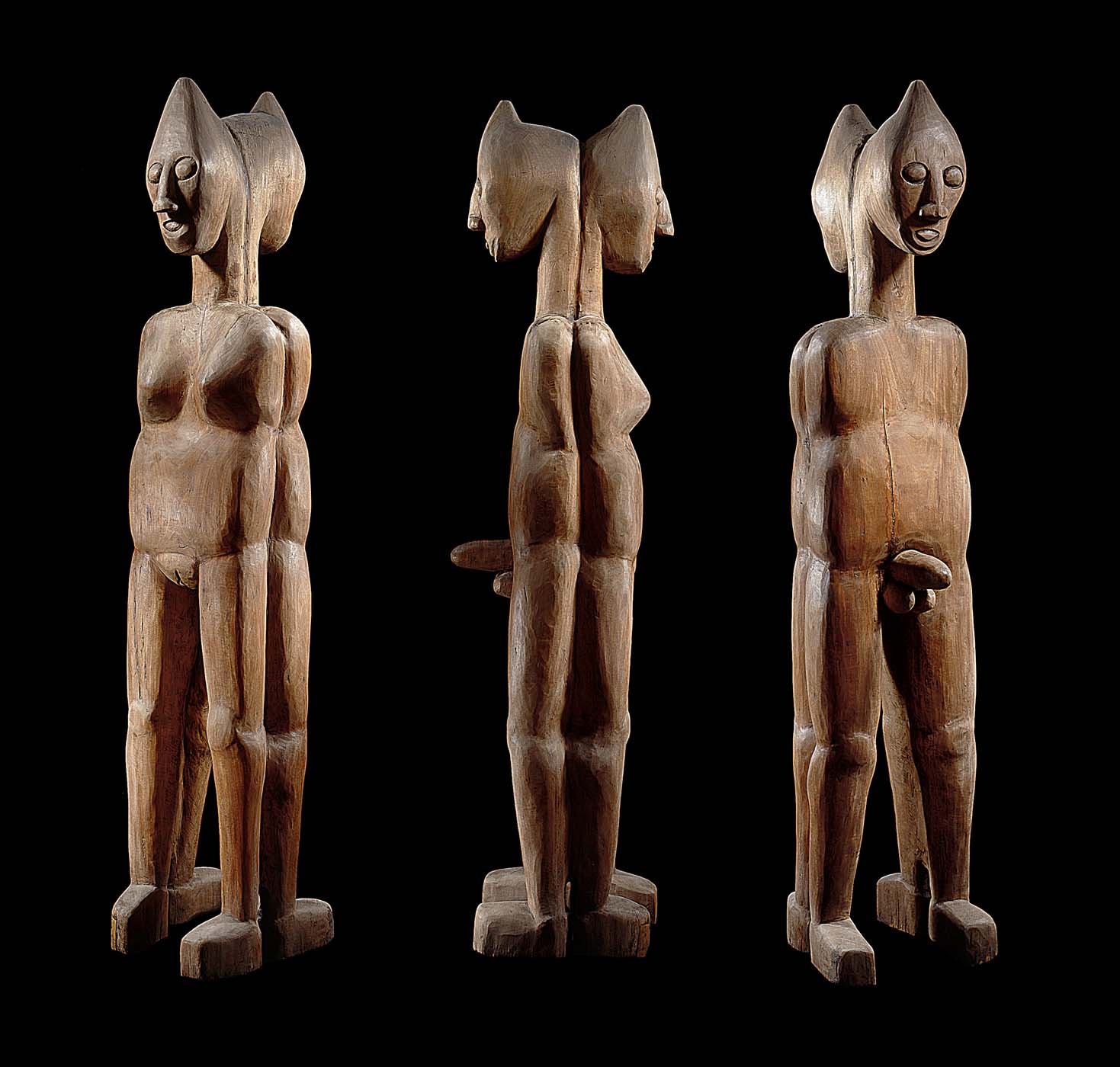
Chico Tabibuia was born into a large family: his mother had twelve children with several different fathers. The great-grandson of an enslaved person, he began working at an early age and remained illiterate throughout his life due to his lack of access to education. He worked successively as a guide for the blind, cattle breeder, merchant, and lumberjack, before dedicating long days, until 1988, to working in the Mata Atlântica rainforest to support his sixteen children from three different unions.
He devoted himself fully to sculpture only at the age of forty. Yet, as a child, he was already creating figures considered “indecent” by those around him. Self-taught and isolated from any local artisanal tradition, he developed a singular visual language shaped by his own imagination.
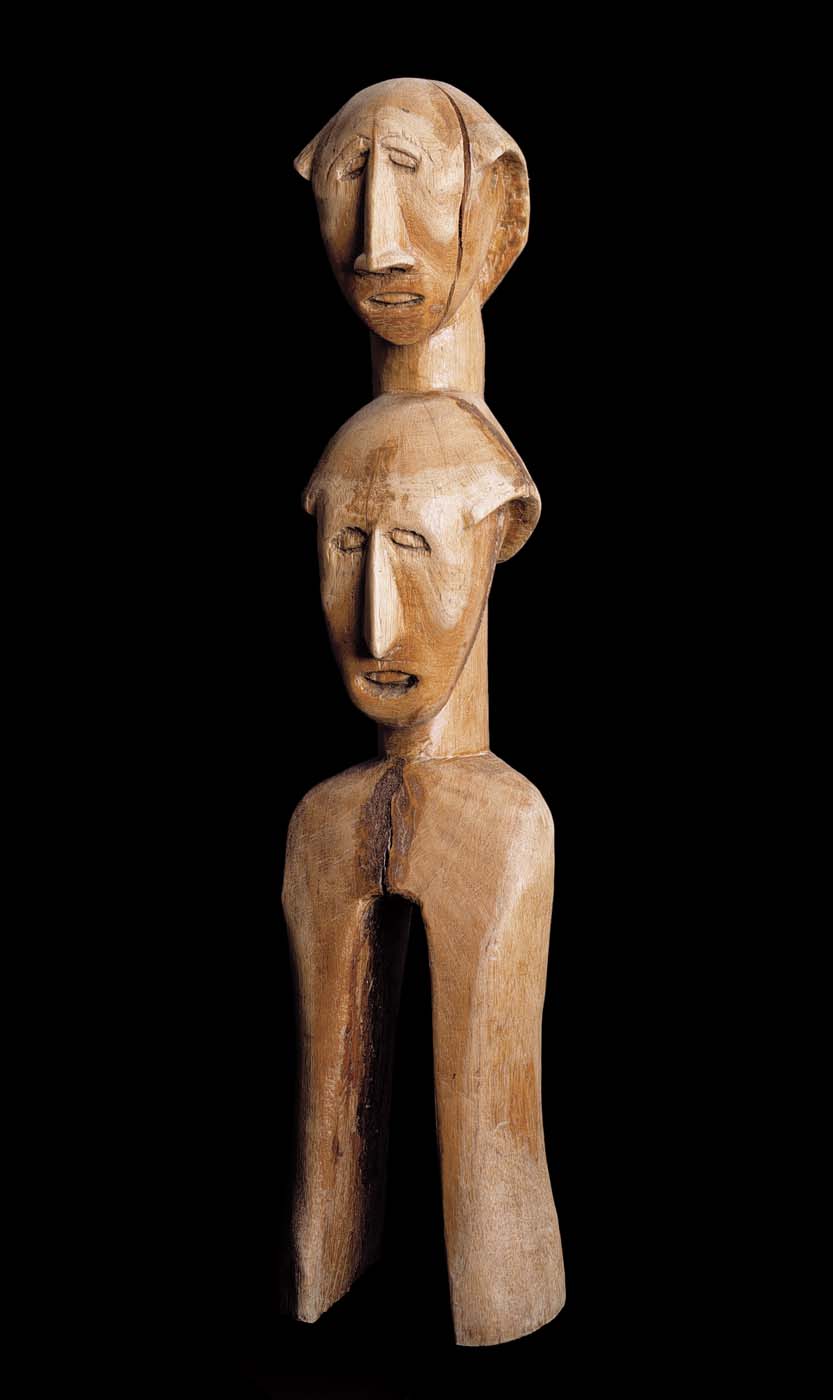
His work is structured around the generative power of the phallus, which informs his forms: heads, limbs, human and animal bodies, as well as the attributes of Exu, a figure associated with crossroads and transformation in Afro-Brazilian traditions. His hybrid sculptures dissolve the boundaries between masculine and feminine, human and animal. Figures that merge a man and a woman into a single being evoke the unity of opposites, androgyny, and the complementarity of the Animus and the Anima.
By country
- Angola
- Argentina
- Austria
- Belgium
- Benin
- Brazil
- Canada
- Chile
- Colombia
- Croatia
- Cuba
- Czech Republic
- Finland
- France
- Germany
- Guatemala
- Haiti
- India
- Iran, Islamic Republic of
- Italy
- Jamaica
- Japan
- Korea, Republic of
- Mexico
- Morocco
- Namibia
- Netherlands
- Papua New Guinea
- Peru
- Philippines
- Poland
- Portugal
- Russian Federation
- Senegal
- Serbia
- Slovakia
- Spain
- Sweden
- Switzerland
- United Kingdom
- United States
- Uruguay
collection | general collection | T | TABIBUIA Chico, (Silva Francisco MORALES, known as)
TABIBUIA Chico, (Silva Francisco MORALES, known as)
1/2