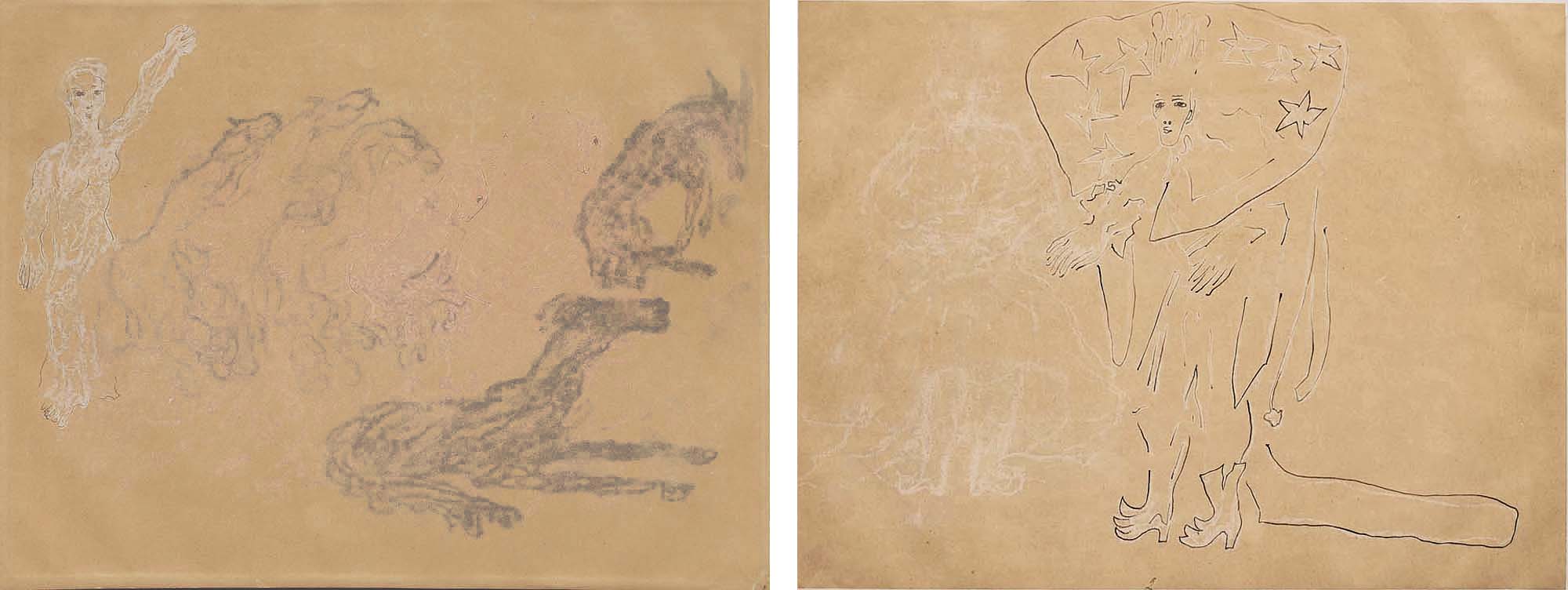
The son of a mathematics professor, Carl Fredrik Hill initially resisted his father’s expectations and became a painting teacher. After studying in Stockholm, he moved to Paris in 1873 and painted en plein air in the Forest of Barbizon, following in the footsteps of Corot and Daubigny. Some of his works were shown at the 1875 Salon, the same year his sister and father died, before he could witness the start of his success.
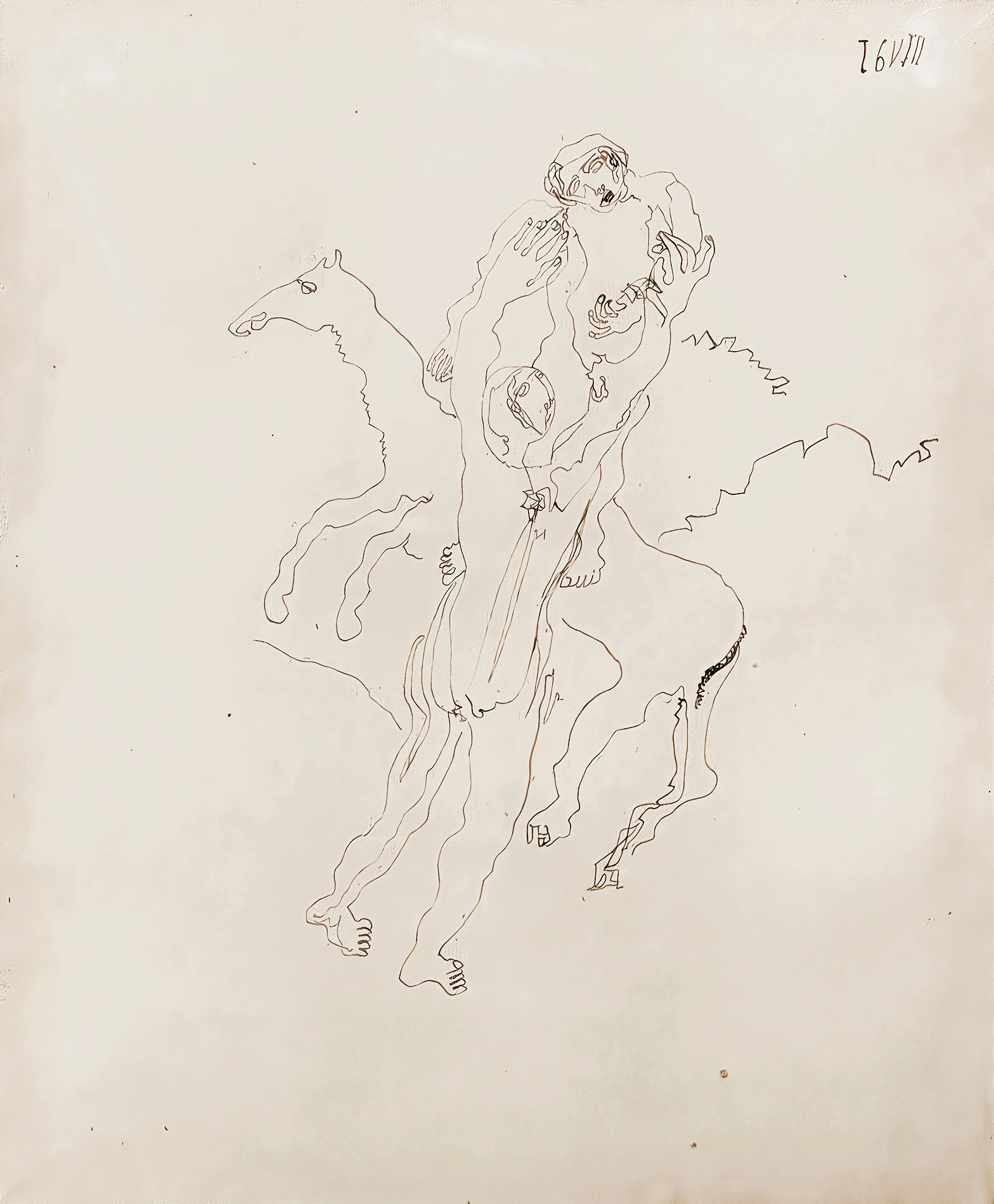
Gradually affected by schizophrenia, Hill was hospitalized in Paris and returned to Sweden in 1880, living almost entirely confined in his childhood home. His style became highly expressive, drawing inspiration from engravings and newspaper illustrations, which he copied and transformed. His drawings combine allegiance to paternal authority with themes of blasphemy and parricide. Hill left nearly 3,500 drawings and a manuscript published under the pseudonym “Nagug,” recounting his years in Paris.
By country
- Angola
- Argentina
- Austria
- Belgium
- Benin
- Brazil
- Canada
- Chile
- Colombia
- Croatia
- Cuba
- Czech Republic
- Finland
- France
- Germany
- Guatemala
- Haiti
- India
- Iran, Islamic Republic of
- Italy
- Jamaica
- Japan
- Korea, Republic of
- Mexico
- Morocco
- Namibia
- Netherlands
- Papua New Guinea
- Peru
- Philippines
- Poland
- Portugal
- Russian Federation
- Senegal
- Serbia
- Slovakia
- Spain
- Sweden
- Switzerland
- United Kingdom
- United States
- Uruguay
collection | general collection | H | HILL Carl Fredrik
HILL Carl Fredrik
1/2