Pearl Blauvelt, known by her neighbors as the “village witch,” came from a family that counted among its ancestors several founding members of the first Dutch Reformed Church in the United States, established in the Hudson Valley north of New York at the end of the 17th century.
At the beginning of the 20th century, she moved with her father to a small town in northeastern Pennsylvania, where they lived in modest conditions. Having become disabled, she was placed in a residence in the 1970s, where she remained until her death. The house where she had lived stood vacant for nearly fifty years, until it was purchased by new owners who discovered nearly eight hundred drawings Pearl Blauvelt had made between 1940 and 1950.
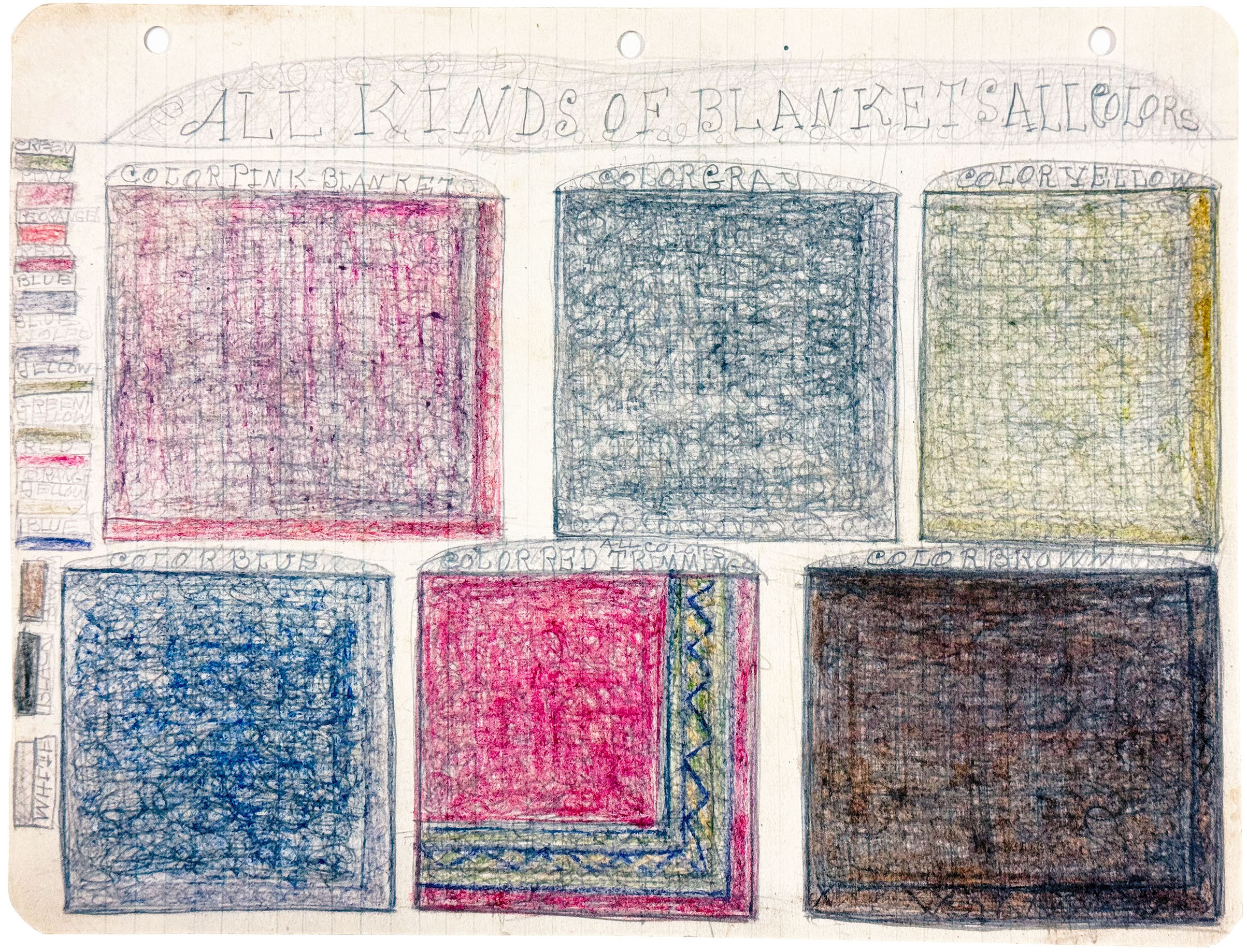
Populated with birds, cows, and horses, traversed by carriages and figures engaged in domestic, industrial, or agricultural labor, these drawings were in part inspired by mail-order catalog images. Perspectives are often inverted and scales asymmetrical.
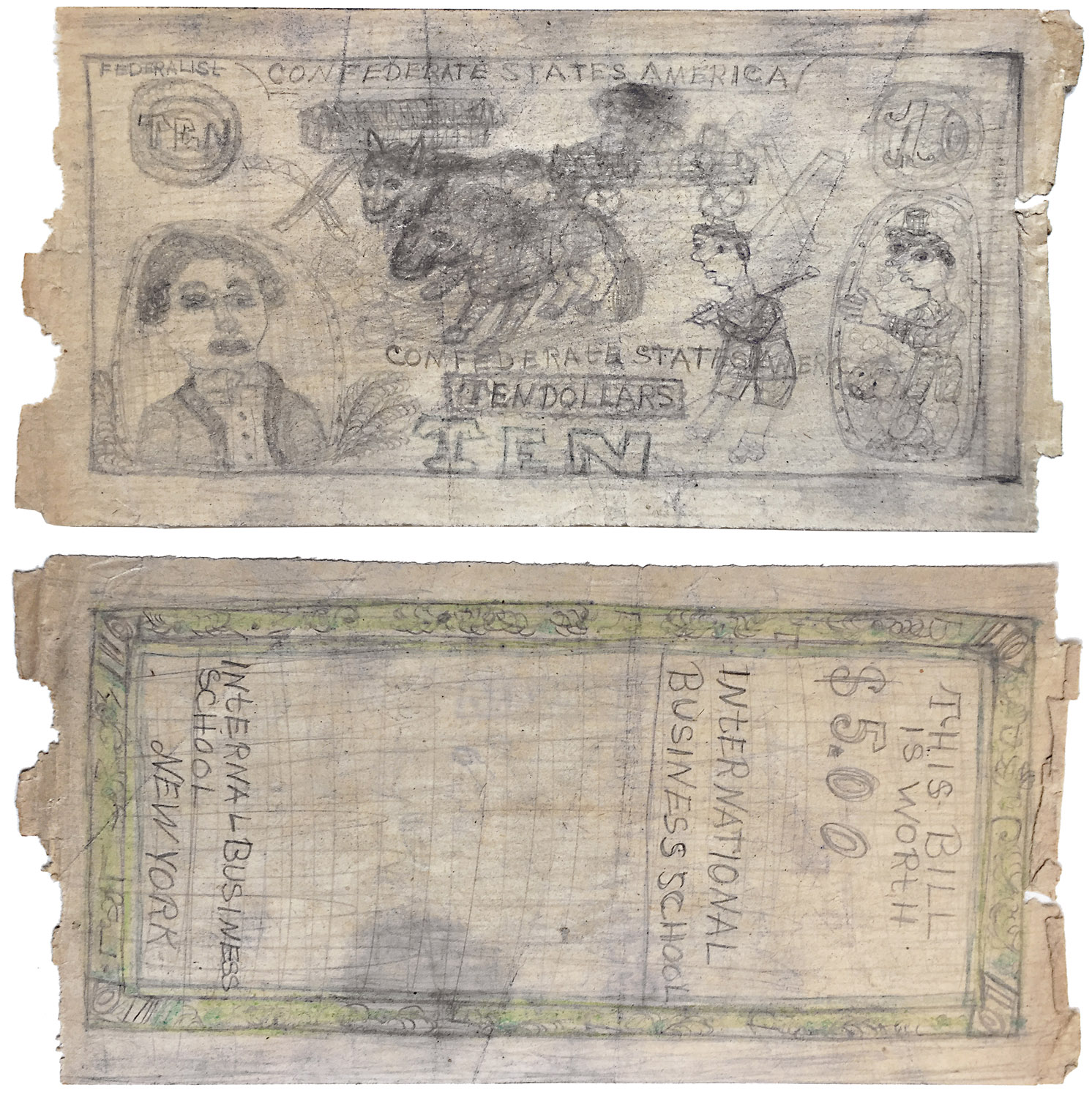
Houses, furniture, cars, clothing, and banknotes reflect the rise of industrial production and the market economy in the United States in the early 20th century. The consumer goods depicted in pencil, accompanied by their commercial descriptions written in capital letters, appear transparent, as if X-rayed.
By country
- Angola
- Argentina
- Austria
- Belgium
- Benin
- Brazil
- Canada
- Chile
- Colombia
- Croatia
- Cuba
- Czech Republic
- Finland
- France
- Germany
- Guatemala
- Haiti
- India
- Iran, Islamic Republic of
- Italy
- Jamaica
- Japan
- Korea, Republic of
- Mexico
- Morocco
- Namibia
- Netherlands
- Papua New Guinea
- Peru
- Philippines
- Poland
- Portugal
- Russian Federation
- Senegal
- Serbia
- Slovakia
- Spain
- Sweden
- Switzerland
- United Kingdom
- United States
- Uruguay
collection | general collection | B | BLAUVELT Pearl
BLAUVELT Pearl
1/2