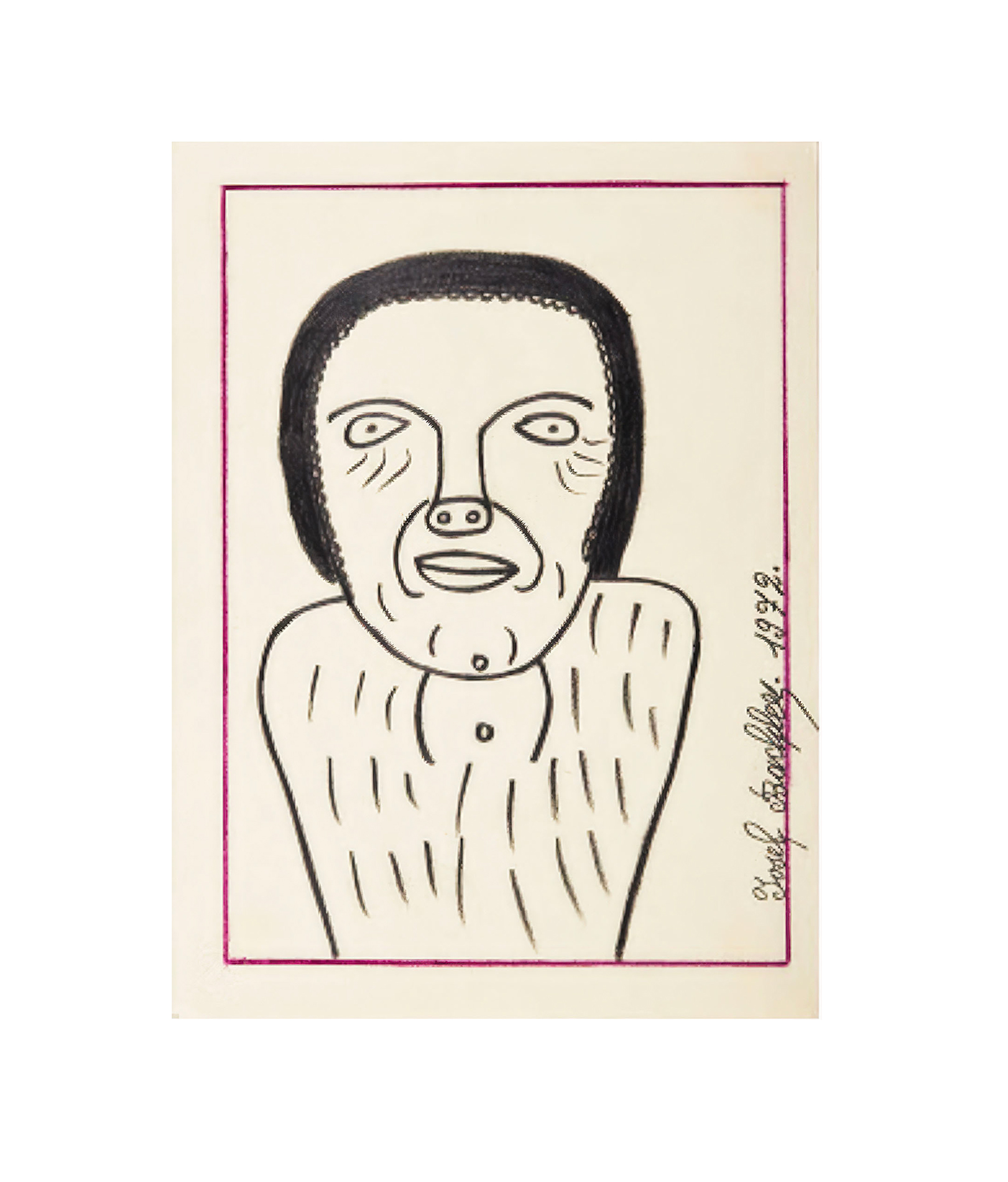
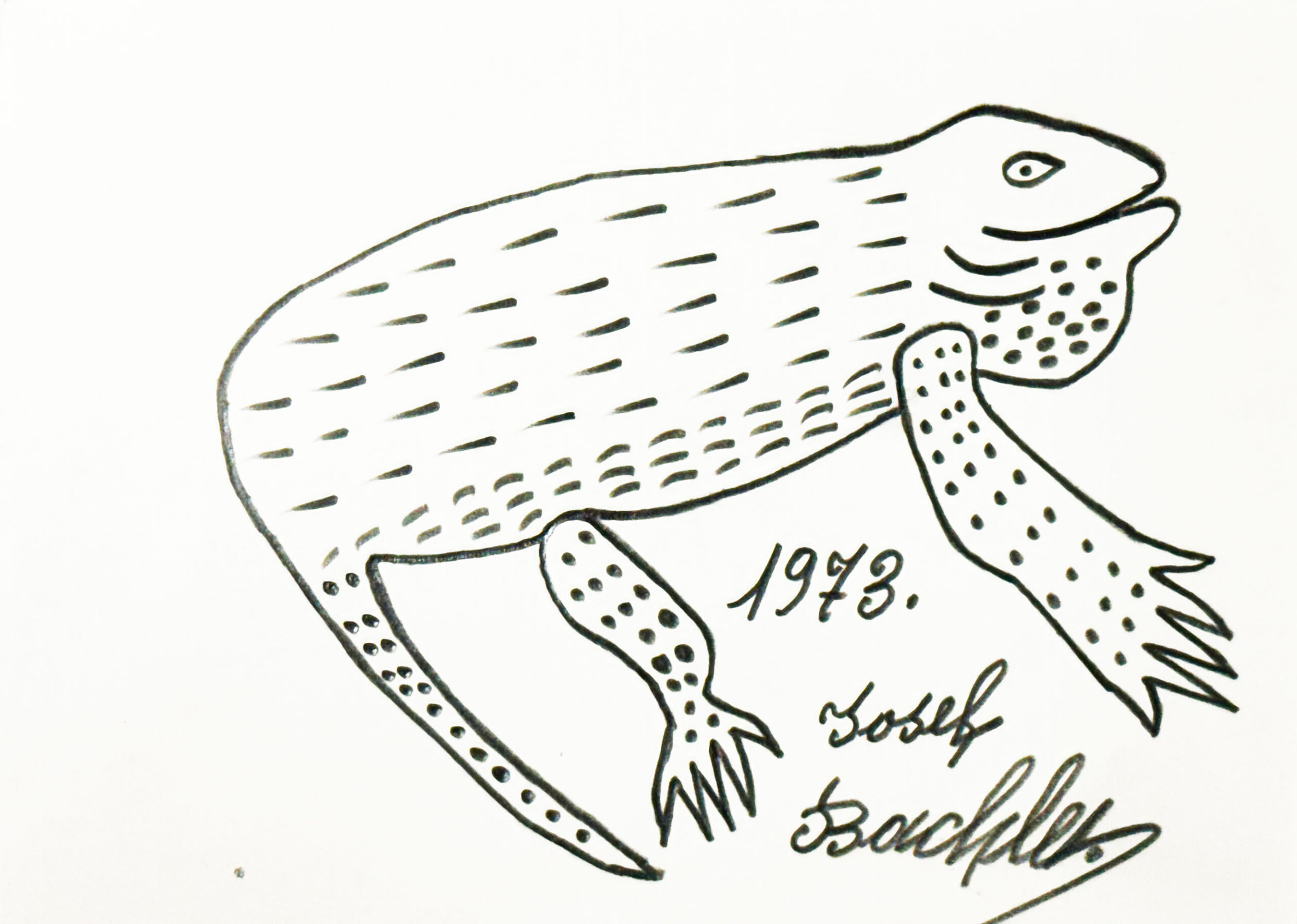
Josef Bachler grew up in an orphanage after the early death of his mother, who is believed to have died as a result of childbirth. His childhood was marked by a succession of foster placements, one of which required him to perform strenuous farm labour alongside his schooling. Returning to the orphanage, he trained as a roofer and worked in this profession until his arrest, for reasons that remain unknown, following the Nazi annexation of Austria in 1938. He was deported to the Dachau concentration camp, where he remained imprisoned until the end of the Second World War.
After 1945, Bachler resumed work as a roofer and started a family. However, alcoholism and violent behaviour eventually led to his admission to the psychiatric hospital at Gugging, where he spent the last nine years of his life. There, he came under the care of the psychiatrist Leo Navratil, who encouraged and brought attention to his artistic practice.
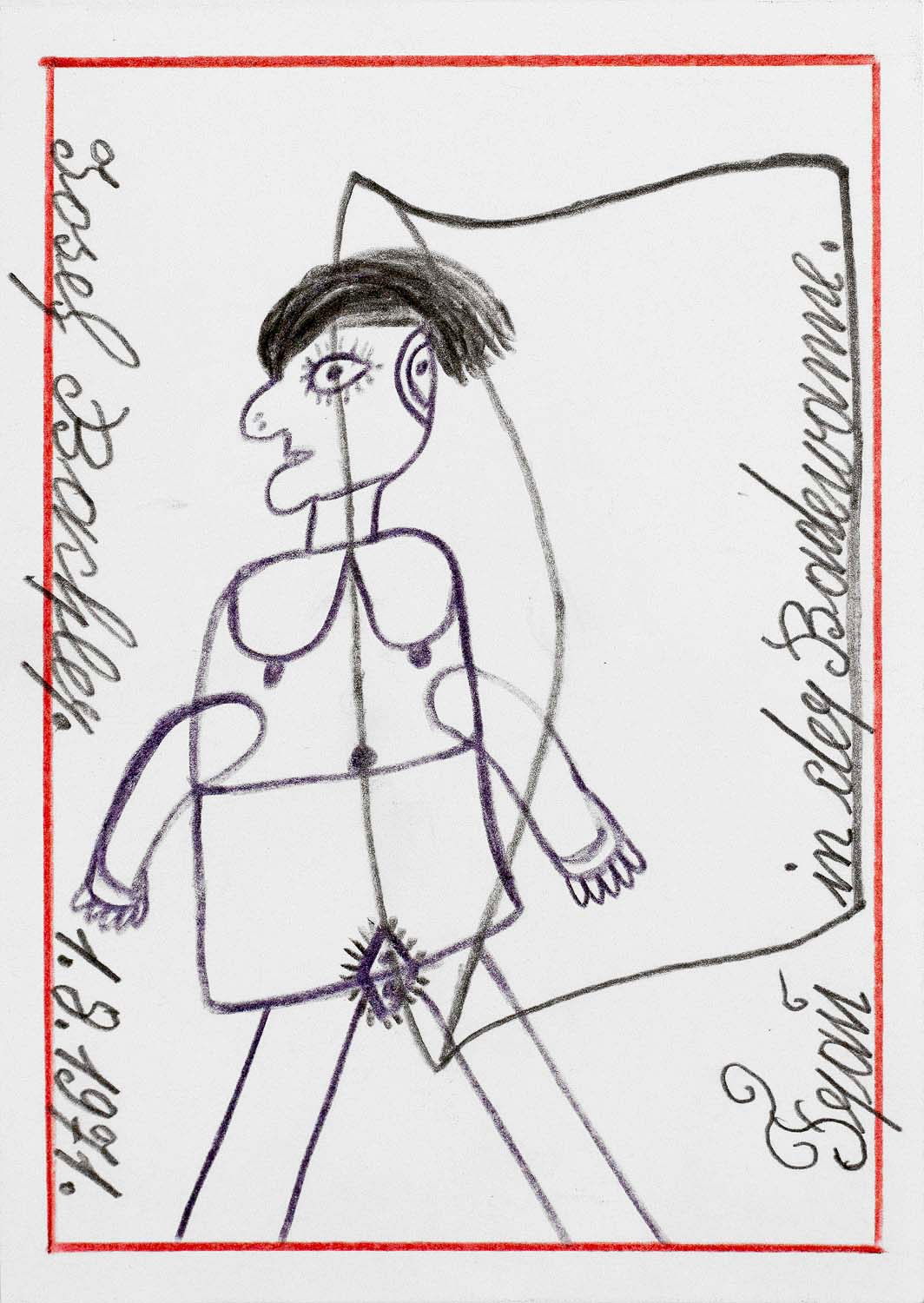
Josef Bachler’s work is characterised by small-format drawings executed primarily in graphite, and more rarely in coloured pencil. His restrained visual language is distinguished by simple figures and an economy of means that lends his work a striking sense of clarity and directness.
By country
- Angola
- Argentina
- Austria
- Belgium
- Benin
- Brazil
- Canada
- Chile
- Colombia
- Croatia
- Cuba
- Czech Republic
- Finland
- France
- Germany
- Guatemala
- Haiti
- India
- Iran, Islamic Republic of
- Italy
- Jamaica
- Japan
- Korea, Republic of
- Mexico
- Morocco
- Namibia
- Netherlands
- Papua New Guinea
- Peru
- Philippines
- Poland
- Portugal
- Russian Federation
- Senegal
- Serbia
- Slovakia
- Spain
- Sweden
- Switzerland
- United Kingdom
- United States
- Uruguay
collection | general collection | B | BACHLER Josef
BACHLER Josef
1/3