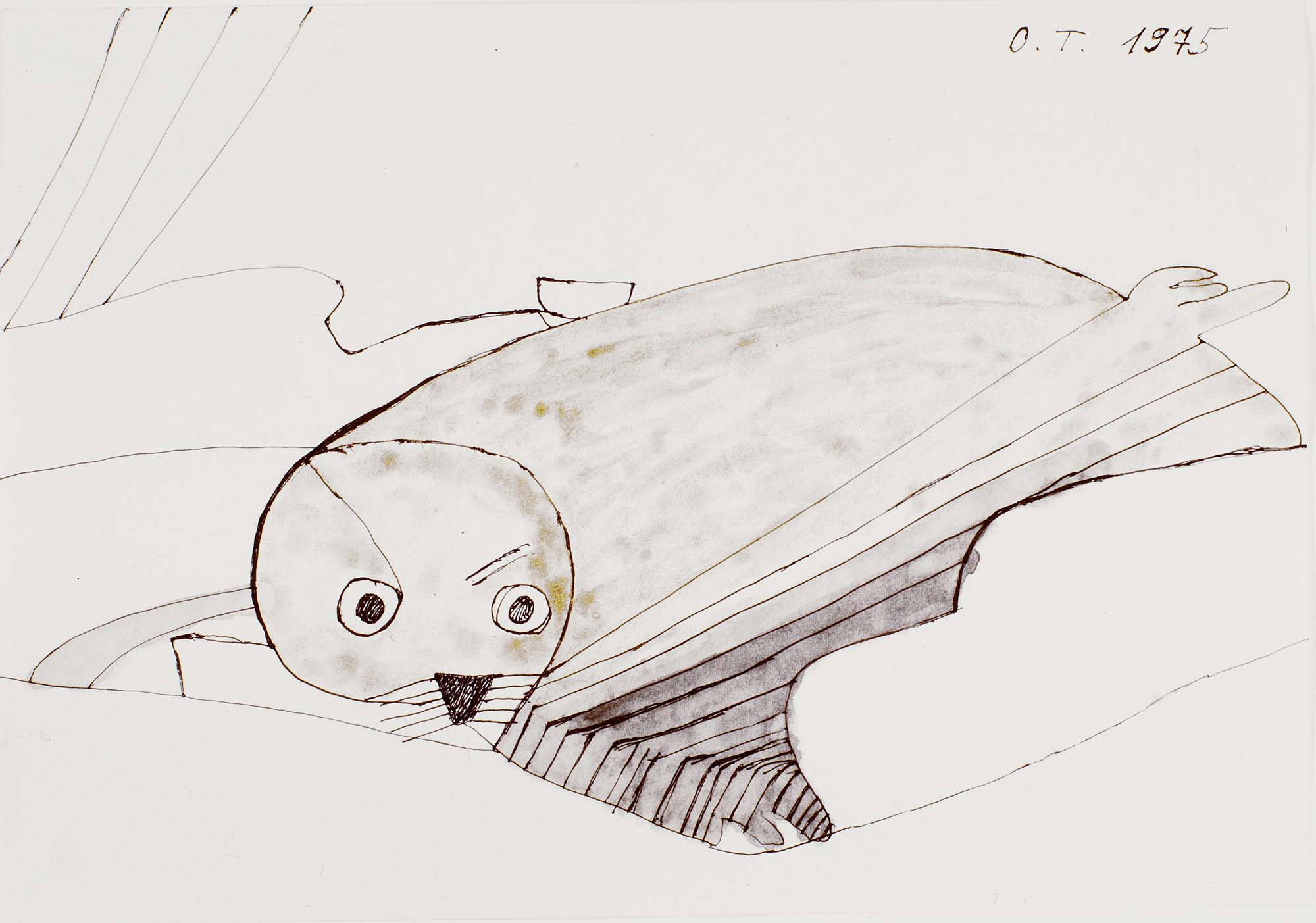
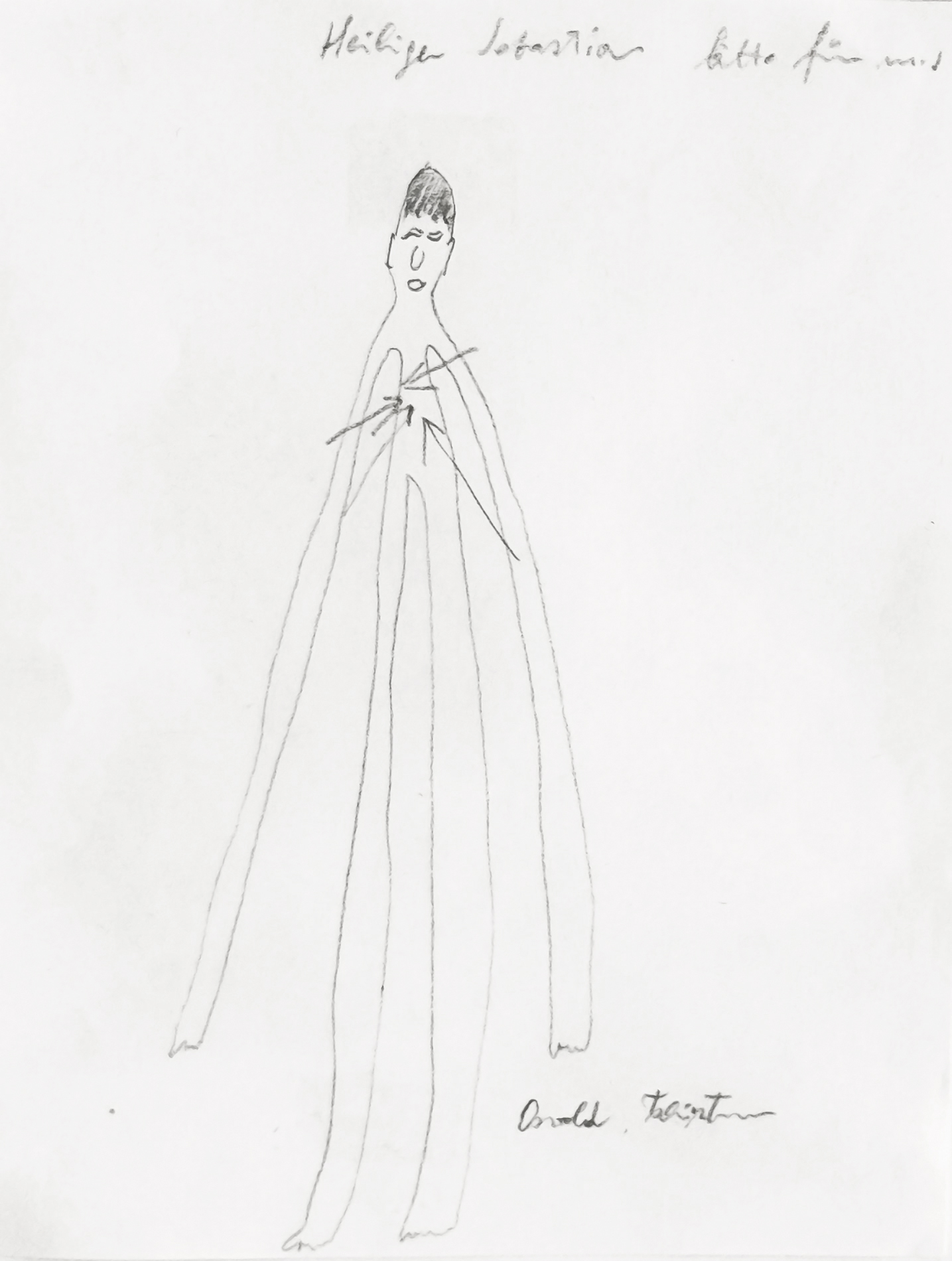
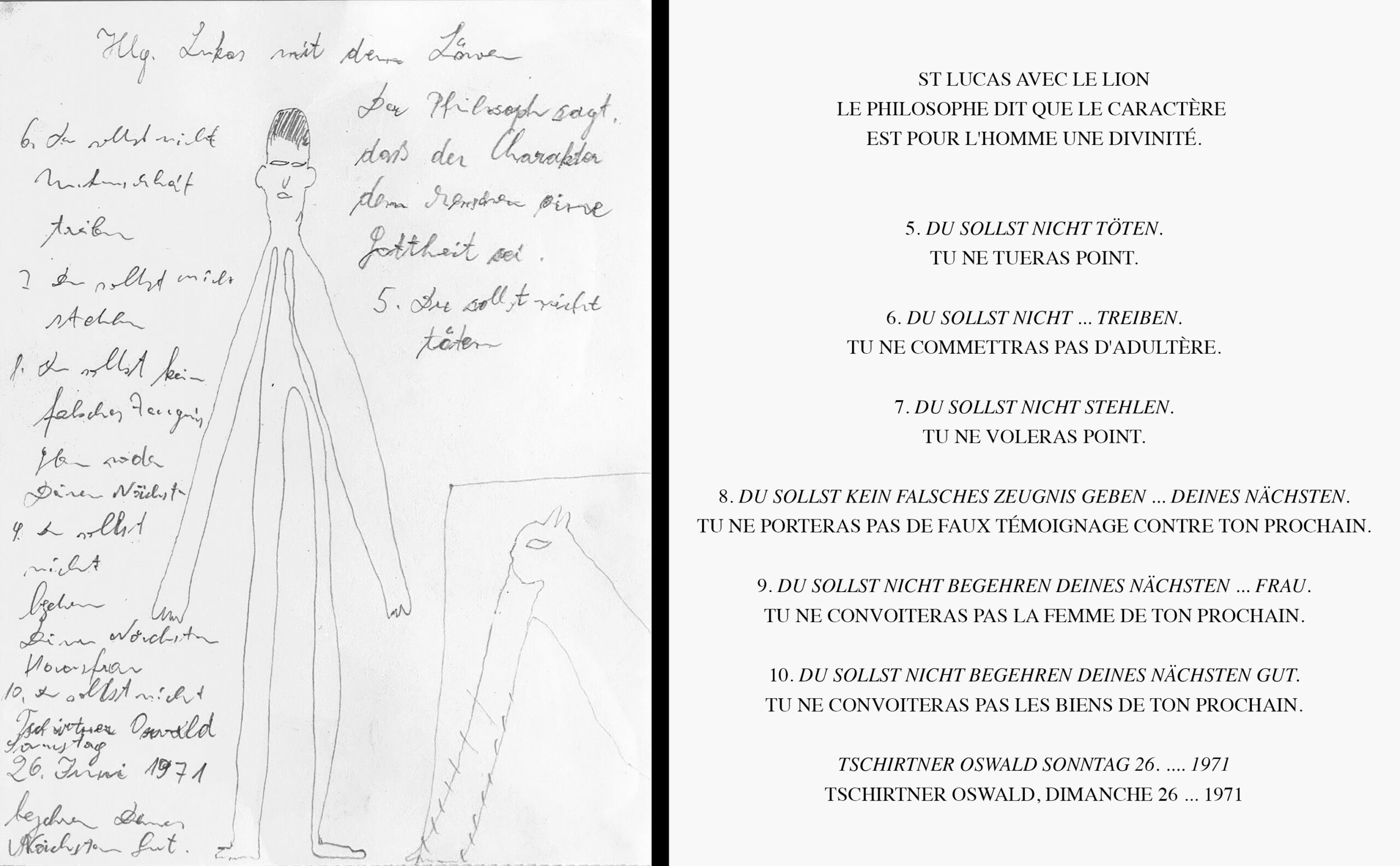
A studious child, Oswald Tschirtner grew up in a Catholic family under the authority of a devout aunt and a priest uncle. At age 10, he entered a seminary, but the war ended his studies in 1939. Drafted into the German army, he participated in the Stalingrad campaign. Upon returning, the first psychotic disorders appeared. Interned from 1946 for schizophrenia, he was admitted in 1954 to Gugging Psychiatric Hospital, where he joined the Haus der Künstler.
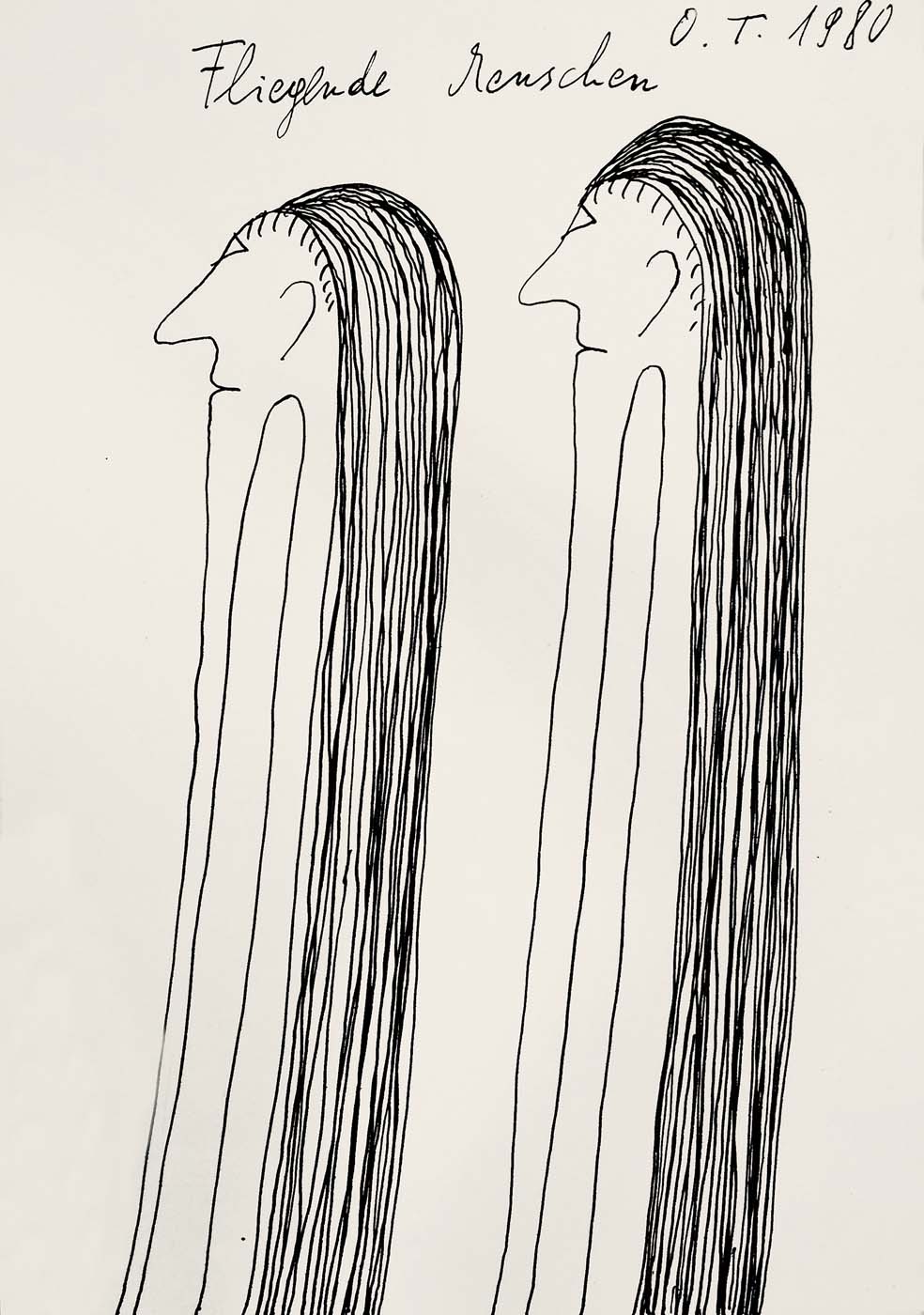
Secretive and reserved, haunted by guilt and anxiety, Tschirtner drew mainly when prompted. The human figures he produced have fully drawn heads but bodies reduced to the bare minimum—two long legs connected directly to the head. There is no distinction between men and women.
By country
- Angola
- Argentina
- Austria
- Belgium
- Benin
- Brazil
- Canada
- Chile
- Colombia
- Croatia
- Cuba
- Czech Republic
- Finland
- France
- Germany
- Guatemala
- Haiti
- India
- Iran, Islamic Republic of
- Italy
- Jamaica
- Japan
- Korea, Republic of
- Mexico
- Morocco
- Namibia
- Netherlands
- Papua New Guinea
- Peru
- Philippines
- Poland
- Portugal
- Russian Federation
- Senegal
- Serbia
- Slovakia
- Spain
- Sweden
- Switzerland
- United Kingdom
- United States
- Uruguay
collection | general collection | T | TSCHIRTNER Oswald
TSCHIRTNER Oswald
1/4