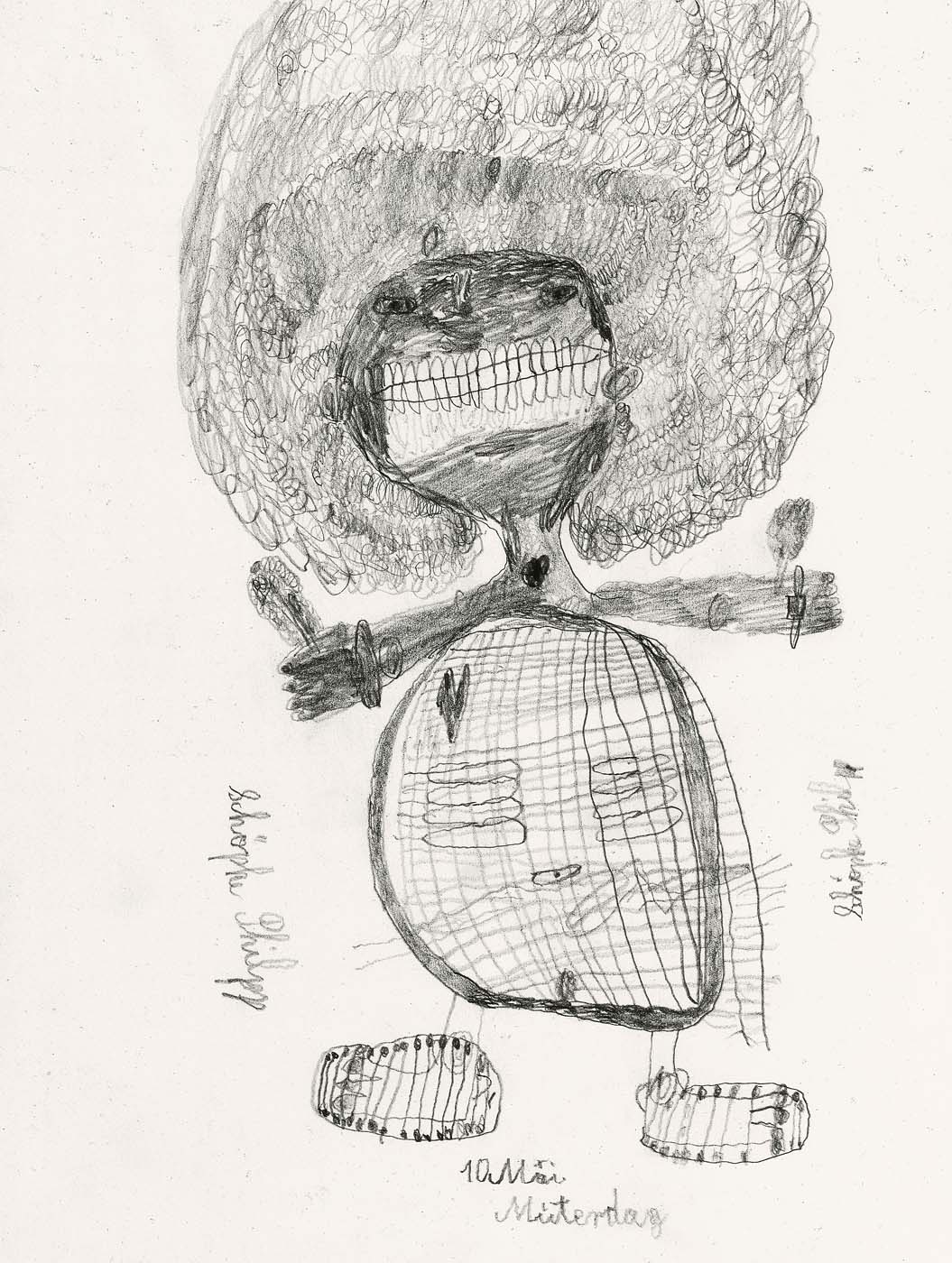
Philipp Schöpke attended primary school, which he was forced to leave after repeating several grades. He later worked as an agricultural labourer but struggled to find his place socially and was often stigmatized by his peers, who called him an “idiot.” His attempts to join the German army ended with him being declared unfit for service. It was during this process that he was diagnosed with manic-depressive psychosis.
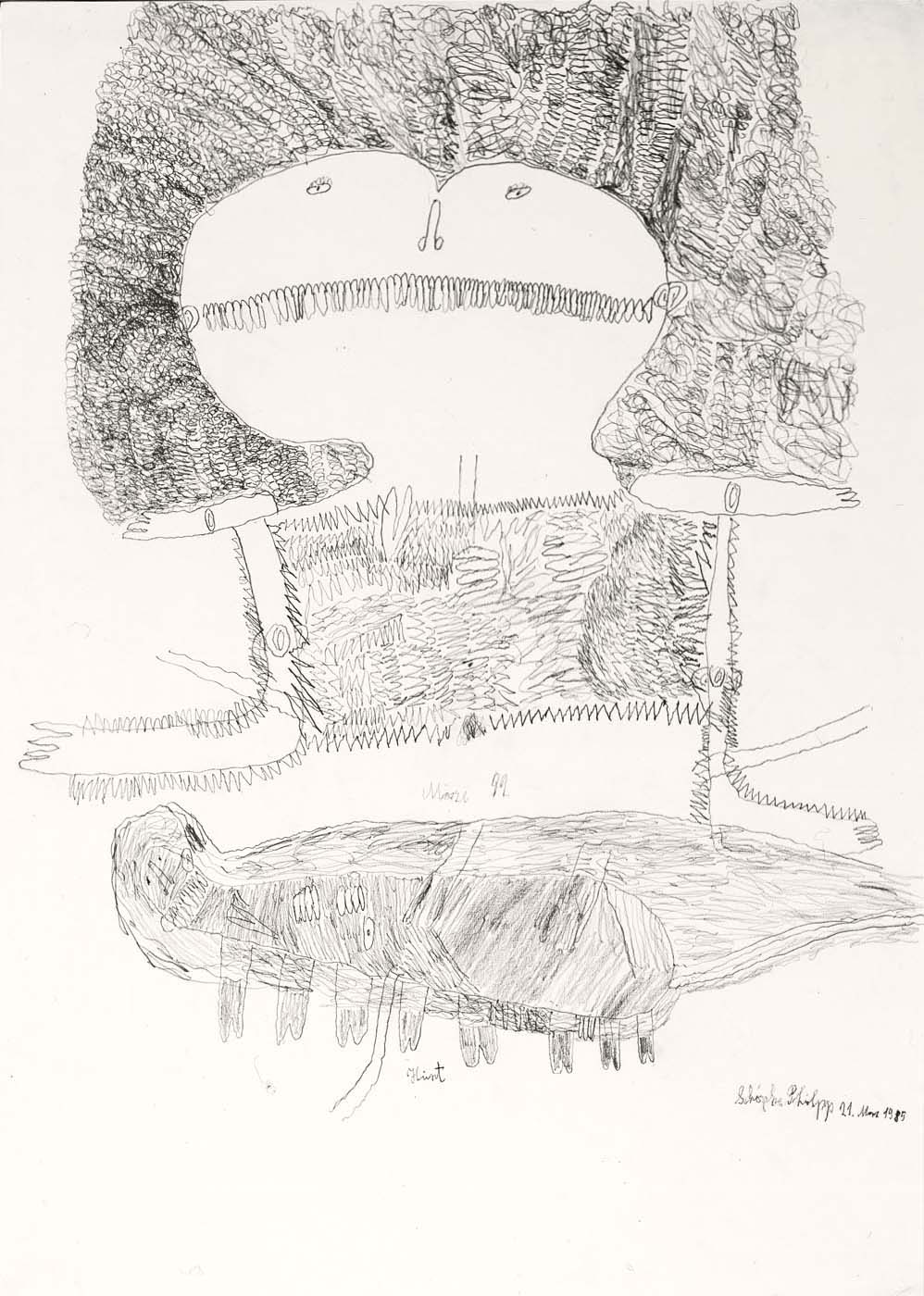
Permanently institutionalized in 1956 at the Gugging Psychiatric Hospital in Austria, Schöpke began drawing. He later became a resident of the Haus der Künstler, where he developed a unique body of work centred on the representation of the human figure.
His figures, as if revealed through X-rays, feature frail, skeletal bodies, vulnerable silhouettes, and disproportionately large heads. Schöpke systematically signed his drawings and, in most cases, identified the person depicted, or noted their gender and age, giving each figure an intimate and enigmatic presence.
By country
- Angola
- Argentina
- Austria
- Belgium
- Benin
- Brazil
- Canada
- Chile
- Colombia
- Croatia
- Cuba
- Czech Republic
- Finland
- France
- Germany
- Guatemala
- Haiti
- India
- Iran, Islamic Republic of
- Italy
- Jamaica
- Japan
- Korea, Republic of
- Mexico
- Morocco
- Namibia
- Netherlands
- Papua New Guinea
- Peru
- Philippines
- Poland
- Portugal
- Russian Federation
- Senegal
- Serbia
- Slovakia
- Spain
- Sweden
- Switzerland
- United Kingdom
- United States
- Uruguay
collection | general collection | S | SCHÖPKE Philipp
SCHÖPKE Philipp
1/2