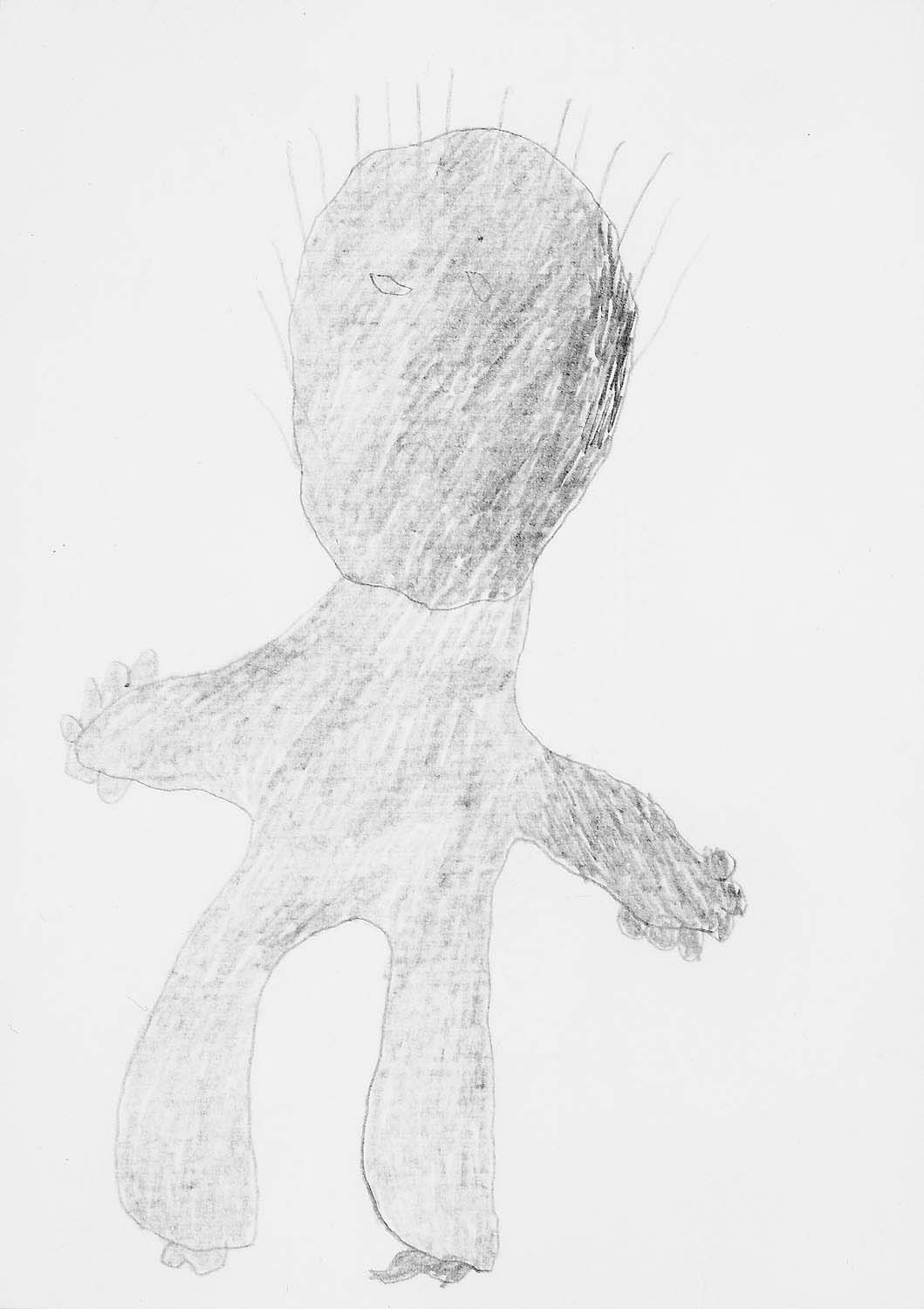
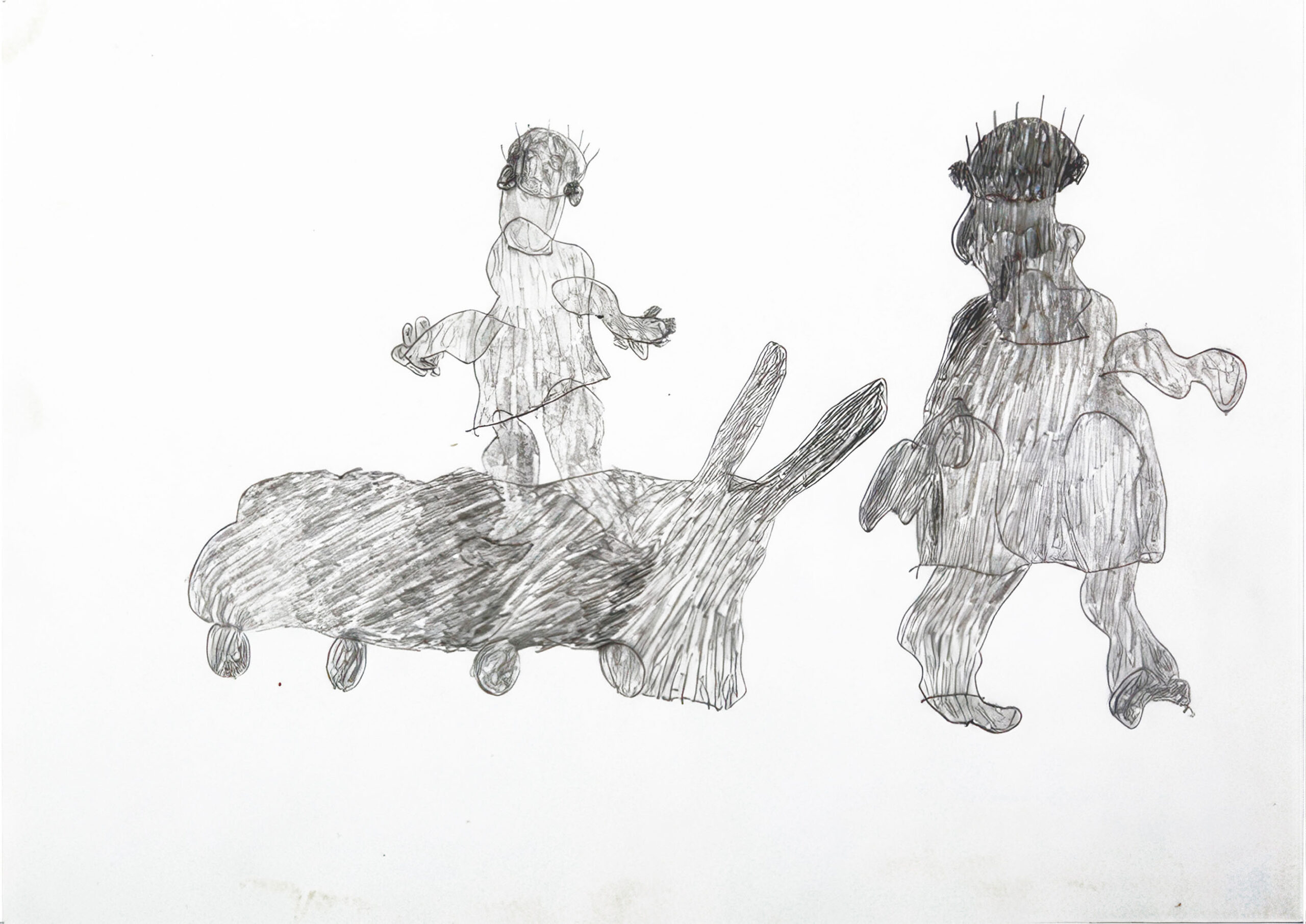
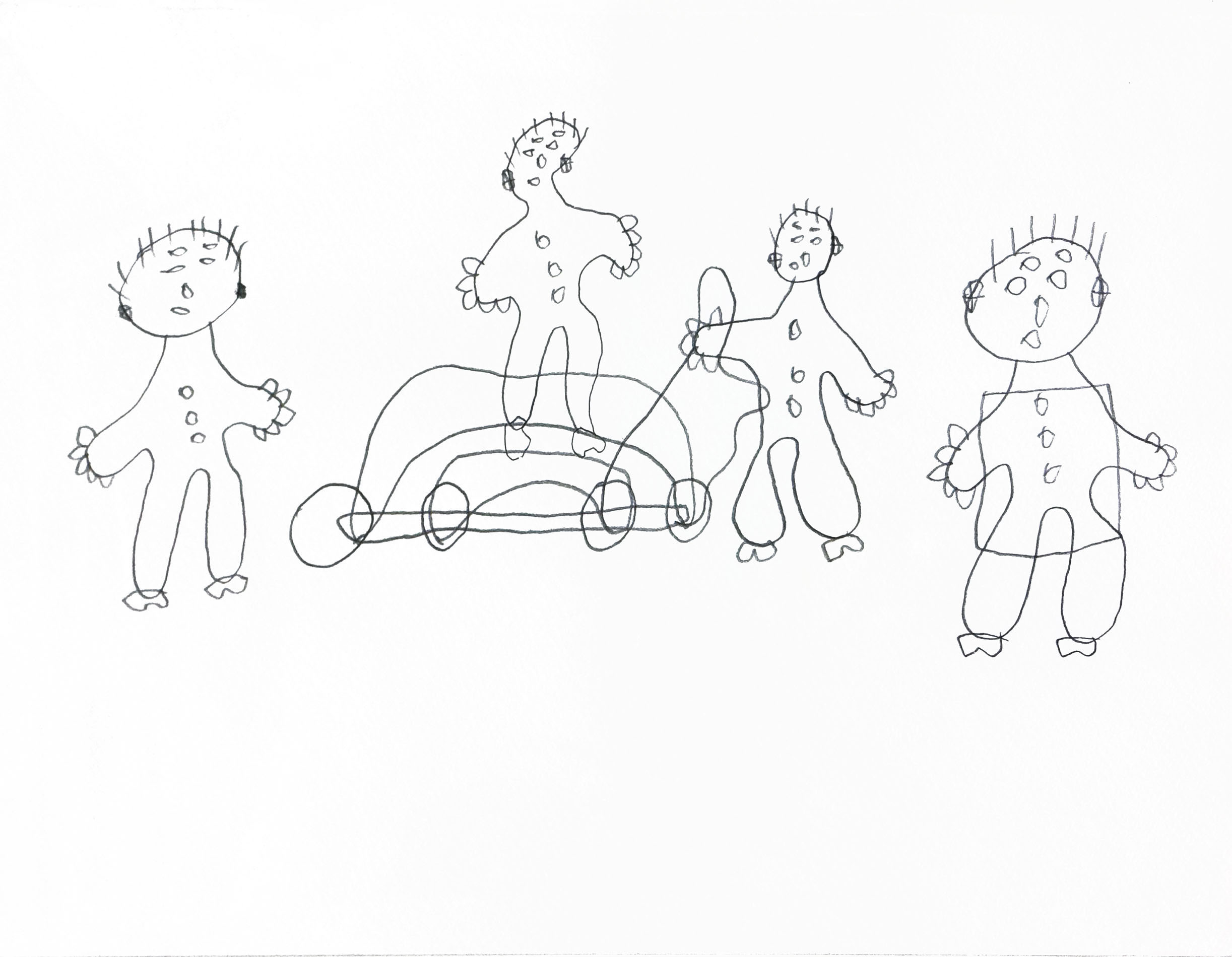
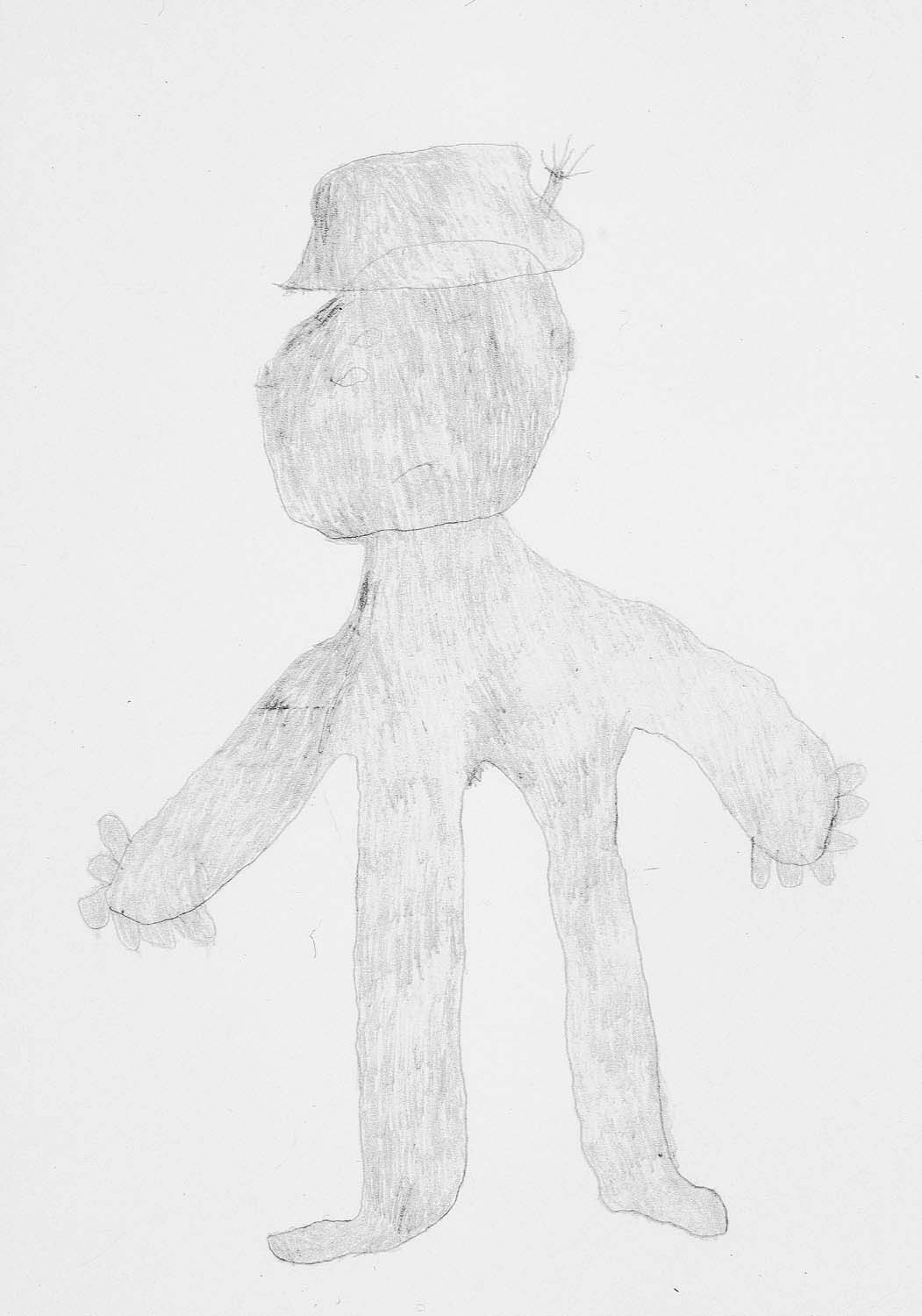
The eldest of a family of seven children, Franz Kernbeis attended primary school for eight years before working on his father’s farm. At the age of eighteen, he experienced his first psychological difficulties, which led to his admission to a psychiatric hospital in 1955. At the beginning of his stay, he would remain motionless for hours or walk around in circles with his eyes closed. When spoken to, he would turn his head away and not respond. Over time, he became more communicative and began drawing at the age of forty-four, after having spent more than twenty years in hospital.
Kernbeis always approached his drawings through their outlines. In some works, he divided the surface into sections, a process of “compartmentalization,” in which the line alone was sufficient to structure the composition. In others, by contrast, he covered the entire sheet with dense black marks.
Franz Kernbeis’s work evokes a cellular world, populated mainly by fragile and timid figures that appear to be placed there, slightly off balance. His body of work includes both very large-scale formats and very small surfaces of remarkable delicacy.
By country
- Angola
- Argentina
- Austria
- Belgium
- Benin
- Brazil
- Canada
- Chile
- Colombia
- Croatia
- Cuba
- Czech Republic
- Finland
- France
- Germany
- Guatemala
- Haiti
- India
- Iran, Islamic Republic of
- Italy
- Jamaica
- Japan
- Korea, Republic of
- Mexico
- Morocco
- Namibia
- Netherlands
- Papua New Guinea
- Peru
- Philippines
- Poland
- Portugal
- Russian Federation
- Senegal
- Serbia
- Slovakia
- Spain
- Sweden
- Switzerland
- United Kingdom
- United States
- Uruguay
collection | general collection | K | KERNBEIS Franz
KERNBEIS Franz
1/4