At fifteen, following his parents’ separation, Adelhyd van Bender was placed in a youth home, where he trained as an electrician. After moving to Berlin in 1968, he worked in his trade while attending evening classes. In 1974, he was admitted to the Hochschule der Künste (HdK) Berlin, where he studied for two years.
Expelled from the university in 1976 and evicted from his apartment, he traveled to England in search of aristocratic roots — an episode after which he adopted the name Adelhyd van Bender.
Returning to Berlin, he devoted himself entirely to art. A devastating fire in 1987 destroyed much of his work and marked a radical turning point. From then on, he believed himself entrusted with a mission — a “chore,” as he described it — imposed by a higher authority.
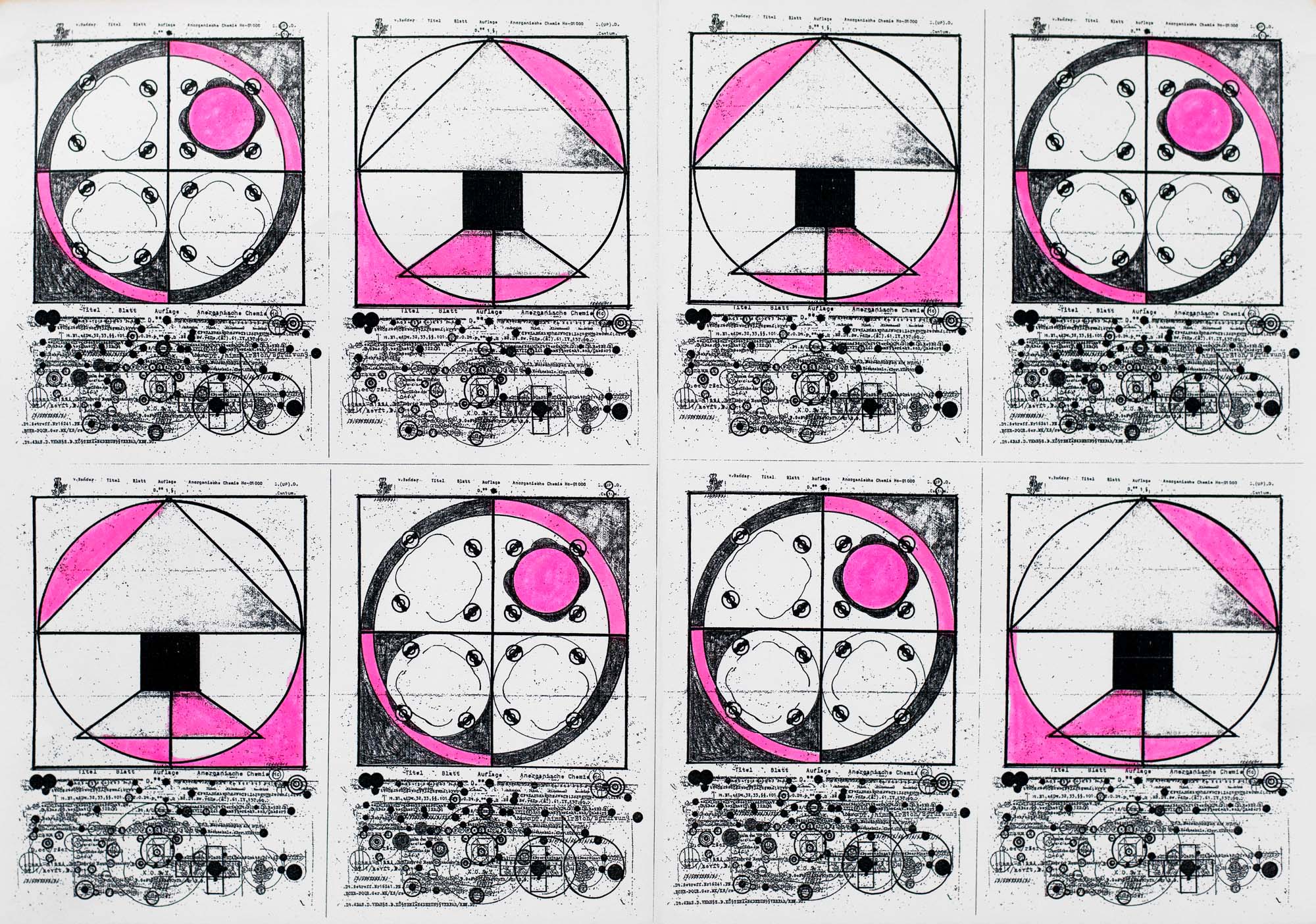
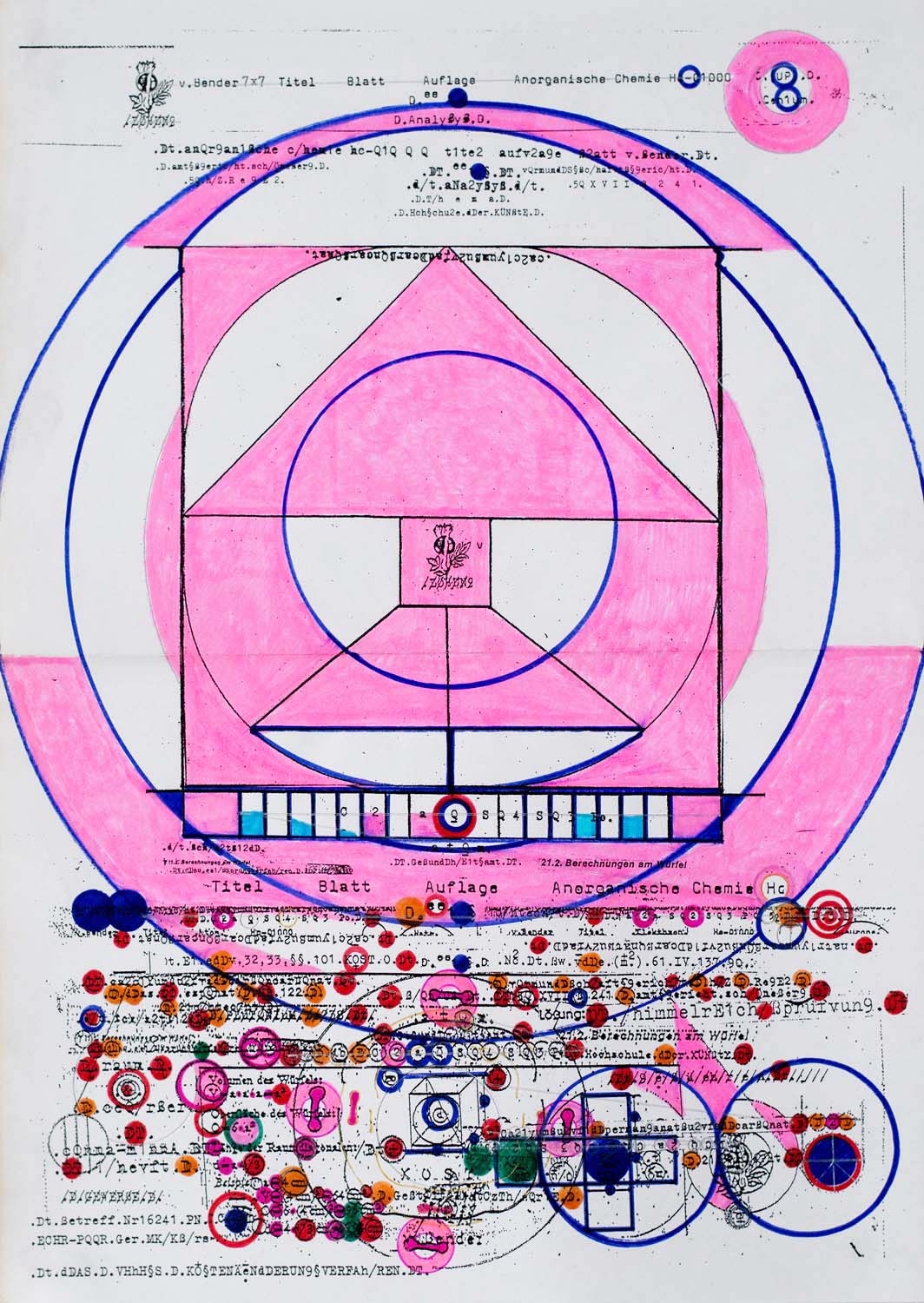
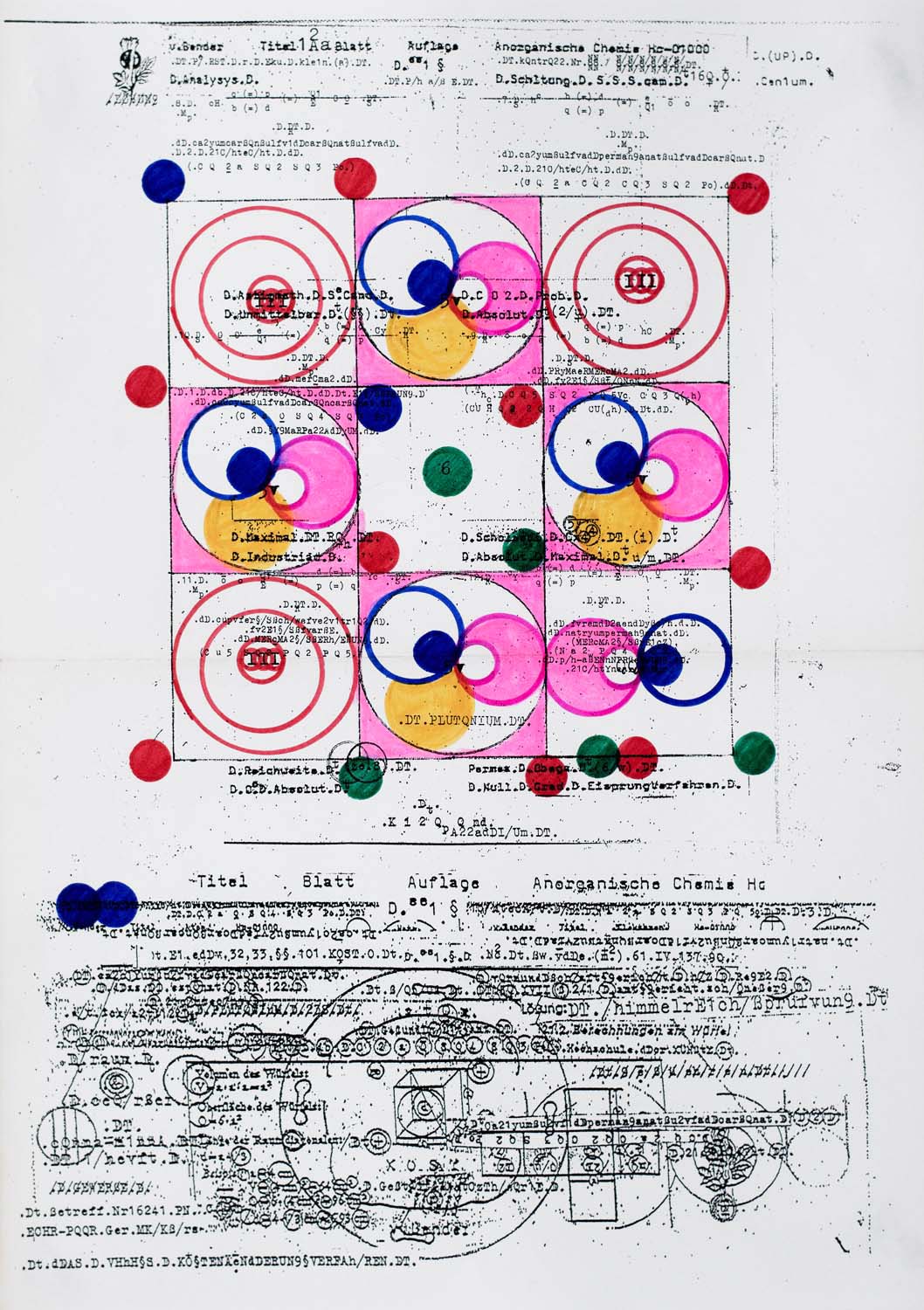
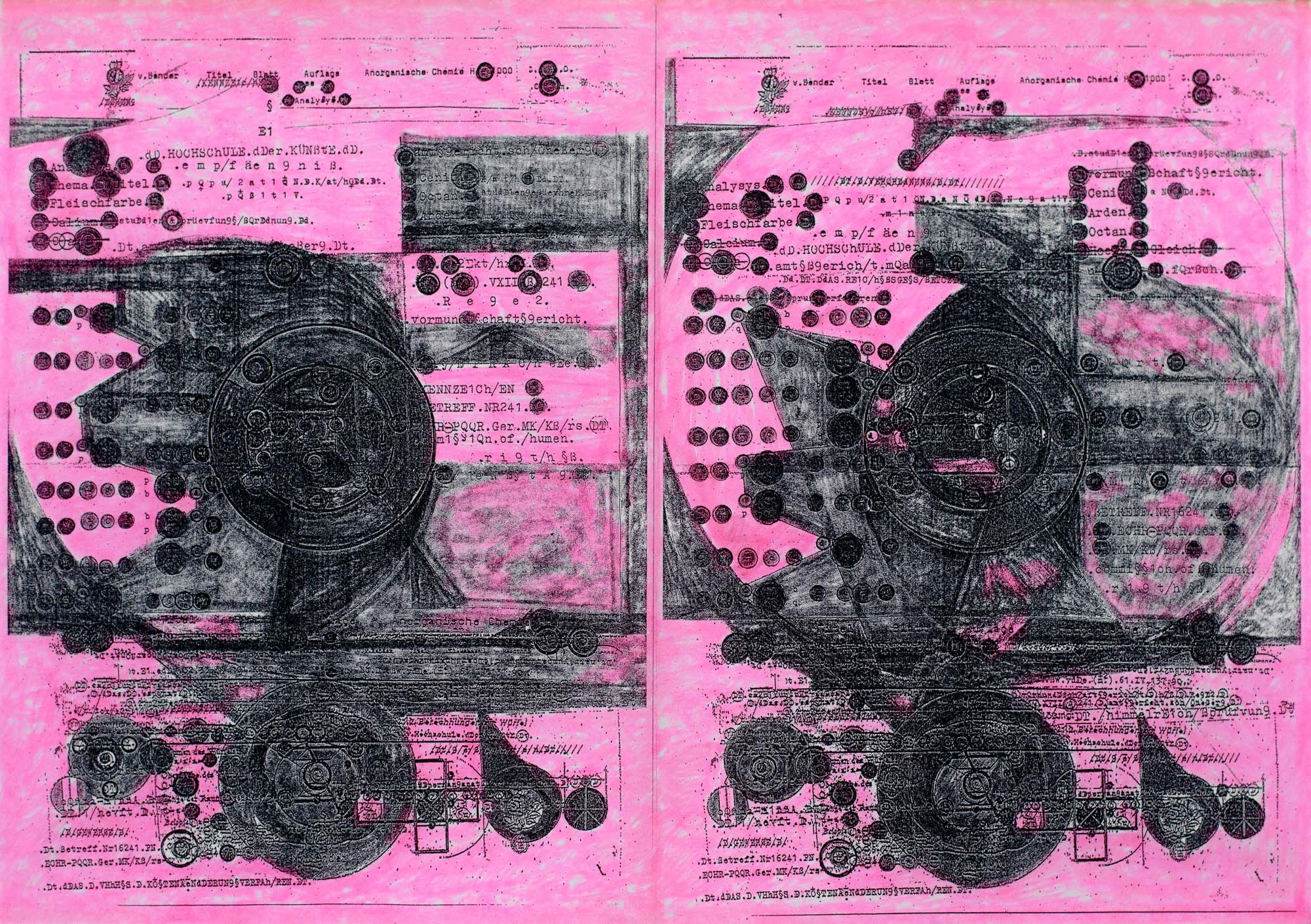
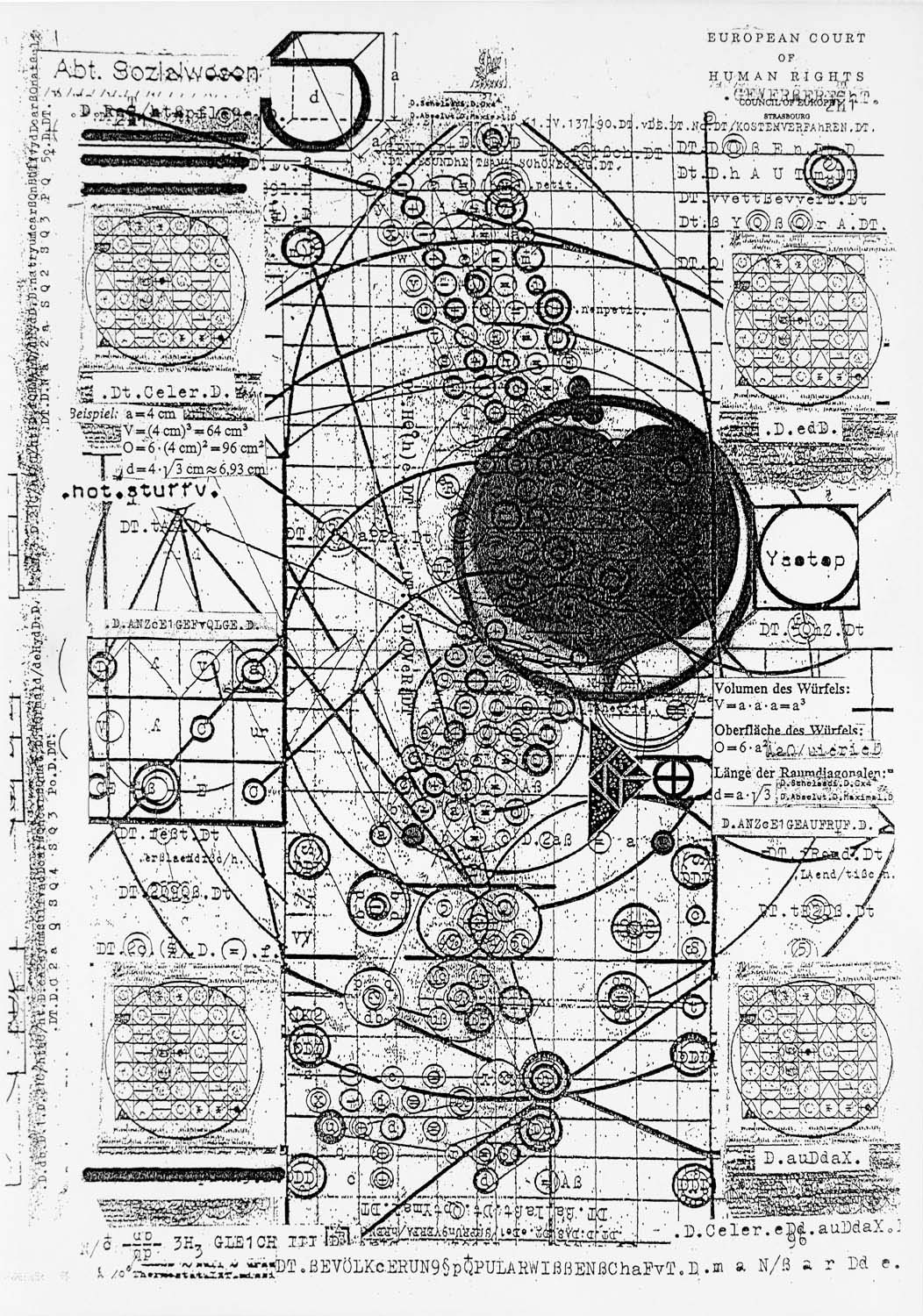
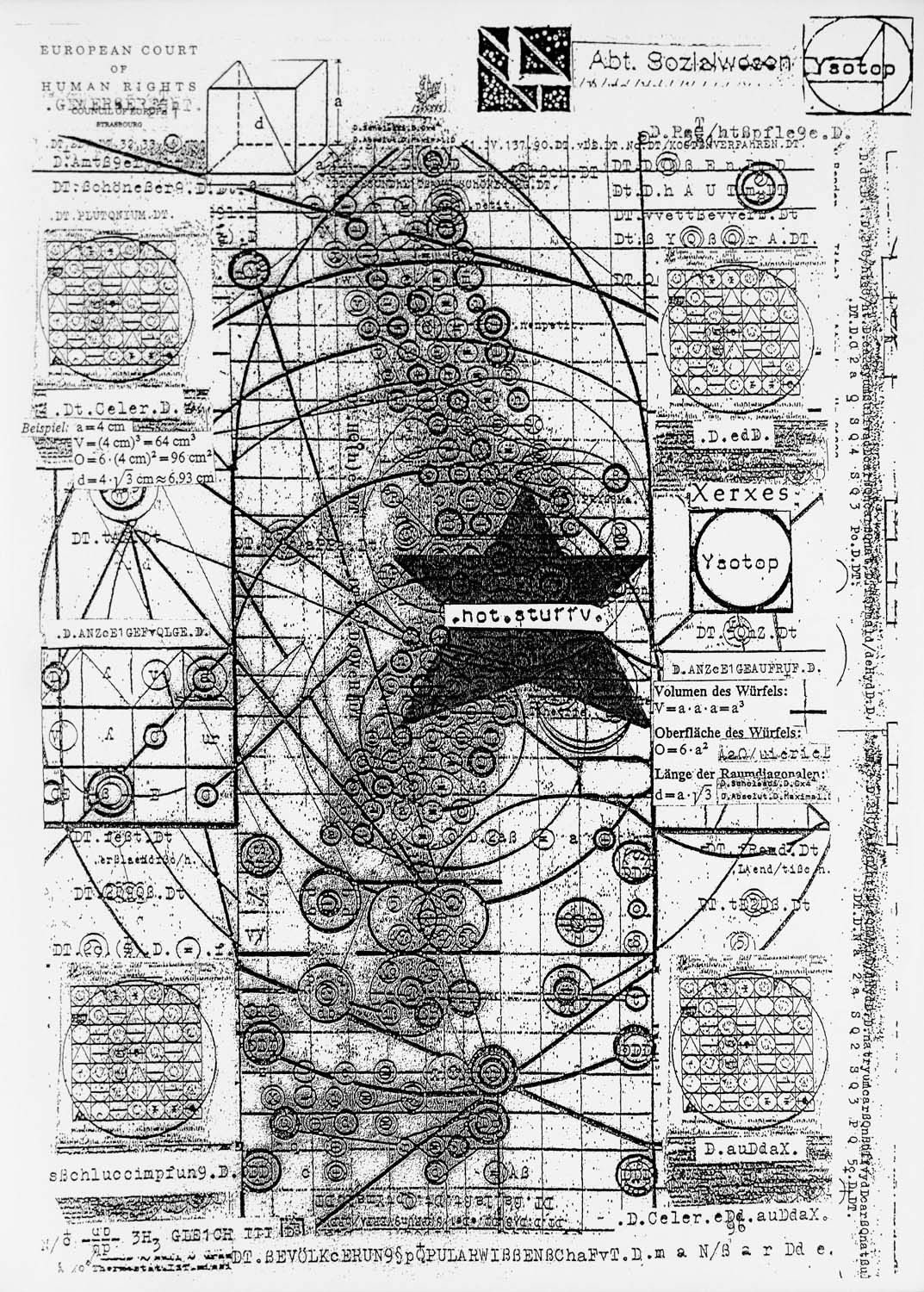
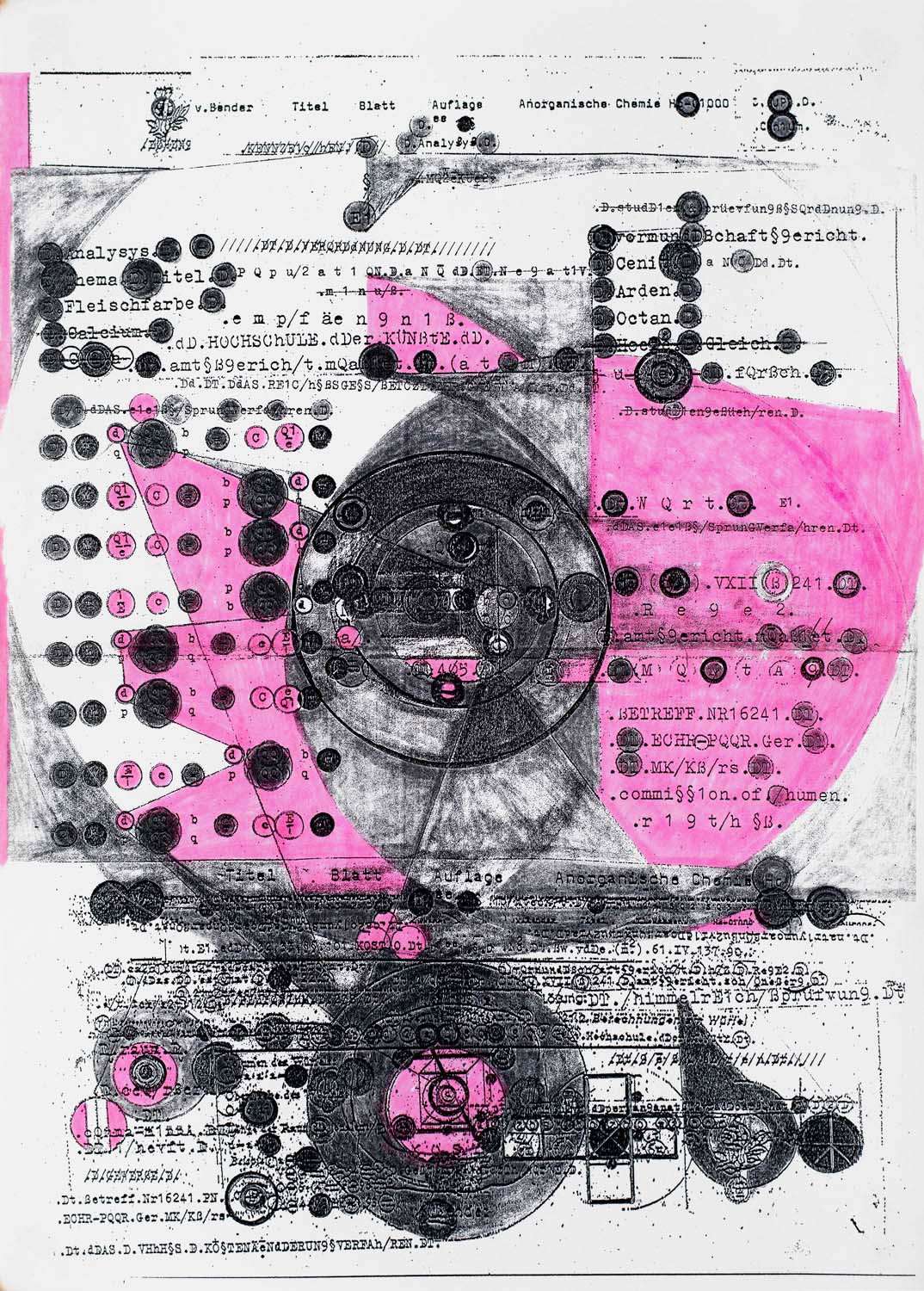
In an obsessive endeavor, he produced 2,000 binders containing between 200 and 250 pages each: collages of geometric forms, color fields, graphic systems, and mathematical or physical formulas, photocopied and reworked. He claimed to possess a uterus containing an “atomic secret.” The cube — associated with the Kaaba — recurs throughout his work, alongside constellations, rockets, and torpedoes.
Through this monumental production of approximately 450,000 pages over twenty-five years, van Bender appears to have sought to contain chaos itself.
By country
- Angola
- Argentina
- Austria
- Belgium
- Benin
- Brazil
- Canada
- Chile
- Colombia
- Croatia
- Cuba
- Czech Republic
- Finland
- France
- Germany
- Guatemala
- Haiti
- India
- Iran, Islamic Republic of
- Italy
- Jamaica
- Japan
- Korea, Republic of
- Mexico
- Morocco
- Namibia
- Netherlands
- Papua New Guinea
- Peru
- Philippines
- Poland
- Portugal
- Russian Federation
- Senegal
- Serbia
- Slovakia
- Spain
- Sweden
- Switzerland
- United Kingdom
- United States
- Uruguay
collection | general collection | B | BENDER Adelhyd van
BENDER Adelhyd van
1/7