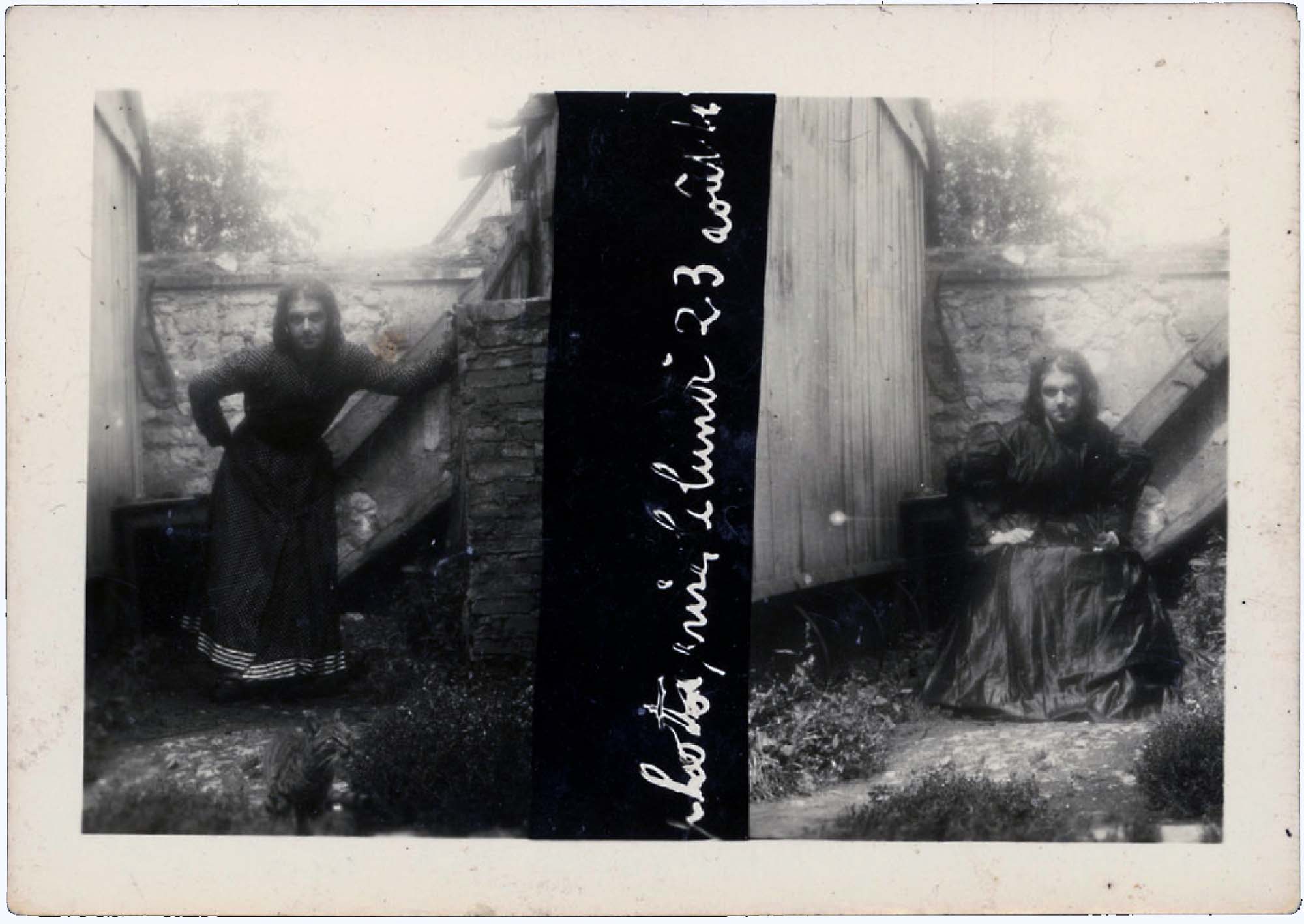
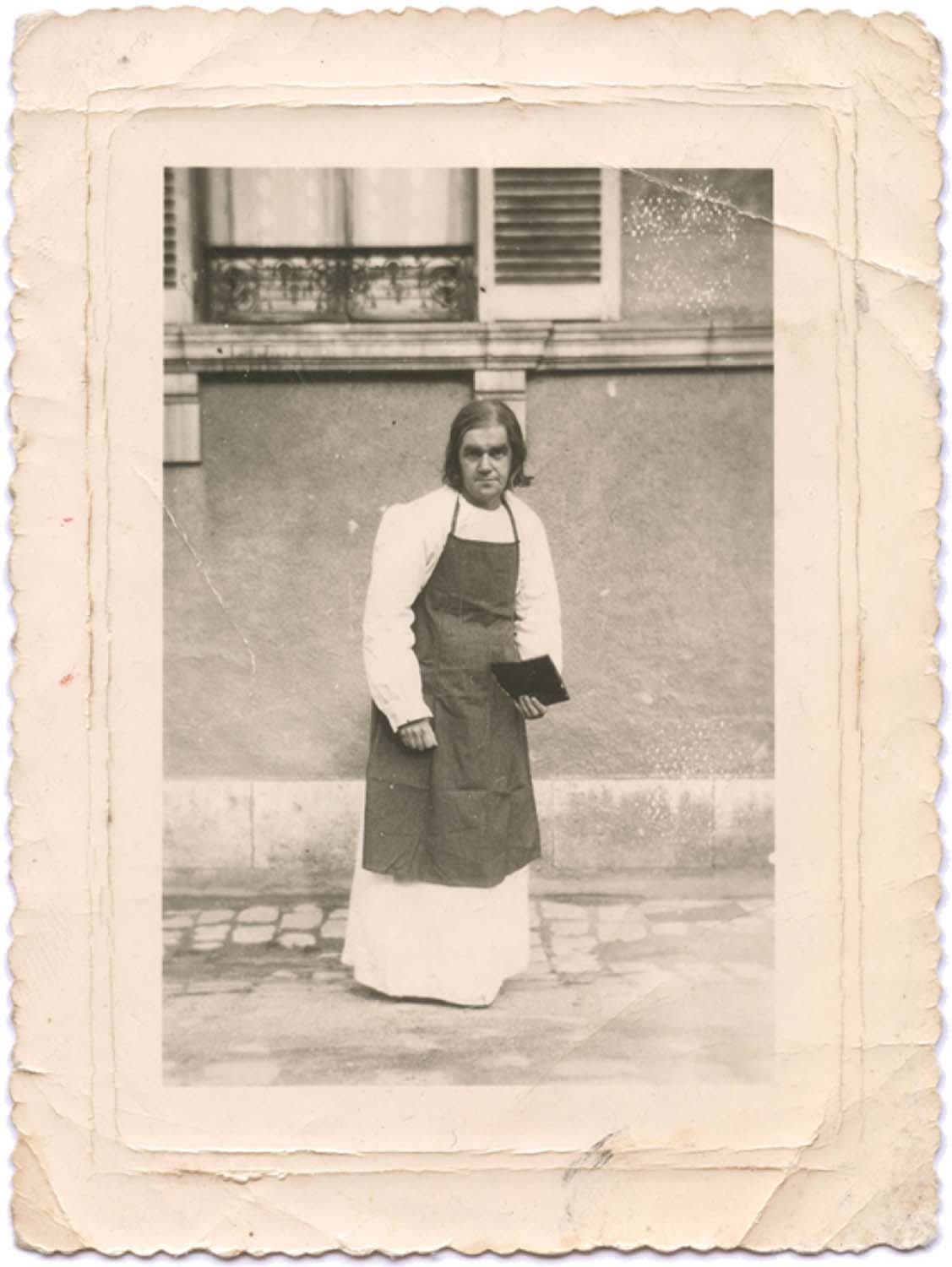
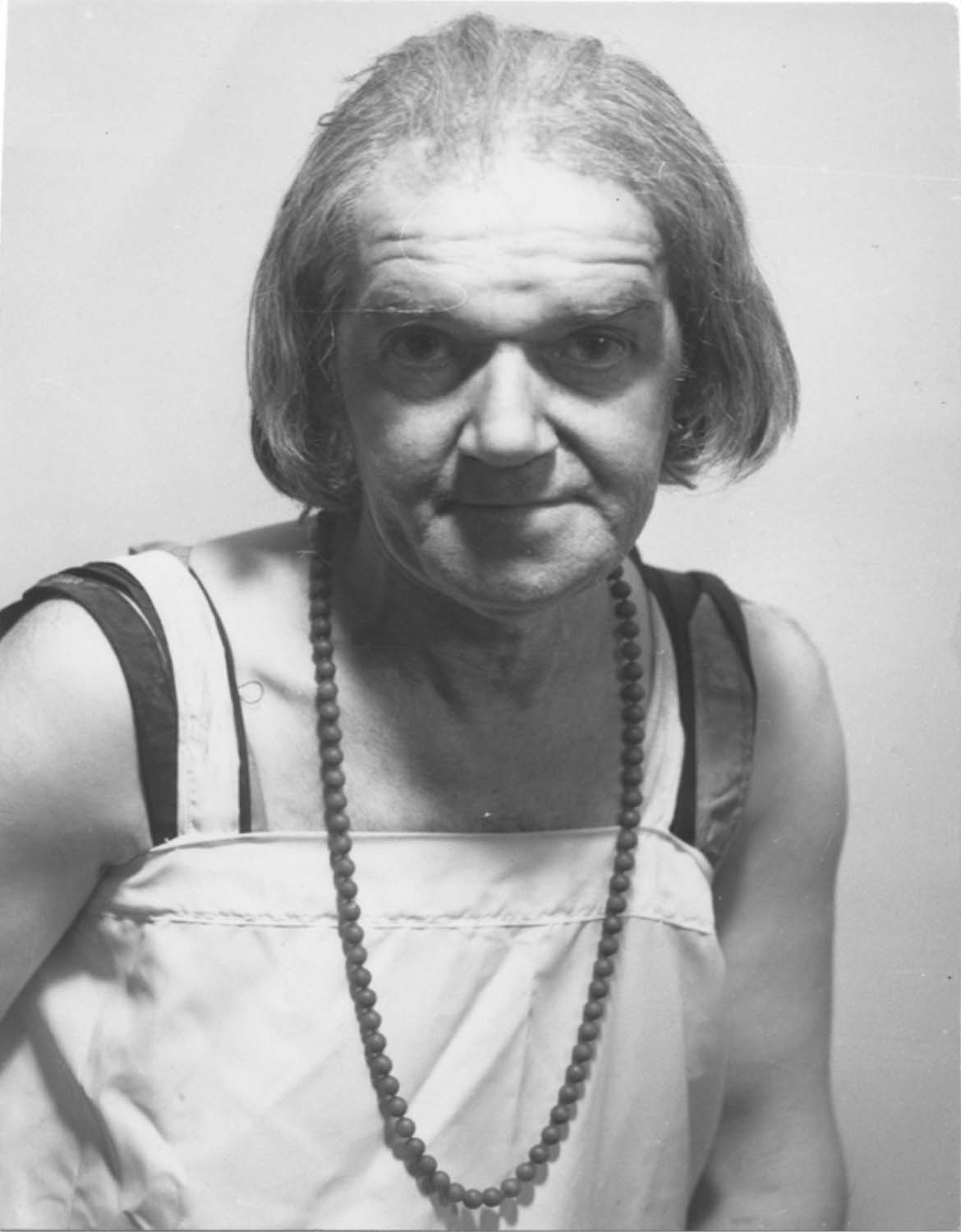
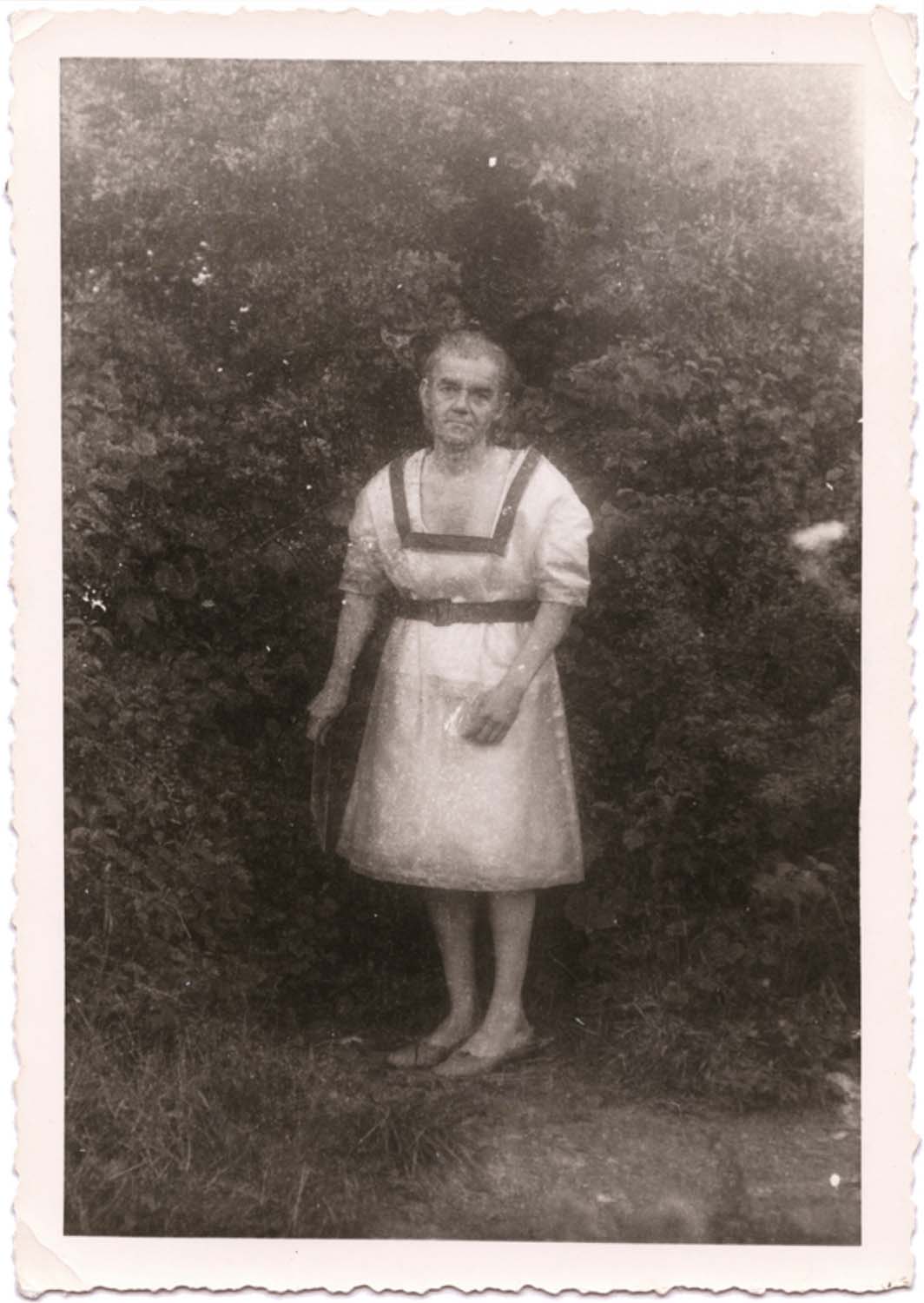
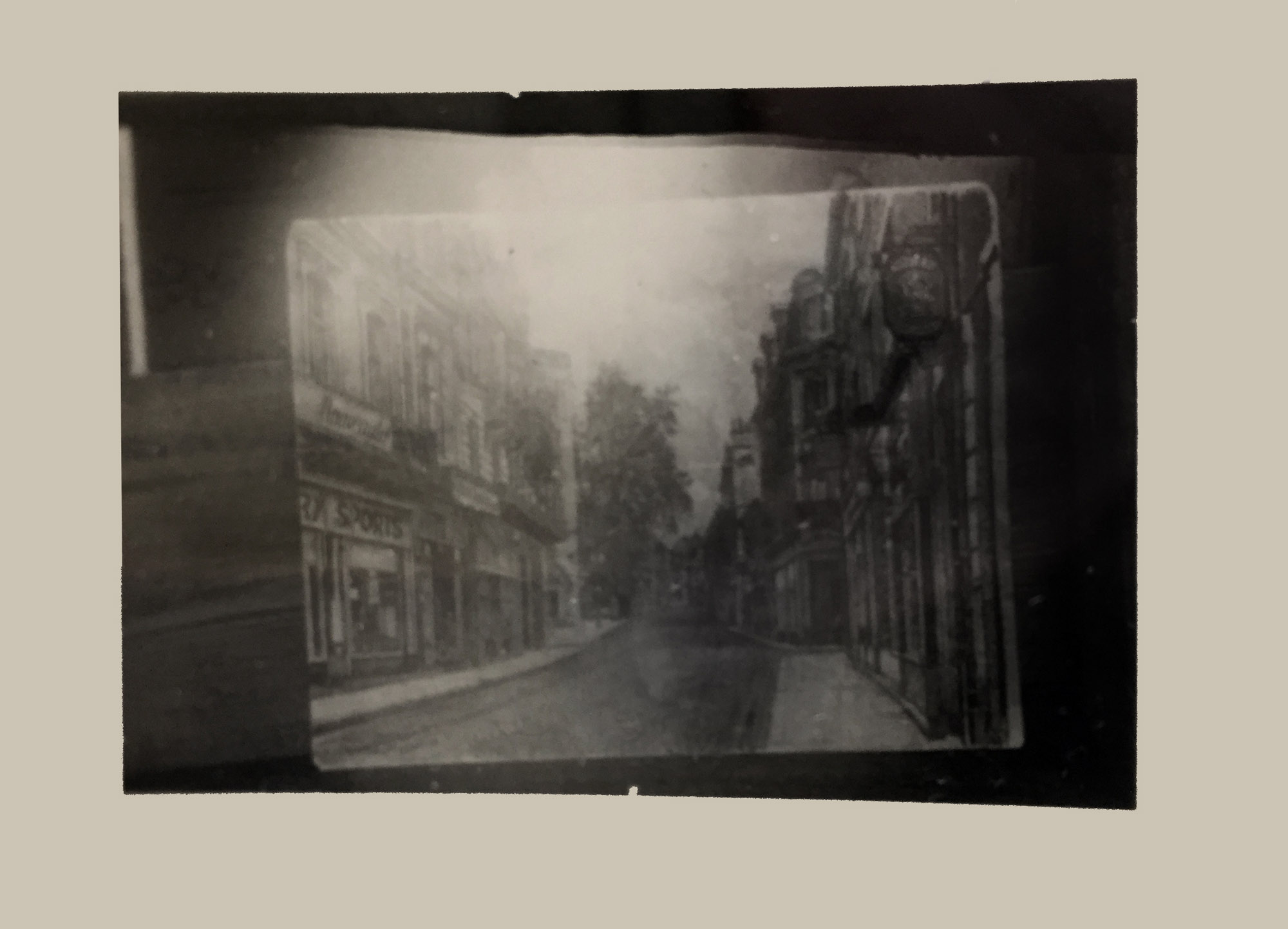
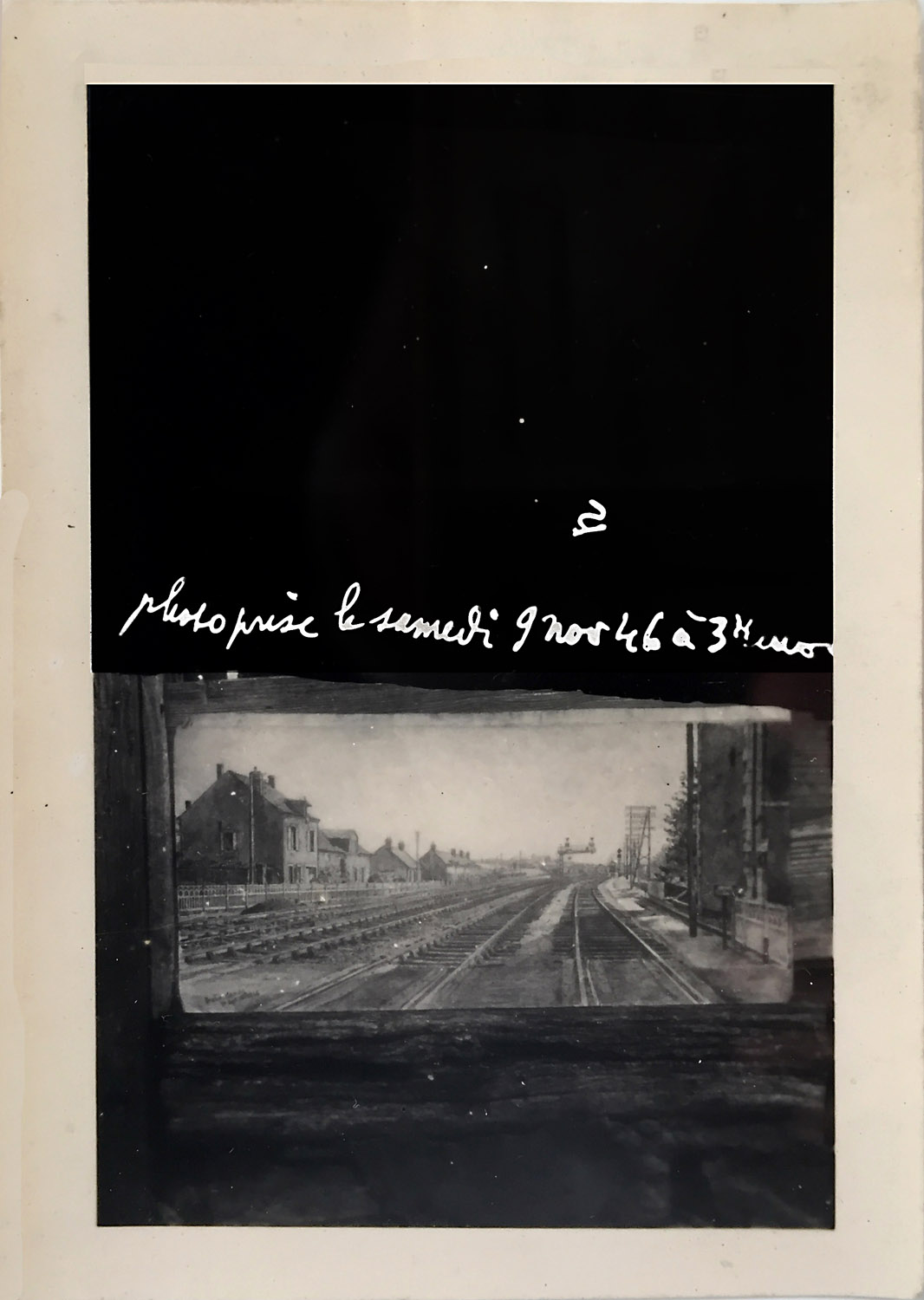
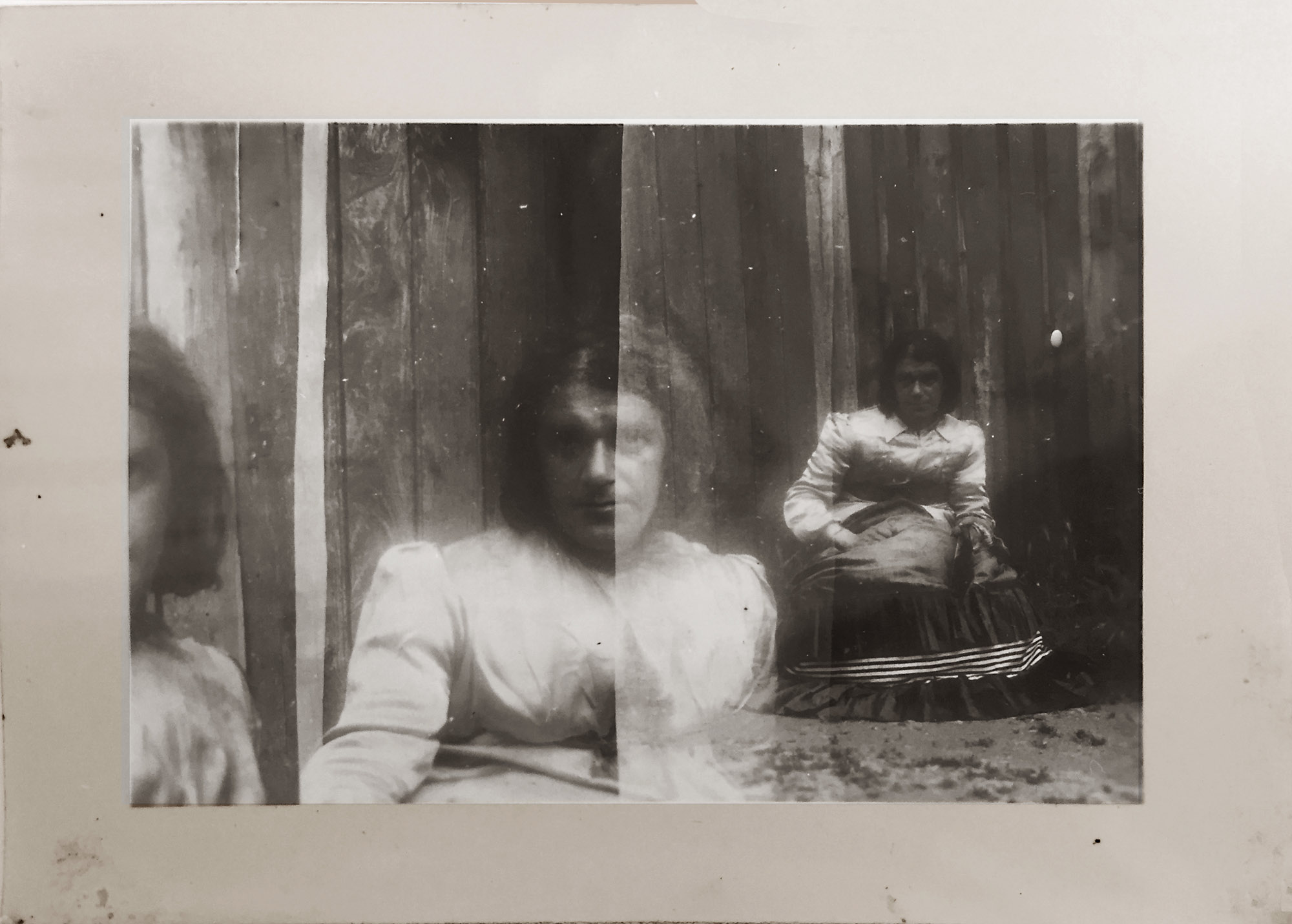
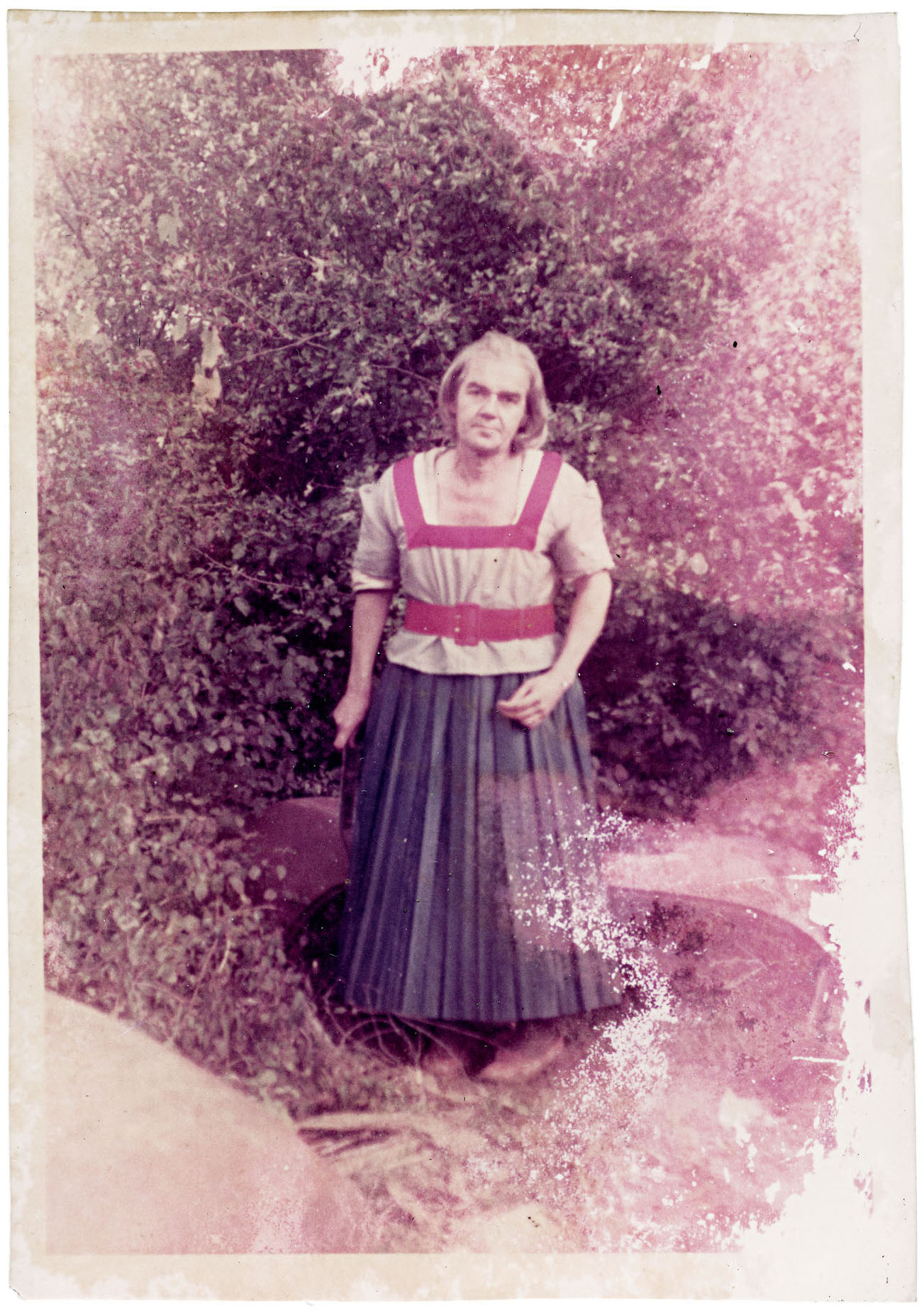
Marcel Bascoulard was 19 when he witnessed his father being murdered by his mother. Very quickly, he drifted into a life of vagrancy, living in makeshift shelters in the Avaricum district of Bourges. He spent his final years in the cab of a truck given to him by the owner of a scrapyard. He taught himself how to draw. In a systematic way, he depicted the streets of his city—deserted streets with wide perspectives from which a kind of realistic vertigo emerges. Admired and rejected, asocial and eccentric, he liked to dress as a woman, in dresses that he sometimes made himself. In one of his letters, he wrote: “If I walk around in women’s clothing, it is because I find (sic) this attire more aesthetic. For the needs of art, when I wear women’s clothing, I take my camera with me and have photographs of myself taken by people I know.”
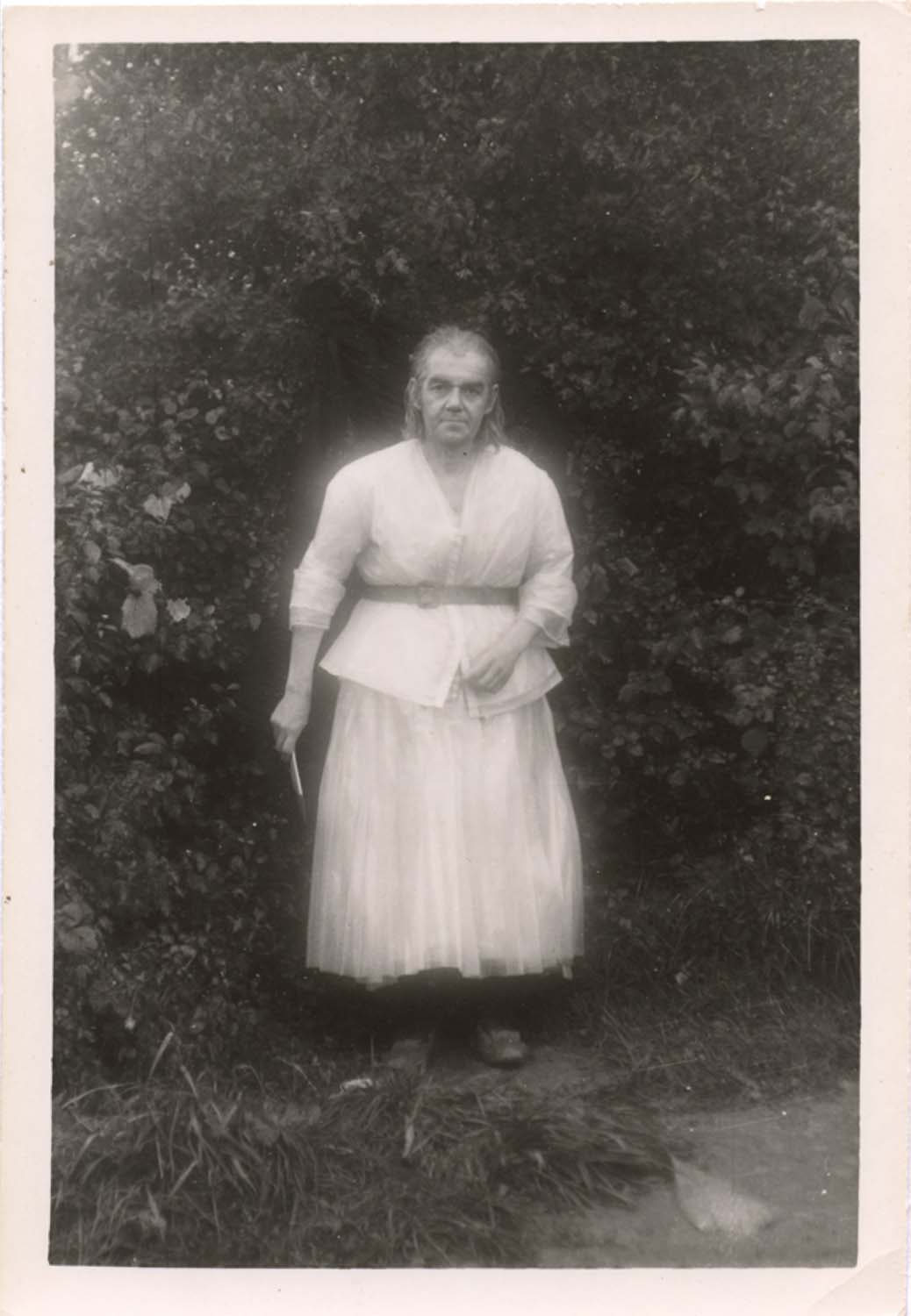
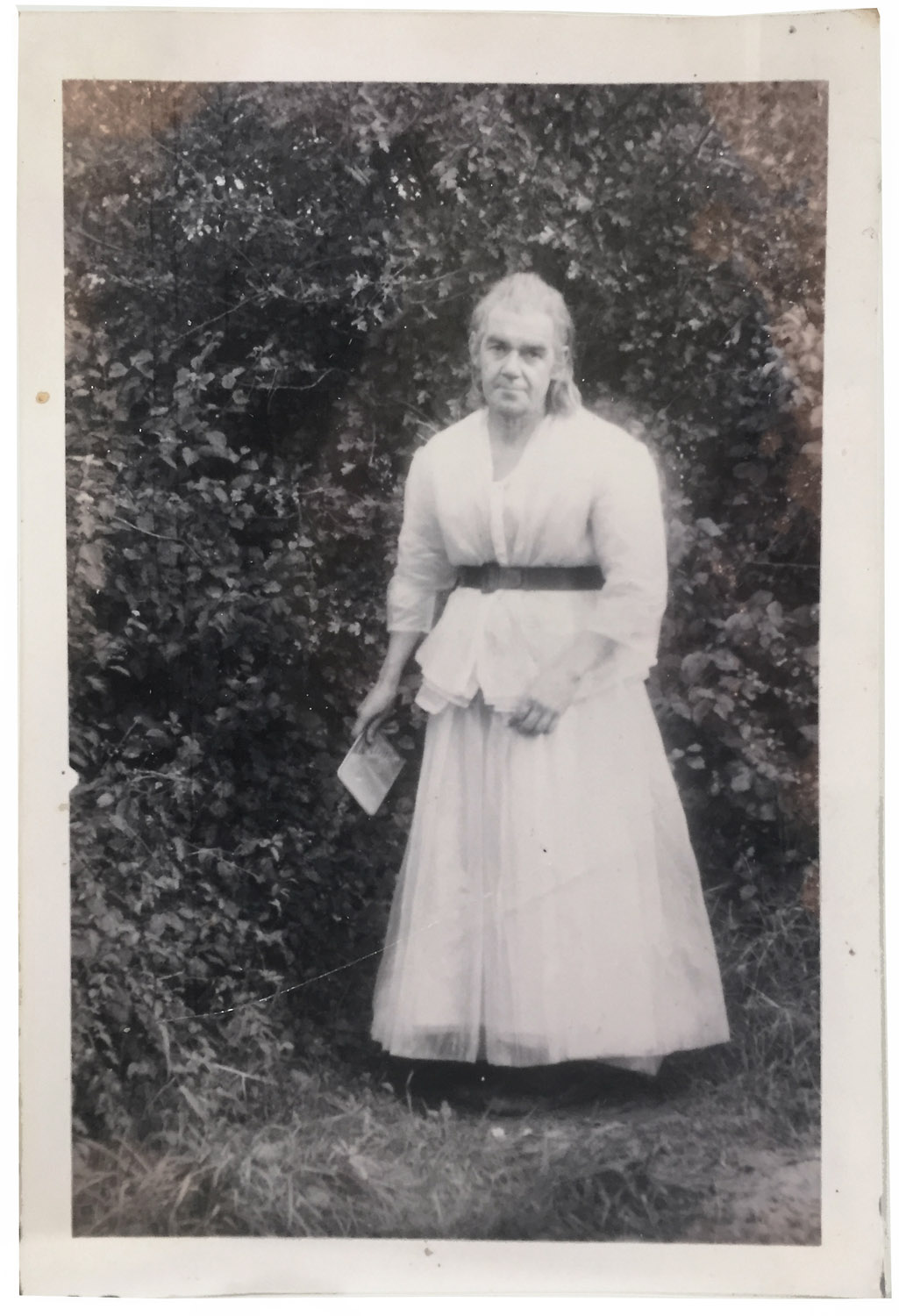
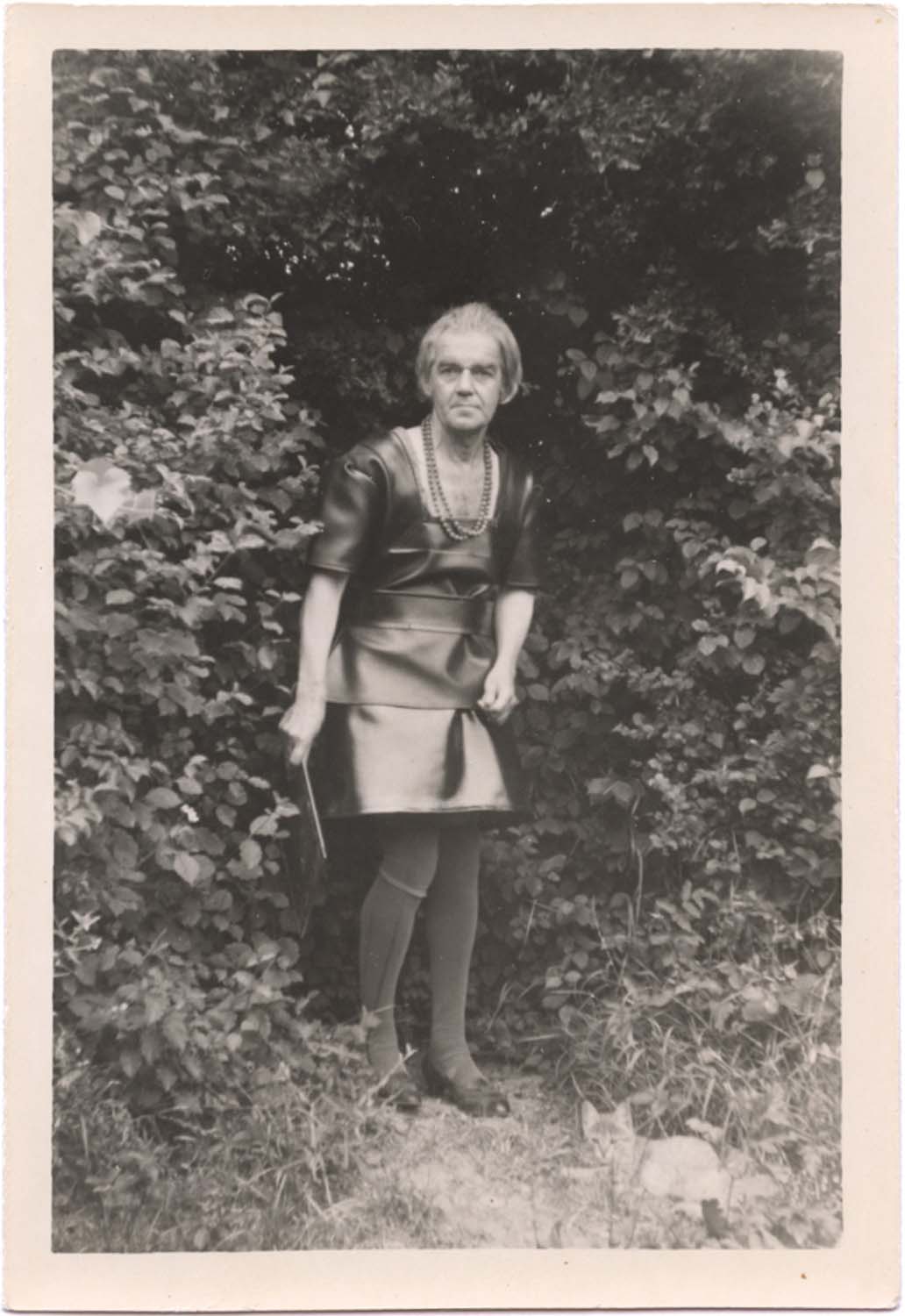
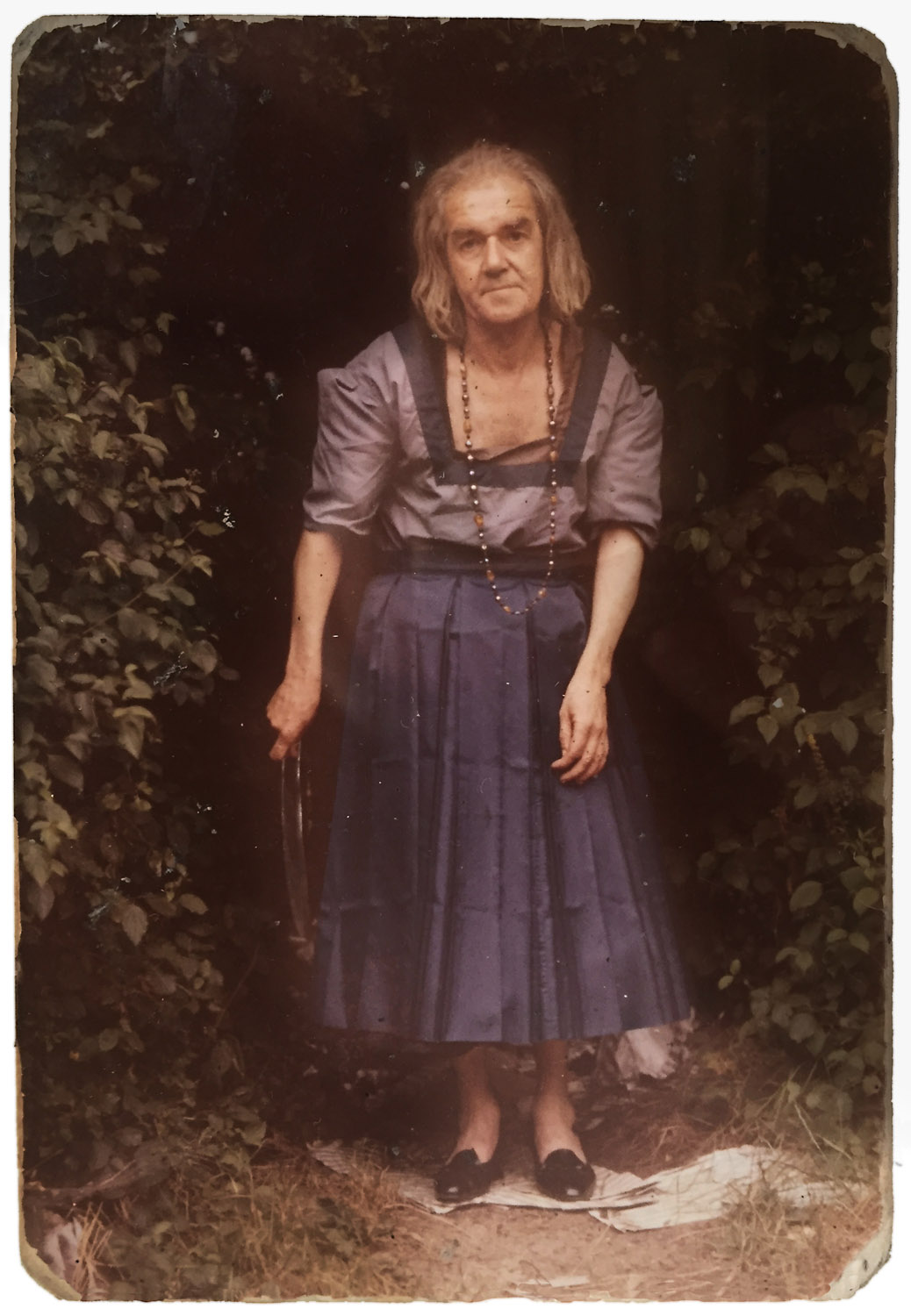
Living just steps away from the Morlet photo studio, Bascoulard began having himself photographed in the 1940s. In these small, scallop-edged photographs, his facial expression is always the same: his head slightly tilted and without makeup. With a cinched waist and a skirt puffed up by petticoats, he takes on the appearance of a young woman ready for marriage. At times he appears as a housewife in an apron, before later transforming into an elegant bourgeois woman. Fashion changes, his posture stoops, and his hair turns white. In 1970, he is seen wearing a black faux-leather apron to resemble a samurai warrior. A strange detail: in each photograph, he holds a broken mirror in his hand.
Marcel Bascoulard stages himself, creating a gallery of unsettling characters—perhaps an echo of a murderous mother. Marginalized, he gains a form of acceptance through others—the ones who photograph him.
On January 12, 1978, he was murdered in Asnières-lès-Bourges, at a place called Les Gargaudières, strangled by a 23-year-old drifter.
By country
- Angola
- Argentina
- Austria
- Belgium
- Benin
- Brazil
- Canada
- Chile
- Colombia
- Croatia
- Cuba
- Czech Republic
- Finland
- France
- Germany
- Guatemala
- Haiti
- India
- Iran, Islamic Republic of
- Italy
- Jamaica
- Japan
- Korea, Republic of
- Mexico
- Morocco
- Namibia
- Netherlands
- Papua New Guinea
- Peru
- Philippines
- Poland
- Portugal
- Russian Federation
- Senegal
- Serbia
- Slovakia
- Spain
- Sweden
- Switzerland
- United Kingdom
- United States
- Uruguay
collection | general collection | B | BASCOULARD Marcel
BASCOULARD Marcel
1/13