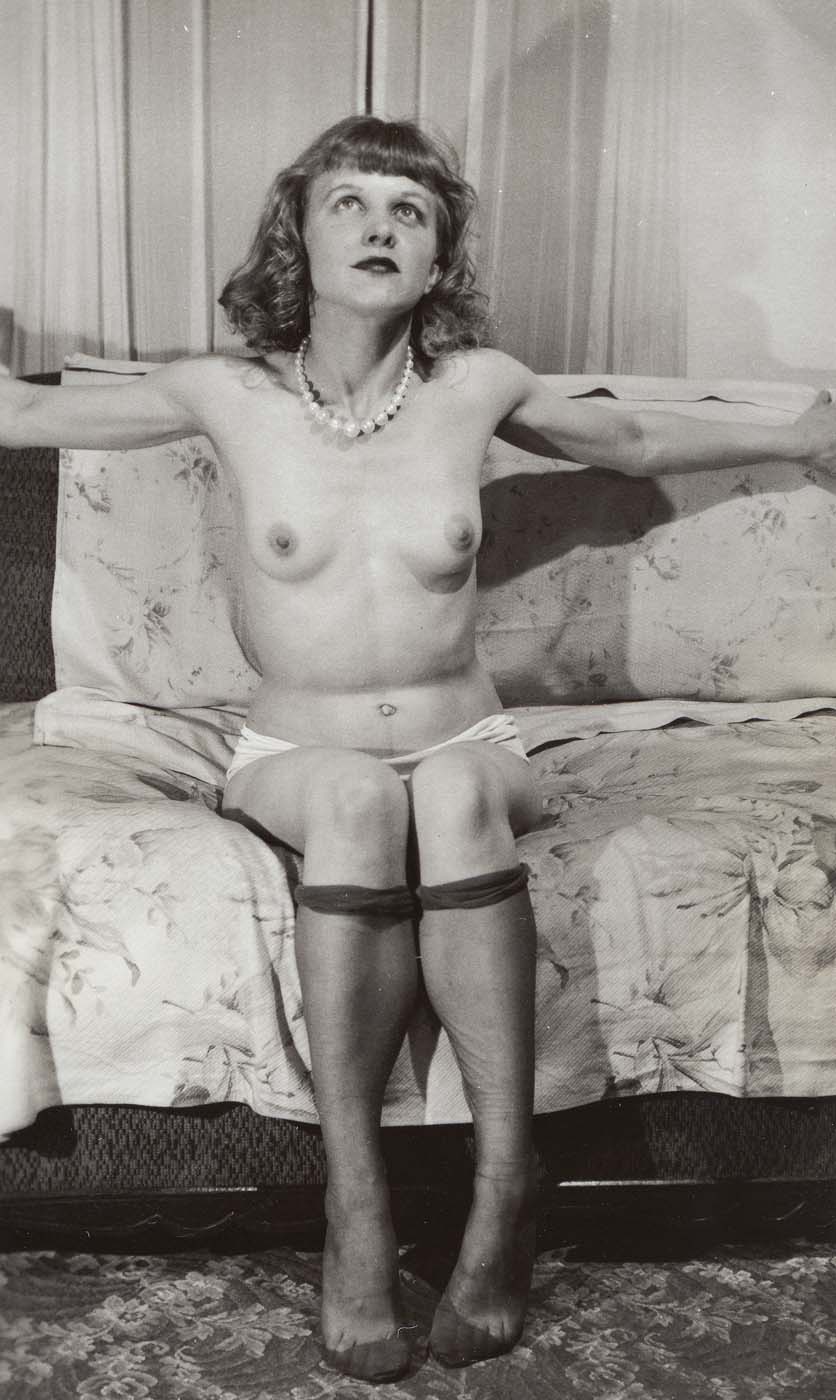
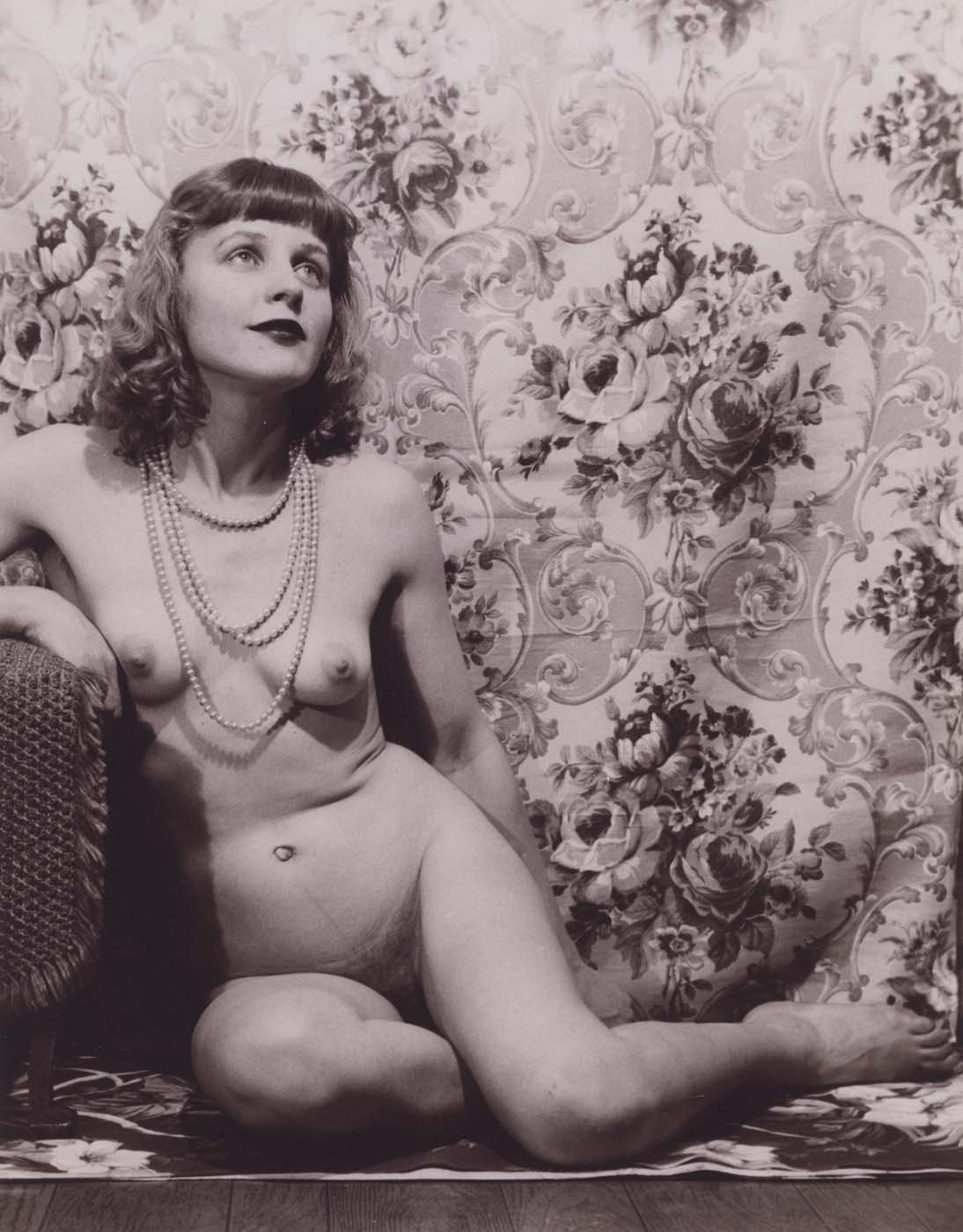
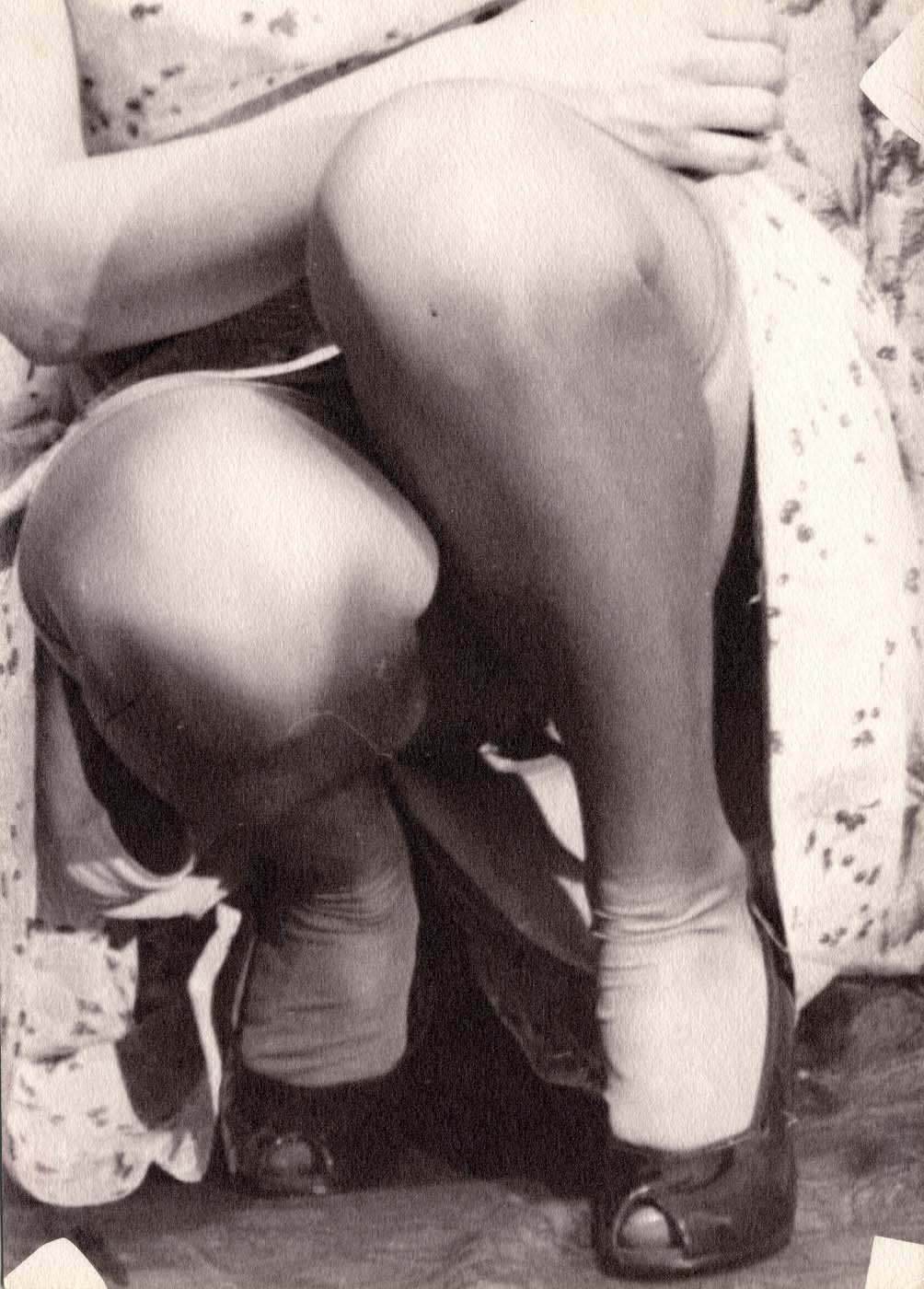
Orphaned by the loss of his mother at the age of seven, Eugene von Bruenchenhein (1910–1983) worked successively as a baker, florist, and grocer before developing, in the privacy of his home, an artistic practice of remarkable originality. Convinced that he was destined for greatness—he regarded his birth, coinciding with the passage of Halley’s Comet, as proof that the gods had endowed him with artistic genius—he created a highly personal universe in which mythology, spirituality, and imagination converge.
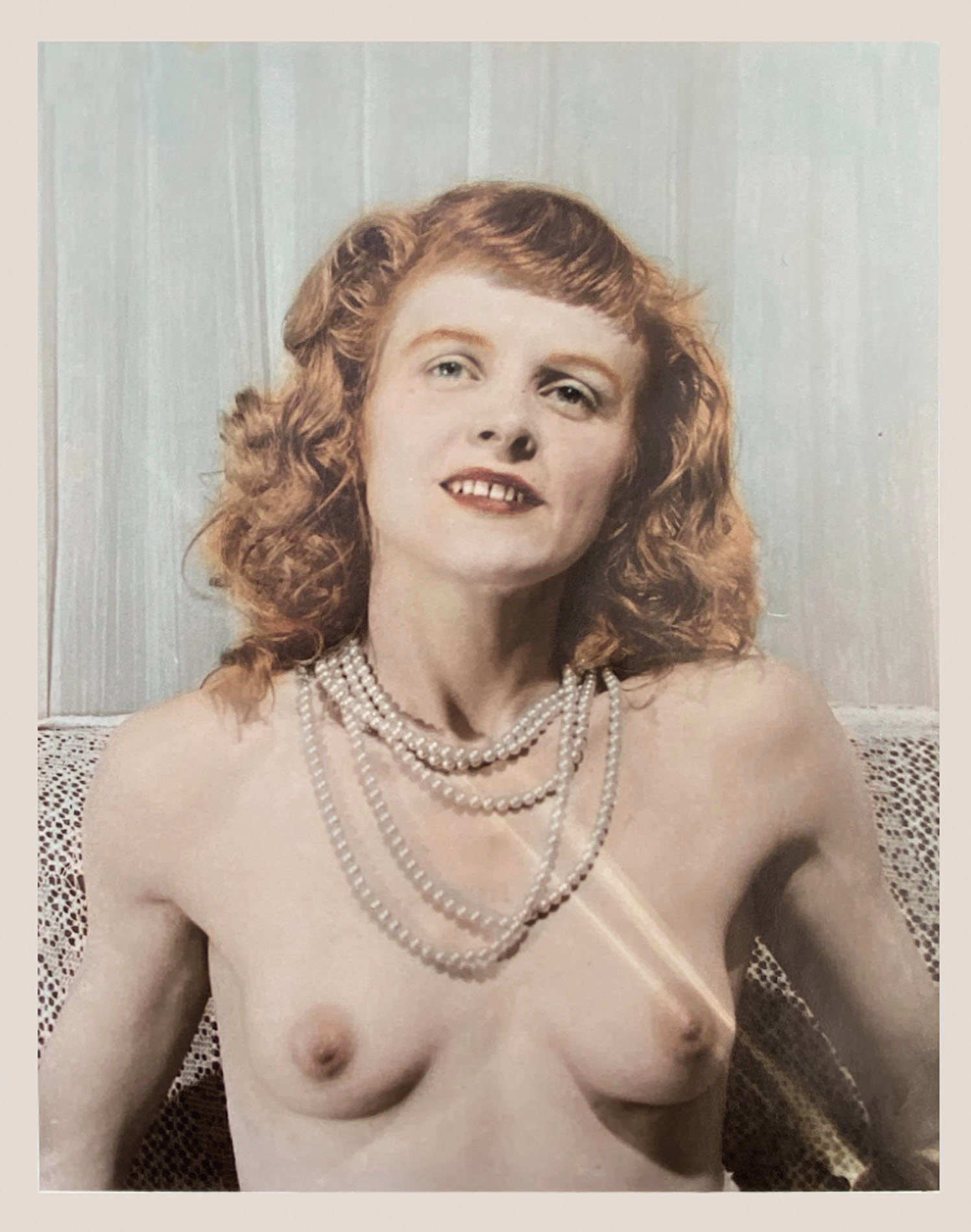
After marrying Eveline Kalke in 1943, whom he renamed Marie, she became the central—and almost exclusive—subject of his work. Over several decades, he produced hundreds of photographic portraits of his wife, portraying her in a variety of roles: goddess, queen, film star, seductress, or ingénue. Staged in improvised settings and often imbued with a subtle eroticism, these images explore idealized femininity and shifting identities. Developed by hand in the kitchen sink, the black-and-white prints were sometimes hand-coloured, enhancing their dreamlike quality.
Alongside his photographic production, von Bruenchenhein experimented with oil painting, applying paint with his hands or with brushes fashioned from Marie’s hair. He also created sculptures from chicken bones, transforming humble domestic materials into intricate sculptural forms. Unknown for most of his lifetime, his work is now recognized as the extraordinary achievement of a self-taught artist whose prolific and deeply personal practice occupies a singular place in twentieth-century art.
By country
- Angola
- Argentina
- Austria
- Belgium
- Benin
- Brazil
- Canada
- Chile
- Colombia
- Croatia
- Cuba
- Czech Republic
- Finland
- France
- Germany
- Guatemala
- Haiti
- India
- Iran, Islamic Republic of
- Italy
- Jamaica
- Japan
- Korea, Republic of
- Mexico
- Morocco
- Namibia
- Netherlands
- Papua New Guinea
- Peru
- Philippines
- Poland
- Portugal
- Russian Federation
- Senegal
- Serbia
- Slovakia
- Spain
- Sweden
- Switzerland
- United Kingdom
- United States
- Uruguay
collection | general collection | B | BRUENCHENHEIN von Eugene
BRUENCHENHEIN von Eugene
1/4