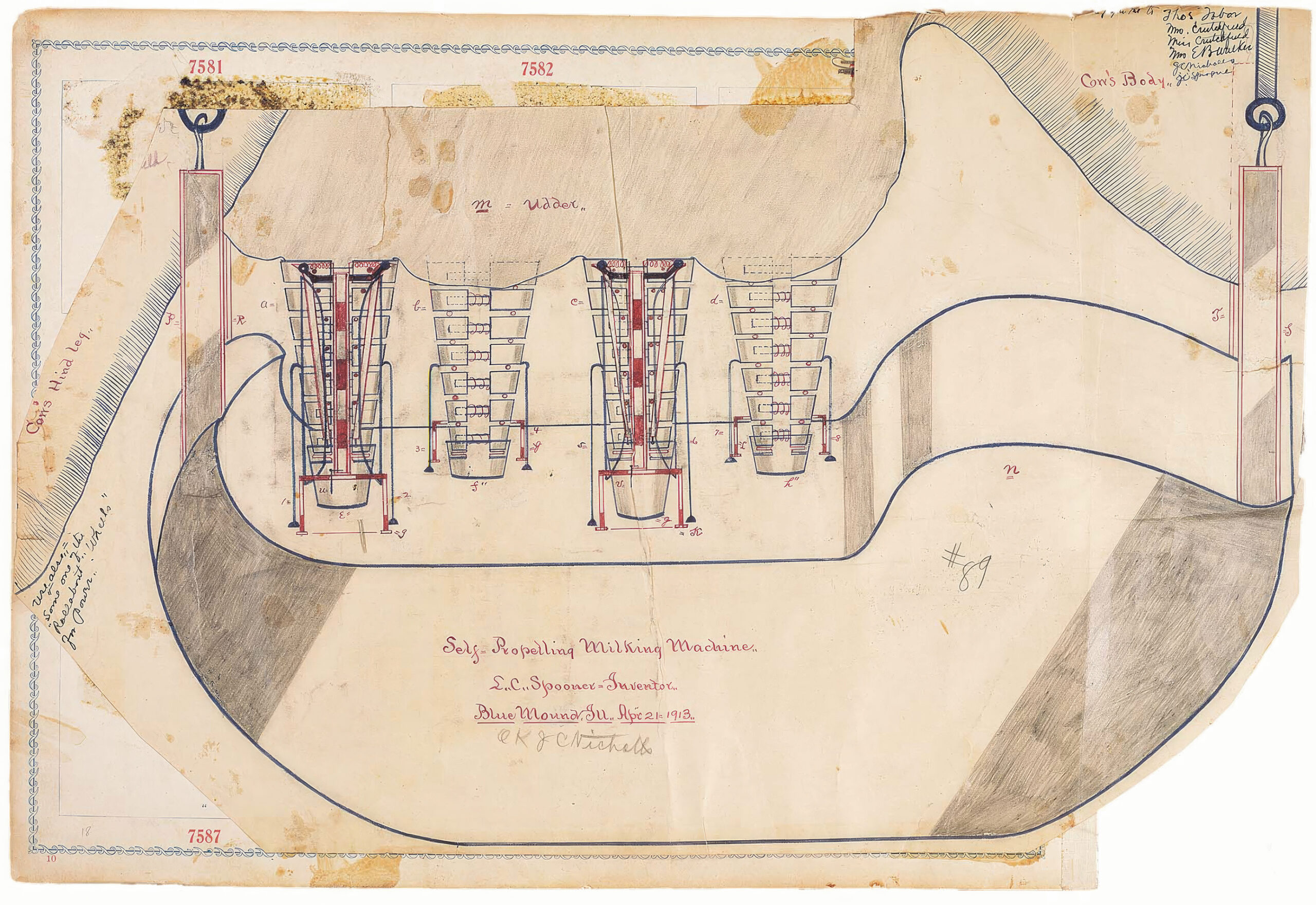
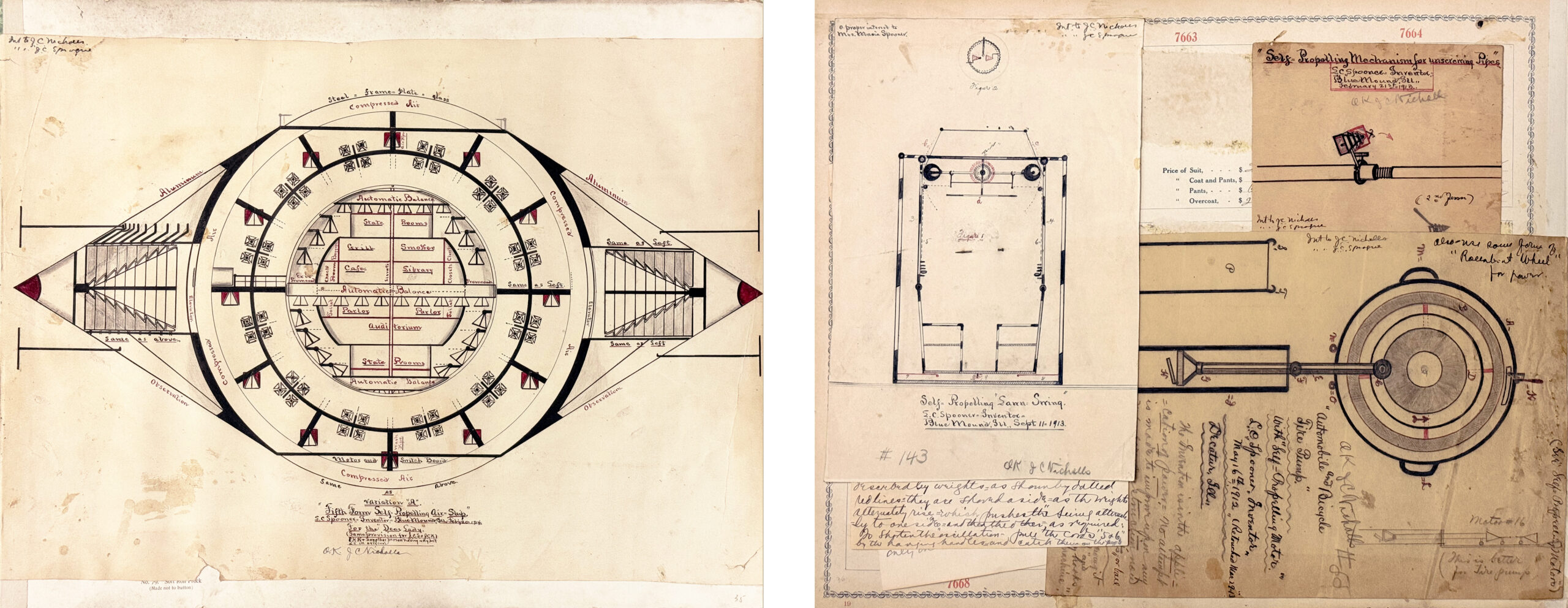
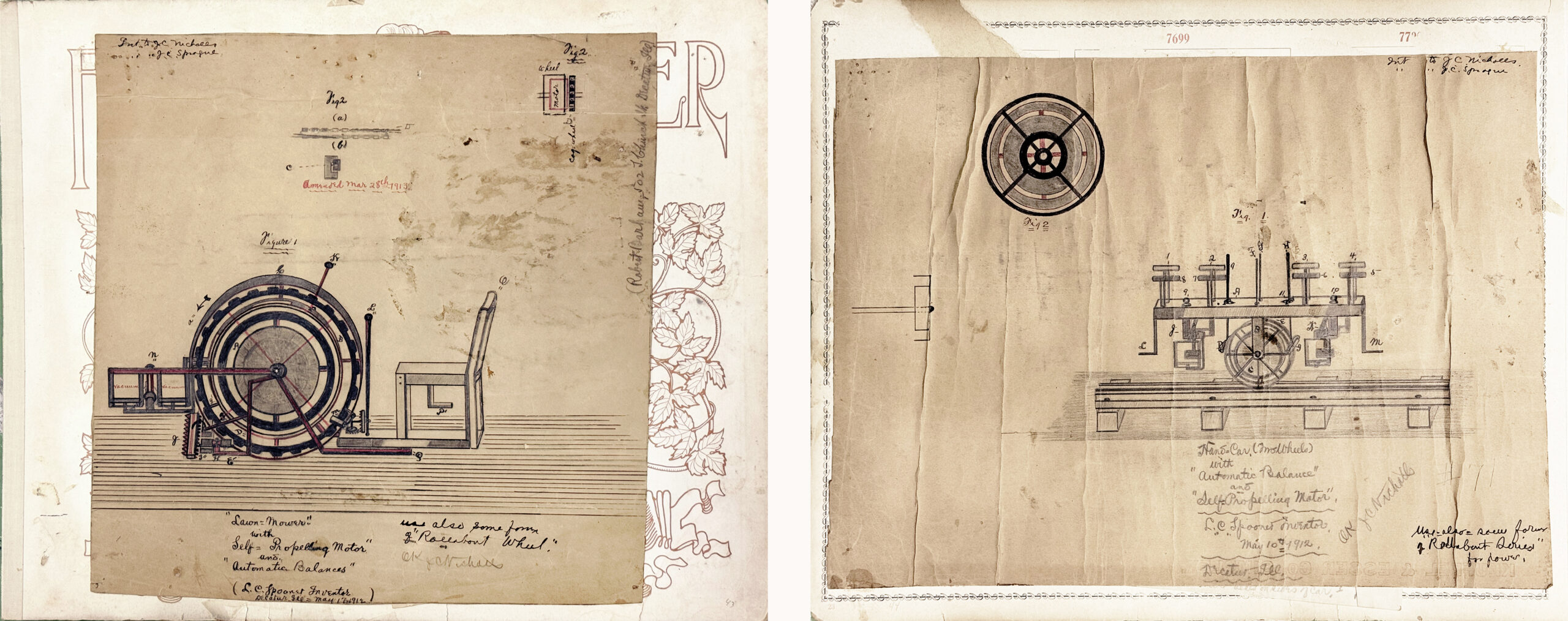
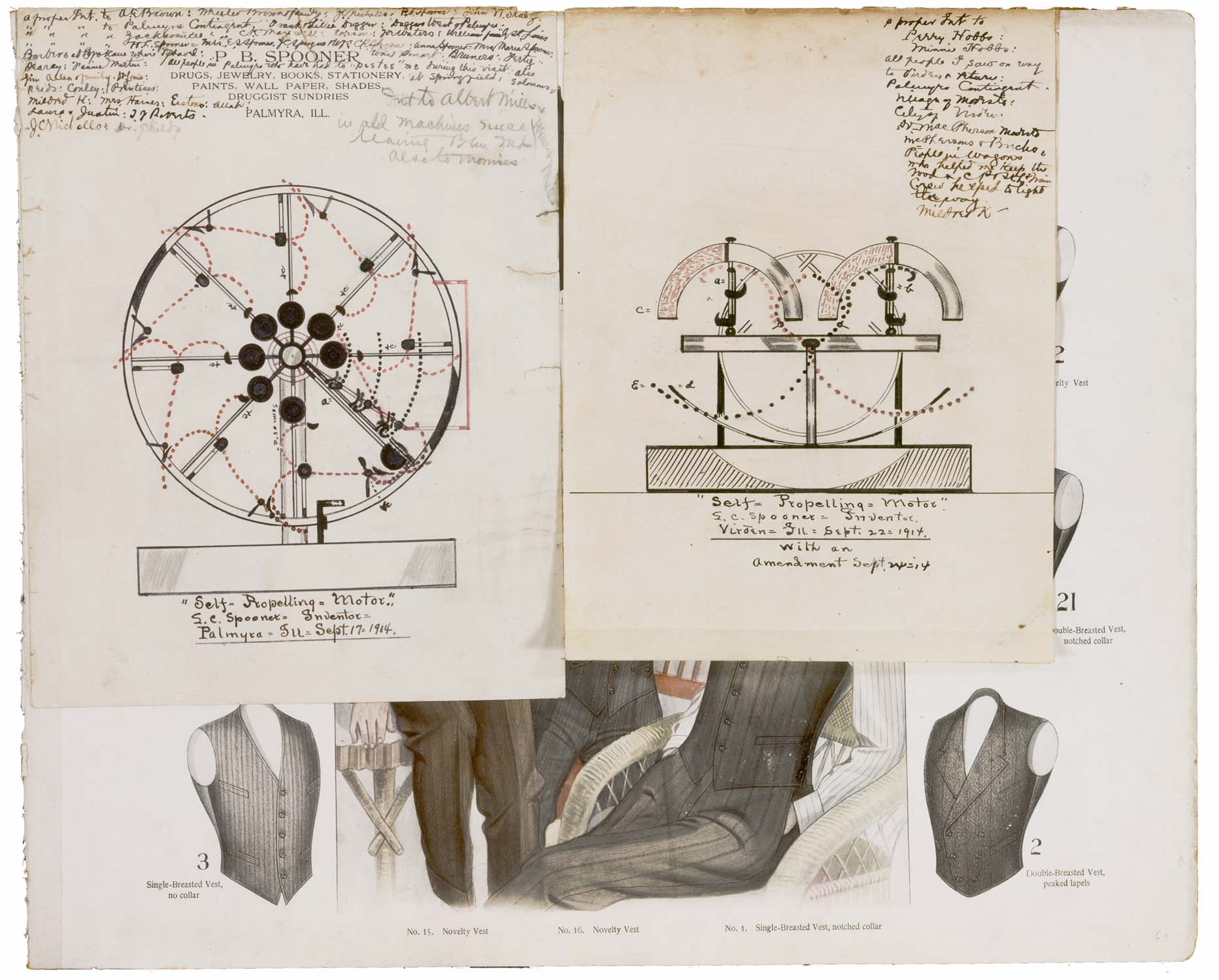
A lawyer, Lee Cordova Spooner first established himself in St. Louis, Missouri, and then in Wisconsin, in Decatur and Palmyra. He was also a self-taught engineer, as evidenced by the cigar vending machine patent he officially filed with the U.S. Patent Office in 1904—a machine built the same year by the Peter Manufacturing Company.
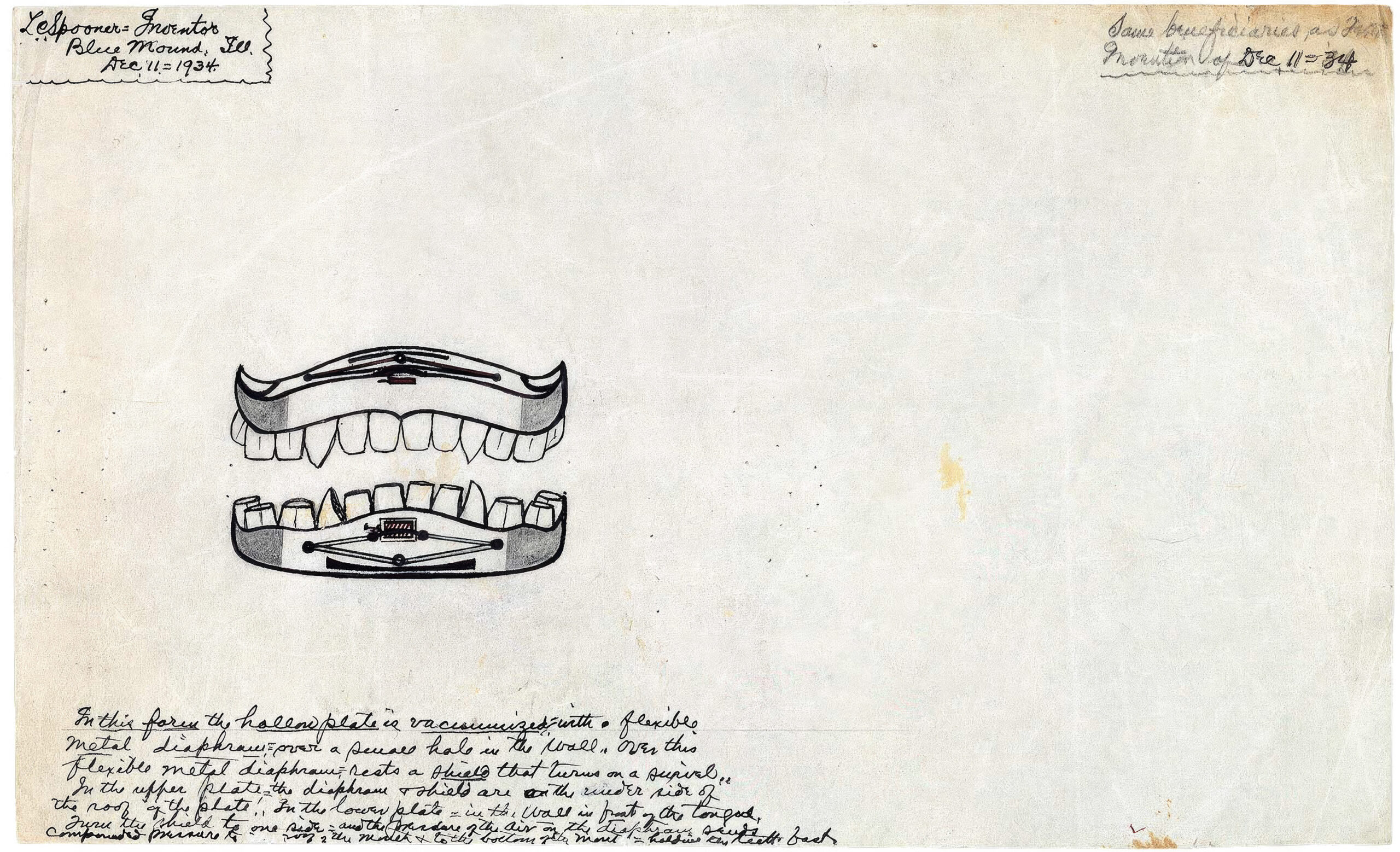
Most of his other designs, signed “L.C. Spooner Inventor,” reflect utopian projects he imagined between 1911 and 1934: “self-propelled” machines or everyday objects (engines, trash cans, scales, “finger lifters,” etc.). Spooner would attach his inventions to the pages of a large fashion catalog (now dismantled) and hide his explanatory patents using straight or safety pins.
On the upper part of some drawings, it reads: “P.B. Spooner. Drugs, jewelry, books, stationery, paints, wall, paper, shades, druggist sundries / Palmyra, Ill.,” suggesting his family ran a business.
By country
- Angola
- Argentina
- Austria
- Belgium
- Benin
- Brazil
- Canada
- Chile
- Colombia
- Croatia
- Cuba
- Czech Republic
- Finland
- France
- Germany
- Guatemala
- Haiti
- India
- Iran, Islamic Republic of
- Italy
- Jamaica
- Japan
- Korea, Republic of
- Mexico
- Morocco
- Namibia
- Netherlands
- Papua New Guinea
- Peru
- Philippines
- Poland
- Portugal
- Russian Federation
- Senegal
- Serbia
- Slovakia
- Spain
- Sweden
- Switzerland
- United Kingdom
- United States
- Uruguay
collection | general collection | S | SPOONER L. C. (Lee Cordova SPOONER, known as)
SPOONER L. C. (Lee Cordova SPOONER, known as)
1/5