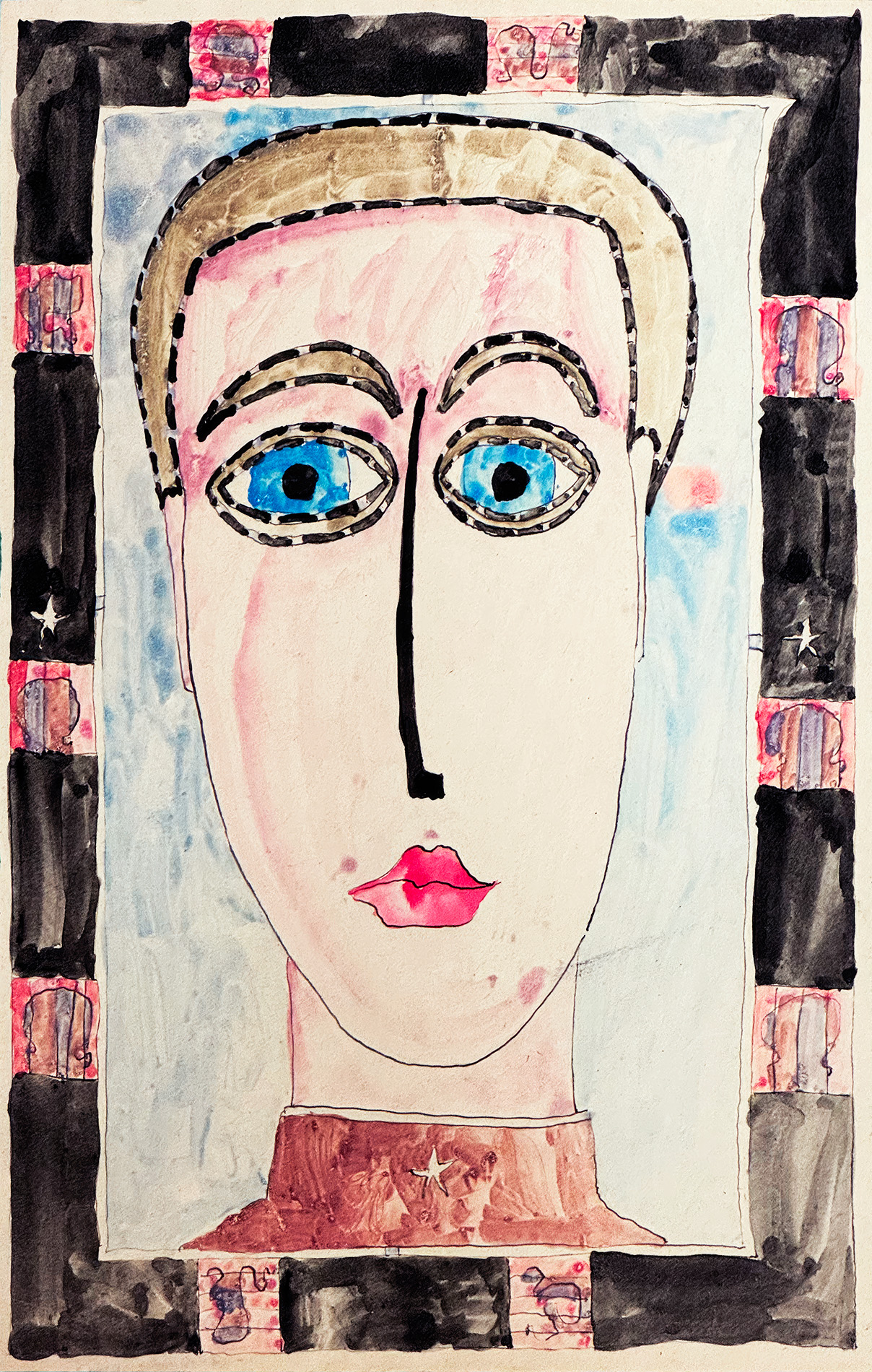
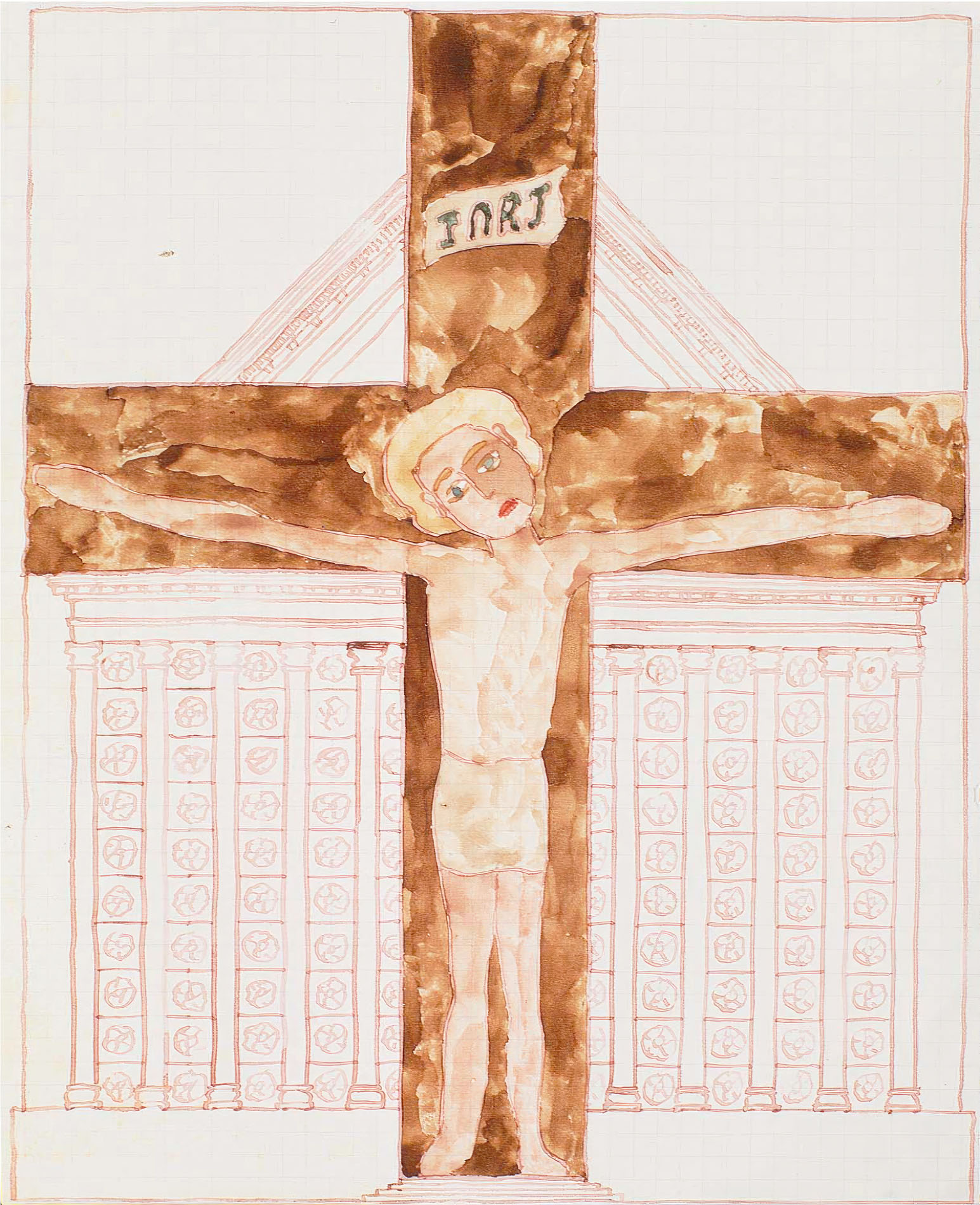
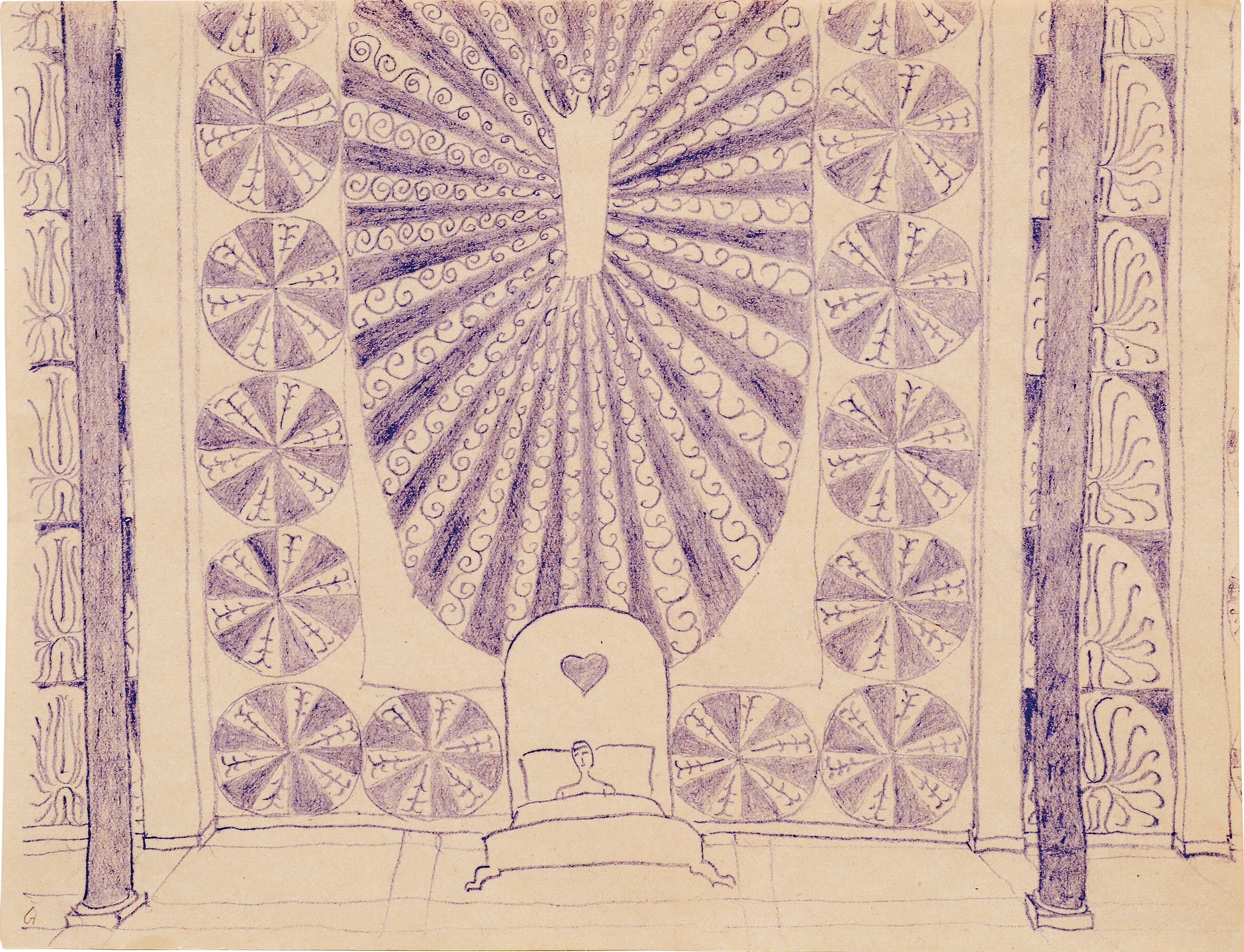
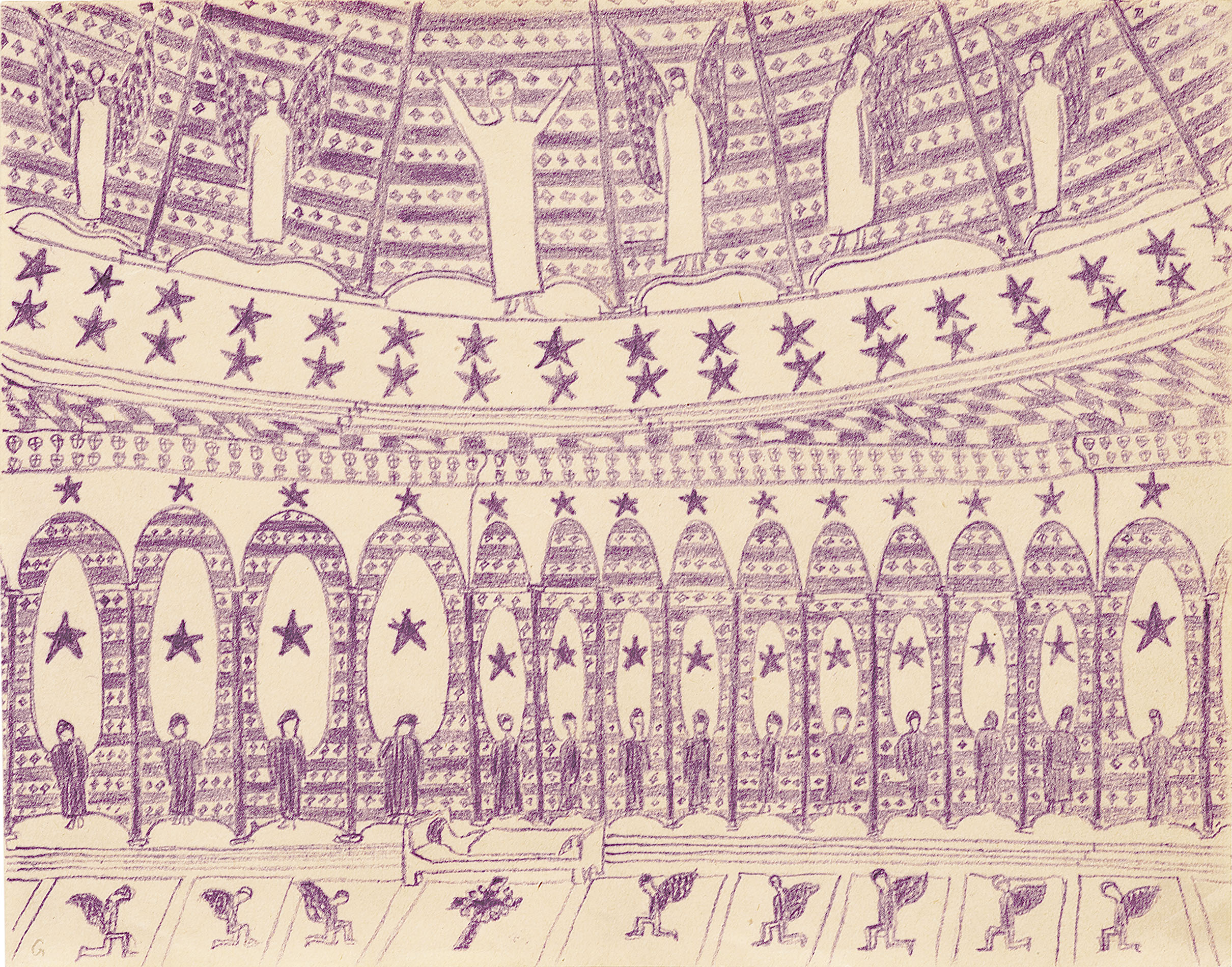
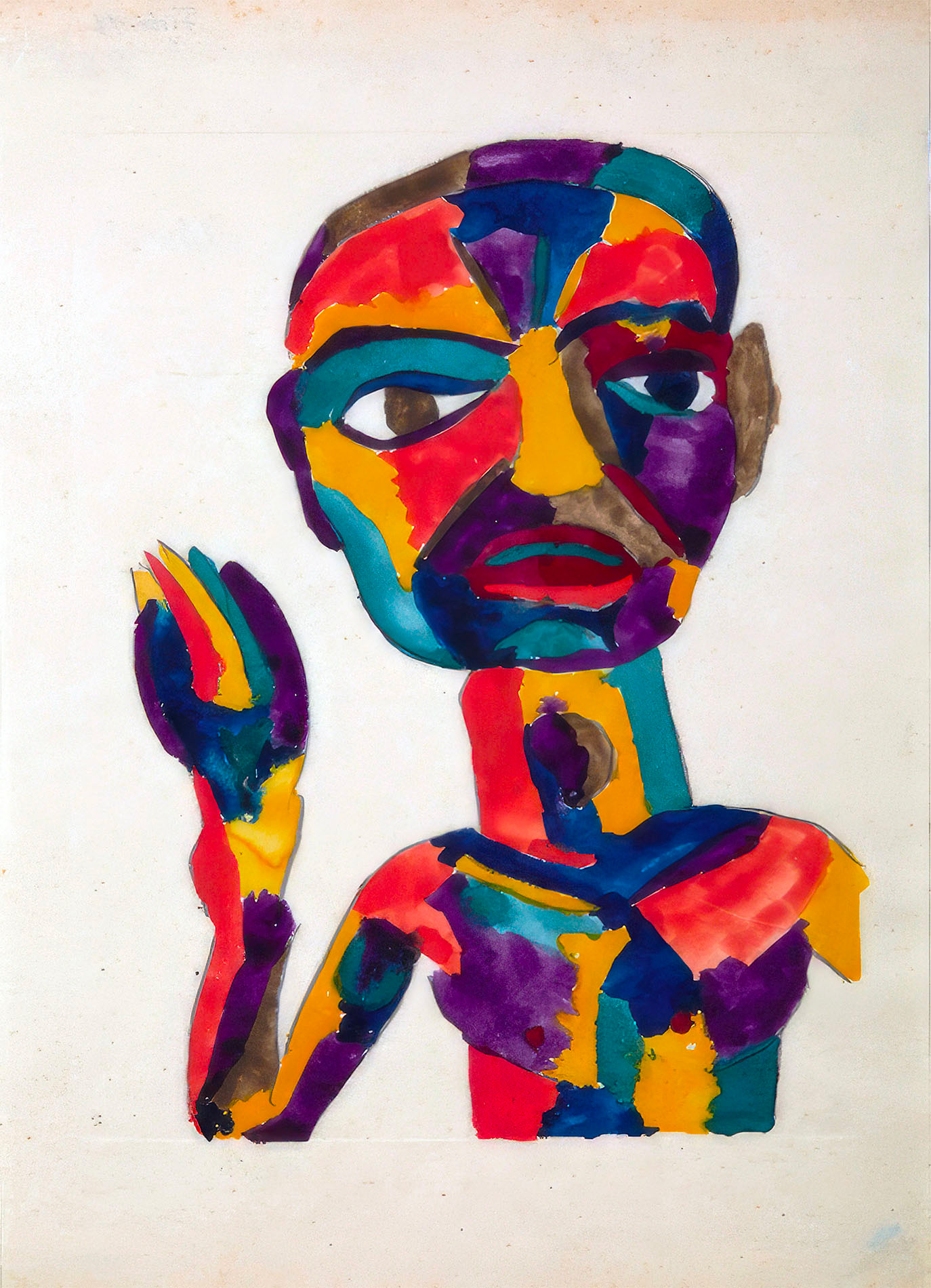
Initiated into Freudian psychoanalysis, Paul Goesch, a student of painting and architecture, attempted self-analysis, which appears to have triggered a profound psychological upheaval. His life thereafter alternated between periods of hospitalization, where he was diagnosed with schizophrenia, and intervals of relative respite. Despite his struggles, he completed his studies in architecture and developed a keen interest in anthroposophy, a philosophical movement founded in the 1920s by the Austrian occultist Rudolf Steiner. In 1919, he moved to Berlin, engaging with the artistic scene, meeting Oskar Kokoschka and Walter Gropius, and participating in avant-garde circles. He was murdered in 1940 in Brandenburg an der Havel, becoming one of the many victims of the Nazi euthanasia program.
Goesch gradually produced a pictorial oeuvre of nearly a thousand drawings, often utopian projects in which architectural elements—temples, porticos—are envisioned as spaces of spiritual passage.
By country
- Angola
- Argentina
- Austria
- Belgium
- Benin
- Brazil
- Canada
- Chile
- Colombia
- Croatia
- Cuba
- Czech Republic
- Finland
- France
- Germany
- Guatemala
- Haiti
- India
- Iran, Islamic Republic of
- Italy
- Jamaica
- Japan
- Korea, Republic of
- Mexico
- Morocco
- Namibia
- Netherlands
- Papua New Guinea
- Peru
- Philippines
- Poland
- Portugal
- Russian Federation
- Senegal
- Serbia
- Slovakia
- Spain
- Sweden
- Switzerland
- United Kingdom
- United States
- Uruguay
collection | general collection | G | GOESCH Paul
GOESCH Paul
1/5