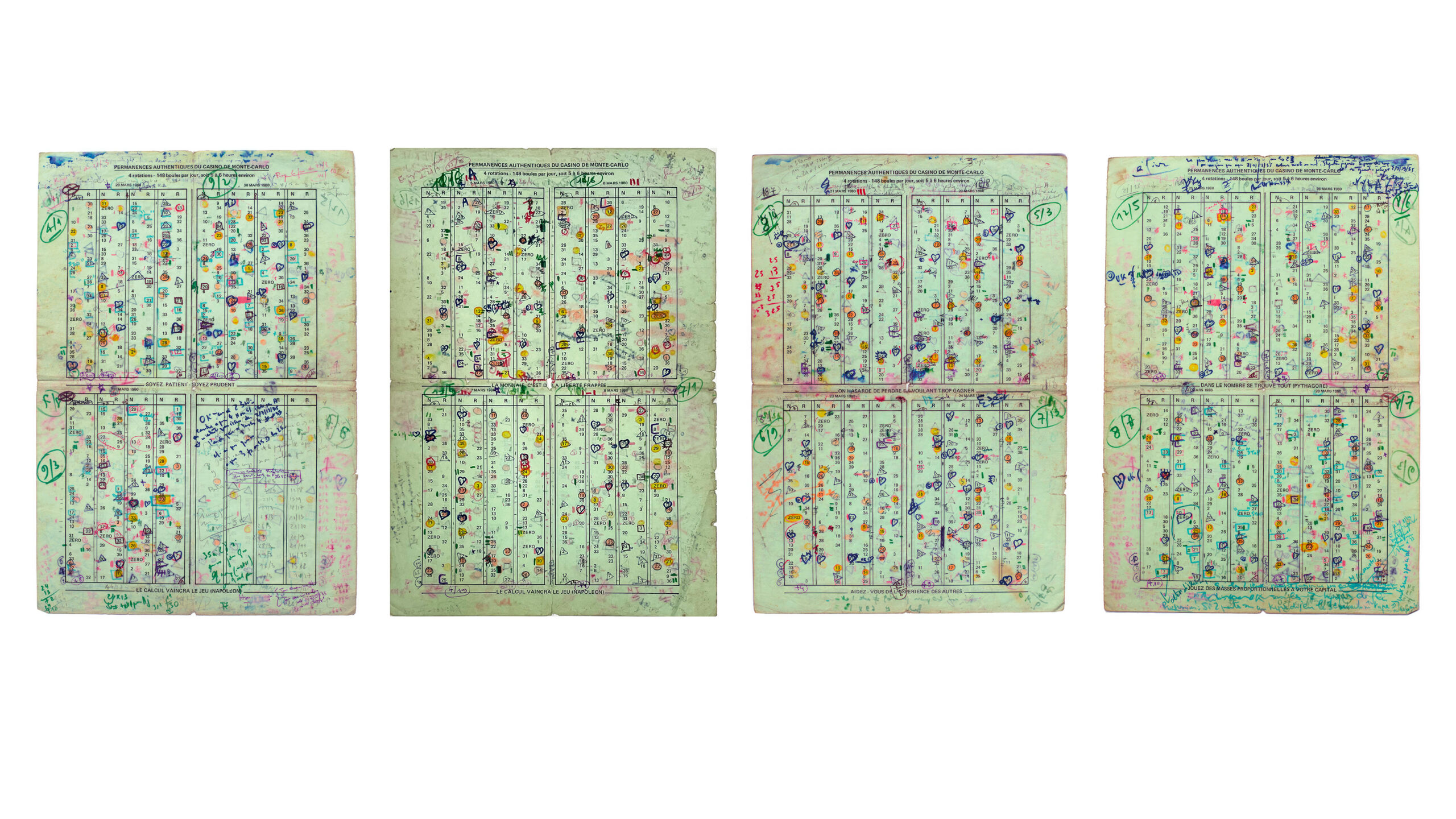
Jean-Daniel Allanche was born into the Jewish community of Tunisia, which he left for France in 1959, later acquiring French citizenship. After completing his studies, he defended two doctoral theses in physics. As a researcher, he published articles in theoretical physics and went on to teach physics for thirty-four years at the University of Paris-VII.
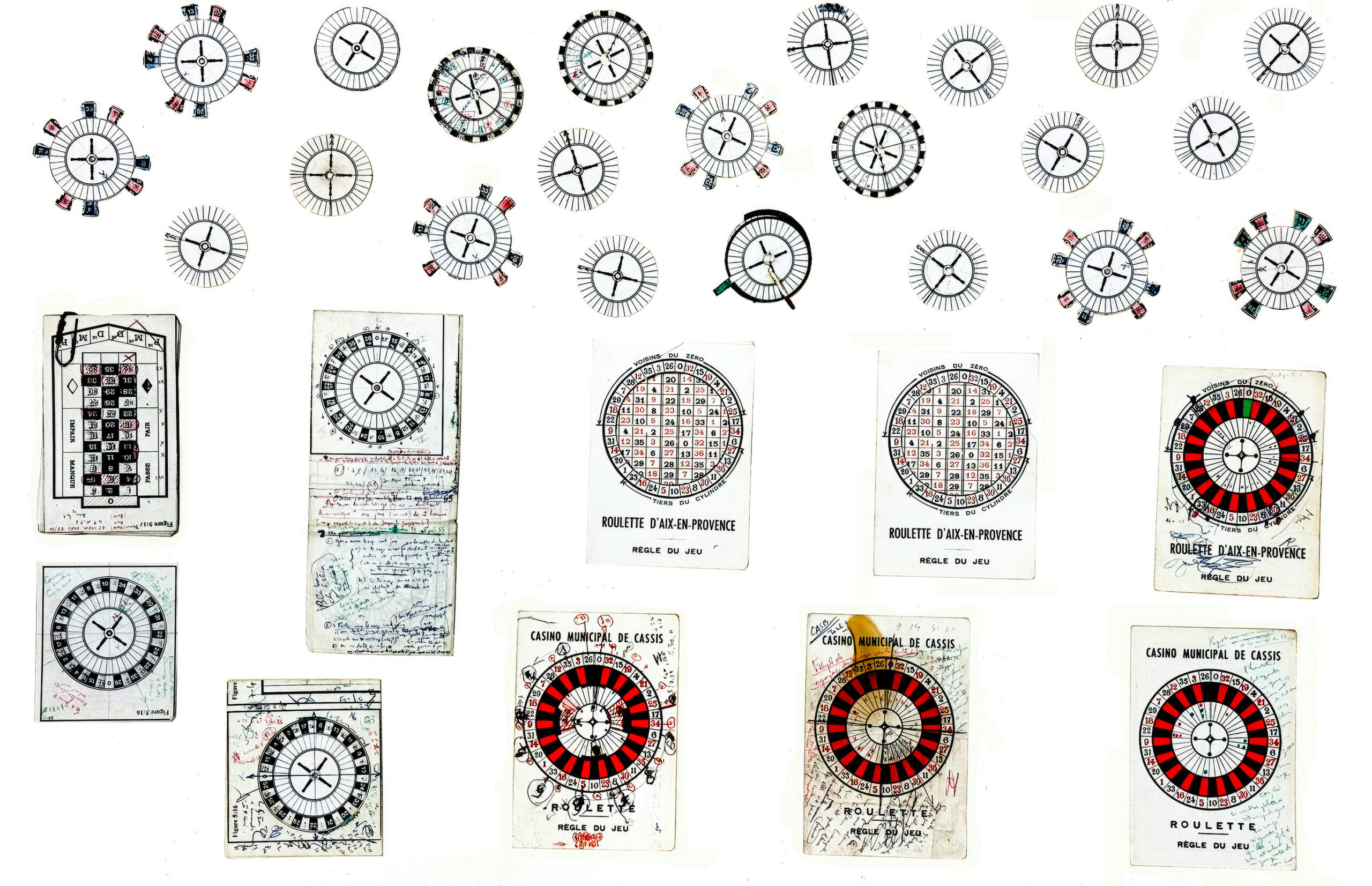
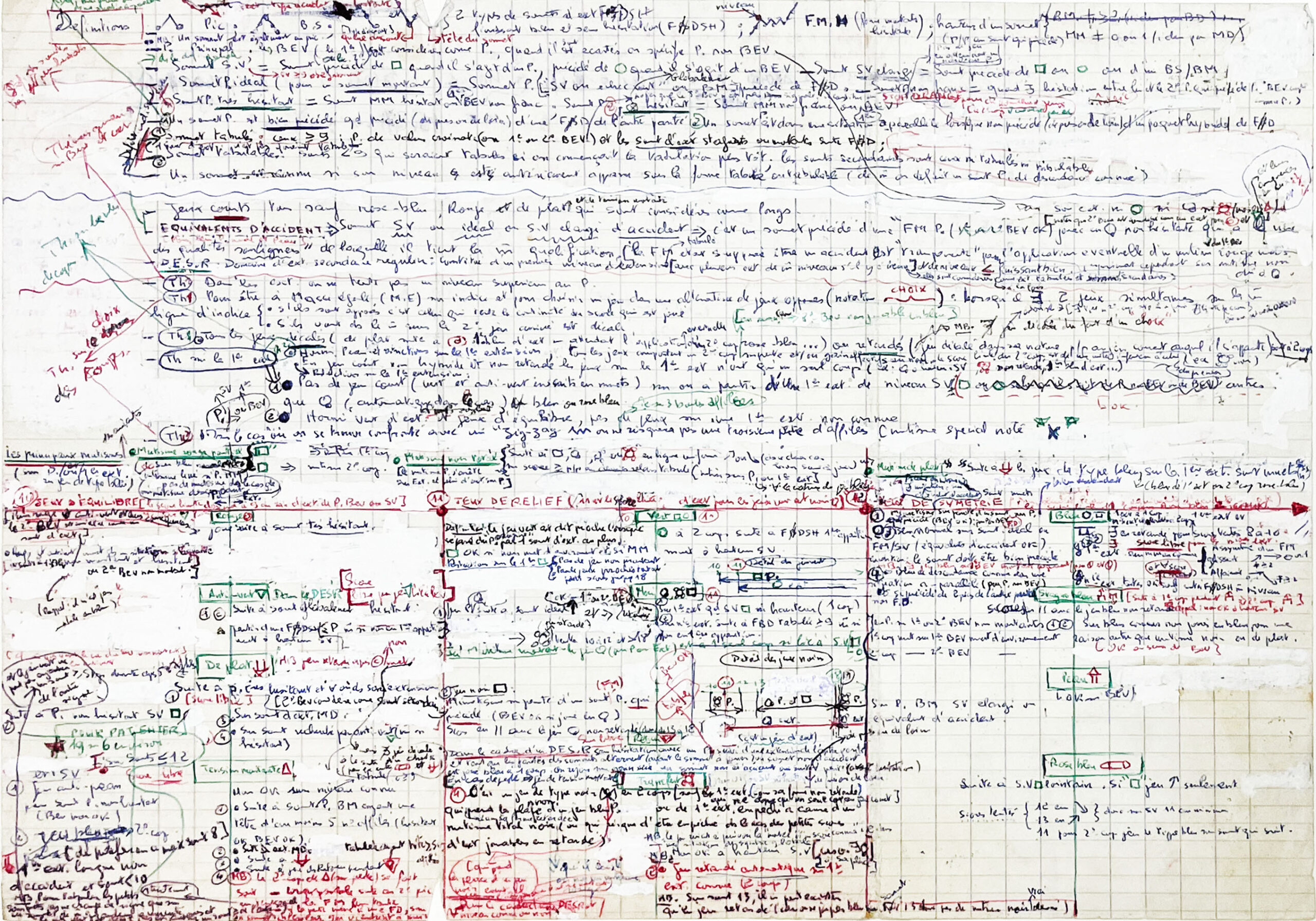
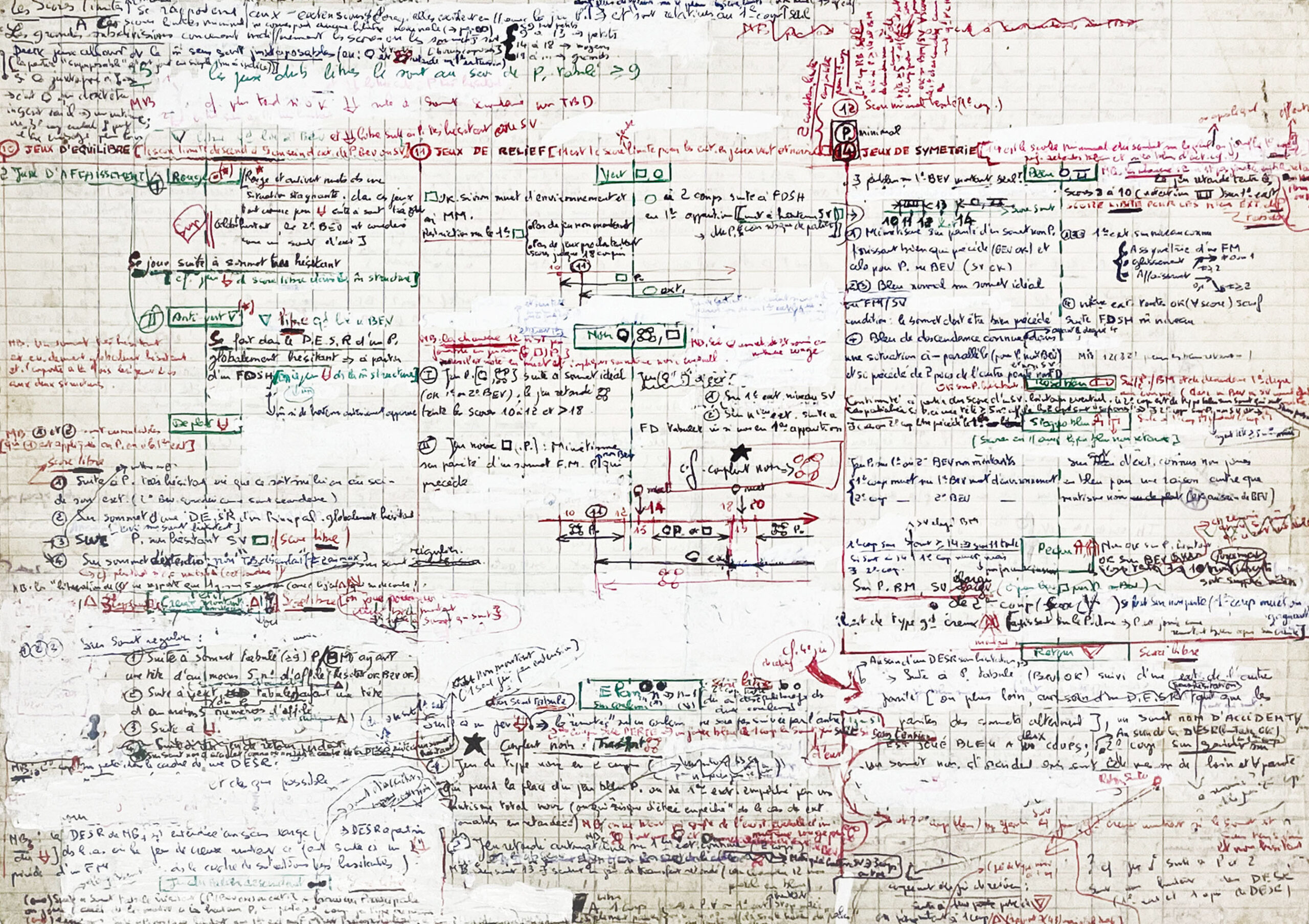
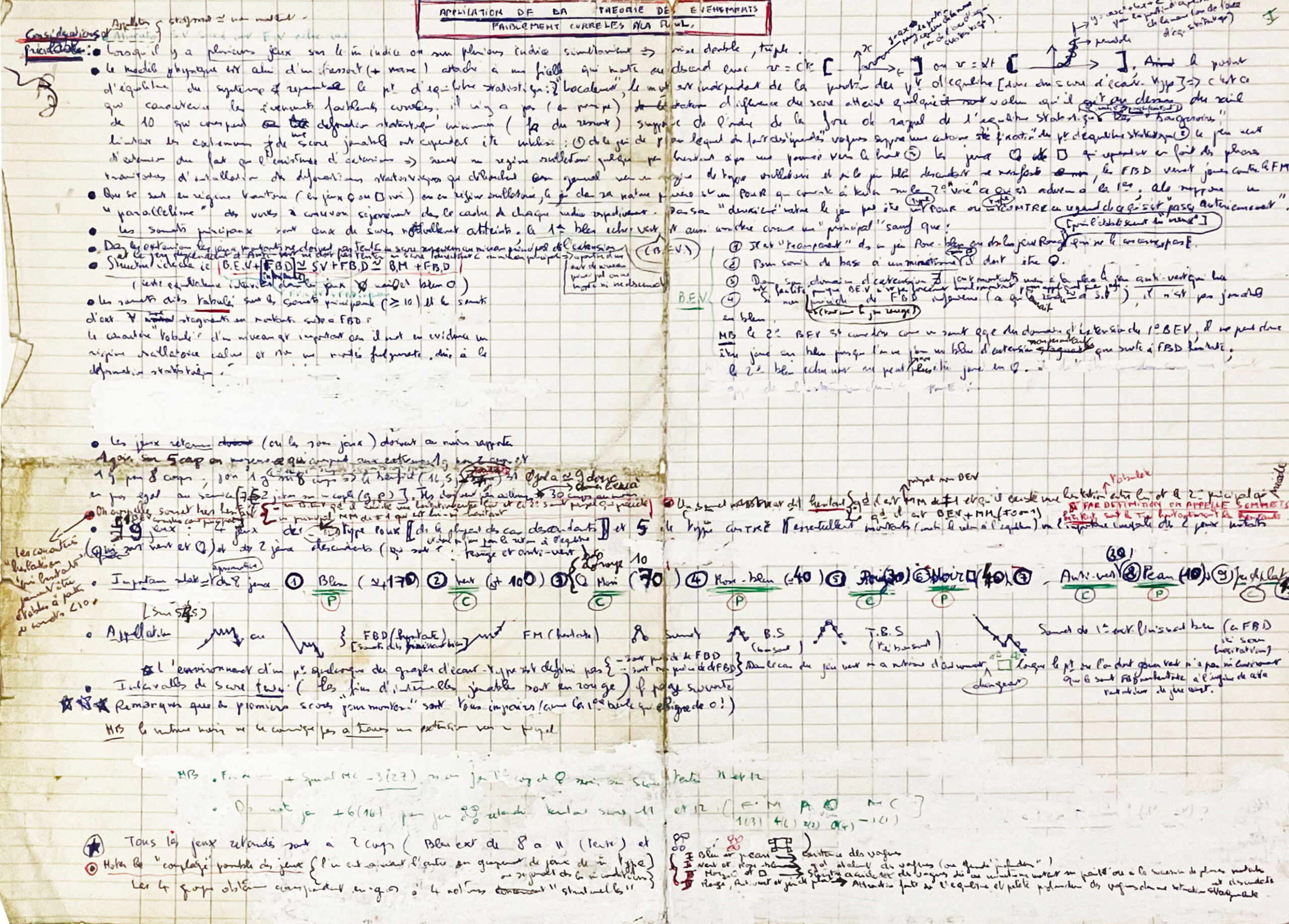
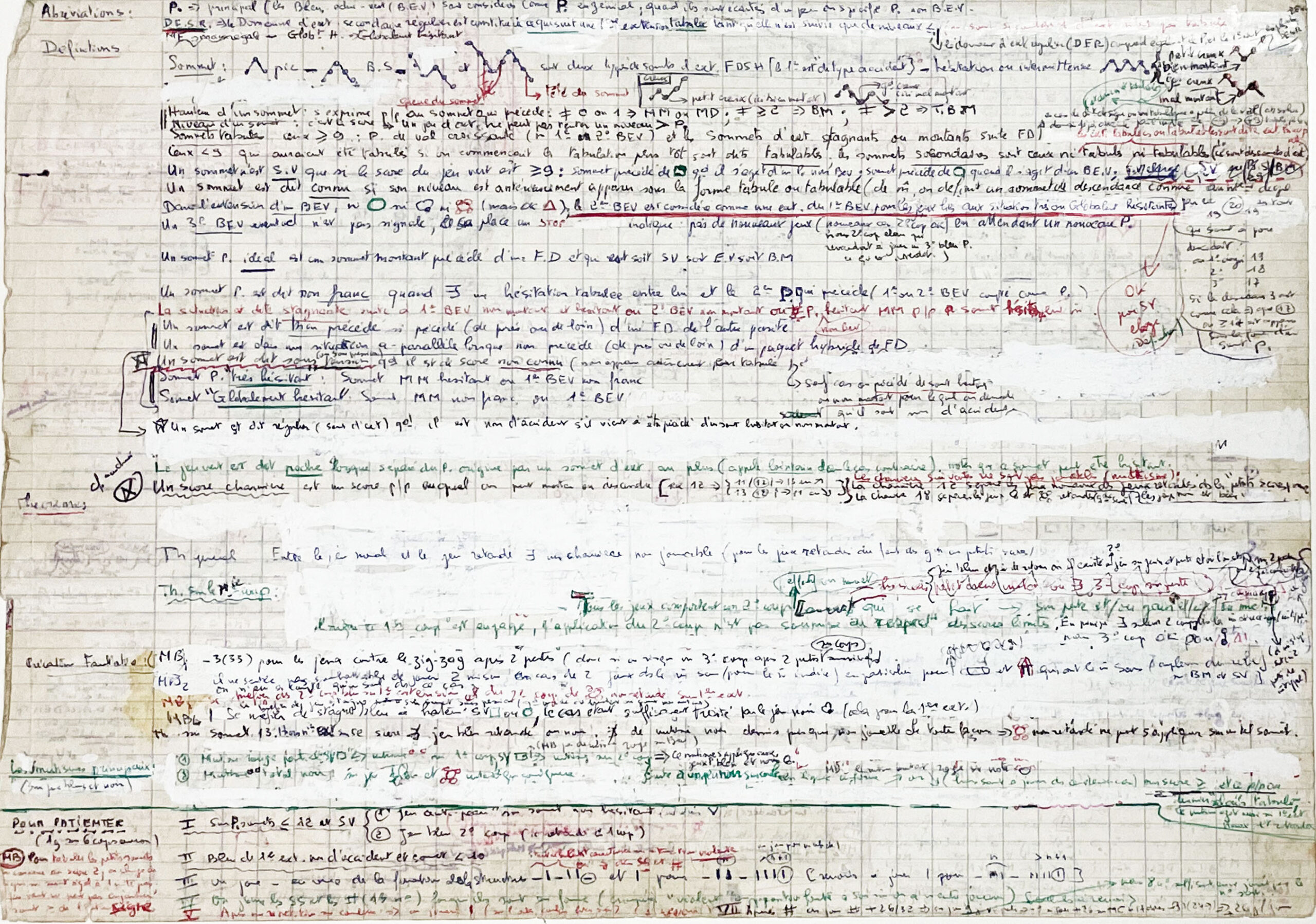
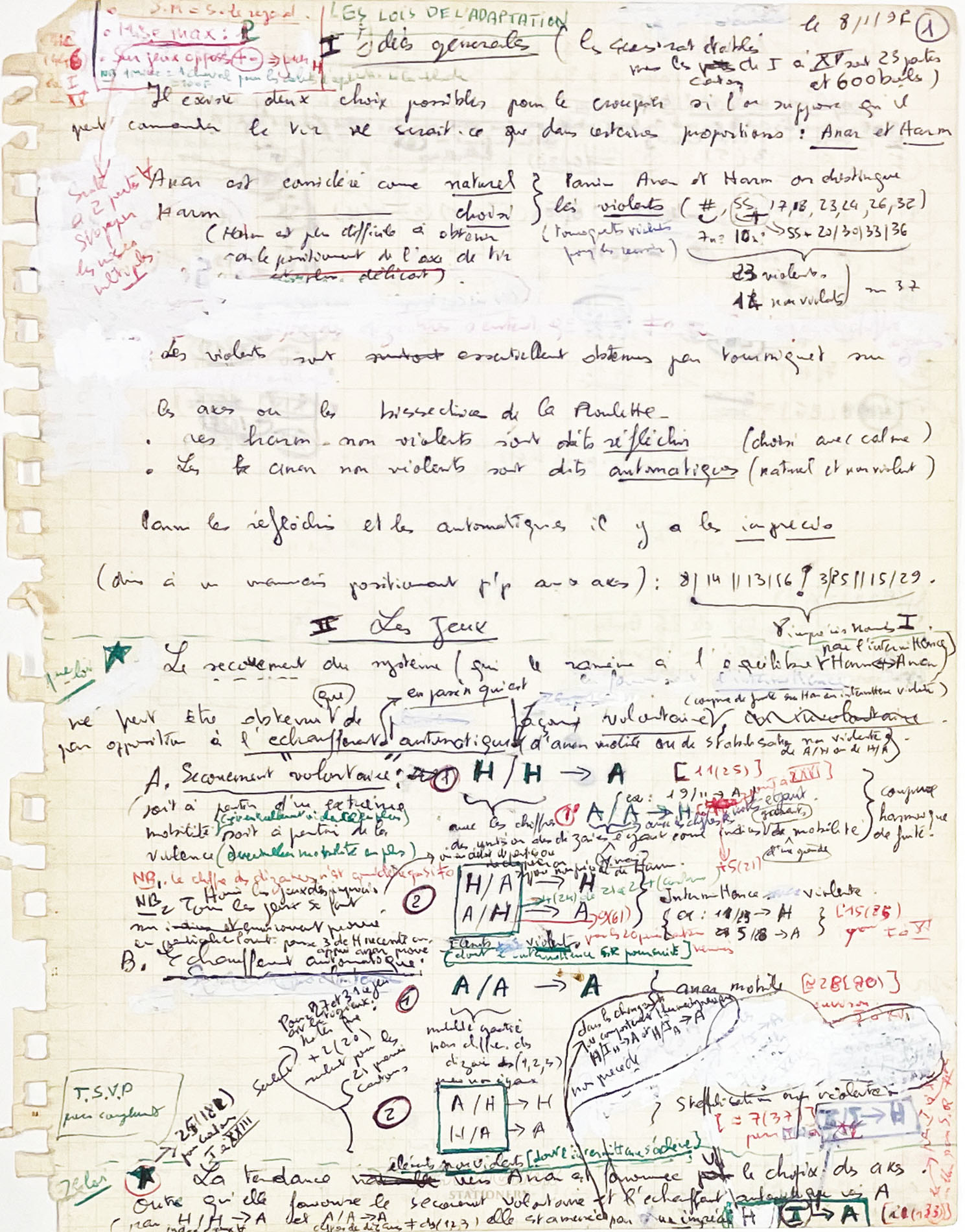
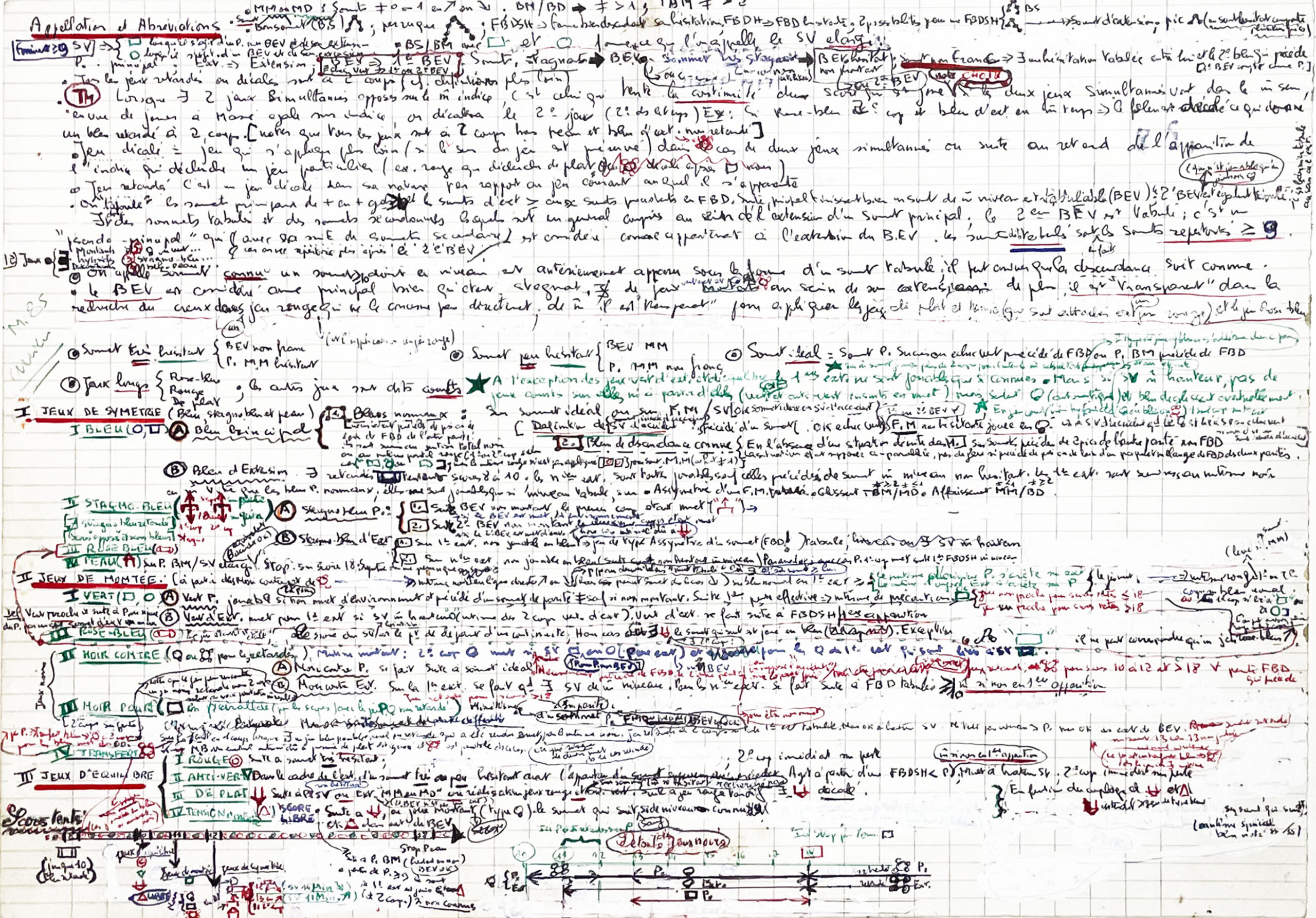
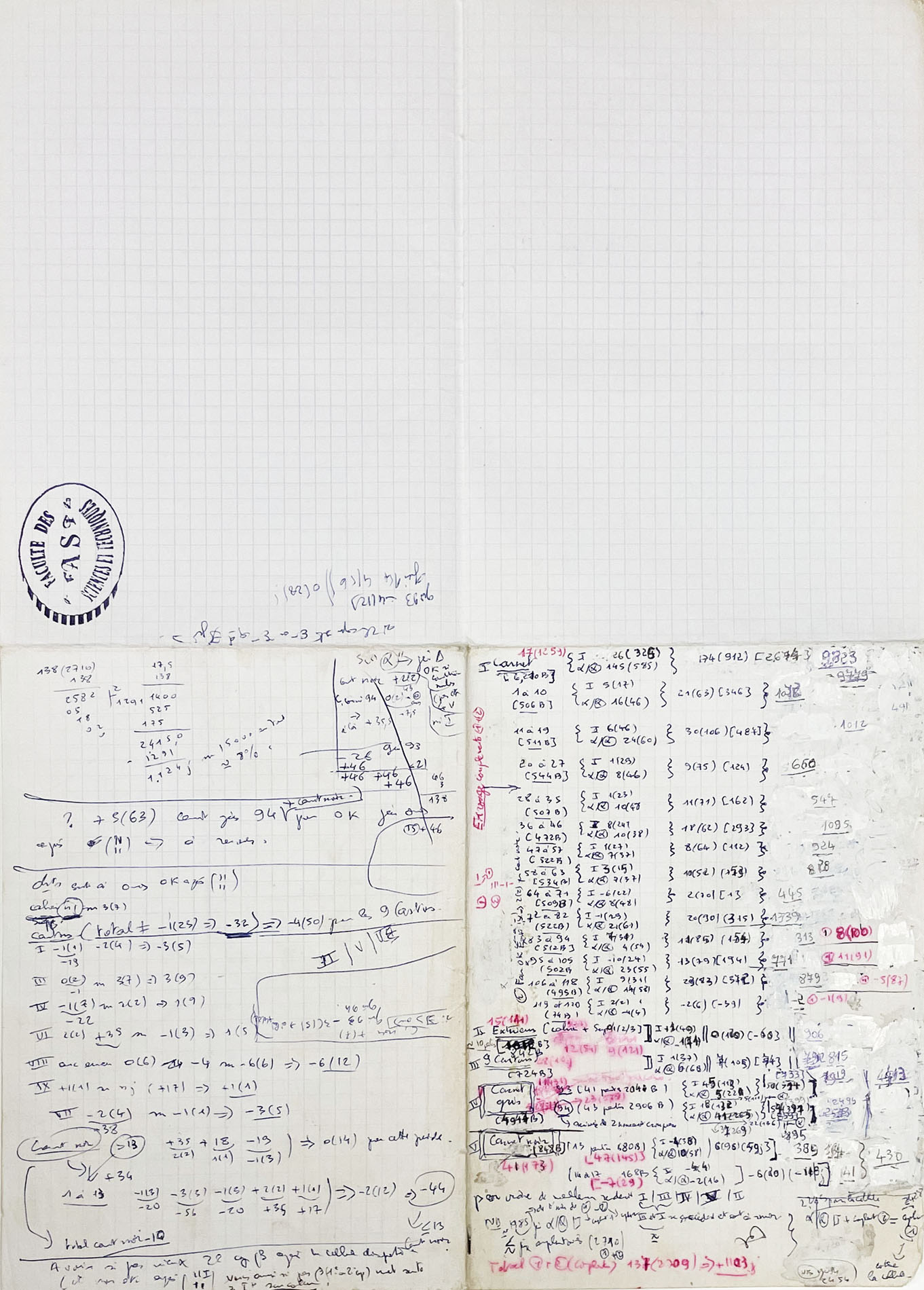
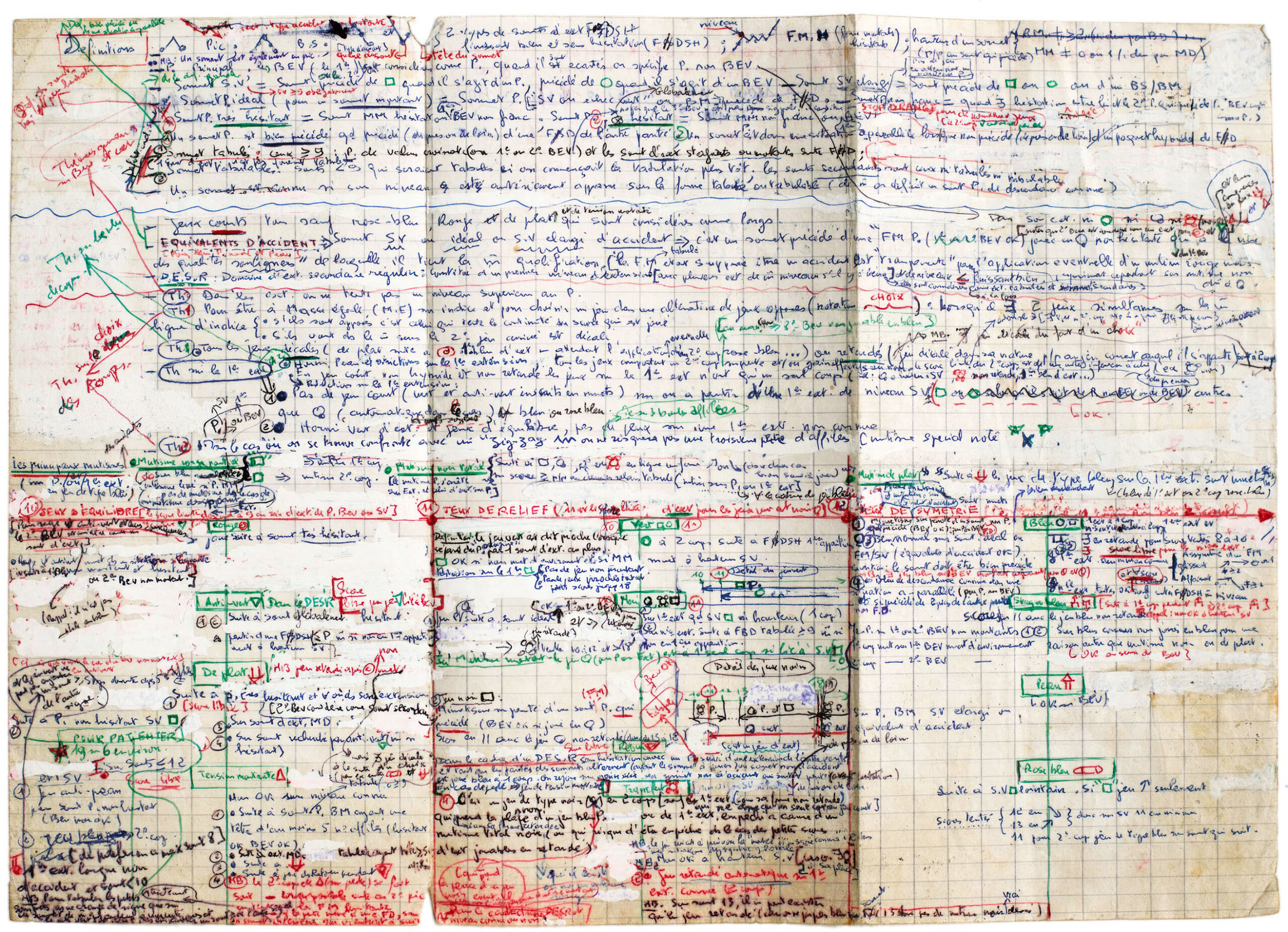
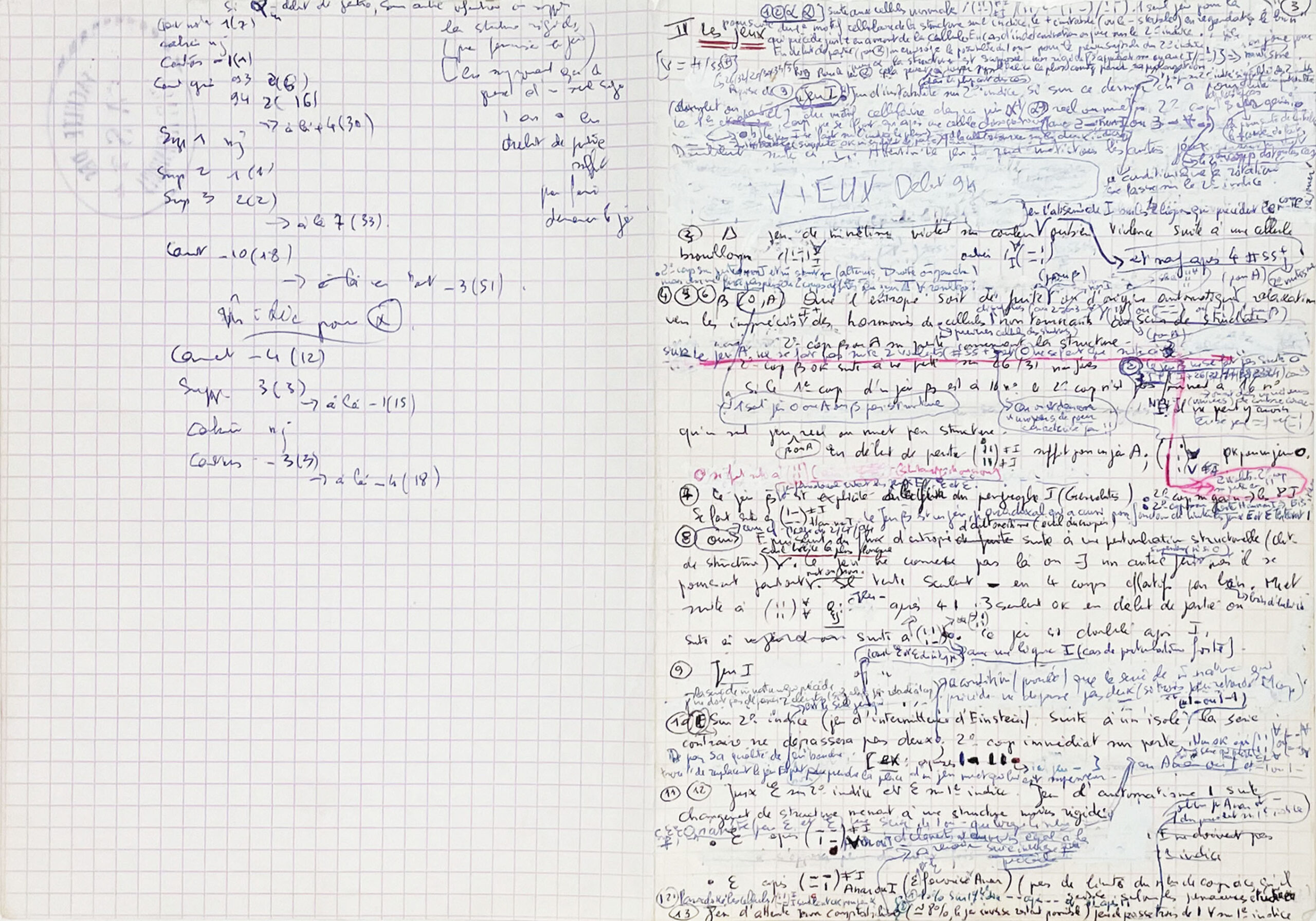
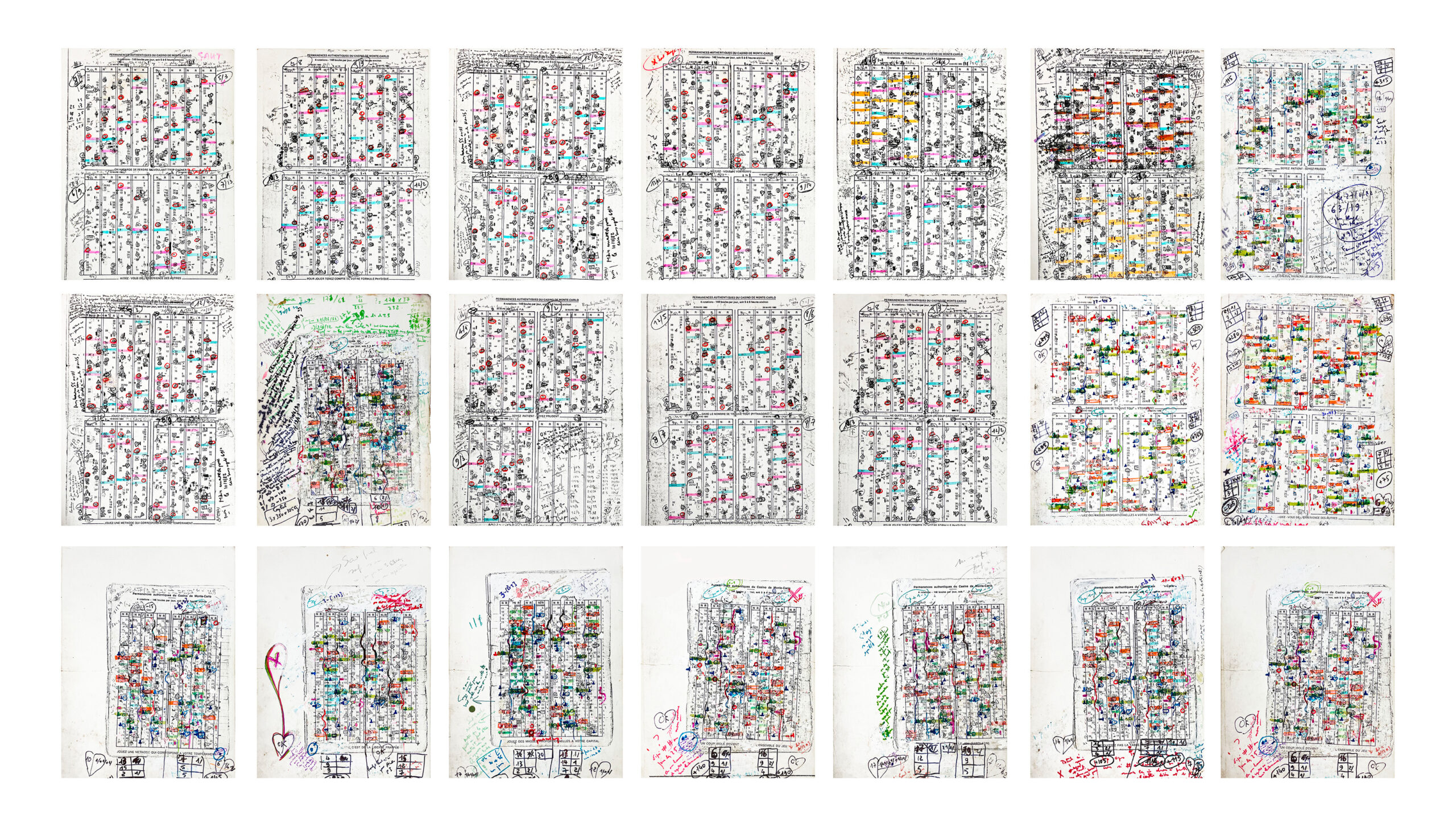
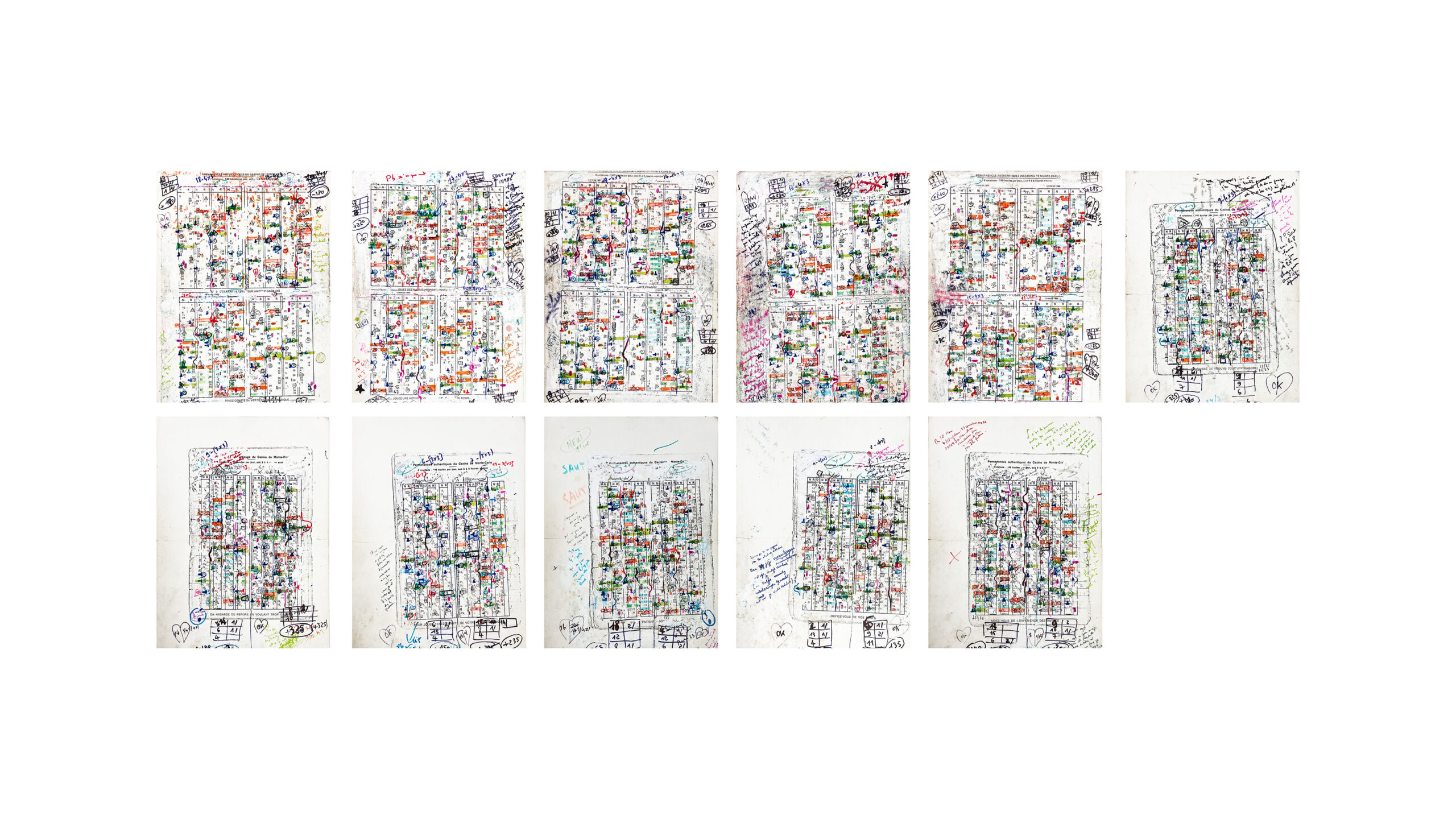
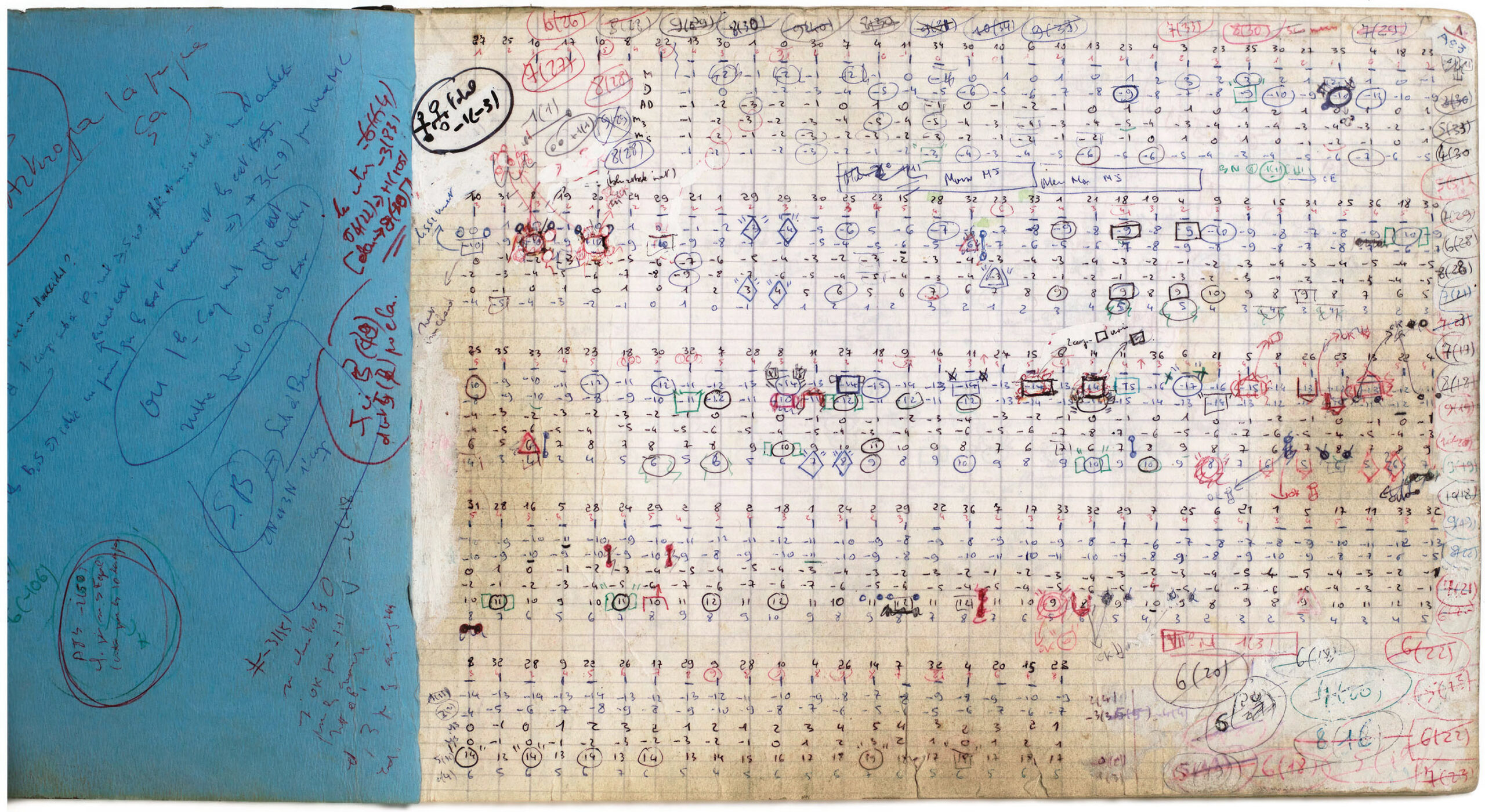
Alongside his academic career, Allanche developed a reflection on chance as a form of organization through a concrete dynamic system: the game of roulette. Convinced that a mathematical structure could make it possible to predict the winning combination, he devoted years to traveling from casino to casino in pursuit of an infallible system. He expressed this idea: “My theory shows […] the existence of ‘structures’ where it has been assumed that there is only chance.“ He even went so far as to comment, in a quasi-phenomenological manner, on the attitude of croupiers, which, he believed, influence the equation of the game. He thus left behind hundreds of diagrams and charts that testify to a relentless quest to master chance.
Parallel to this utopian pursuit, Allanche created an environment that may be understood as a total work of art. He ceaselessly painted the walls of his Paris apartment, complementing his paintings with a dense accumulation of collected and transformed objects.
By country
- Angola
- Argentina
- Austria
- Belgium
- Benin
- Brazil
- Canada
- Chile
- Colombia
- Croatia
- Cuba
- Czech Republic
- Finland
- France
- Germany
- Guatemala
- Haiti
- India
- Iran, Islamic Republic of
- Italy
- Jamaica
- Japan
- Korea, Republic of
- Mexico
- Morocco
- Namibia
- Netherlands
- Papua New Guinea
- Peru
- Philippines
- Poland
- Portugal
- Russian Federation
- Senegal
- Serbia
- Slovakia
- Spain
- Sweden
- Switzerland
- United Kingdom
- United States
- Uruguay
collection | general collection | A | ALLANCHE Jean-Daniel
ALLANCHE Jean-Daniel
1/14