
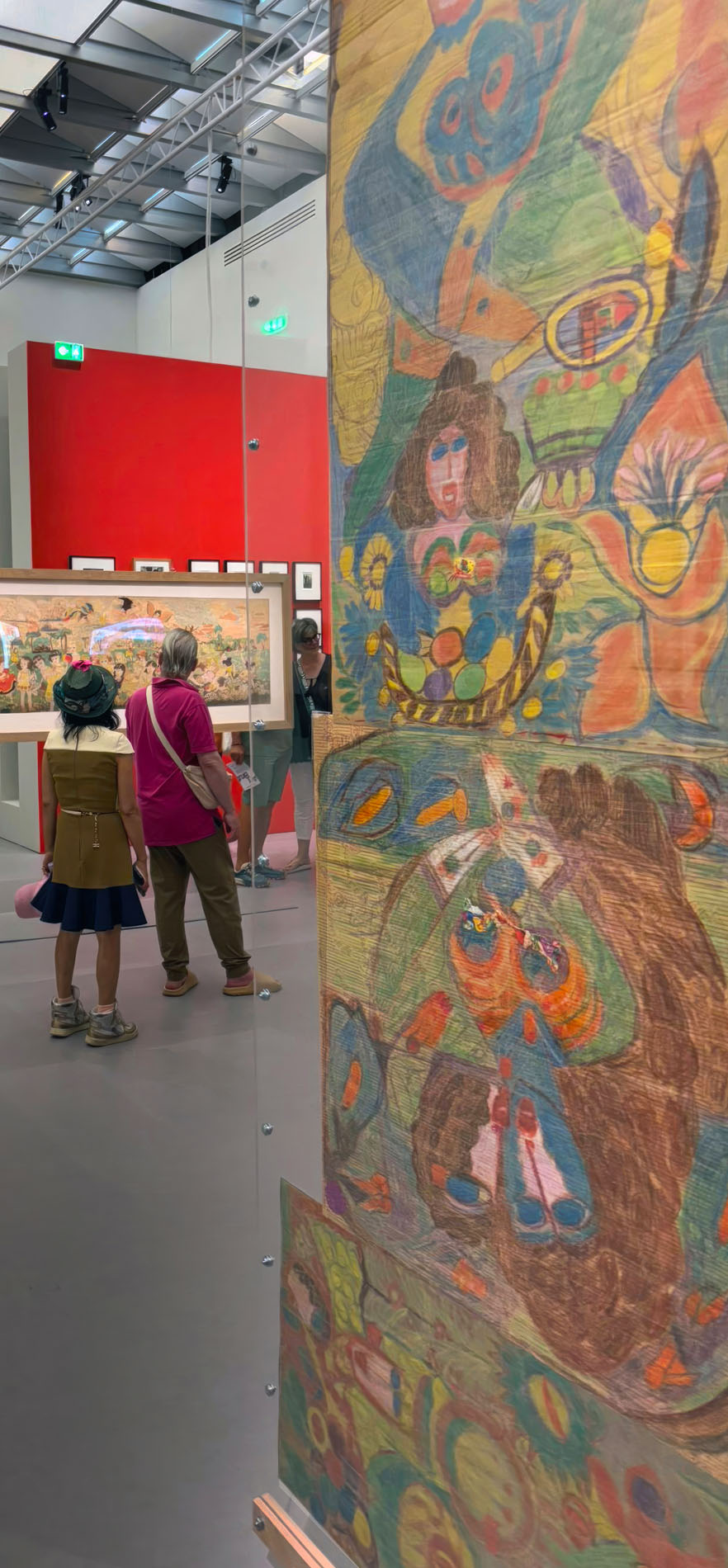
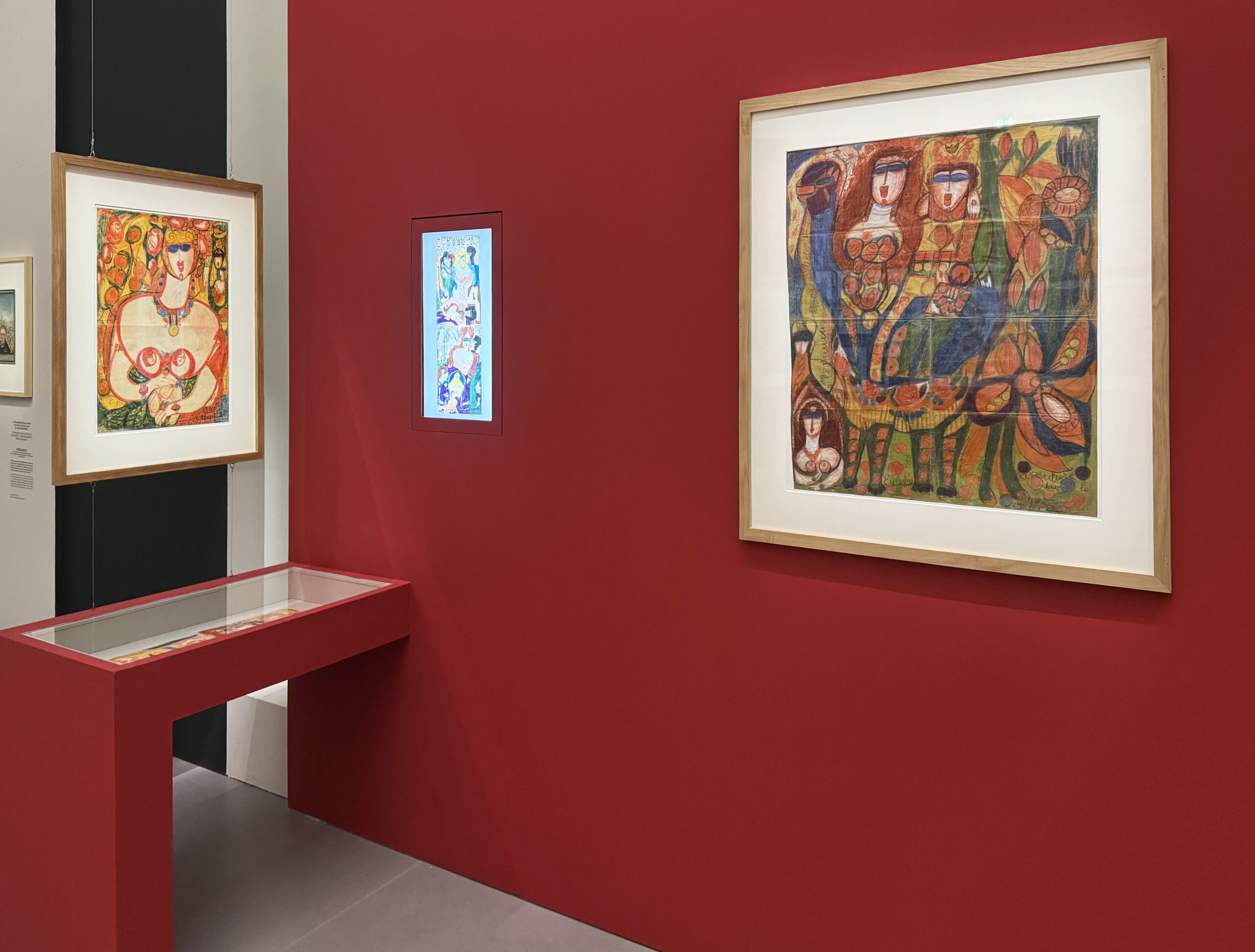
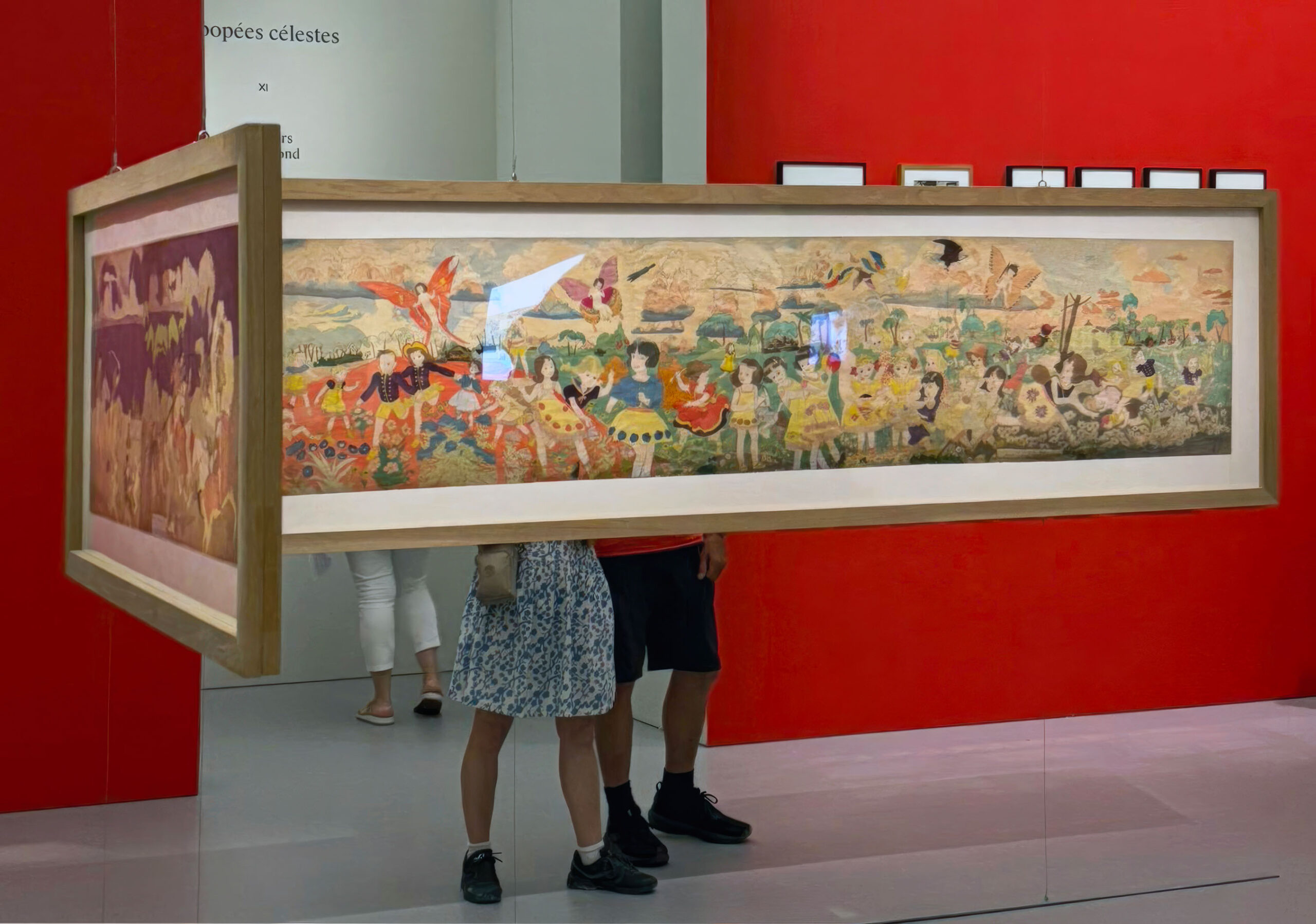
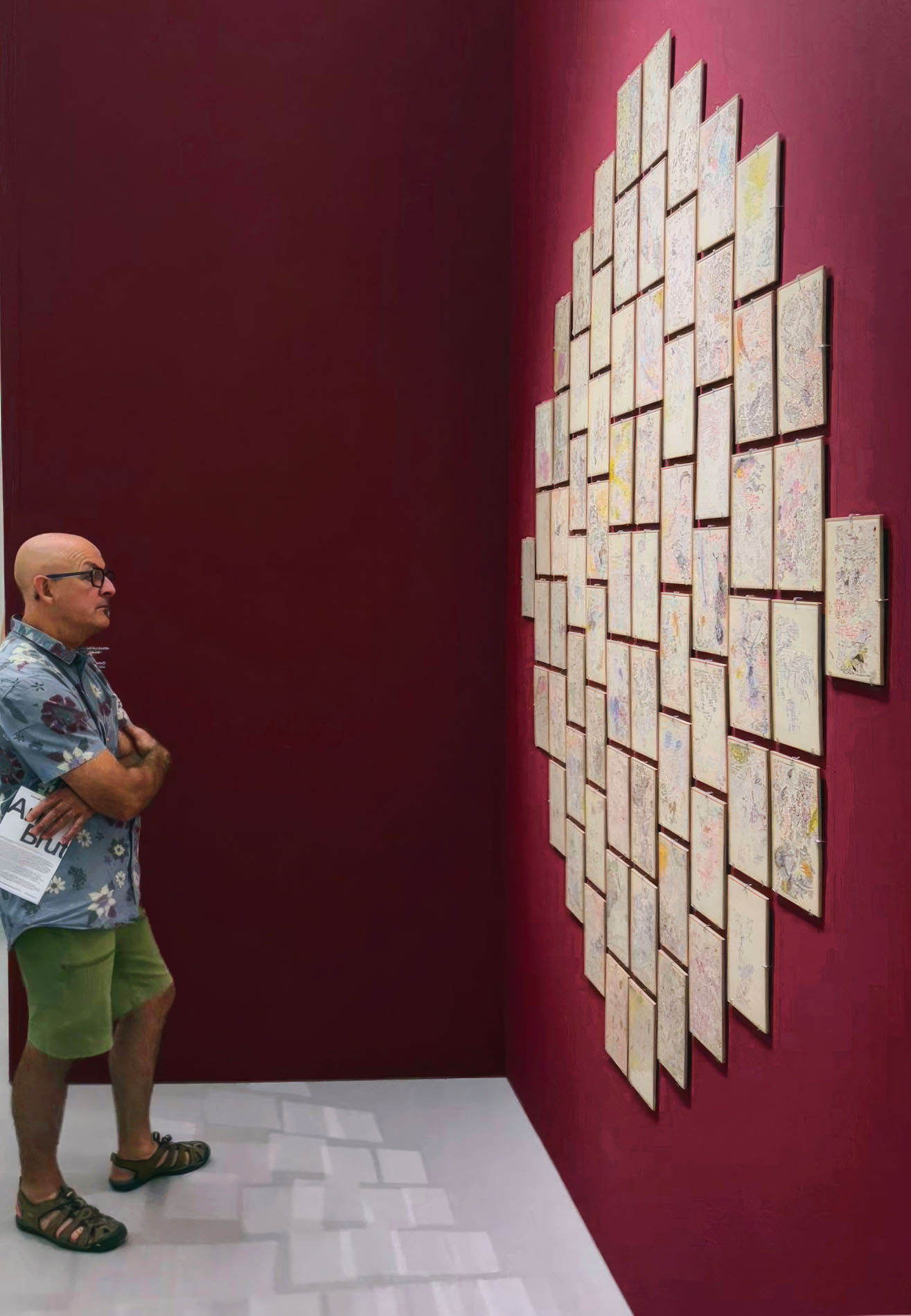
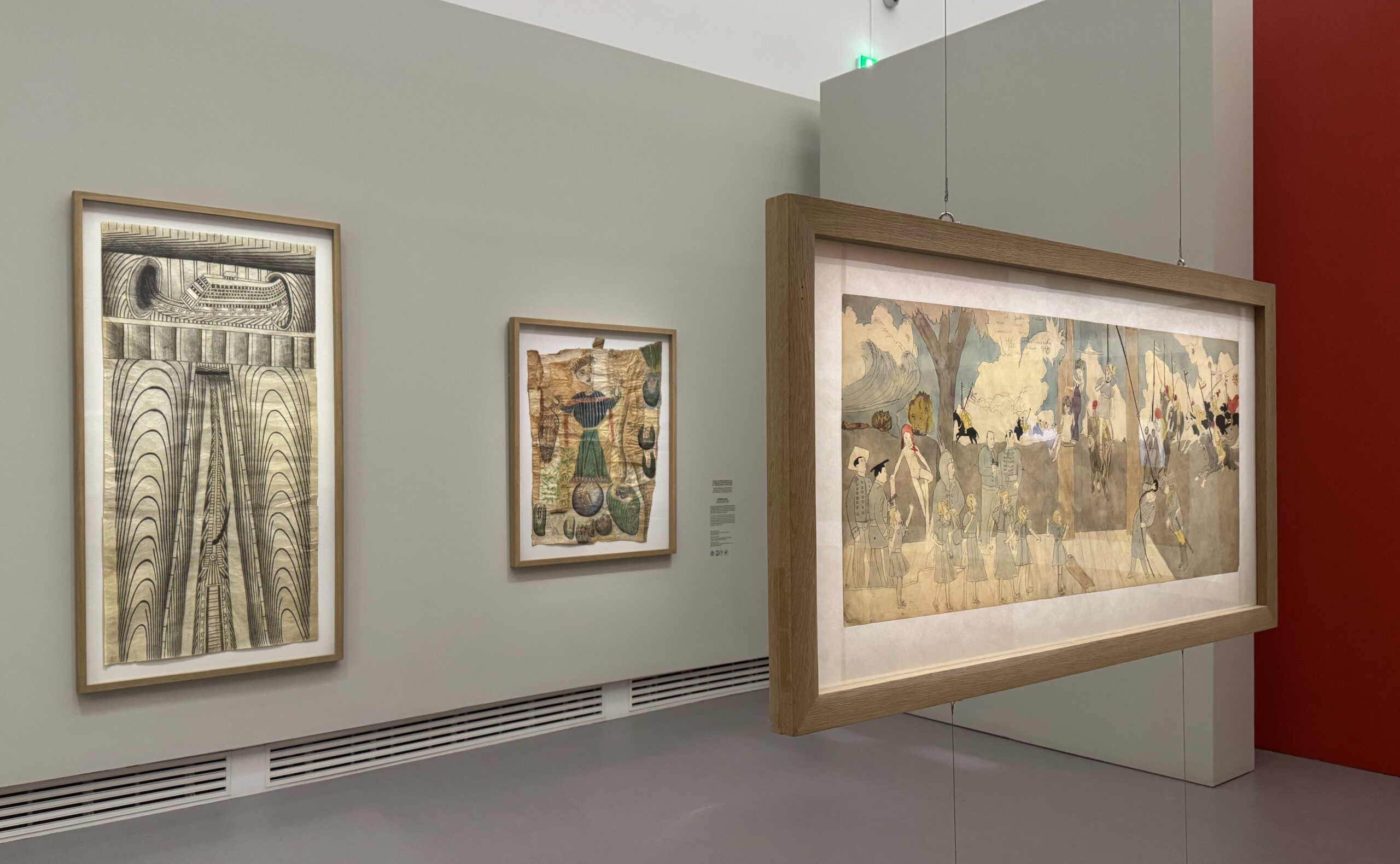
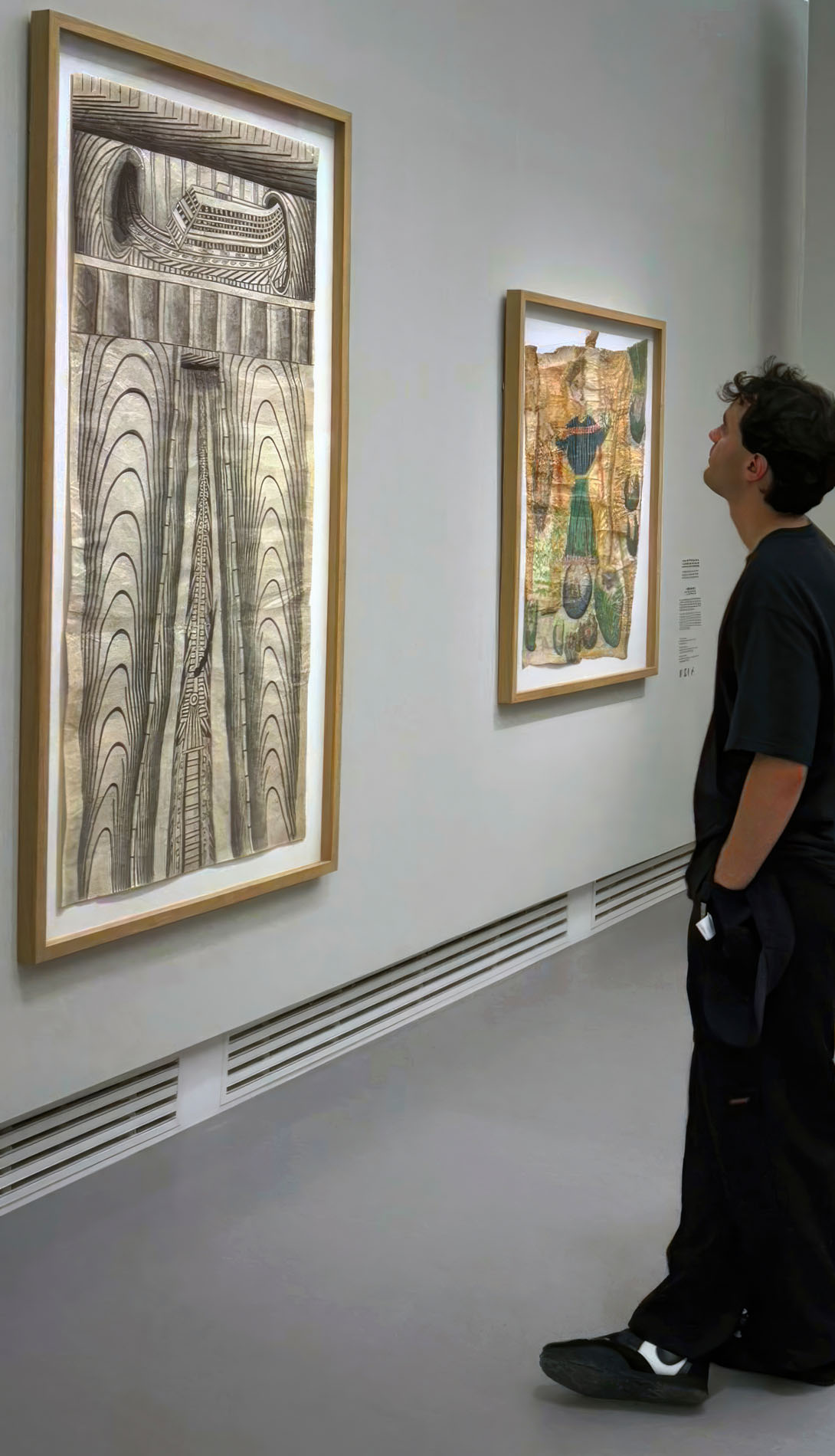
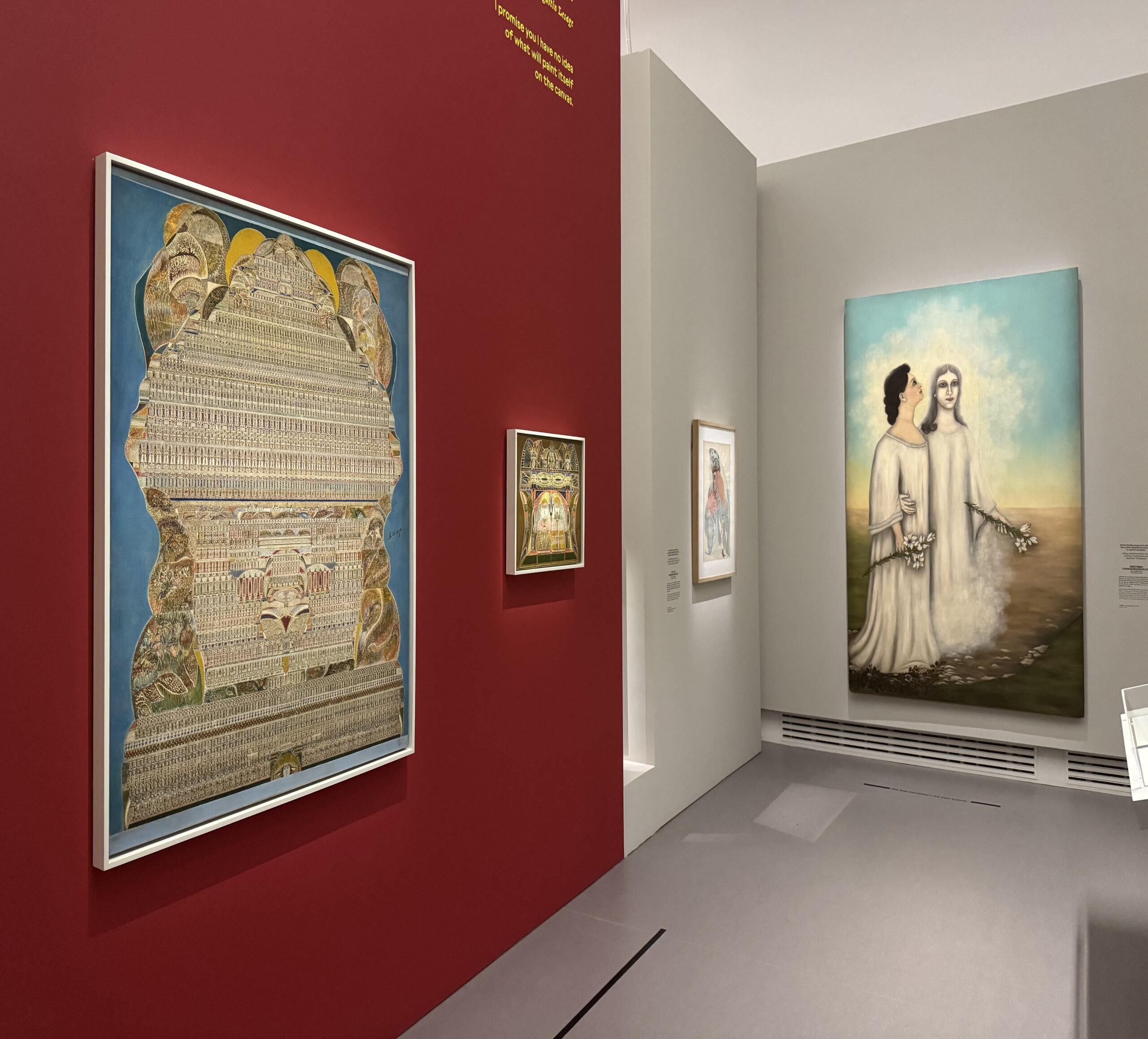
Exposition Grand Palais – “after”.
A student of art history at the Royal College of Art in London, Céline Kaller has been interested in Art Brut for several years. Her current research focuses on the activities of the abcd association, the Decharme Collection, its donation to the Centre Pompidou, and the exhibition recently presented at the Grand Palais. As an introduction to her dissertation, she wished to interview the principal figures behind this adventure: Bruno Decharme and Barbara Safarova.
AN OVERVIEW: ATTENDANCE AND RECEPTION
CKWhat was the attendance for the exhibition?
BDThe exhibition, which inaugurated the reopening of the Grand Palais, ran for eleven weeks and welcomed just over 75,000 visitors, averaging around 1,100 visitors per day.
CKMuseums generally conduct visitor satisfaction studies. What conclusions did you draw from them?
BDFrom the very conception of this exhibition, our main concern was to communicate a complex message as simply as possible. Art Brut is both difficult to grasp and immediately accessible to all audiences. According to the Grand Palais, the results were remarkable, with a satisfaction rate of 93%. Three aspects stood out in particular: the quality of the works, the clarity of the curatorial approach, and the quality of the mediation and educational framework.
CKWhy do you describe it as a complex message?
BDArt Brut disrupts the categories traditionally proposed by art history and destabilizes conventional frameworks. It calls upon varied domains such as language, science, philosophy, mysticism… transcending the simple aesthetic object. The tools for understanding these works lie at the crossroads of several fields of thought — history, geography, psychiatry, psychology, sociology, philosophy, and literature — each providing a particular, though necessarily partial, perspective. The challenge therefore lies in conveying this diversity of approaches without losing the public, through mediation that remains accessible while respecting the complexity of possible interpretations. At the same time, Art Brut is fundamentally popular in essence: created outside traditional intellectual frameworks, it is characterized by a spontaneity that makes it immediately accessible to everyone.
CKYet part of the public still did not connect with it.
BSSince Art Brut is not a constituted movement, it also confronts visitors with a great diversity of forms and signs, without offering a single interpretive framework. Faced with these works, each person is referred back to their own subjectivity, anxieties, or fears, which may provoke withdrawal or the desire to move on quickly. Engaging with them therefore requires a certain openness, even a form of courage.
TELLING THE STORY OF A COLLECTION: A TWO-VOICED APPROACH
CKBefore discussing your curatorial choices, I would like to hear about the way you work together: what guiding principle directs abcd?
BDI am a filmmaker. Through portraits of artists, I seek to tell stories that come as close as possible to the mystery that drives them to create. As a collector, I pursue this same quest through the works themselves, attempting to grasp invisible impulses and their buried secrets.
BSAs a researcher, I approach the works through conceptual and structured frameworks. I draw upon interpretive models offered by disciplines such as literature, history, sociology, psychoanalysis, and philosophy. Each provides a singular perspective without claiming to hold a definitive truth. Above all, these works teach us to look at them patiently, without believing we have definitively uncovered their meaning. Our collaboration is based on this complementarity, cultivated over nearly thirty years, in dialogue with other researchers who make up the abcd team (art brut connaissance & diffusion).
BDOver time, as our collection took shape, certain questions that deeply resonate with Barbara and me gradually emerged. We have thus conceived more than fifty exhibitions, each exploring one facet of these questions.
CK What is this guiding thread?
BSOur objective is to analyze how these singular artists apprehend the world and to highlight certain constants running through their works. To this end, the exhibition paths are structured around themes and universal questions shared by all of us, in order to examine how each artist within the field of Art Brut engages with them. This approach allows us to emphasize a specific aspect of their practice — whether a recurring motif, a technique, or an operational mode.
BDAn approach whose unfolding therefore echoes the existential quest at work within these productions.
WHAT CURATORIAL CHOICE?
CKWhy this choice?
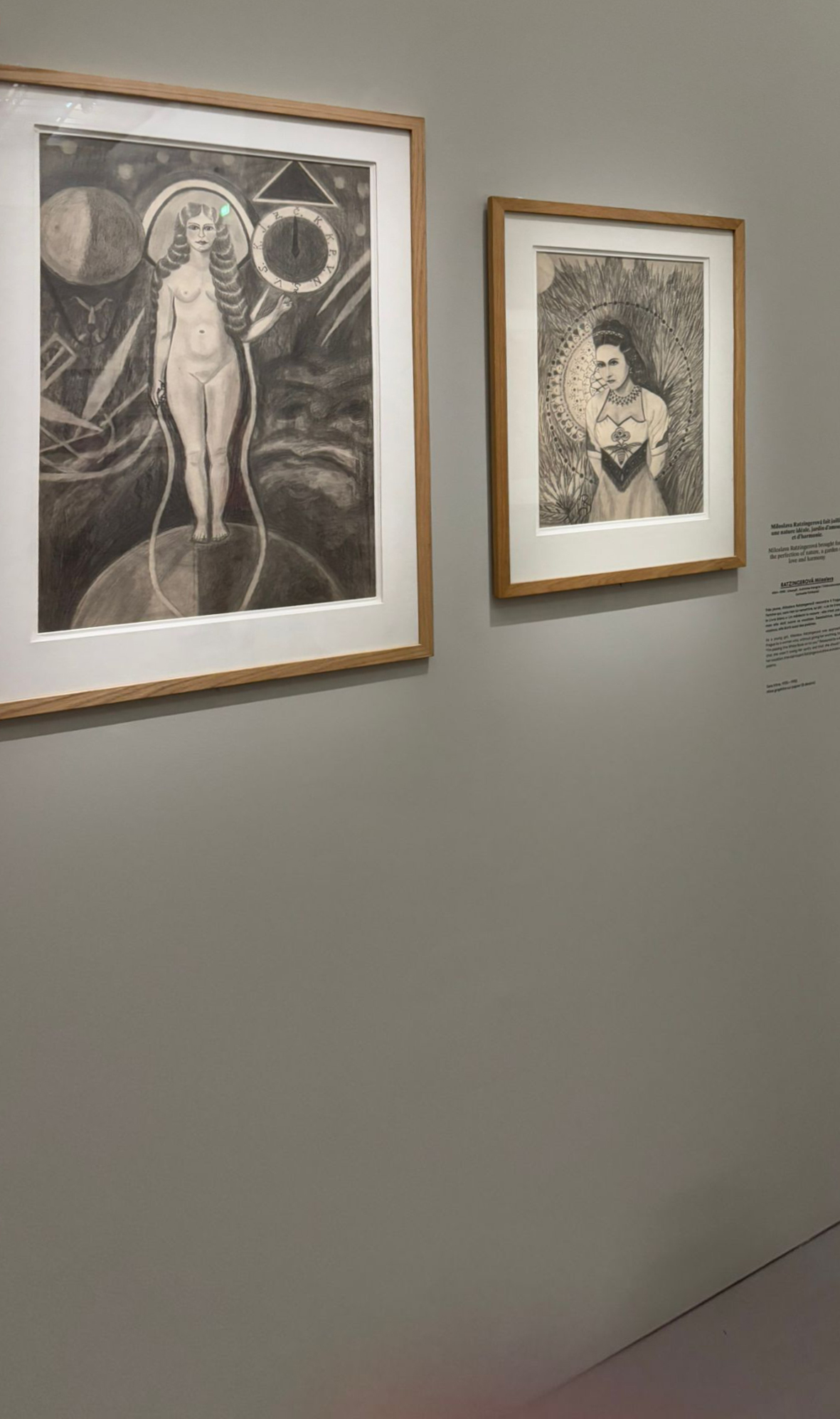
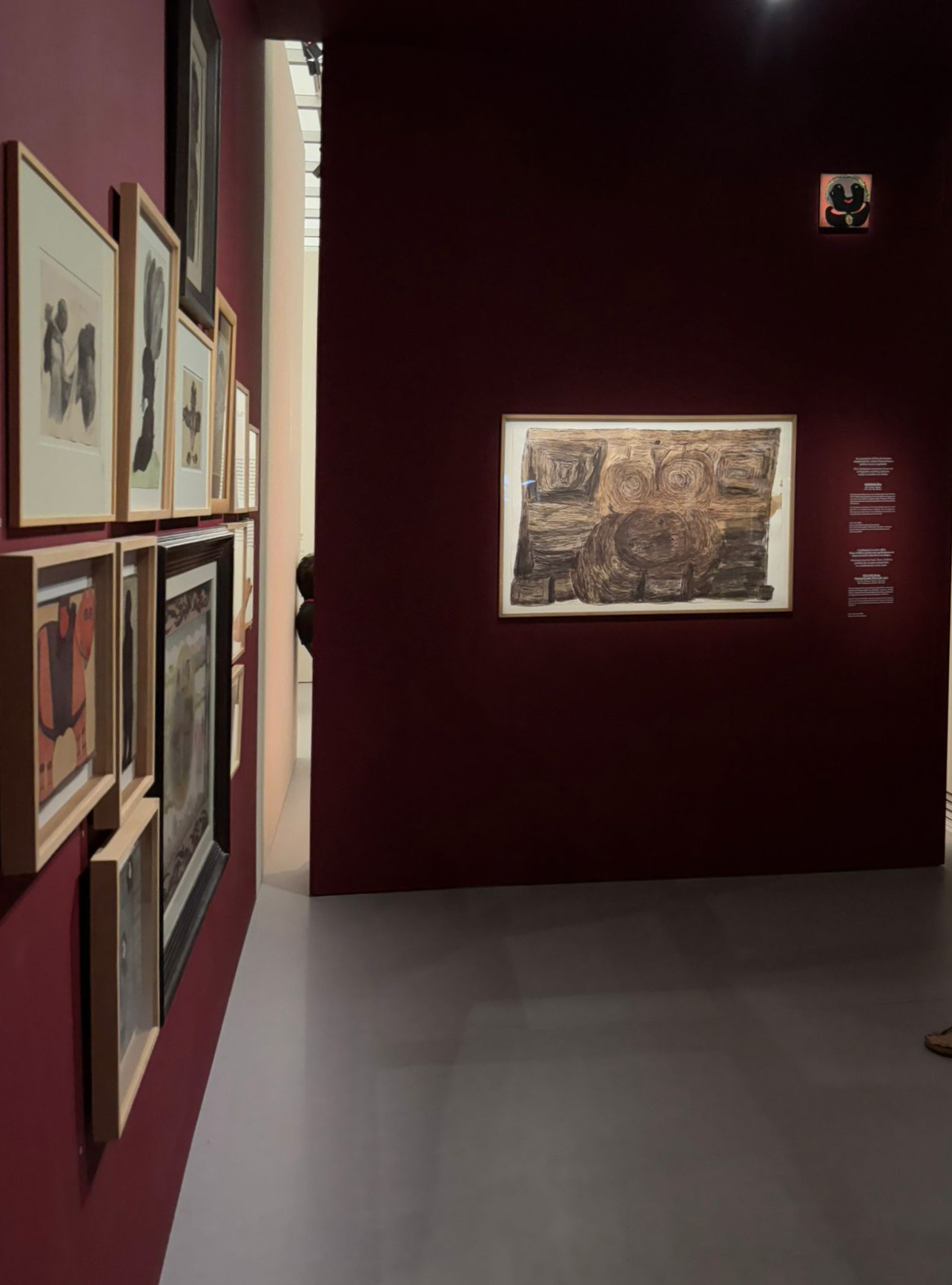
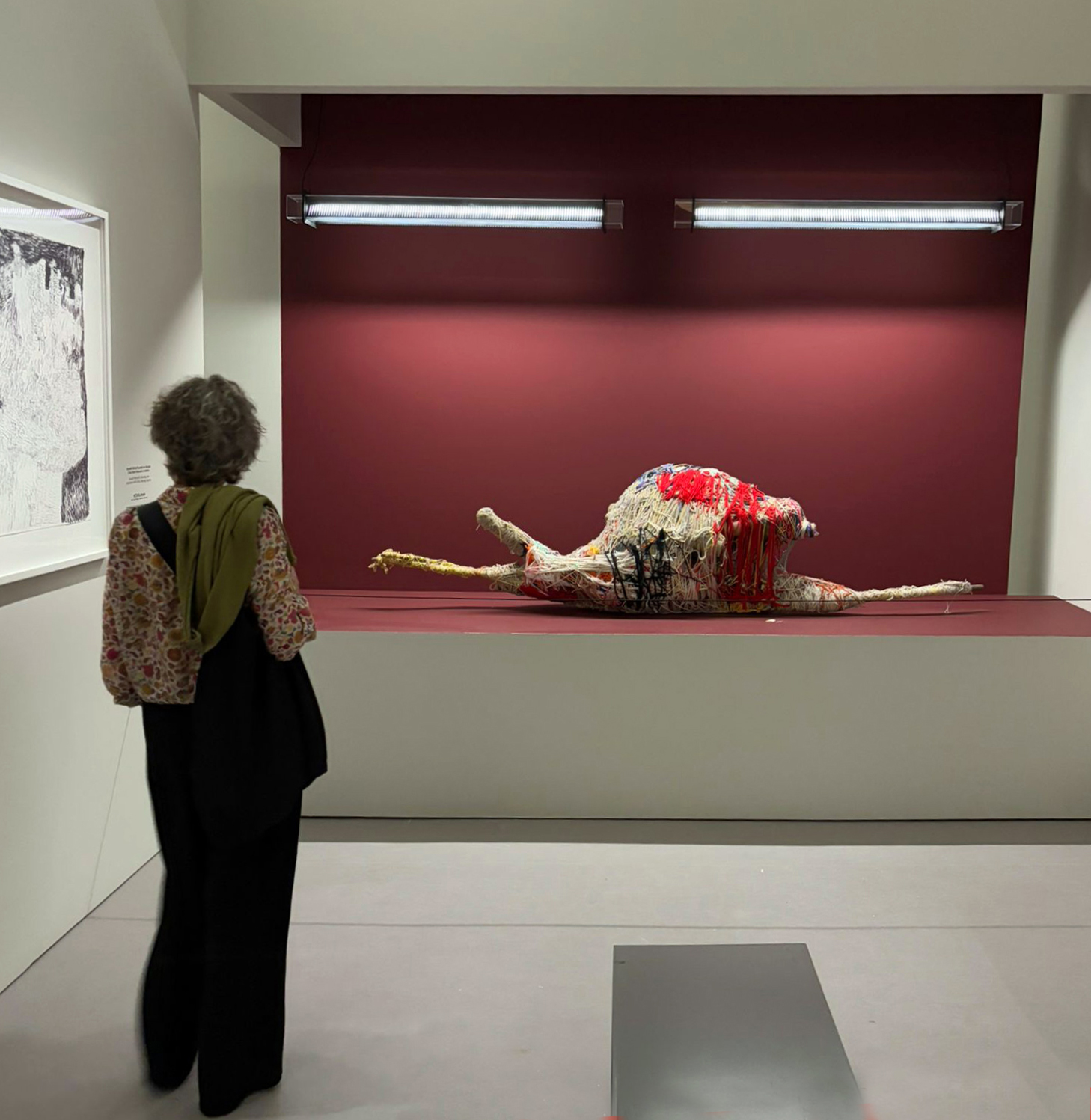
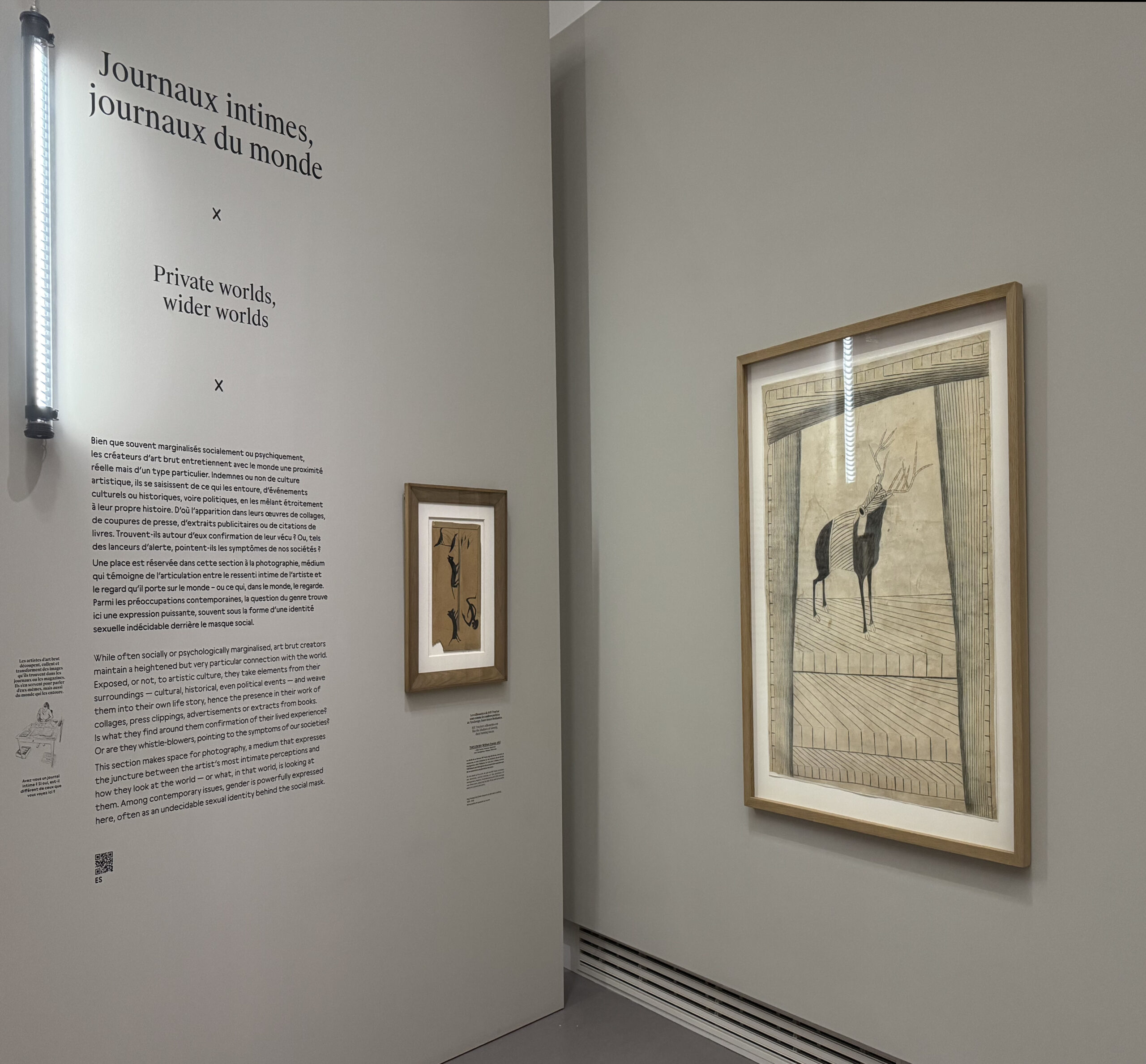
BDWhen the Centre Pompidou joined forces with the Grand Palais RMN to produce joint exhibitions, this partnership was part of the Constellations program centered on the museum’s collections. The Decharme donation in 2021 naturally shaped the curatorial choice of the exhibition. With the title chosen by the museum — Within the Intimacy of a Collection. The Decharme Donation to the Centre Pompidou — the aim was to construct a narrative coherent with this orientation. The exhibition thus retraces a history of Art Brut — or at least one aspect of it — through the story of a collection: the Decharme Collection.
BSThe museum also wished to propose an approach departing from the “classical” modes of presenting Art Brut, which were considered outdated.
BREAKING DOWN CATEGORIES
CKWhat do you mean by breaking away from more classical approaches?
BDToday, many publications or exhibitions devoted to Art Brut still privilege classificatory logics (“art of the insane,” “self-taught artists,” “marginals,” “mediums,” “environment builders,” etc.) or historicist and chronological approaches. This places emphasis above all on the sociological belonging of the artists, relegating their singularity — the specificity of a work — to the background. For example, not all institutionalized creators share the same history or the same relationship to creation; grouping them a priori within one category teaches us little and may even prove stigmatizing while producing an austere narrative. Likewise, imposing chronology remains artificial: while certain works resonate with their time, many escape it; many are neither dated nor attributed with certainty.
BSIn our exhibitions, we seek to reveal the internal logic of the works themselves and to provide visitors — many of whom are discovering this field — with a few keys to understanding their diversity. Jean Dubuffet himself, in accounting for his explorations, favored an approach based on studying works case by case, artist by artist.
BDAll of this seems far more essential to me than the often sterile debate surrounding categories or definitions of a concept that, in any case, never stops shifting.
CKHow, then, did you choose to tell the story of your collection?
BDA work of art never ceases to question the viewer: what emotions does it arouse, what reflections does it provoke, what does it reveal about ourselves, and what does it say about the world? Art Brut works invite us on extraordinary journeys, opening unprecedented perspectives on human knowledge. They constitute a constellation of individualities whose psychic mechanisms of creation we attempt to illuminate. Art Brut thus appears as a genuine dreaming machine, as well as a precious source of knowledge.
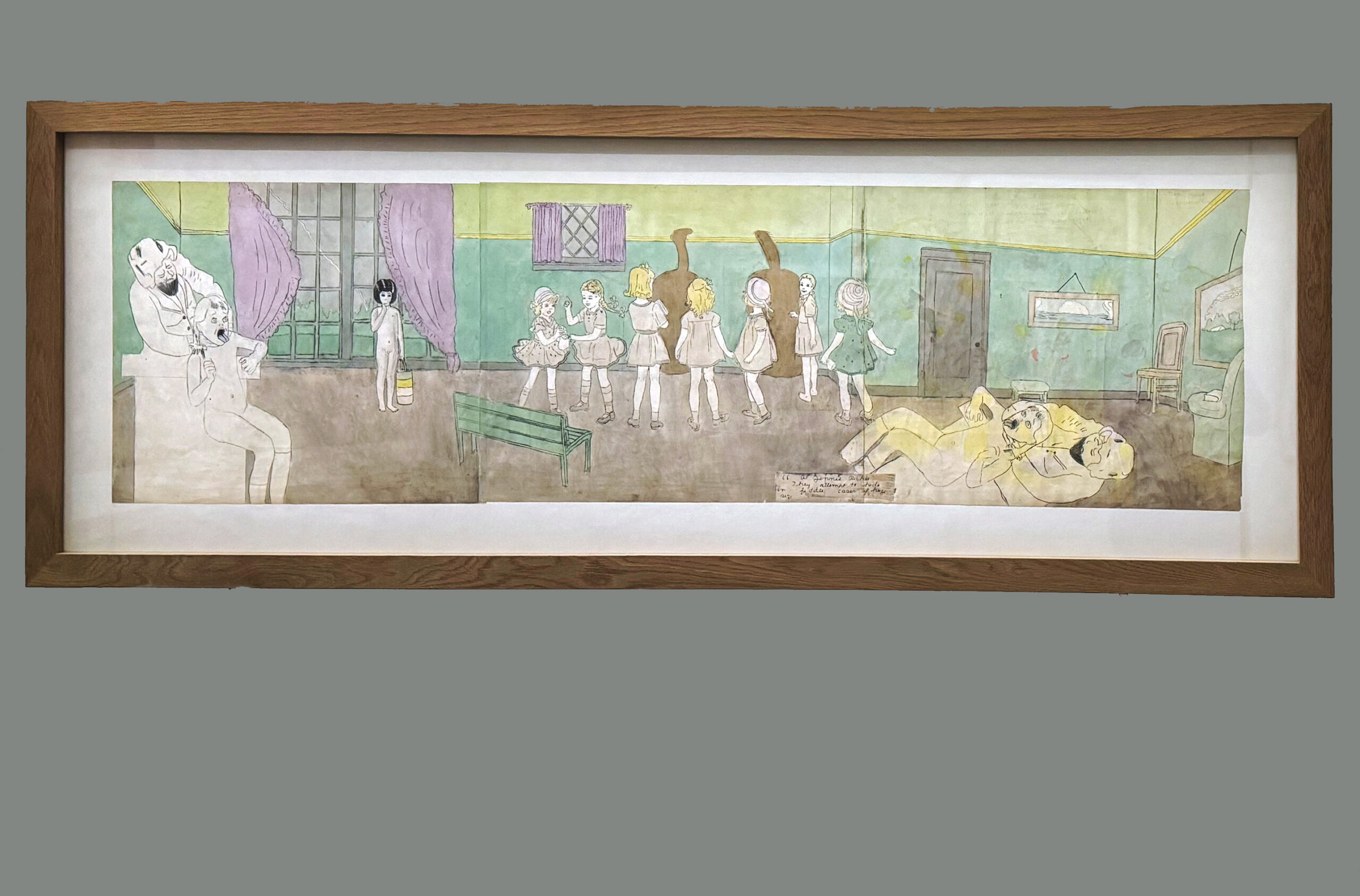
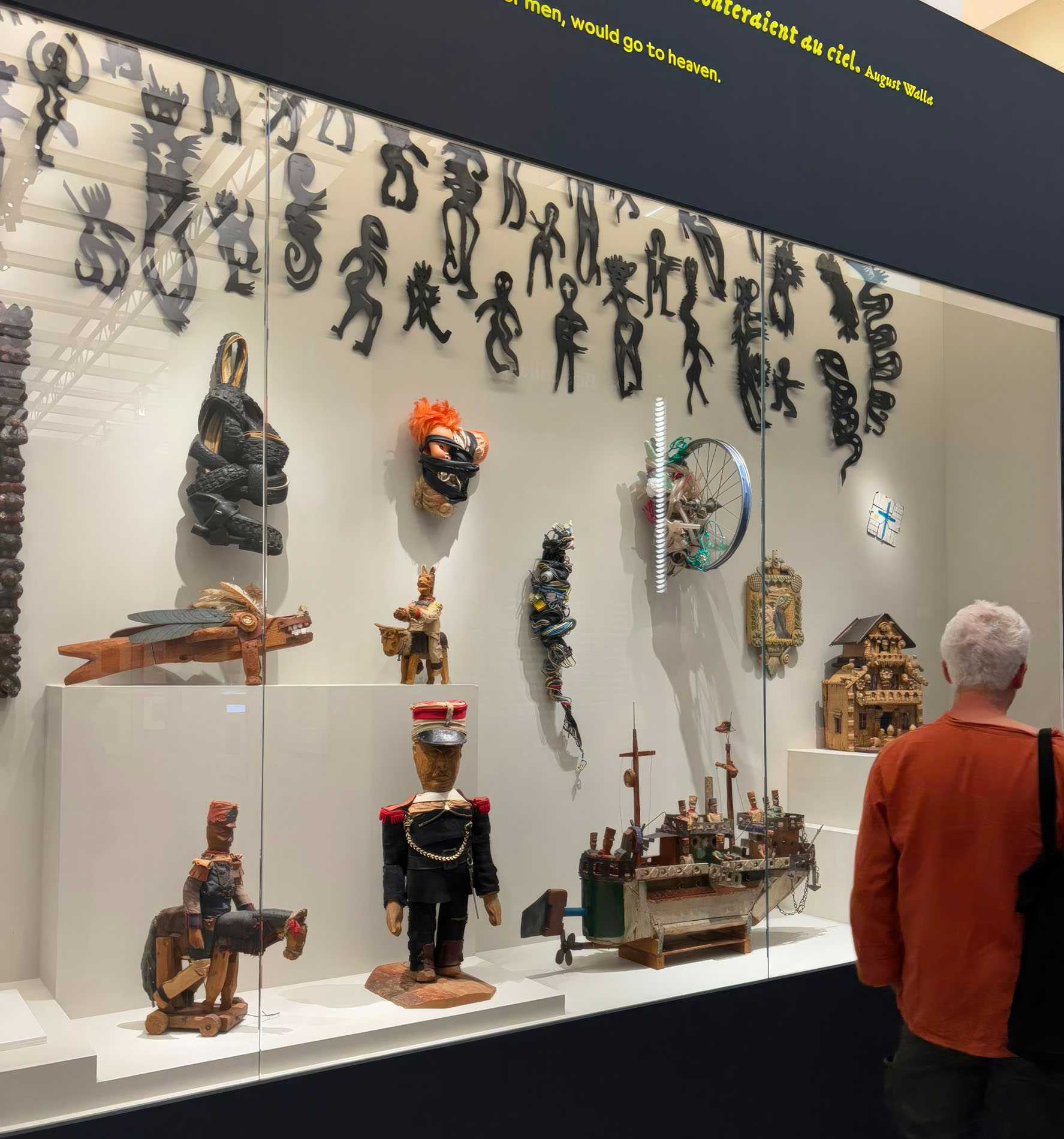
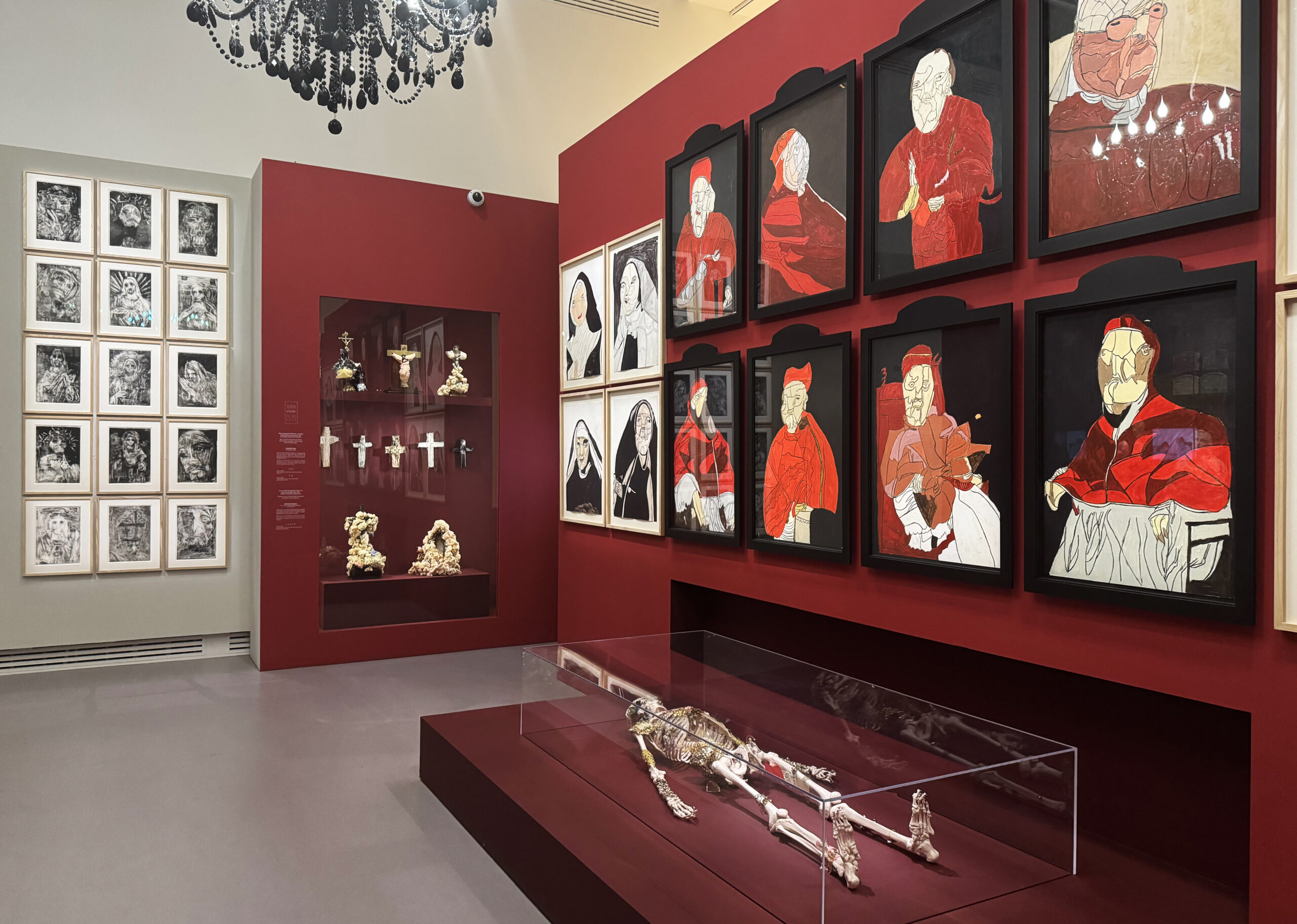
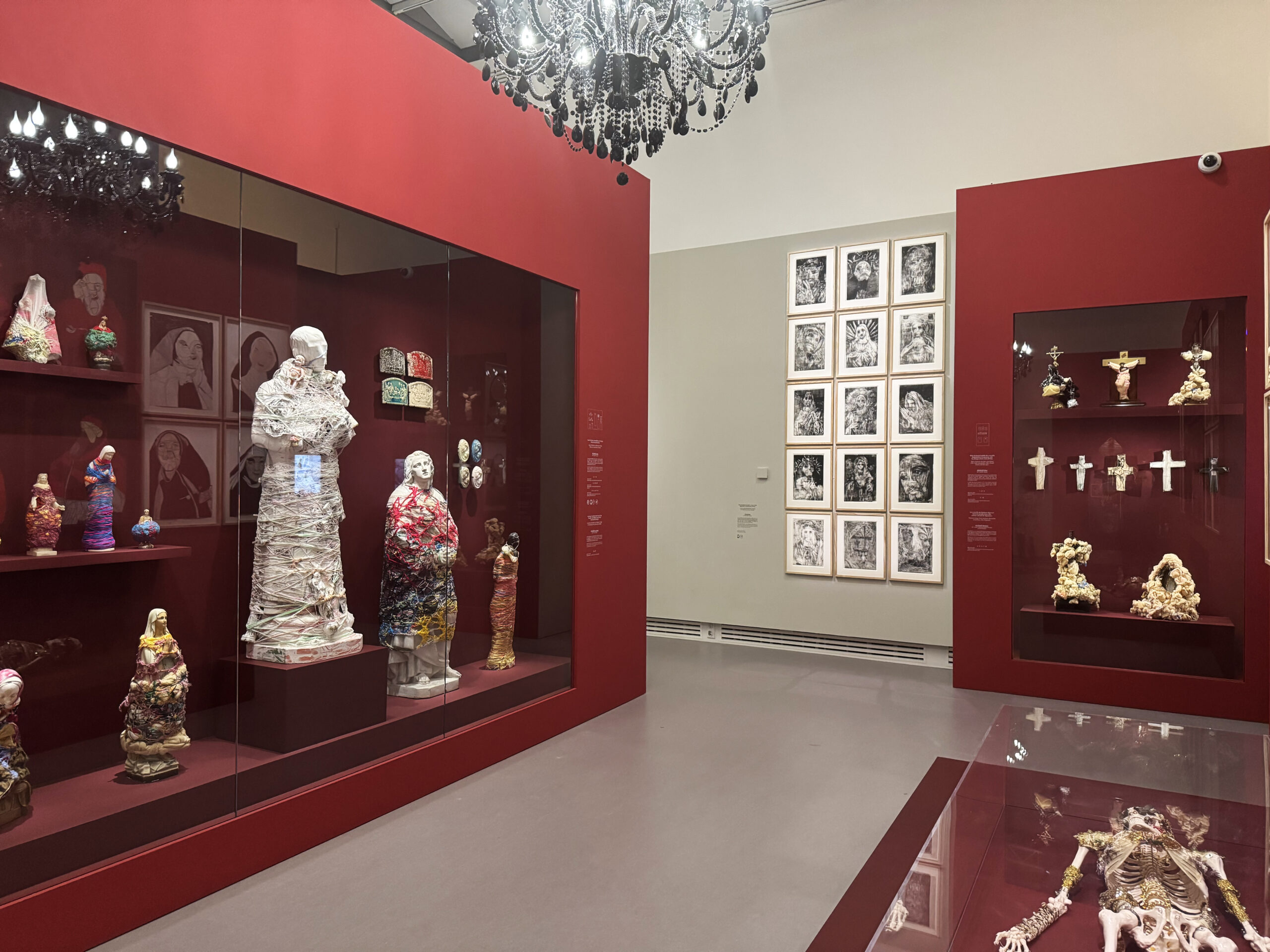
BSSome examples of gallery themes include: Repairing the World, emphasizing how many of these creators seek to save the planet or cure illnesses — far beyond a purely aesthetic concern. To Me the Flaming Tongues of Fire, a room devoted to the exploration and reinvention of languages and writing systems. Order, in God’s Name! or the necessity many feel to impose order upon the world, even dominate it and become its creators. Monsters, Chimeras and Ghosts, or the body in mutation. Dance with Spirits, dealing with creations produced without the conscious control of the creator… Also Break Collages, Orphan Works, anonymous works, and testimonies from our research expeditions in Japan, Brazil, Cuba, and elsewhere.
BDThis dynamic approach offers great freedom of reflection, allowing works to be associated according to intuitions, as one builds an architecture piece by piece — or composes a film. This freedom enables dialogue between works distant geographically or temporally, yet close in vision. Conversely, it seems absurd to us to imprison them within temporal categories under the pretext of facilitating public understanding. Thus, contemporary Art Brut works can stand beside older works, revealing unexpected correspondences. For example, in the sequence To Me the Flaming Tongues of Fire, Harald Stoffers’ large letter piece (2000s) resonates with anonymous embroideries from Marcel Réja’s former collection dating from the late nineteenth century. In Break Collages, the works of Auguste Forestier (1940s) “dialogue” with those of ACM (2000s).
BSThe internal structure of the works, the history of their authors, and the enigmatic way in which they perceive the world: that is what interests us. This approach is accompanied by contextualization through detailed wall texts and sometimes short films, forming a dispositif that illuminates the works without reducing their singularity. Finally, at the end of the exhibition, we inserted the history of Art Brut into a dense chronology revealing echoes of the “great History” running through it, while remaining at a distance from the history of art to which it remains foreign.
A LIVING LEGACY: BEYOND JEAN DUBUFFET
CKHow do you position yourselves in relation to the history of Art Brut founded by Jean Dubuffet?
BDJean Dubuffet laid foundations whose thinking remains very much alive today. His contribution was later extended and enriched, notably through Michel Thévoz’s reflections during his direction of the Collection de l’Art Brut (CAB). The plurality of forms of otherness he highlighted transcends time, taking different forms according to contexts, periods, and cultures.
BSReducing this legacy to a mere historical moment would unjustly limit its scope. Implicitly, it is a way of trying to erase this artistic field, relegating it to a simple component of contemporary art, as though it no longer had any reason to exist. This strategy of denial is frequently found among many critics and art historians, and even museum curators.
BDDissidence — the true, radical, authentic kind, which has nothing to do with fashionable provocative postures — has always existed. It has simply taken different forms over time; it constantly shifts. It is up to us to continue exploring and revealing the treasures that still emerge beyond the beaten paths. The tools Art Brut offers us remain very much alive.
CKIf you had to summarize this exhibition in one sentence?
BSWe proposed a journey nourished by extravagant human stories, unique artistic propositions, and adventures that inspire dreams while revealing unsuspected knowledge about the world. Through the intimate tool of the collector, we become modest archaeologists, uncoverers of buried secrets that we wish to share with a broad public and invite them to dream — and the public, it seems, responded enthusiastically.
AND TOMORROW?
CKWhat prompted you to make this donation?
BDThe motivation was of a heritage-related nature. It was primarily about preserving a rare collection from the uncertainties inherent in inheritance processes, which too often lead to the dispersal of collections. It was also driven by a deeply held conviction, shared with Barbara Safarova and my children: that culture is a precious asset that must be preserved, and that it can serve as an essential safeguard against all forms of babarism. We believe that the privilege of having assembled such a collection gives us a particular responsibility, fully aligned with the public interest. This commitment may also be seen as a continuation of a family legacy, as my great-grandfather was a major patron of the arts one of the founders of a renowned Paris museum.
CKWhat are your plans for the future?
BDNow that I have made this donation, in a sense fulfilling my mission, I know that my work and the artworks are protected and in good hands. Alongside the museum, Barbara and I will continue to invest ourselves, notably by encouraging other collectors to contribute to enriching the corpus of Art Brut. We will also continue our collaboration with the Kandinsky Library on research projects.
But the essential part of my activity will now focus on the works preserved within my family. Over the years, my children have built their own collection and developed their own perspective. We have decided to bring these ensembles together within the same entity, under the label Decharme Collection, whose development we will collectively oversee for a time… before I pass the torch on to them.