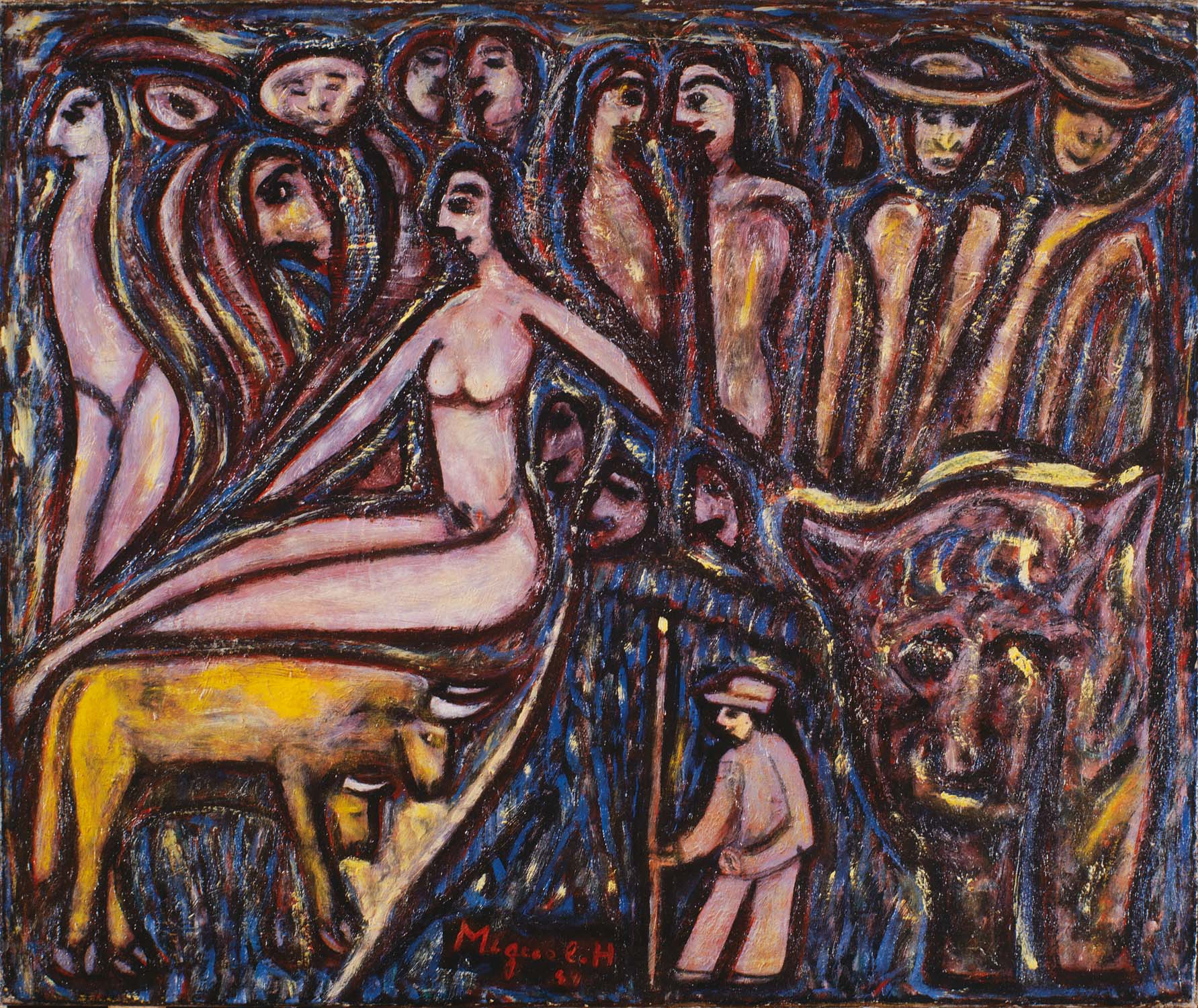
Born in Spain to a family of farmers, Miguel Hernández emigrated to Brazil at 19, where he held various jobs and began his political activism. Returning to Europe around the age of 30, he collaborated with anarchist journals, engaged in anti-militarist propaganda, and was imprisoned several times, drawing during his detentions.
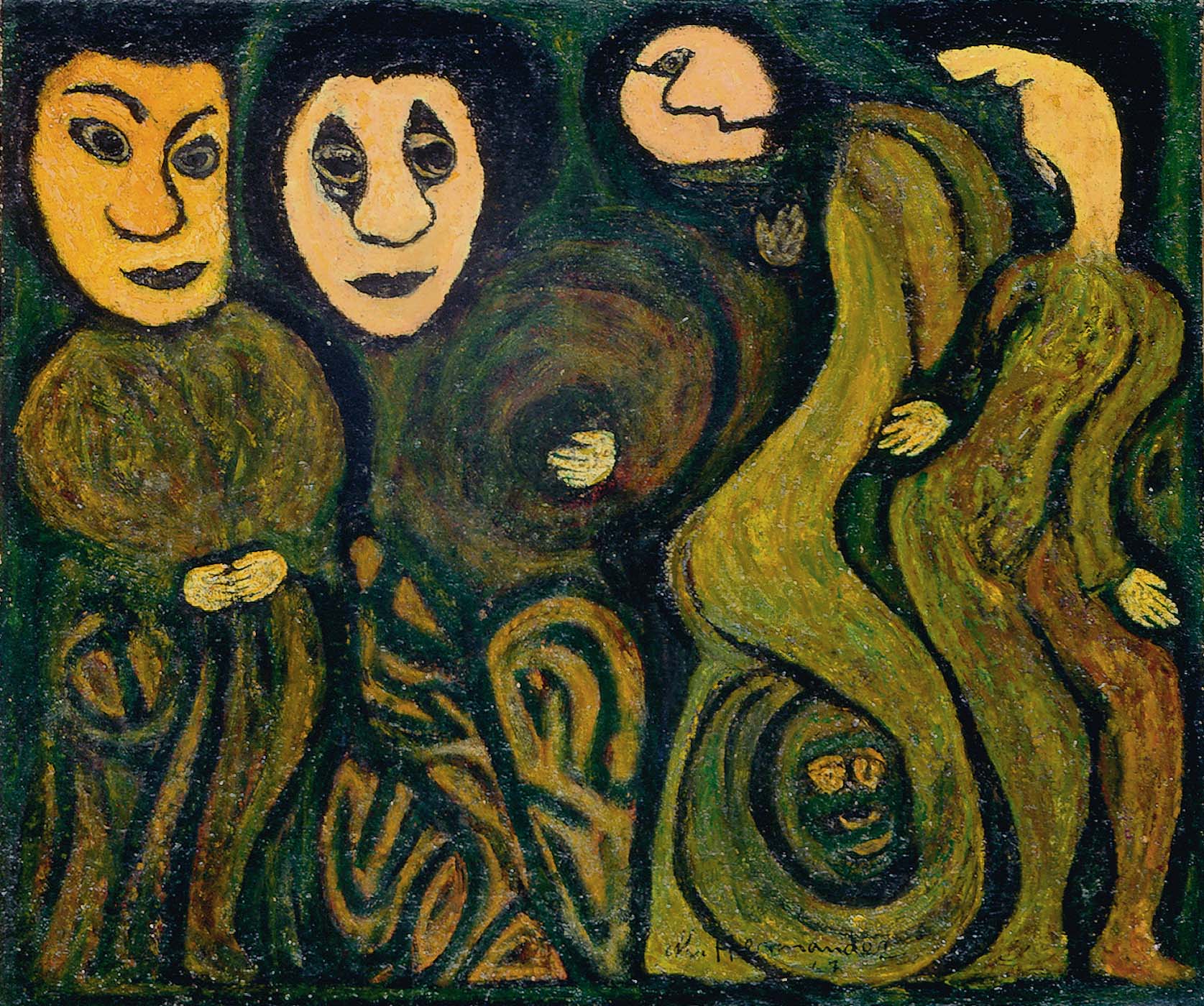
The Spanish Civil War forced him and his wife to flee to France; before their internment in a refugee camp, he asked his wife to return to Spain—they never saw each other again. After the Liberation, settled in Paris, he lived in poverty while continuing his political and artistic work. As administrator of the journal España Libre, he devoted his art to images of Spain, the working and rural world, anguished spirals, and ghostly women evoking his wife. His work, combining political engagement and visual poetry, was exhibited as early as 1947 by Michel Tapié and Jean Dubuffet.
By country
- Angola
- Argentina
- Austria
- Belgium
- Benin
- Brazil
- Canada
- Chile
- Colombia
- Croatia
- Cuba
- Czech Republic
- Finland
- France
- Germany
- Guatemala
- Haiti
- India
- Iran, Islamic Republic of
- Italy
- Jamaica
- Japan
- Korea, Republic of
- Mexico
- Morocco
- Namibia
- Netherlands
- Papua New Guinea
- Peru
- Philippines
- Poland
- Portugal
- Russian Federation
- Senegal
- Serbia
- Slovakia
- Spain
- Sweden
- Switzerland
- United Kingdom
- United States
- Uruguay
collection | general collection | H | HERNANDEZ Miguel
HERNANDEZ Miguel
1/2