Aloïse Corbaz was 11 years old when her mother died. After earning her secondary school diploma in 1906, she had a romantic relationship with a student—a relationship her sister violently put an end to—and dreamed of becoming an opera singer.
Expatriating to Germany in 1911, she worked there as a teacher and later as a governess, notably in Potsdam at the court of Emperor Wilhelm II, with whom she fell passionately in love. She developed psychological disorders at the age of 27, and the outbreak of war forced her to return to Switzerland. Hospitalized from 1918 onward, she was interned at La Rosière asylum from 1920 until her death.
Although during the first years she isolated herself and experienced occasional violent outbursts, she gradually adapted to hospital life. Upon her arrival at La Rosière, she began writing and drawing in secret, but it was not until 1936 that the hospital director, Hans Steck, took an interest in her work.
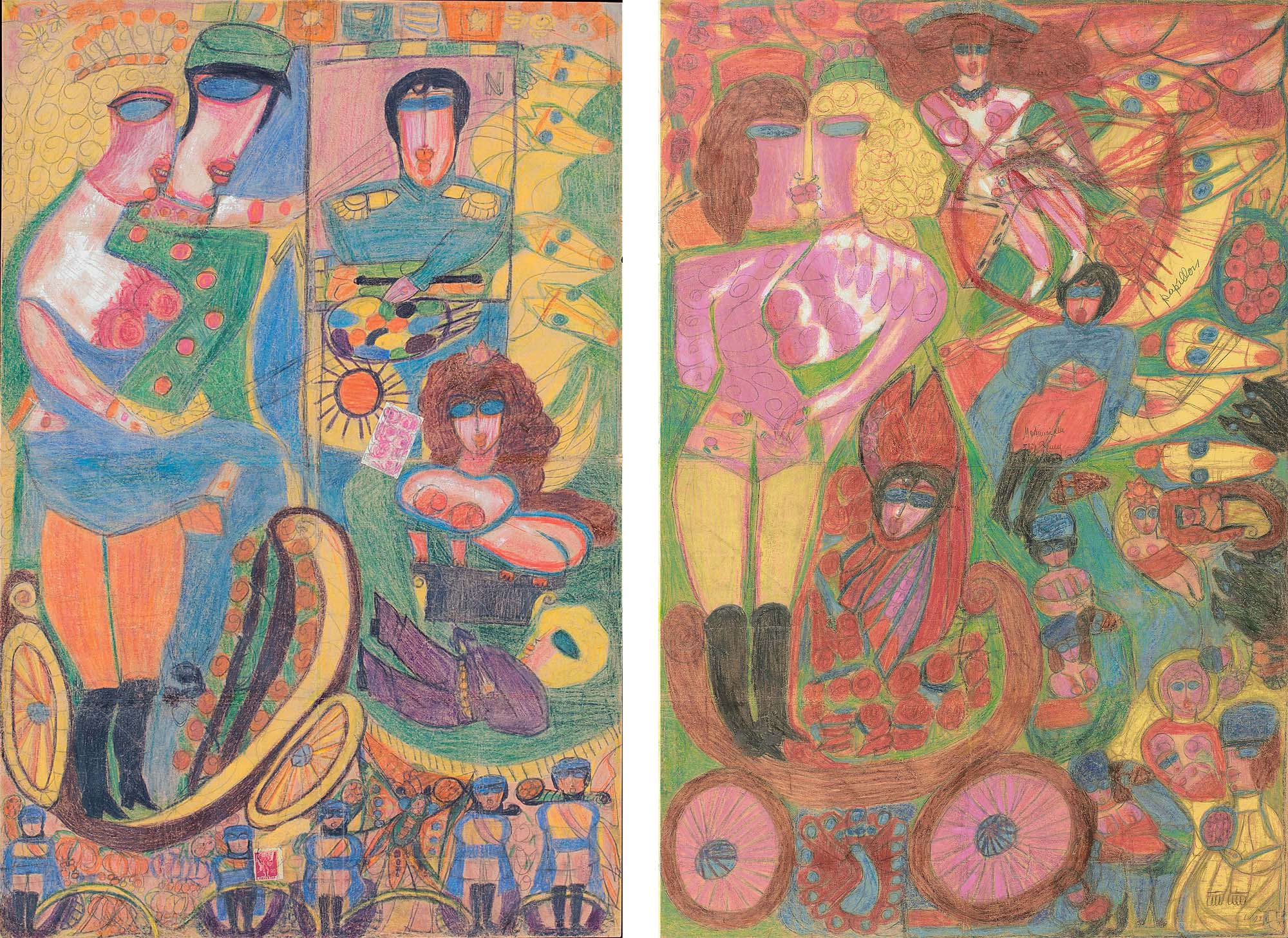
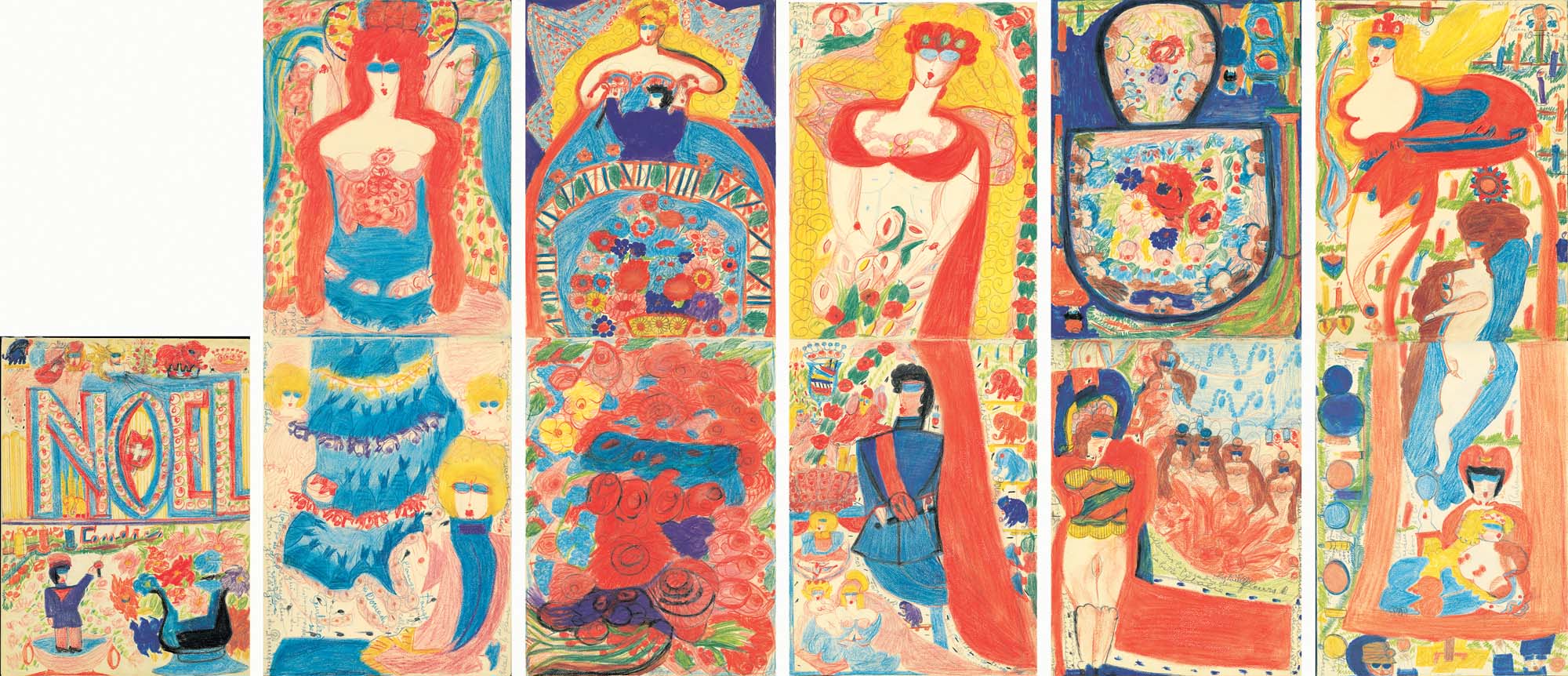
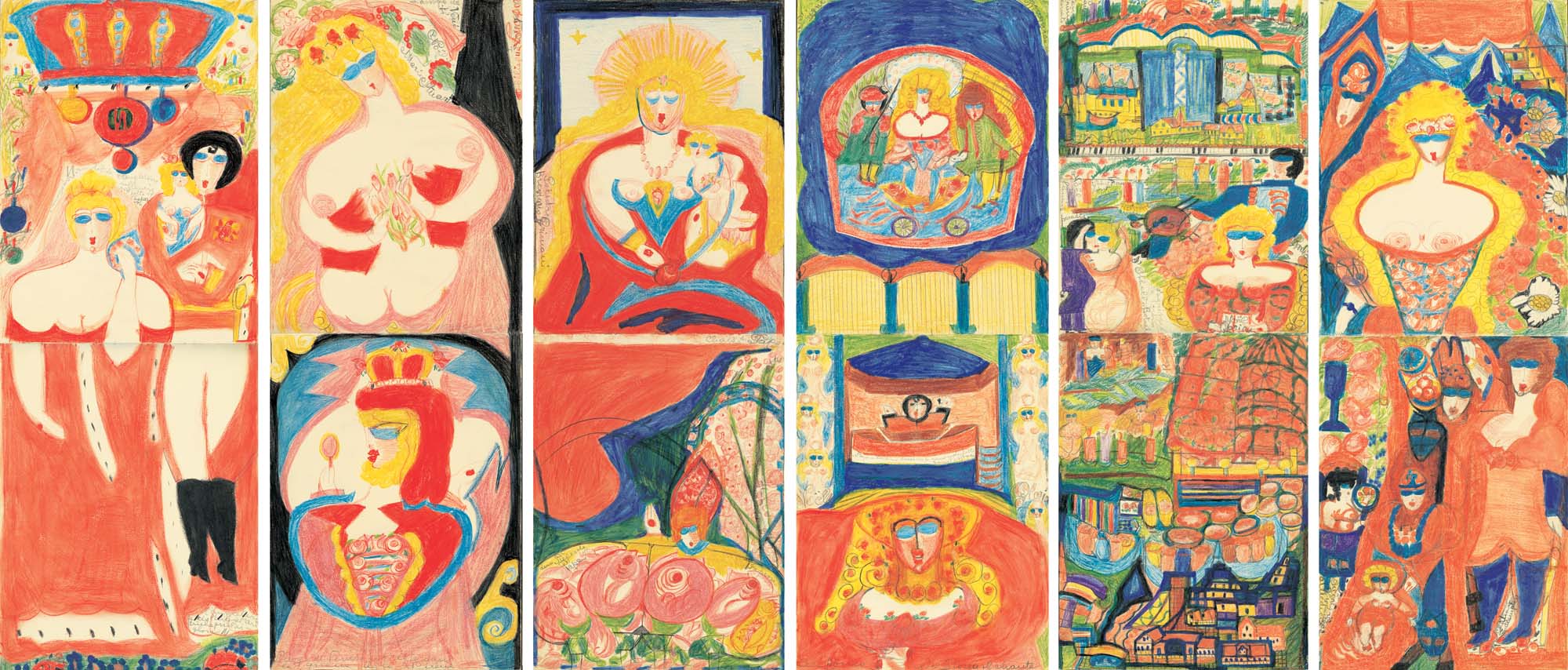
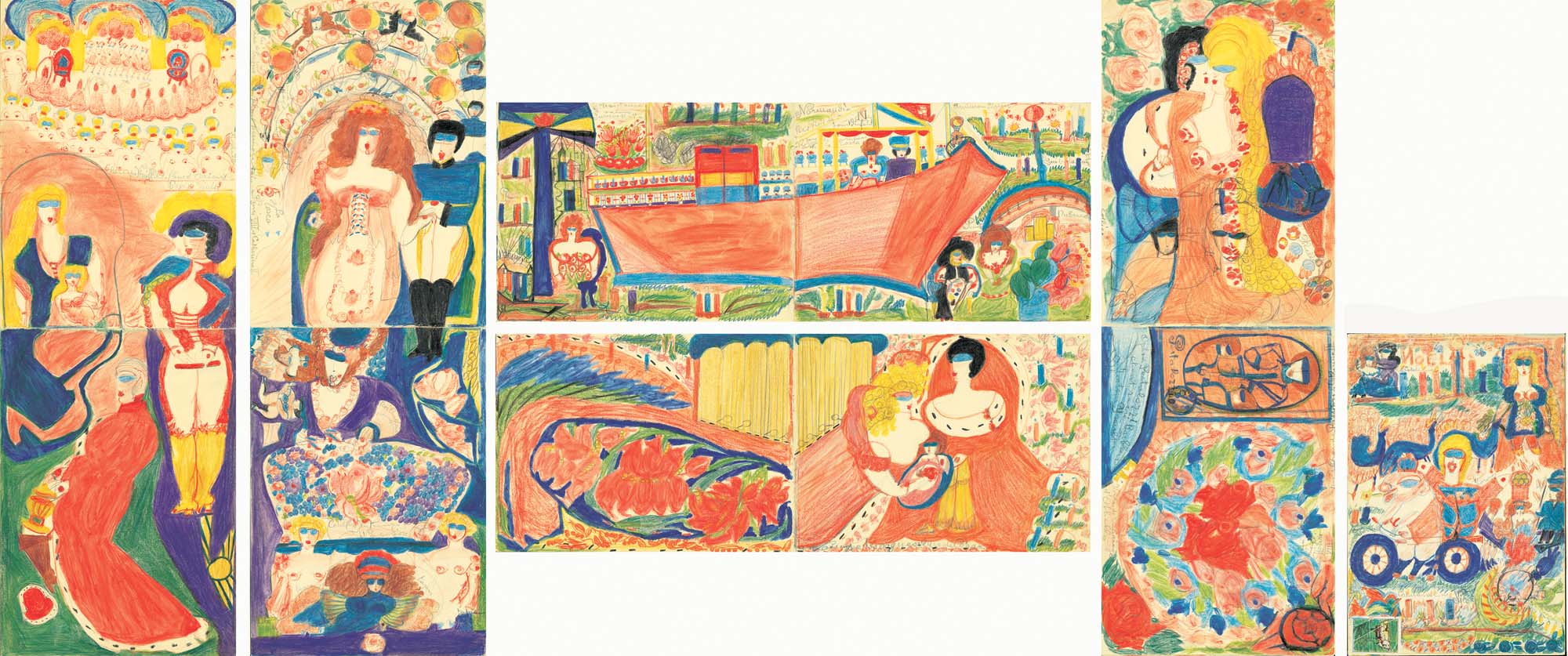
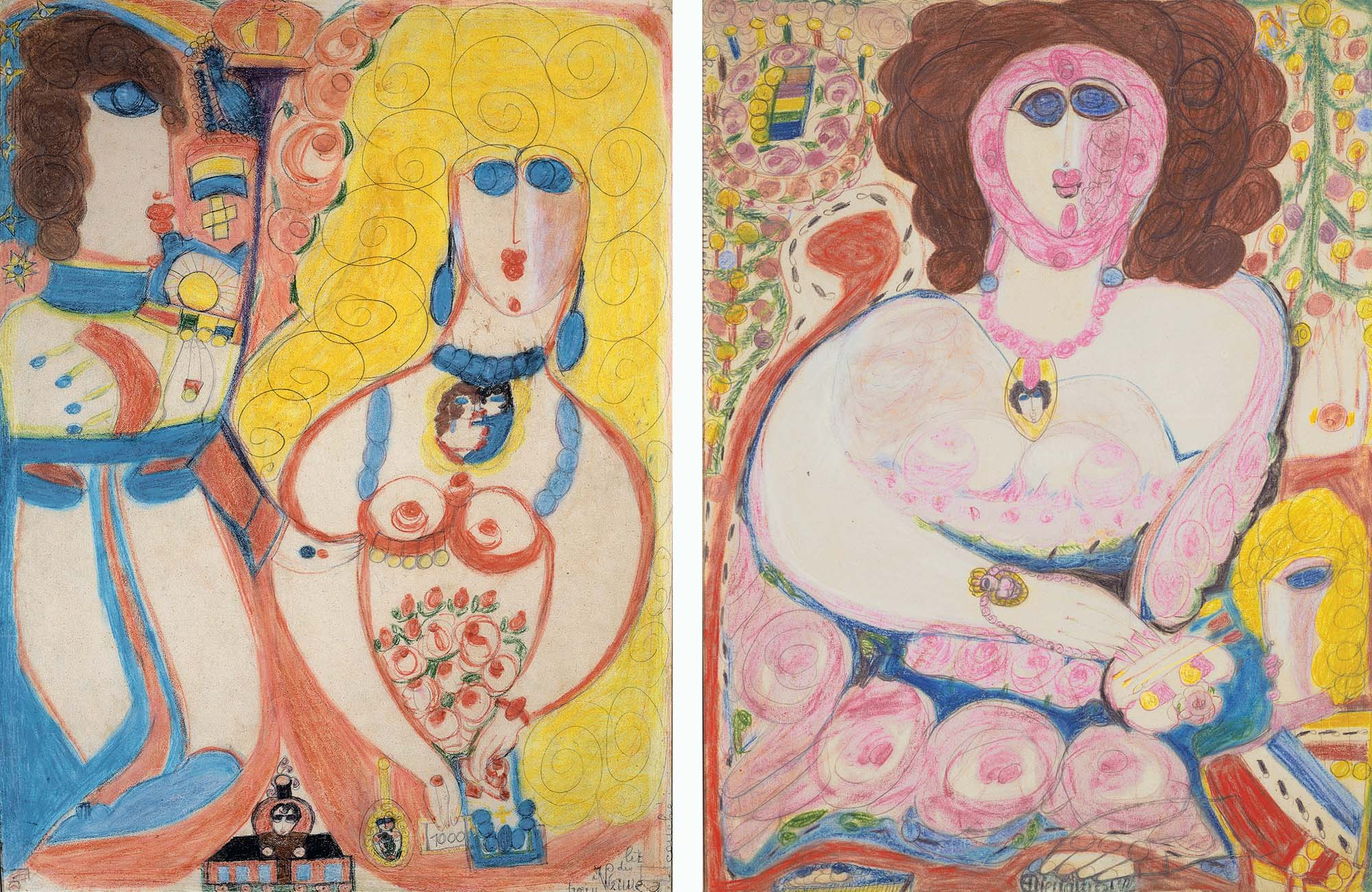
Corbaz drew a stream of blue-eyed figures on both the front and back of every sheet of paper, most often using colored pencils and oil pastels, but sometimes also petal juice or toothpaste. To develop her narratives, she sewed several sheets together with wool thread.
She claimed to have undergone a symbolic death, sealing her break with the “former natural world of the past,” and to have been reborn as the great orchestrator of a body of work populated with flowers, kings, queens, voluptuous princes and princesses, cakes and circuses, and famous and legendary love stories: an immense gallery of portraits at once sumptuous and ghostly, filled with abundant yet expressionless masks. In 1946, Jacqueline Porret-Forel, a general practitioner, came into contact with Jean Dubuffet, who in 1949 exhibited her drawings under the name Aloyse in Paris at the René Drouin Gallery.
CORBAZ aloïse