A very shy child, Alfred Marié was initially drawn to the trade of house painting. Encouraged by a friend, he enrolled in 1968 at the École Régionale Supérieure d’expression Plastique in Tourcoing. He left five years later, destroying all the works he had produced during his studies.
In 1974, he met Corinne, who became both his partner and an essential support in his artistic journey — so much so that he adopted the name A.C.M., for Alfred Corinne Marié, as a testament to their shared path.
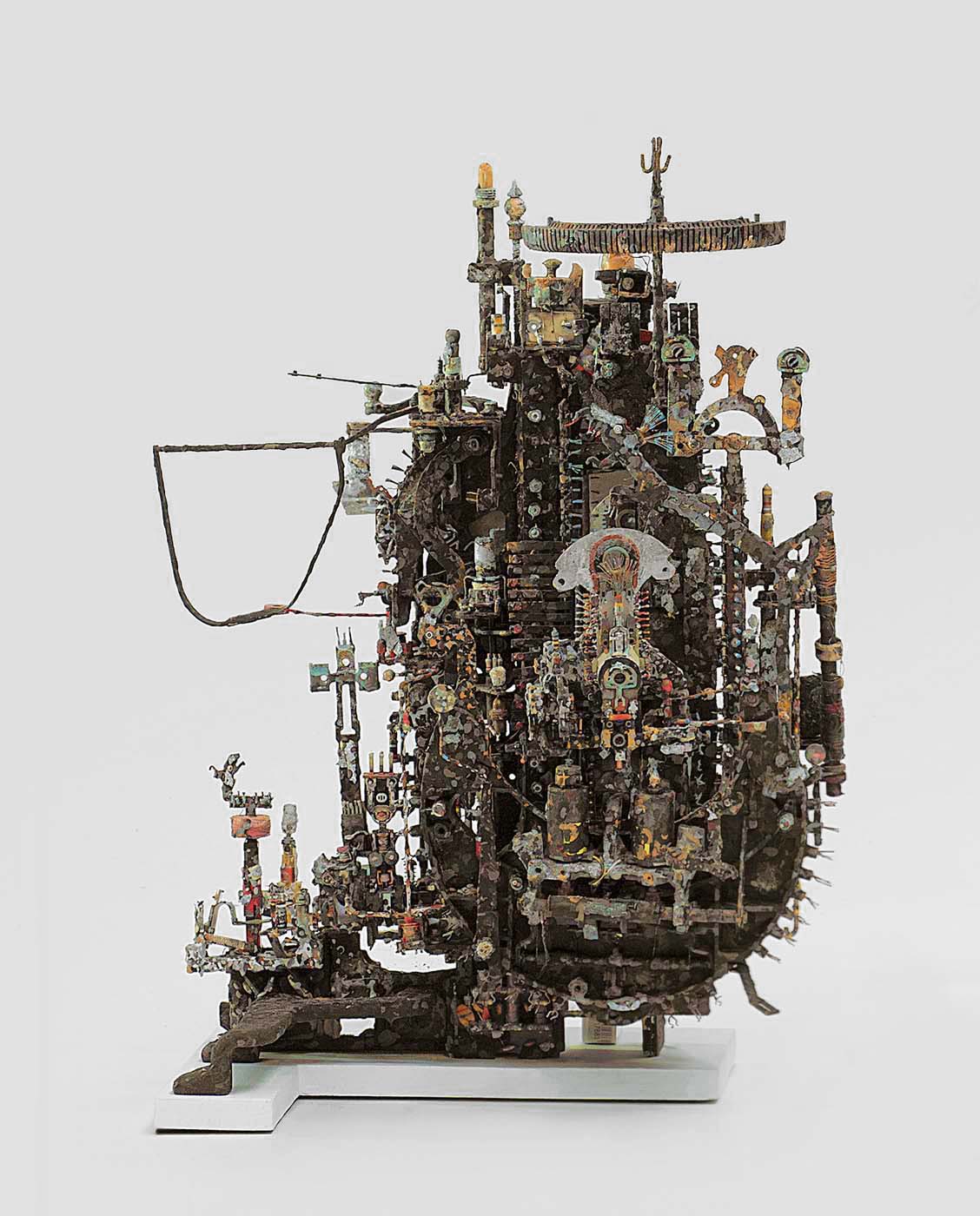
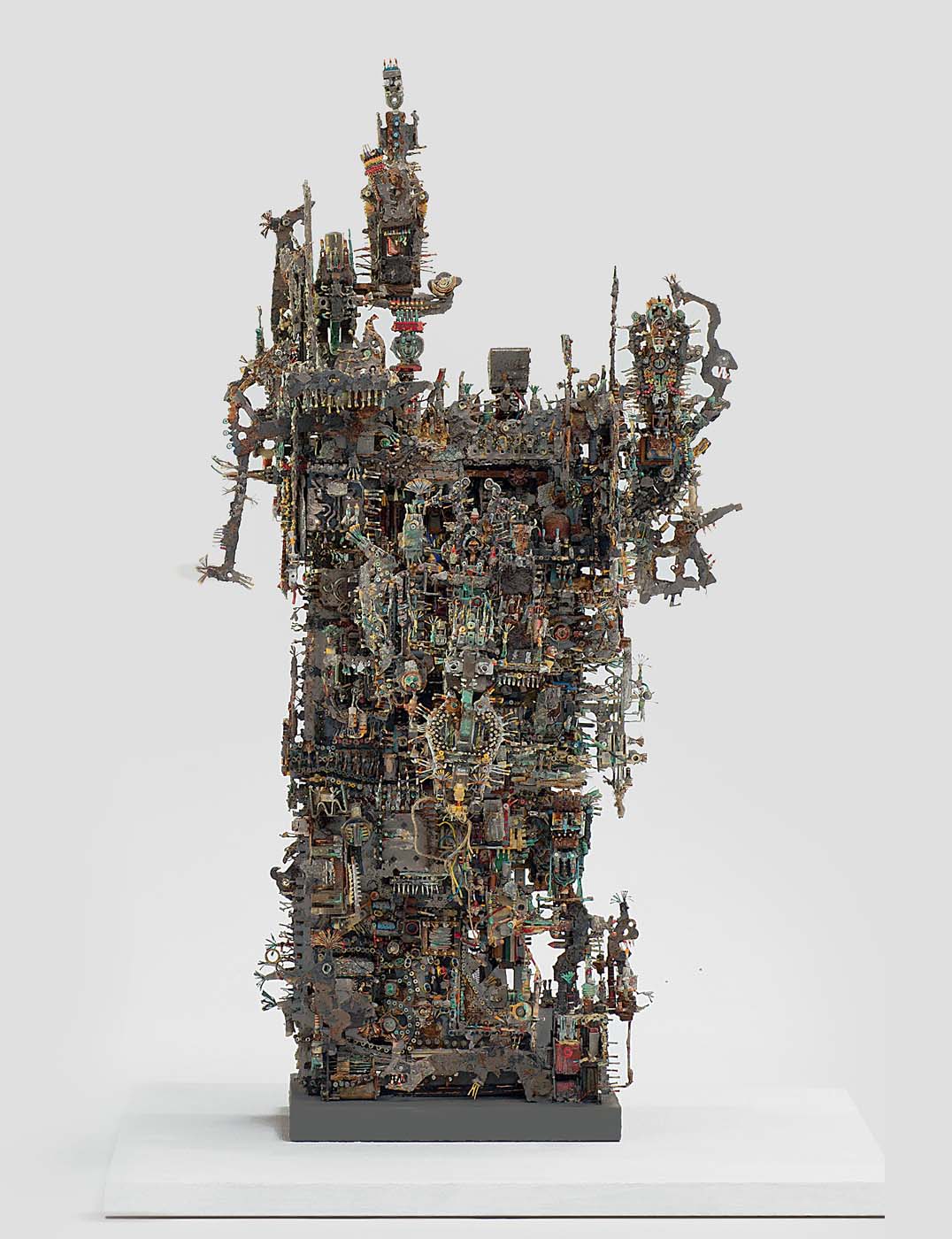
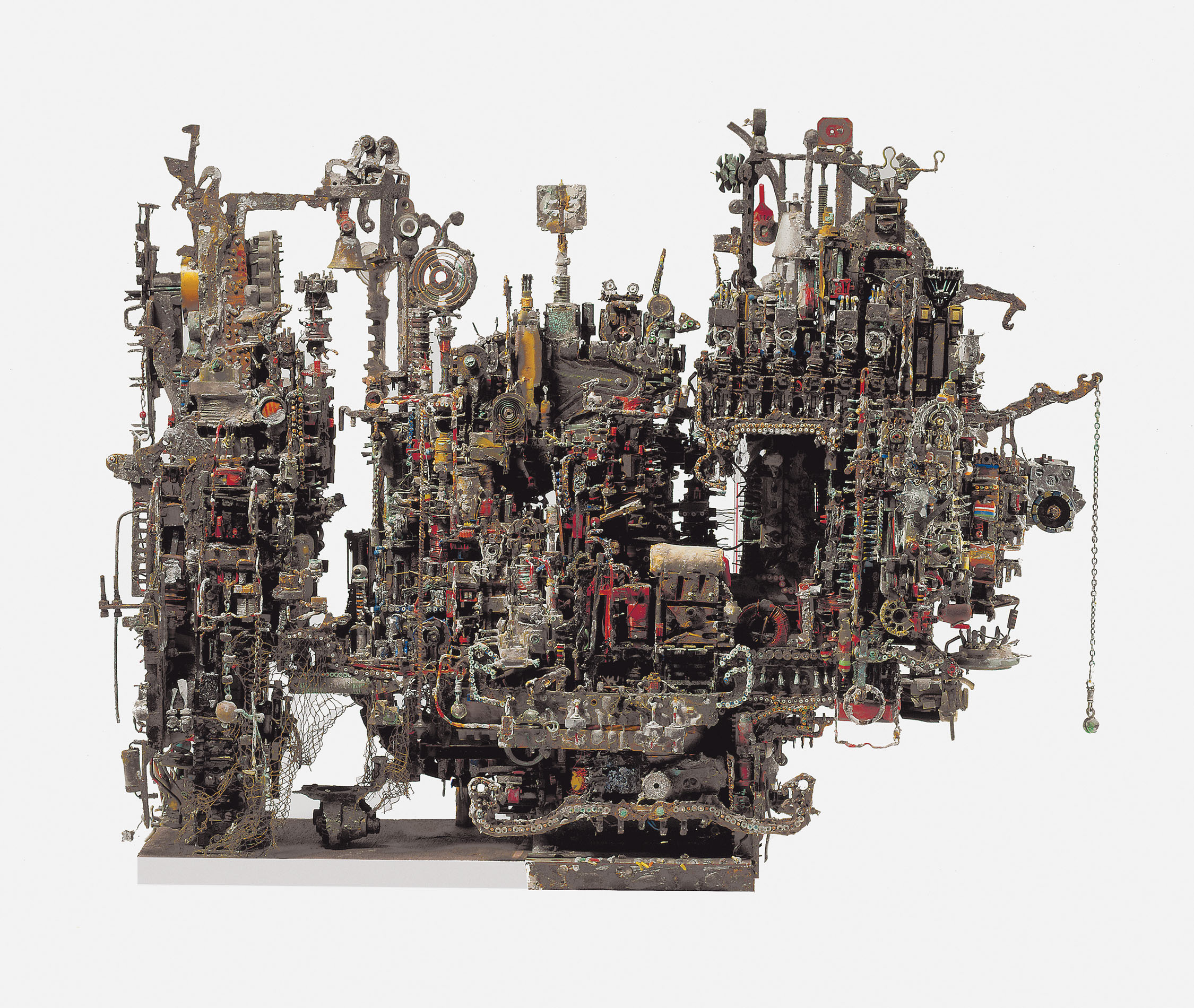
After two years of wandering, the couple settled in Alfred’s family home, which had stood abandoned for several years. As they restored the house, A.C.M. resumed his artistic practice, taking over his father’s former weaving workshop. There, he began assembling fragments salvaged from old typewriters, alarm clocks, transistors, electronic components, and electrical wires. Once cleaned, these elements were transformed through processes of acid treatment and oxidation, then carefully glued together. From this meticulous labor emerged intricate architectural constructions — cathedrals, ships, and labyrinthine structures animated by mirrors.
A.C.M.