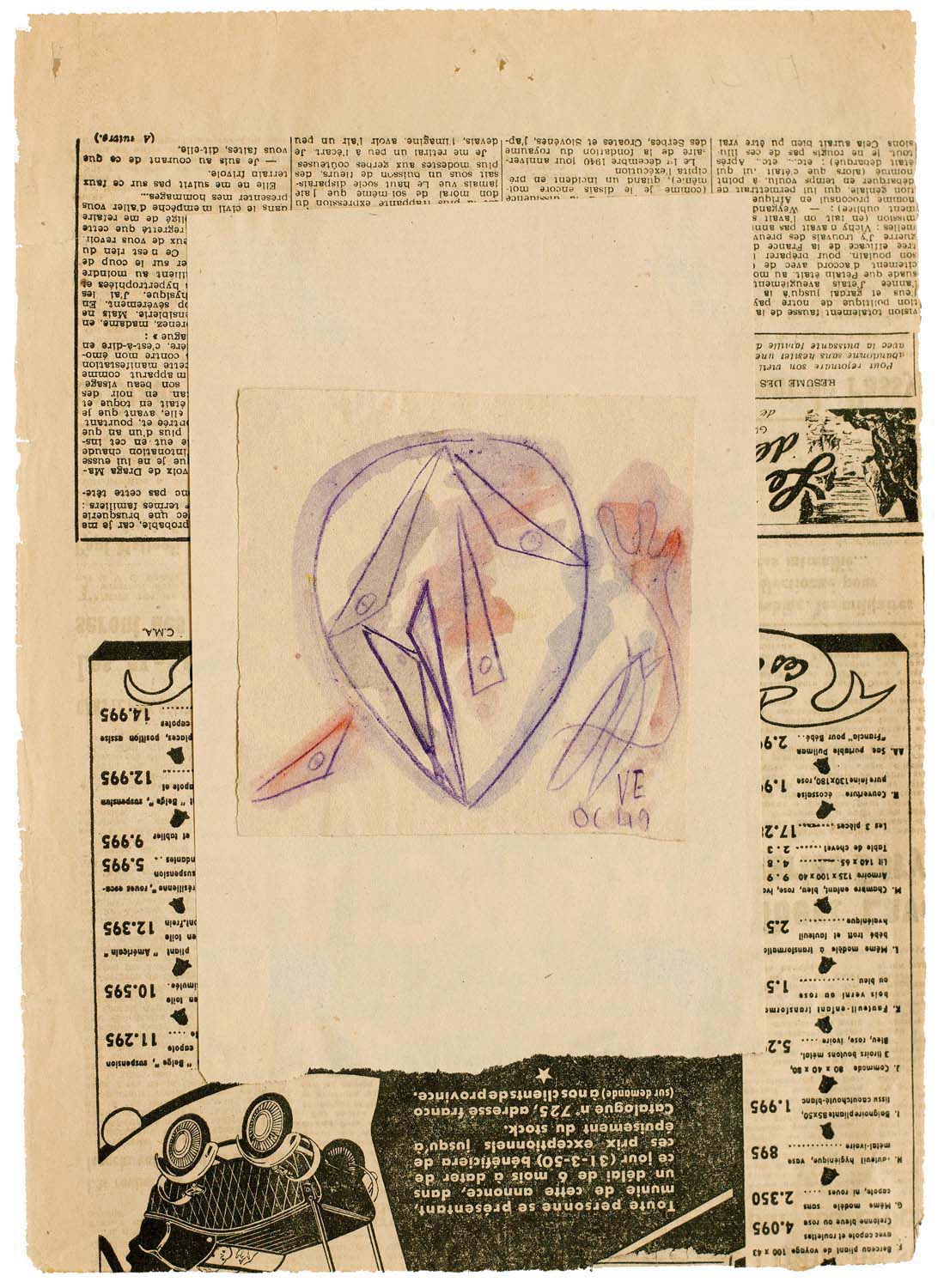
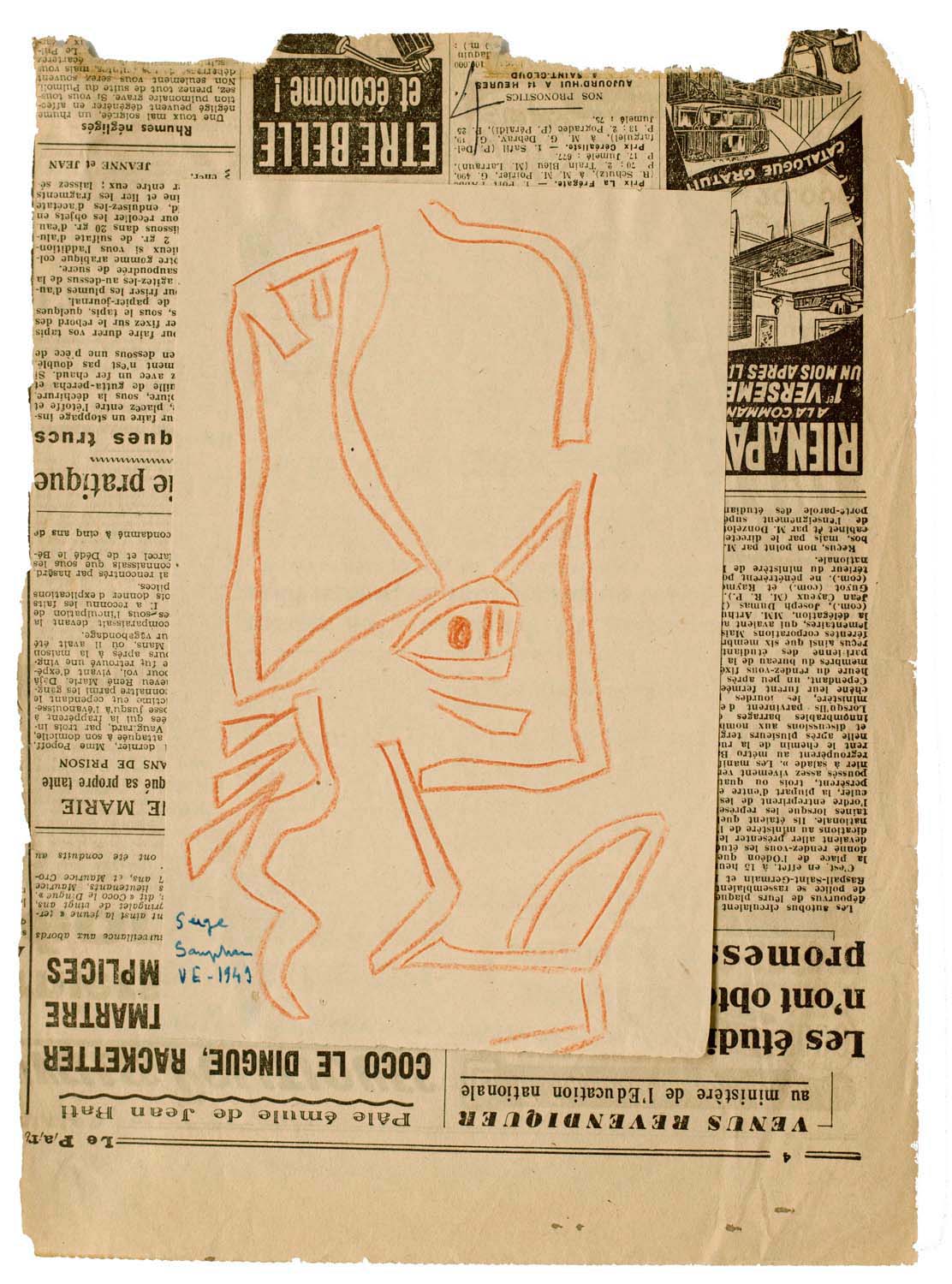
Né hors mariage, reconnu par son père sans jamais trouver pleinement sa place au sein d’une famille marquée par le deuil, Sauphar est élevé par sa mère, artiste. Adolescent, atteint de tuberculose, il est envoyé en sanatorium sous le nom maternel, circonstance qui l’a peut-être protégé de la déportation dont son demi-frère sera victime.
En 1948, à vingt-six ans, il est interné à Ville-Évrard après un épisode d’errance et de confusion. Il y demeure six ans dans le service du Dr Dublineau, avant d’être transféré à l’hôpital Esquirol à Saint-Maurice, où il restera jusqu’à sa mort en 1987, dans le service du Pr Baruk puis du Pr Lantéri-Laura. Durant près de quarante ans d’hospitalisation, il est connu de tous comme « le peintre ».
Dans l’enceinte de l’hôpital, Sauphar aménage son propre atelier, lieu de création intense où il travaille sans relâche et accueille visiteurs et soignants, auxquels il offre volontiers œuvres et ouvrages d’art. Héritier d’une fortune familiale, il choisit pourtant de rester à l’hôpital, convaincu que l’art pouvait contribuer à la rédemption du monde.
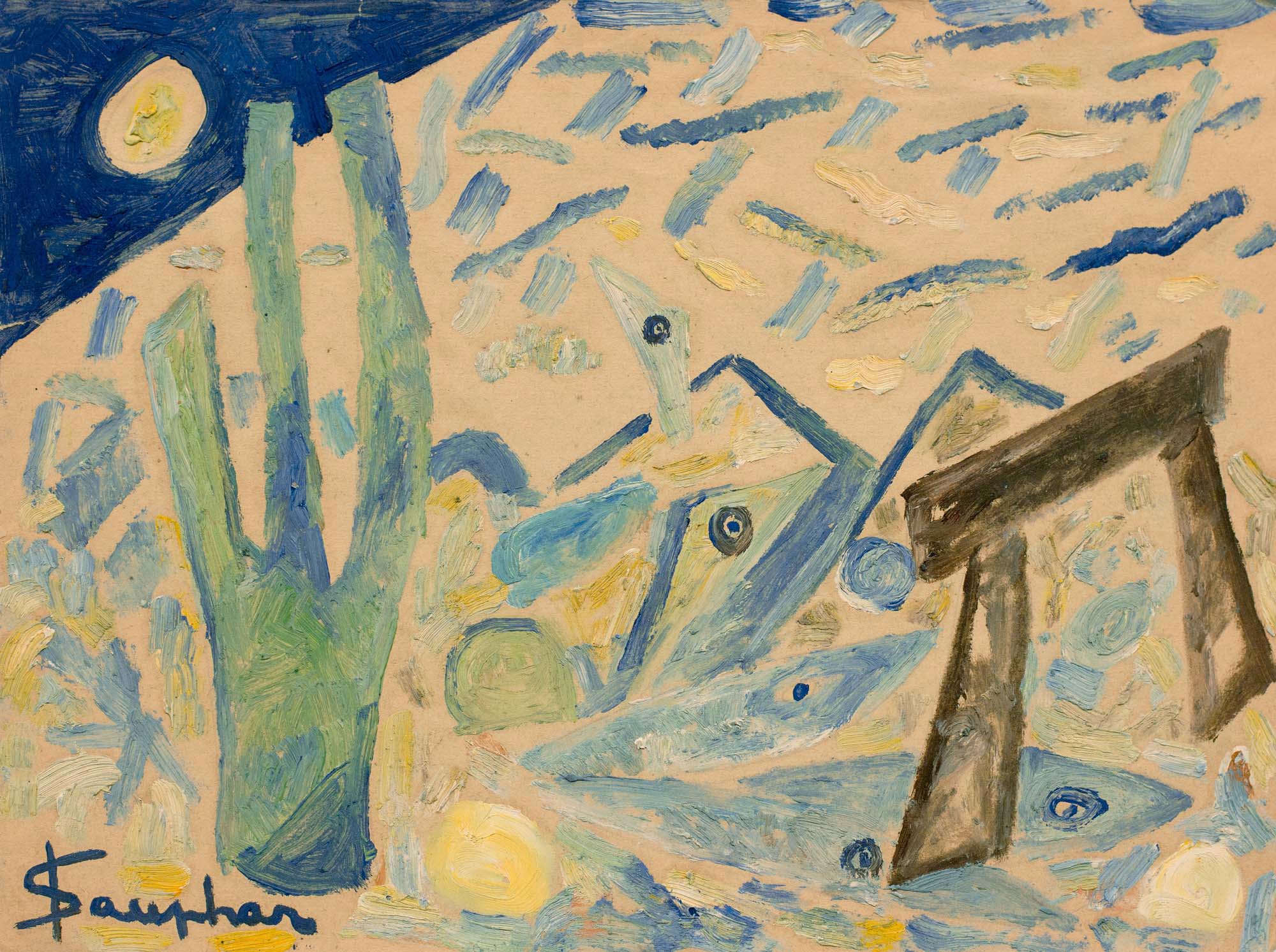
Son œuvre, nourrie par l’héritage de son père et de son grand-père, grands collectionneurs notamment d’arts asiatiques, témoigne d’une érudition singulière. Sa culture artistique, littéraire et historique se mêle à une quête identitaire profonde, faisant de sa peinture un espace où se rencontrent mémoire, savoir et expérience intime.
By country
- Angola
- Argentina
- Austria
- Belgium
- Benin
- Brazil
- Canada
- Chile
- Colombia
- Croatia
- Cuba
- Czech Republic
- Finland
- France
- Germany
- Guatemala
- Haiti
- India
- Iran, Islamic Republic of
- Italy
- Jamaica
- Japan
- Korea, Republic of
- Mexico
- Morocco
- Namibia
- Netherlands
- Papua New Guinea
- Peru
- Philippines
- Poland
- Portugal
- Russian Federation
- Senegal
- Serbia
- Slovakia
- Spain
- Sweden
- Switzerland
- United Kingdom
- United States
- Uruguay
collection | general collection | S | SAUPHAR Serge
SAUPHAR Serge
1/3