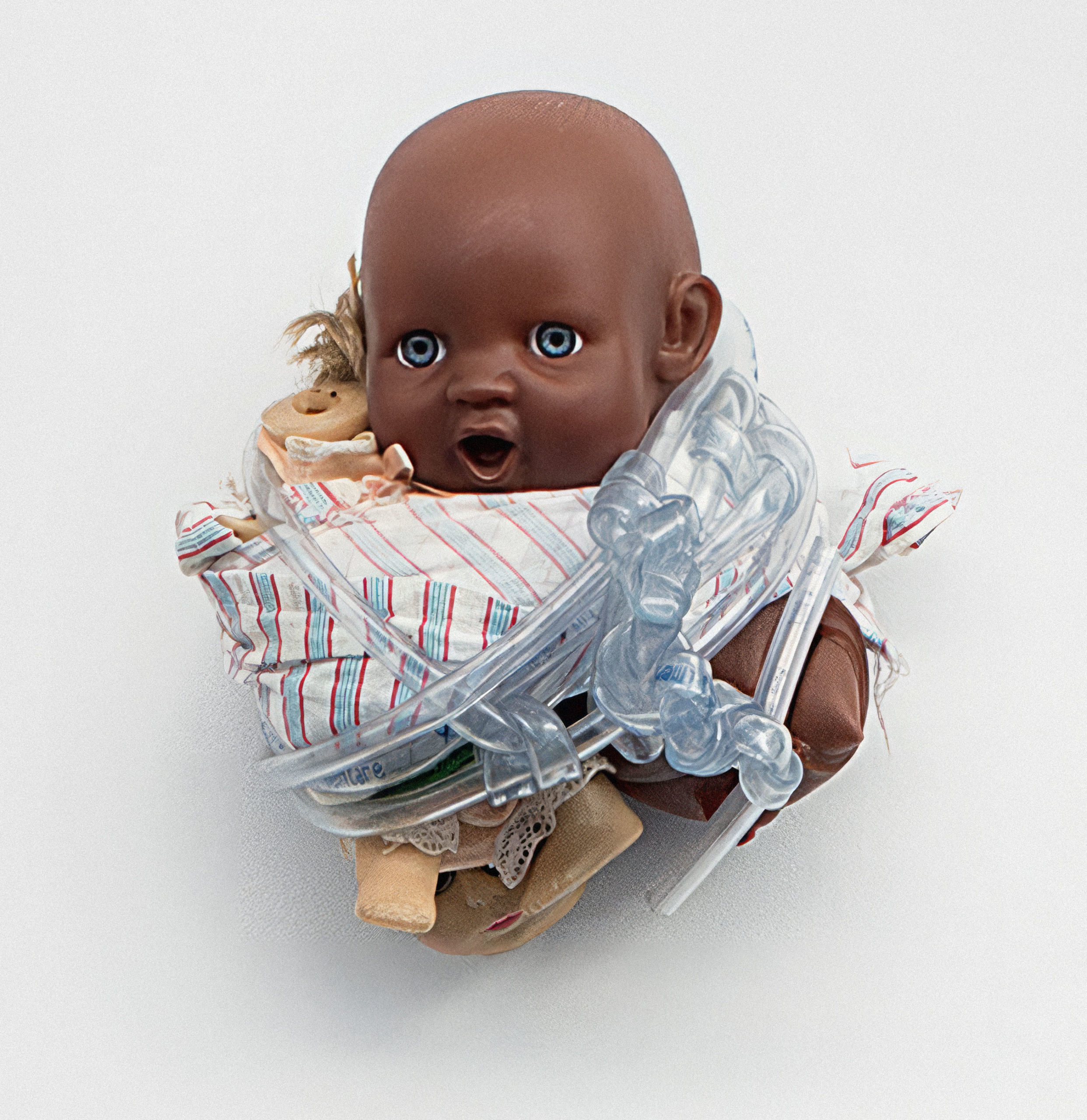
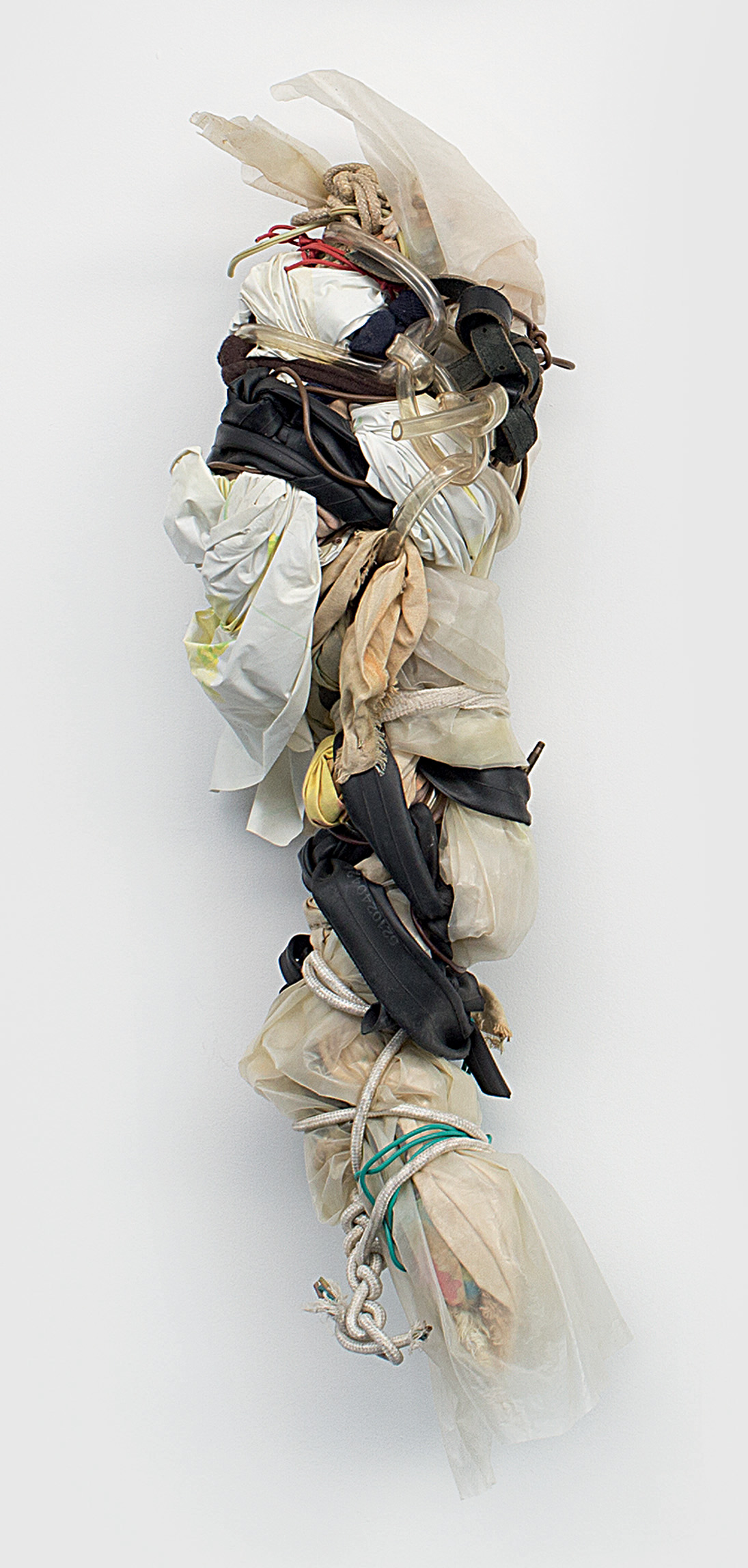
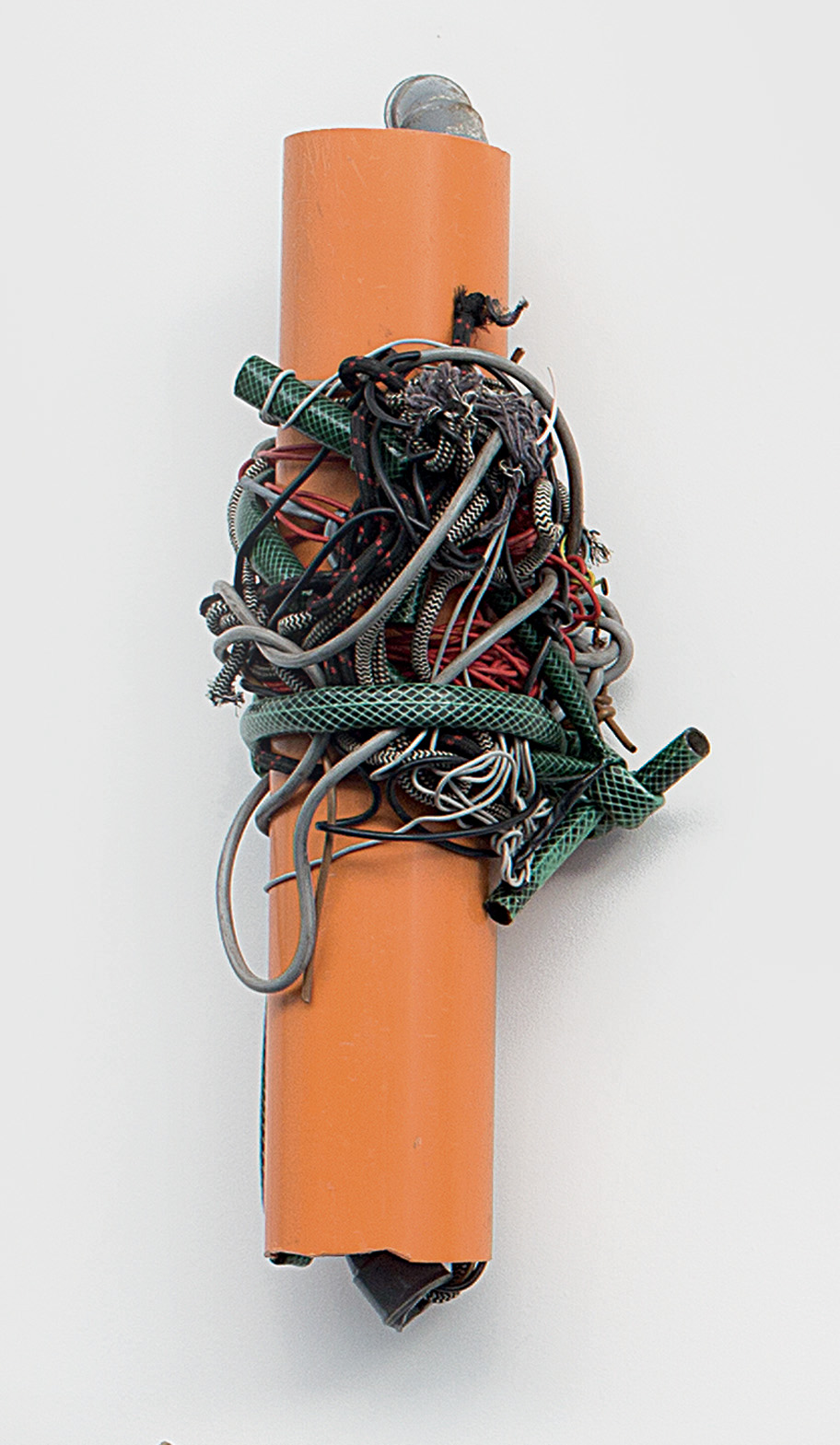
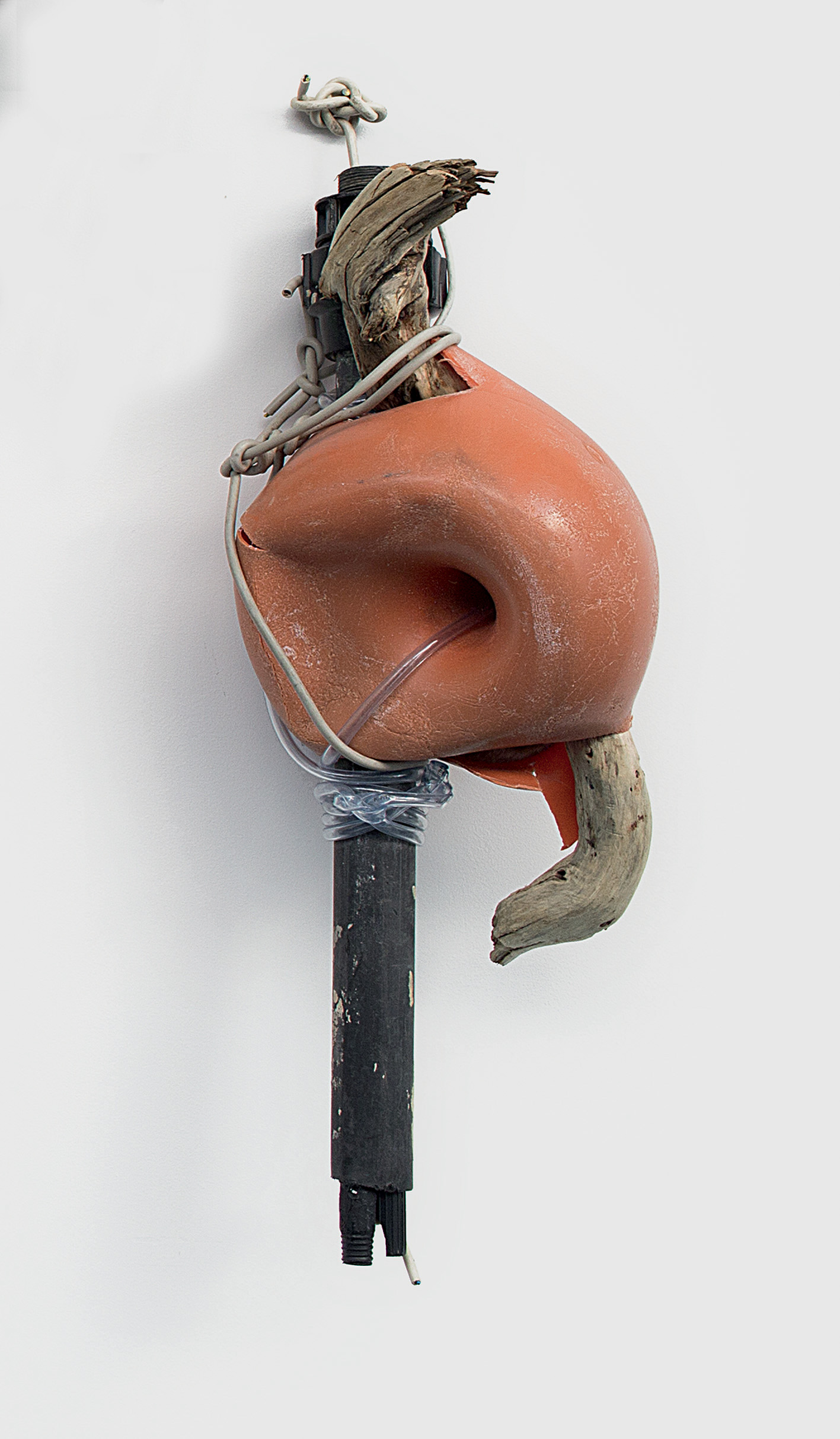
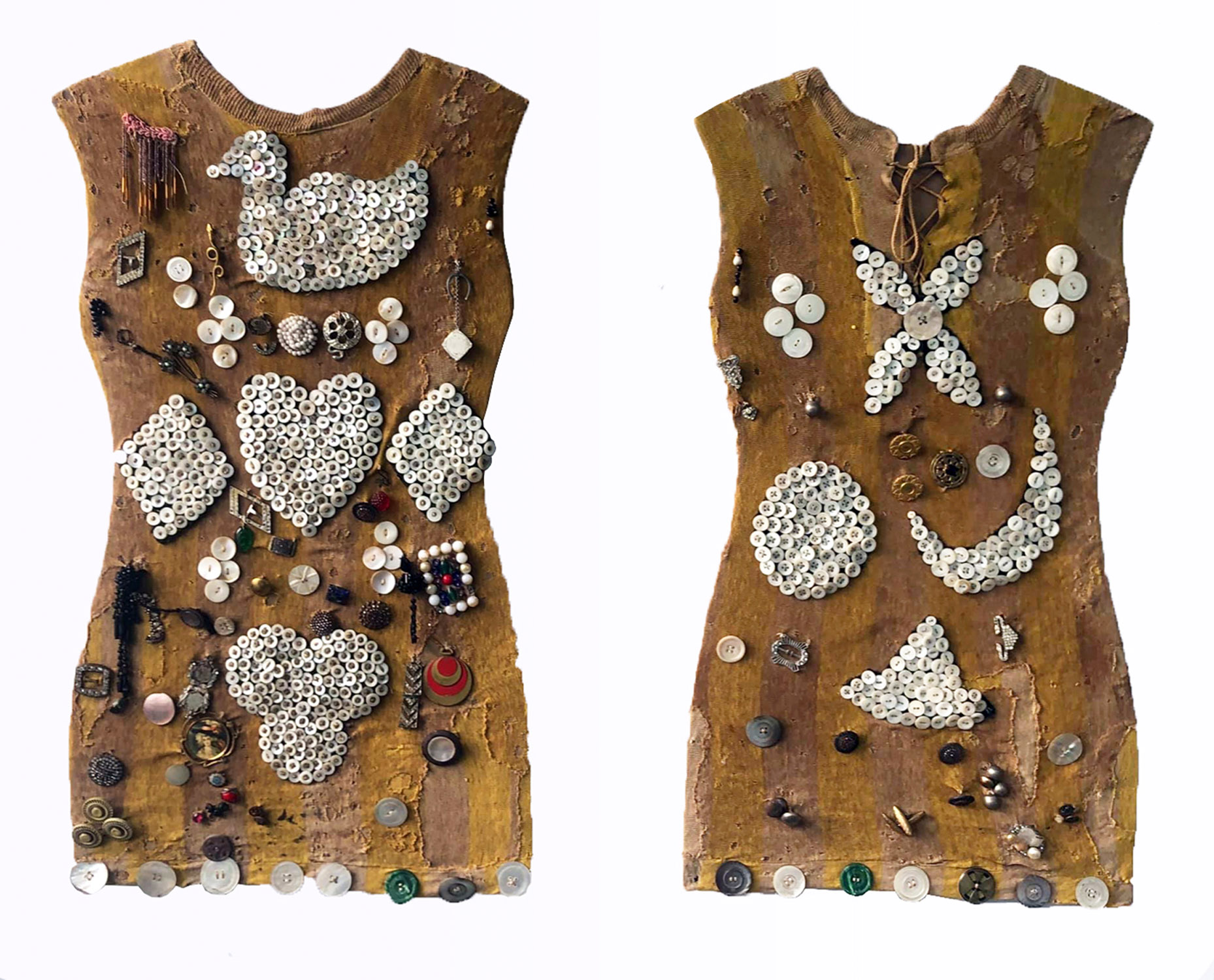
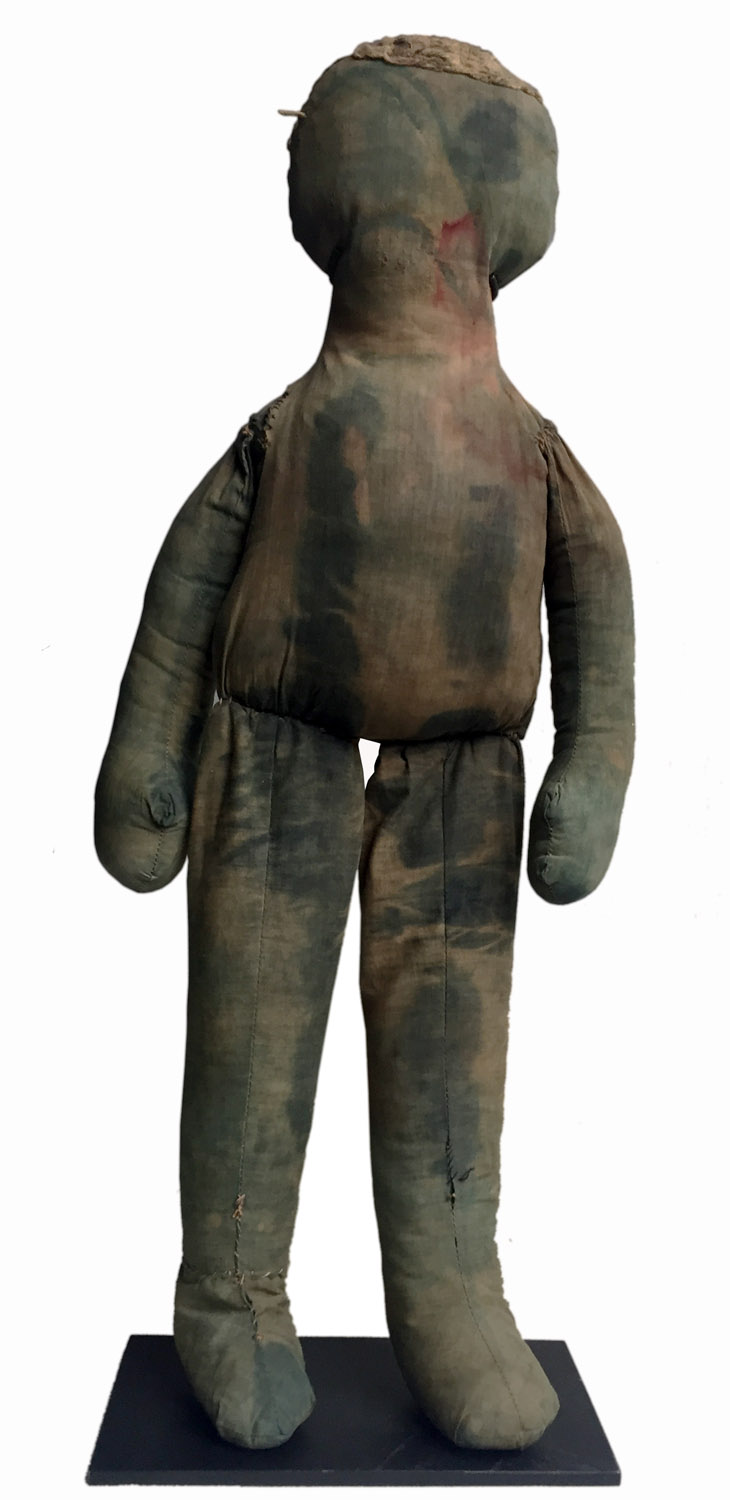
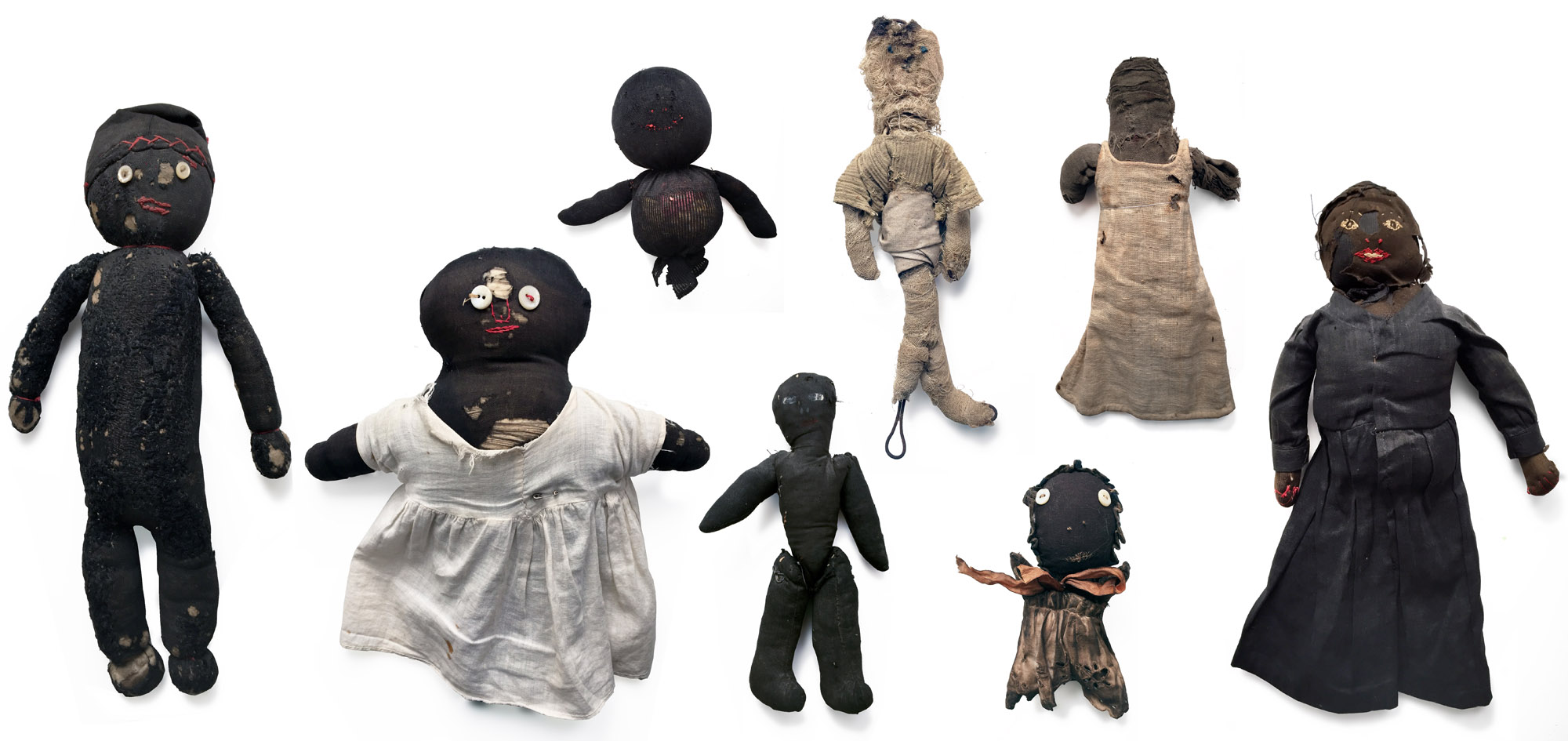
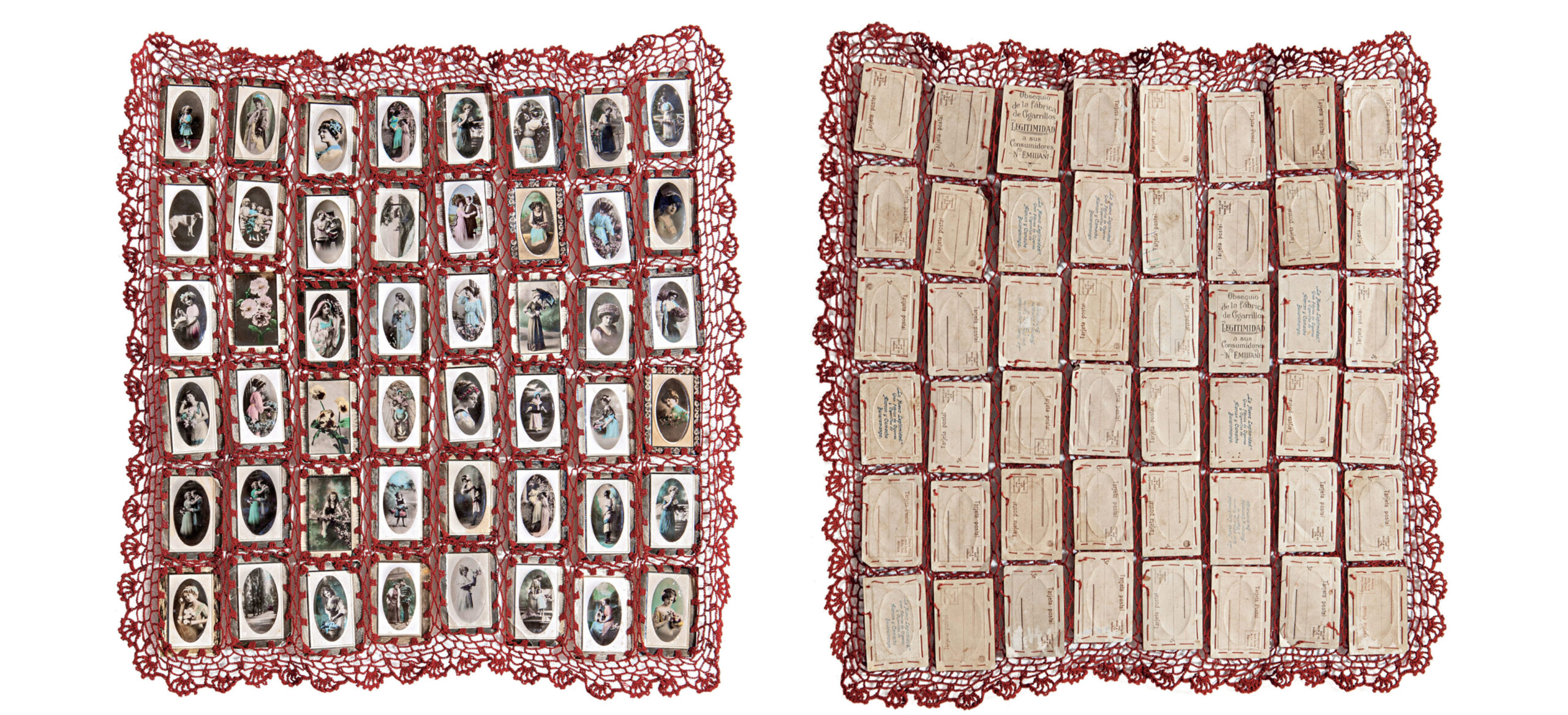
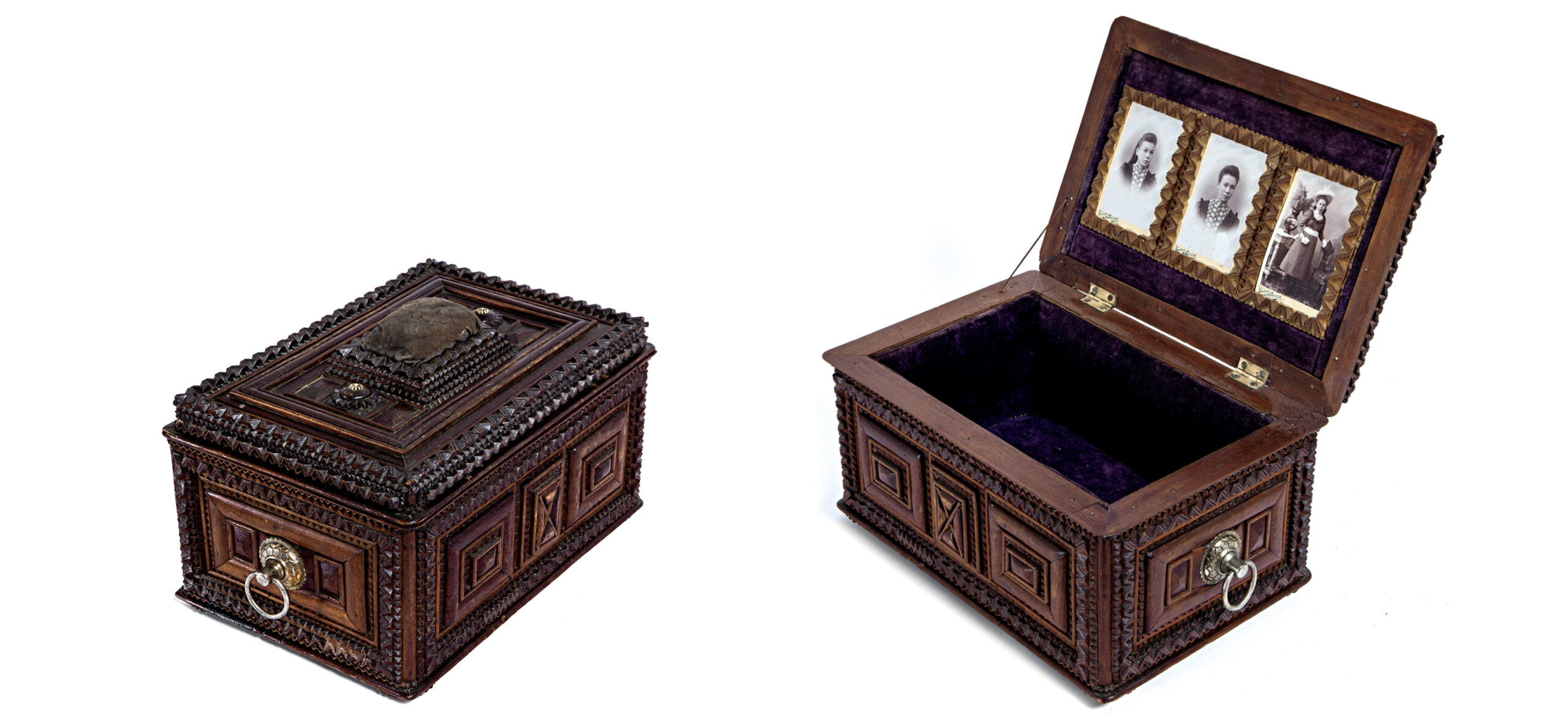
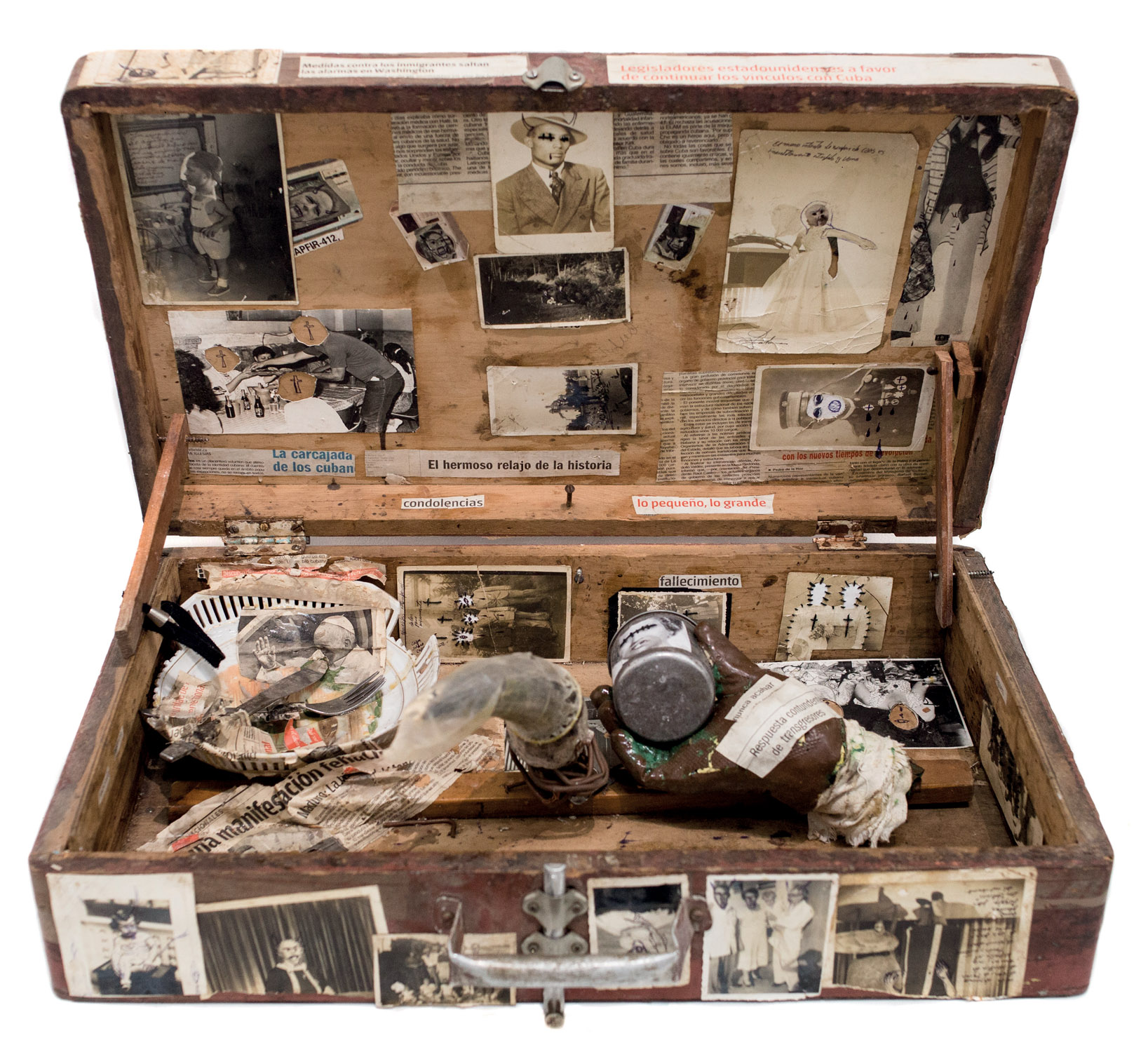
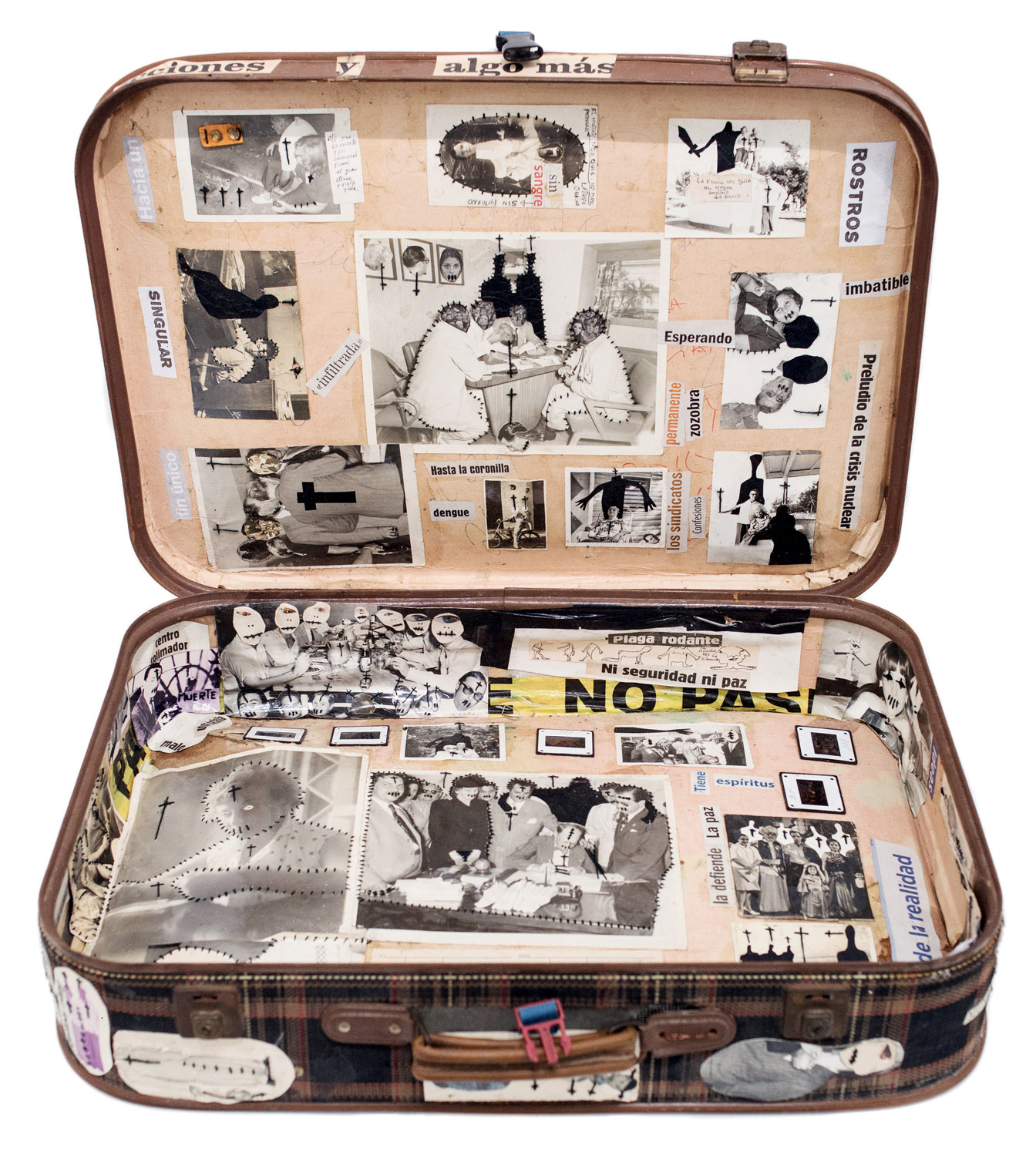
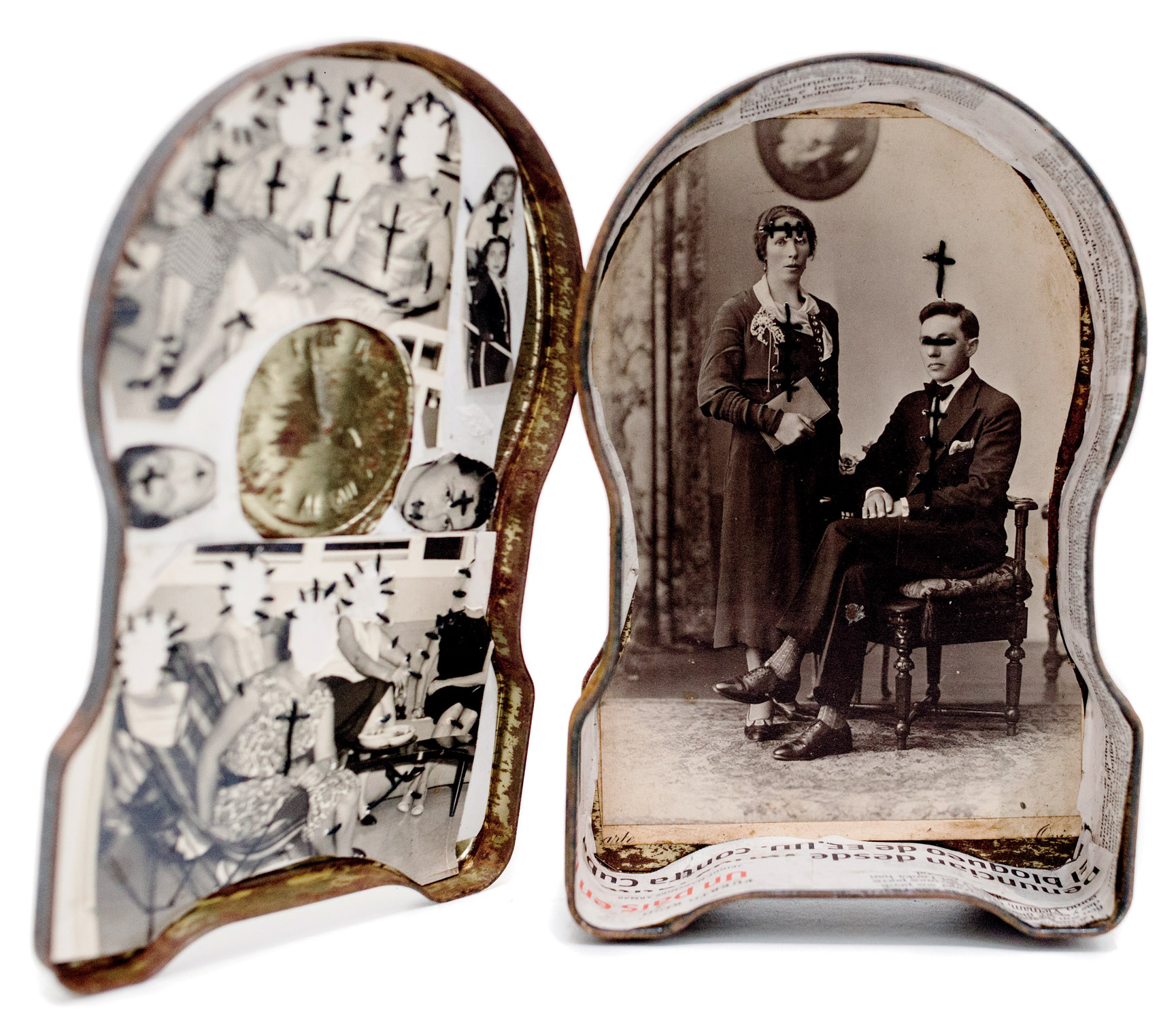
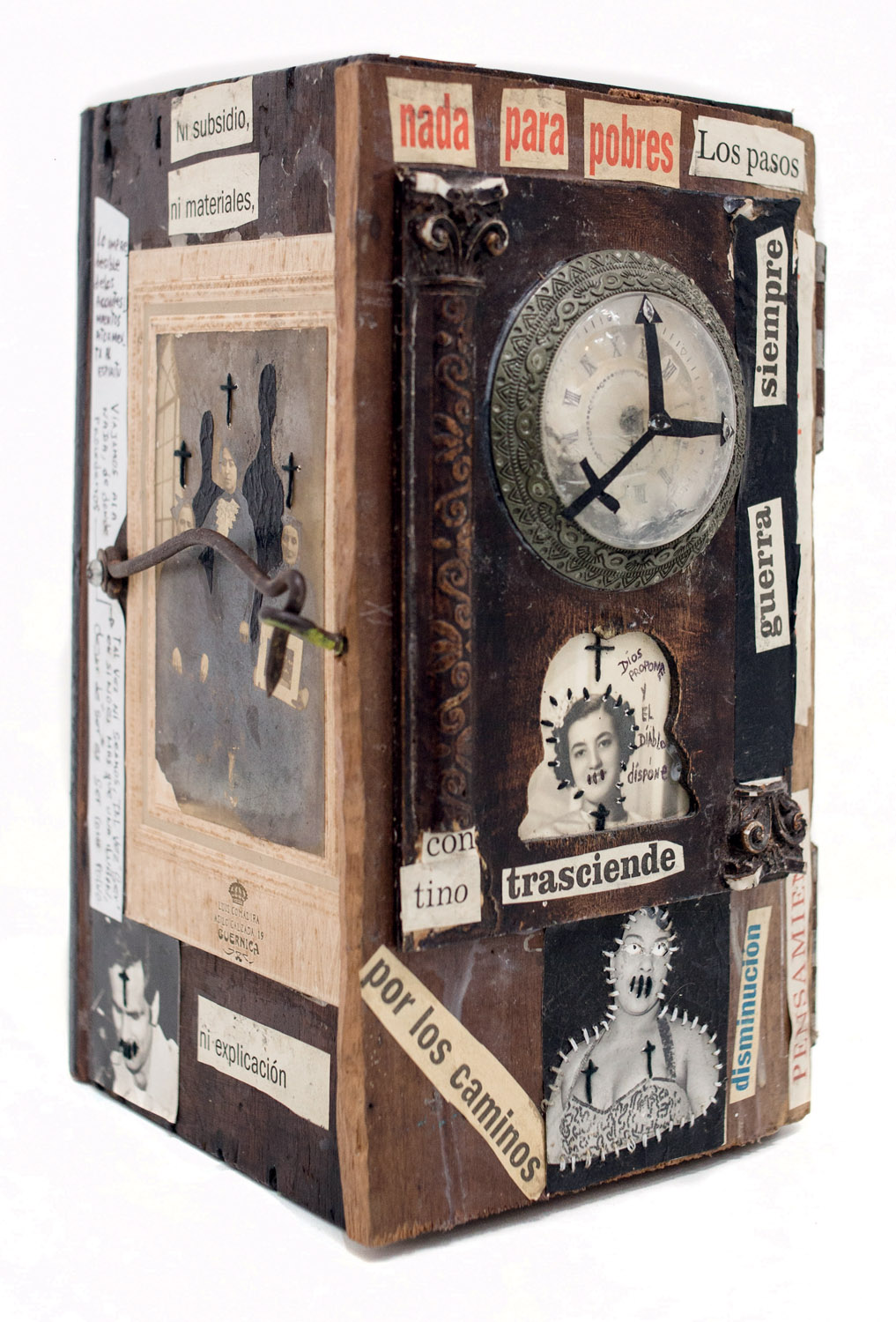
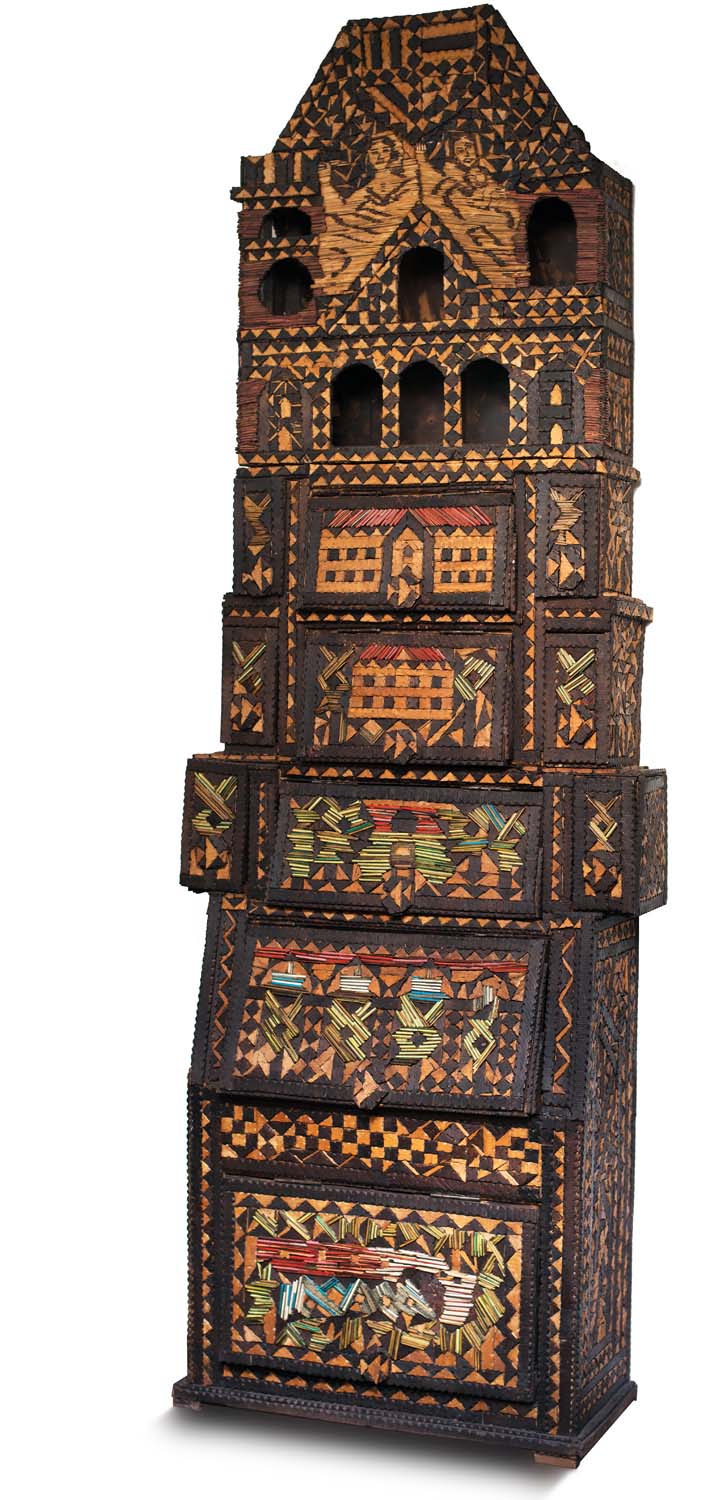
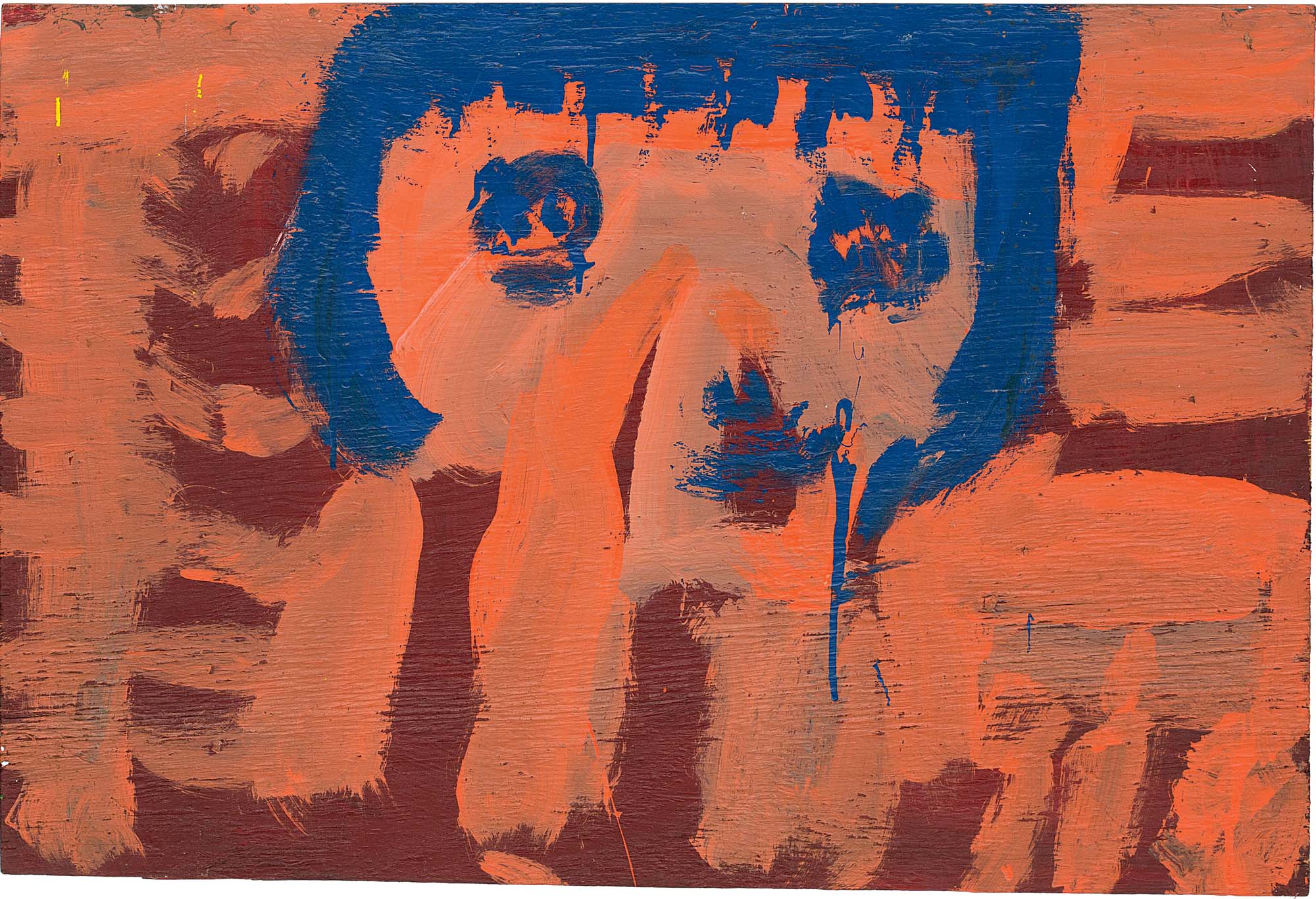
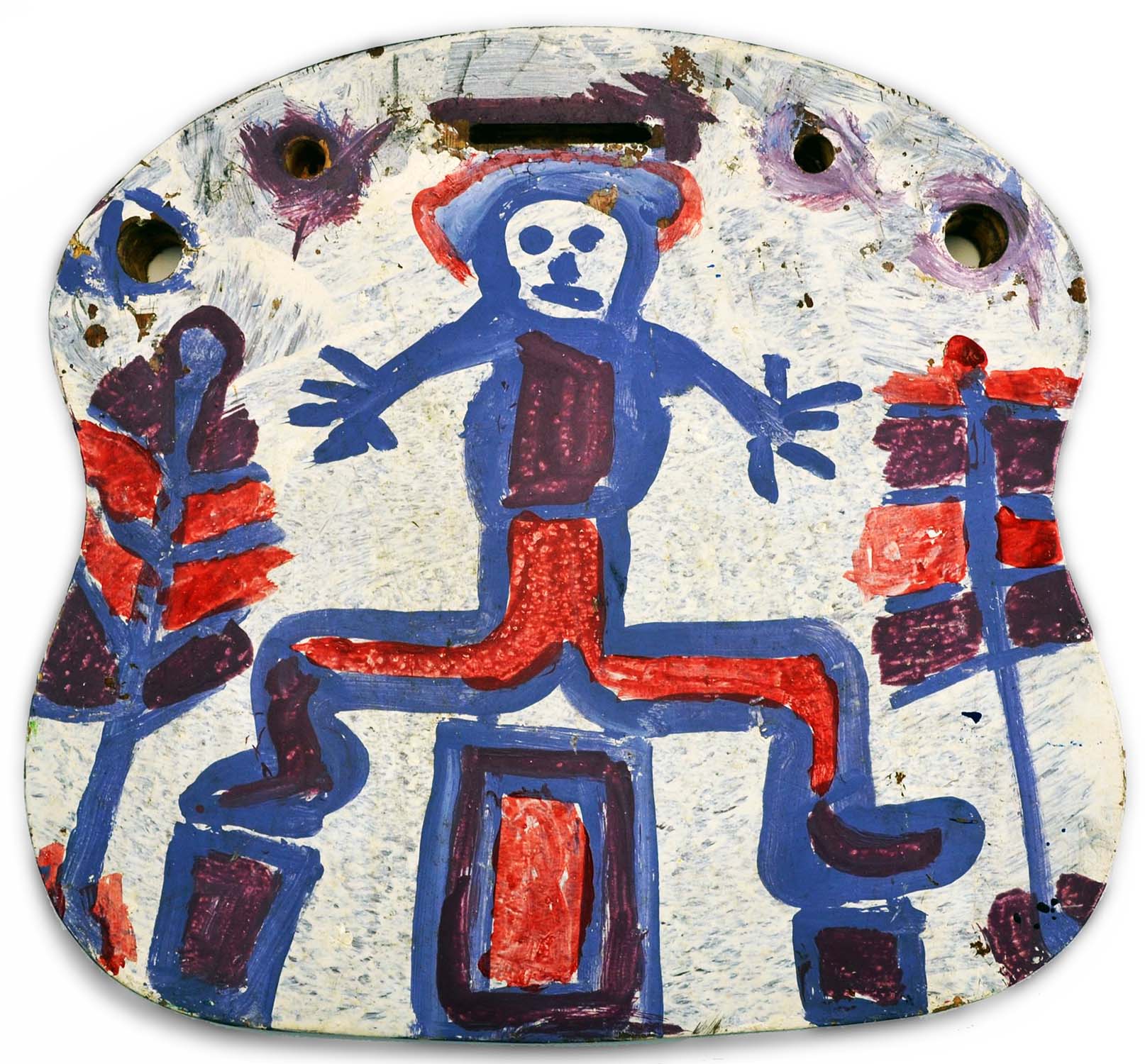
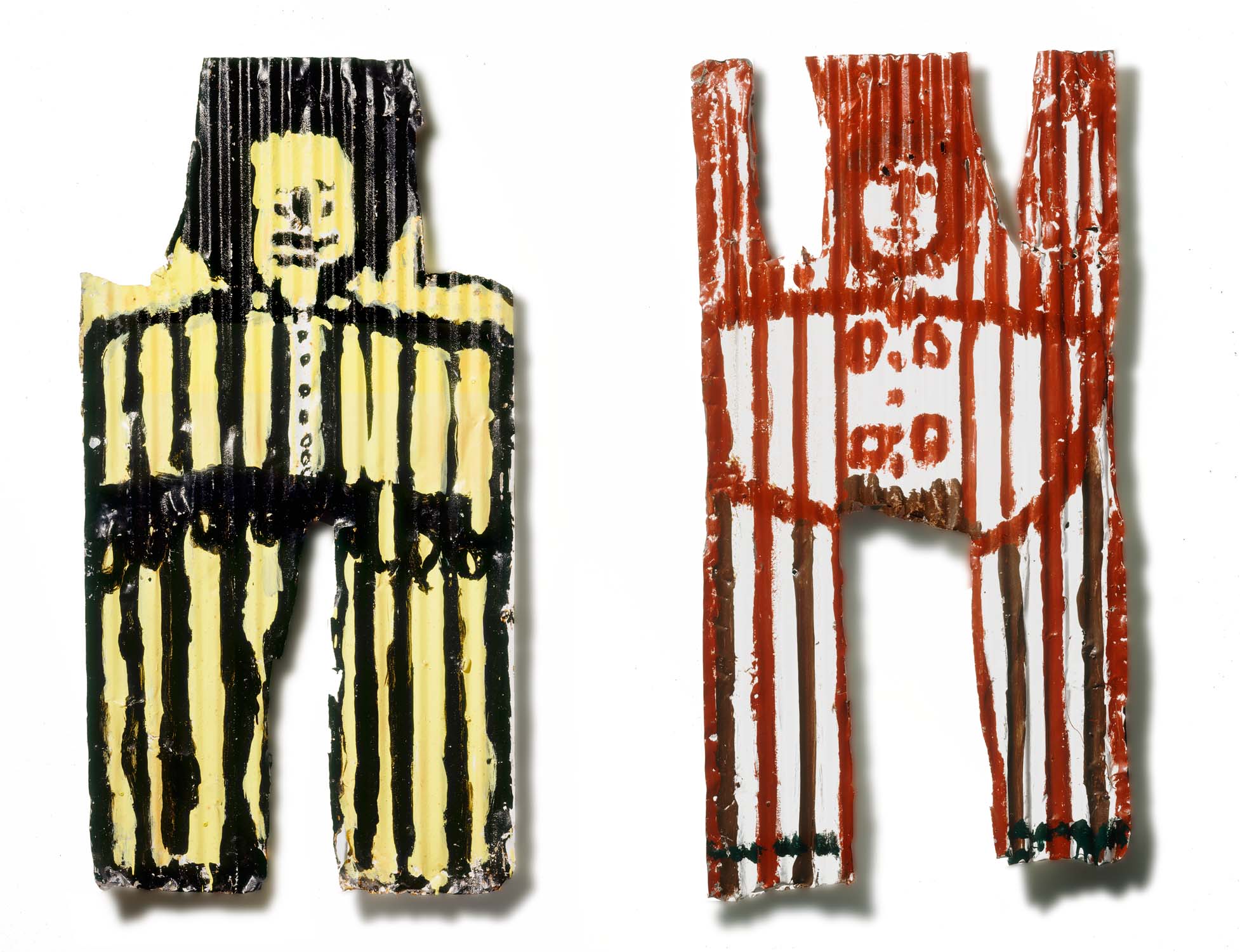
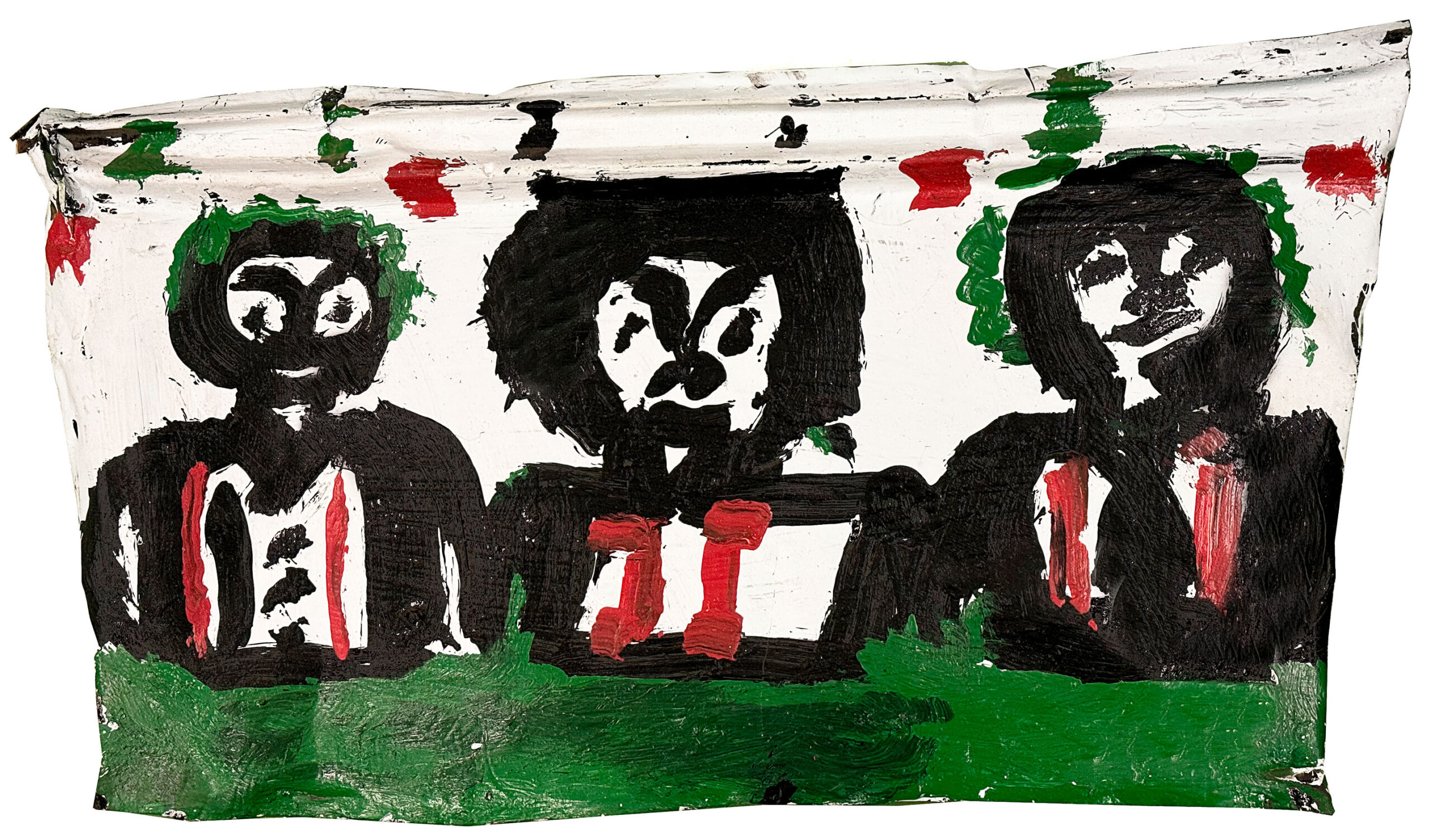
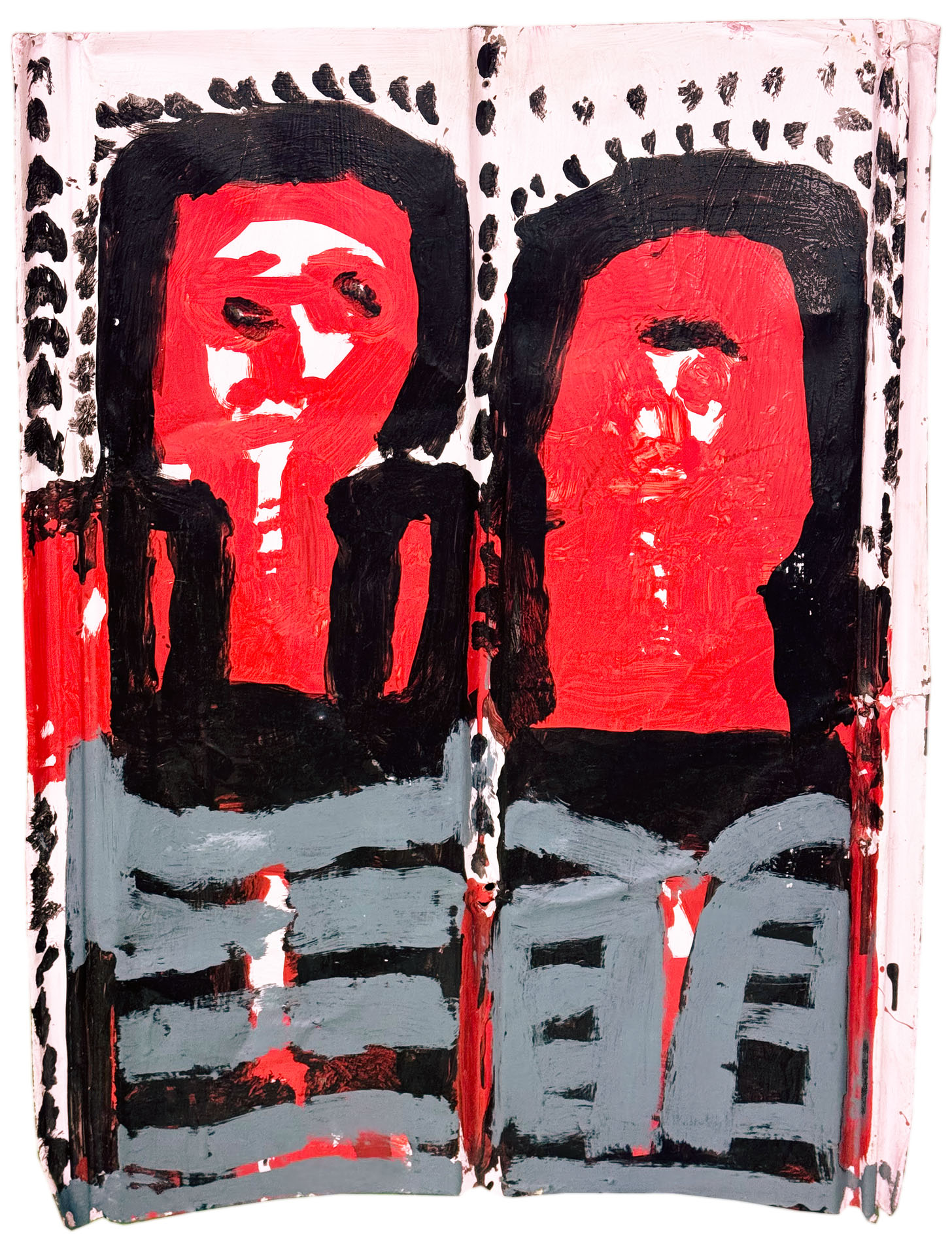
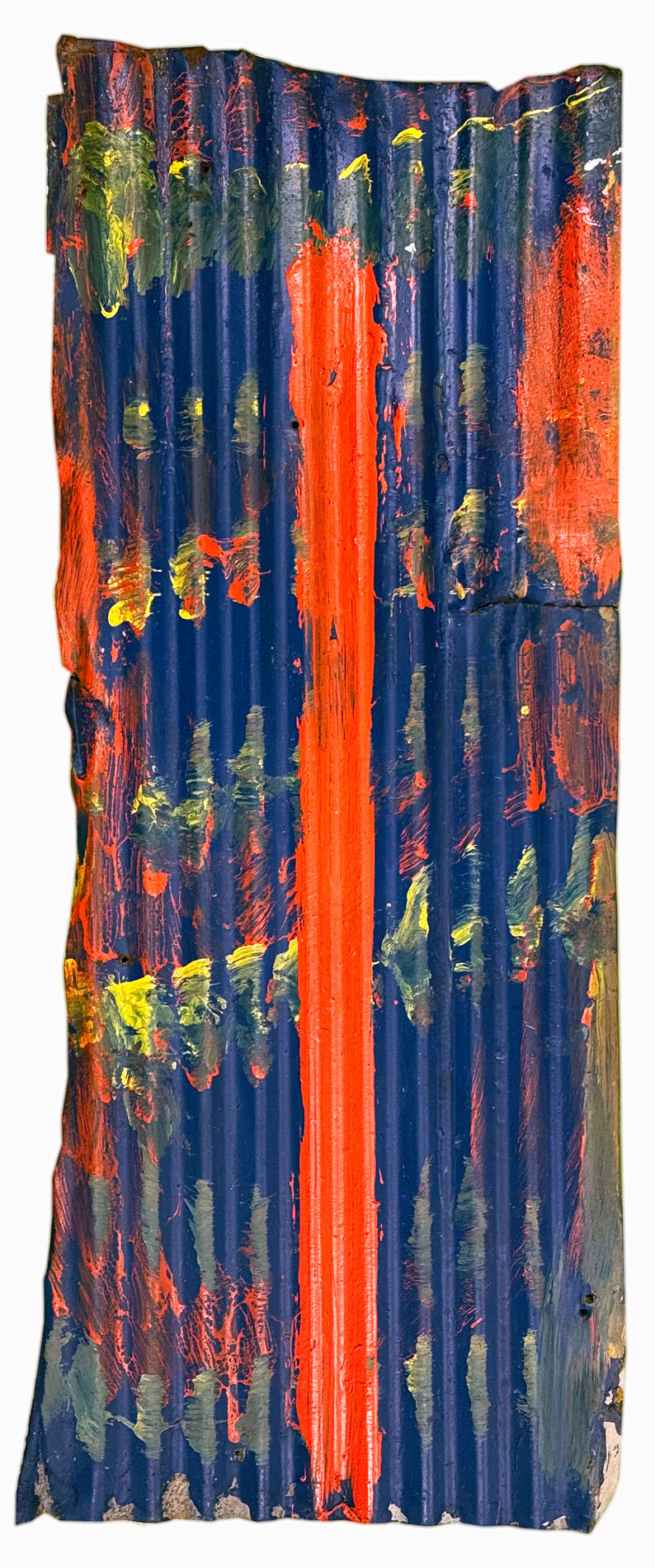
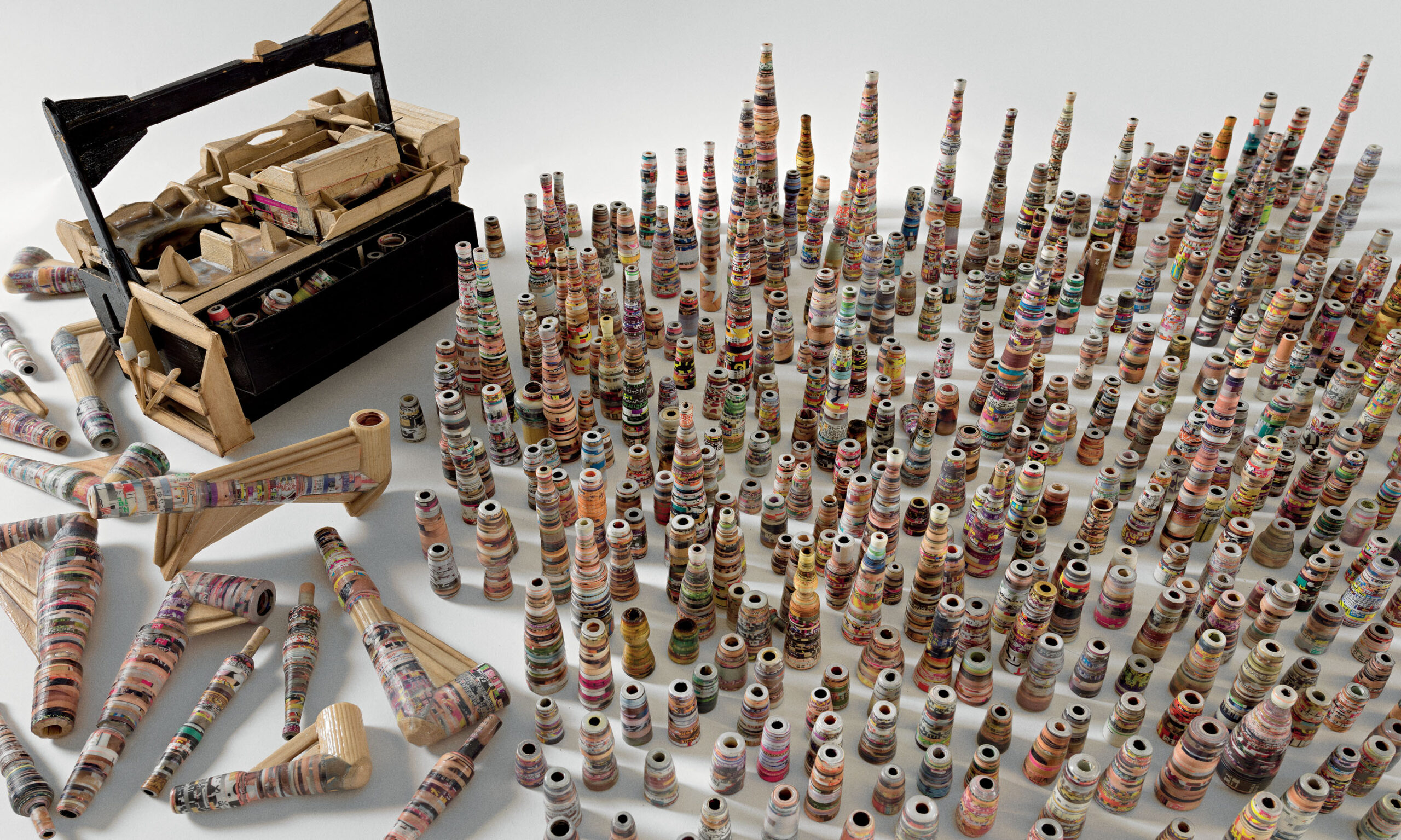
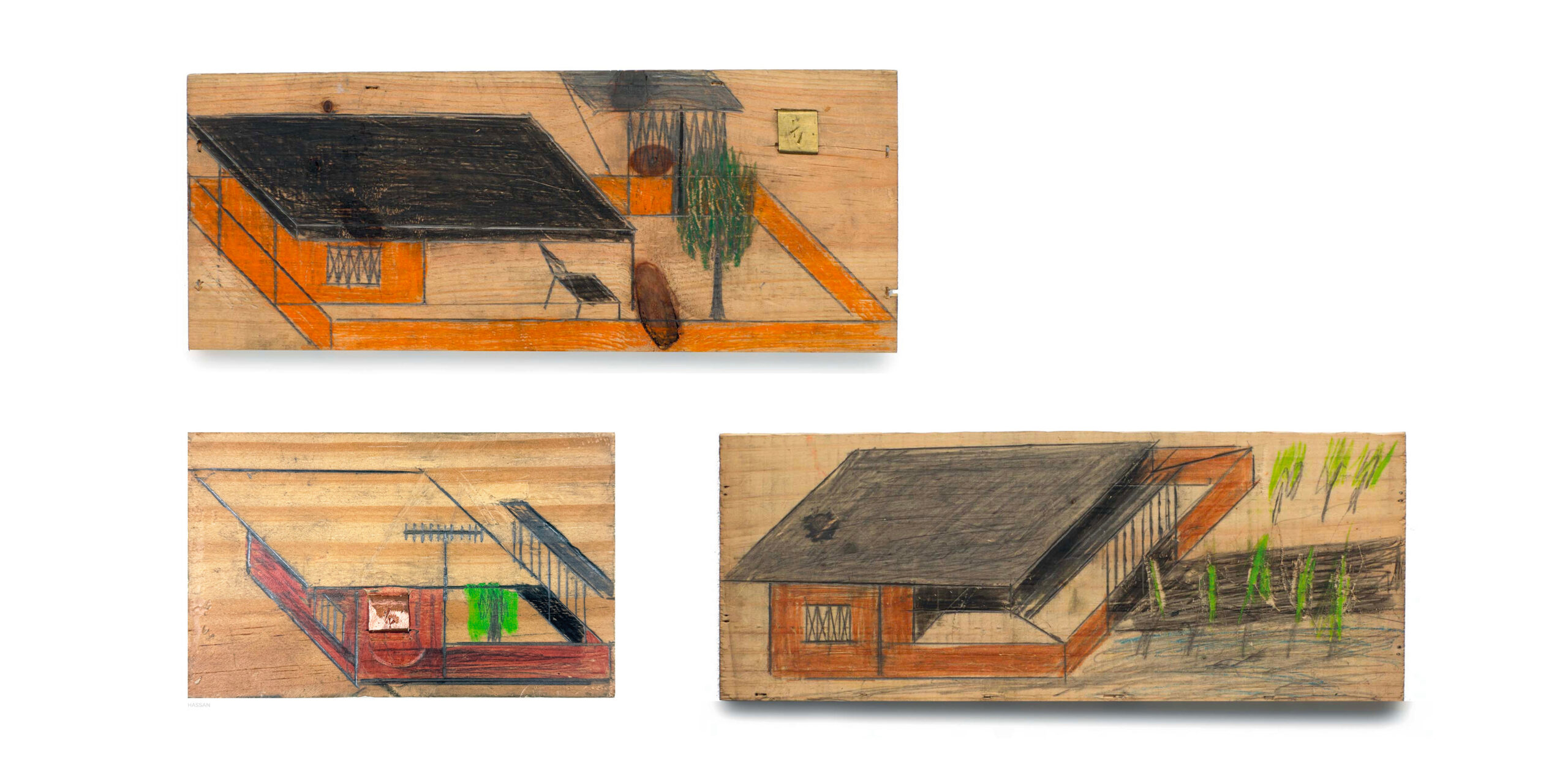
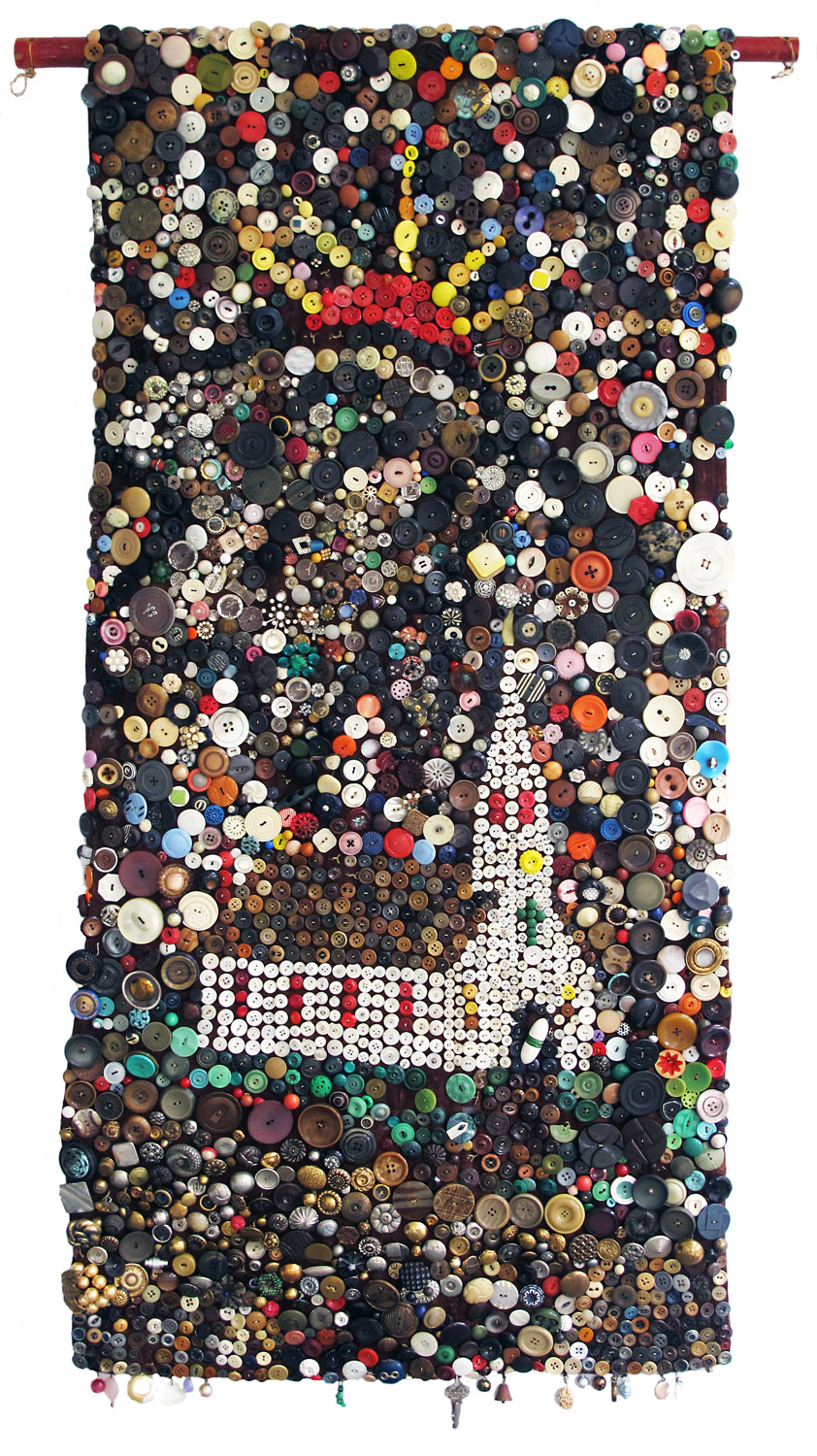
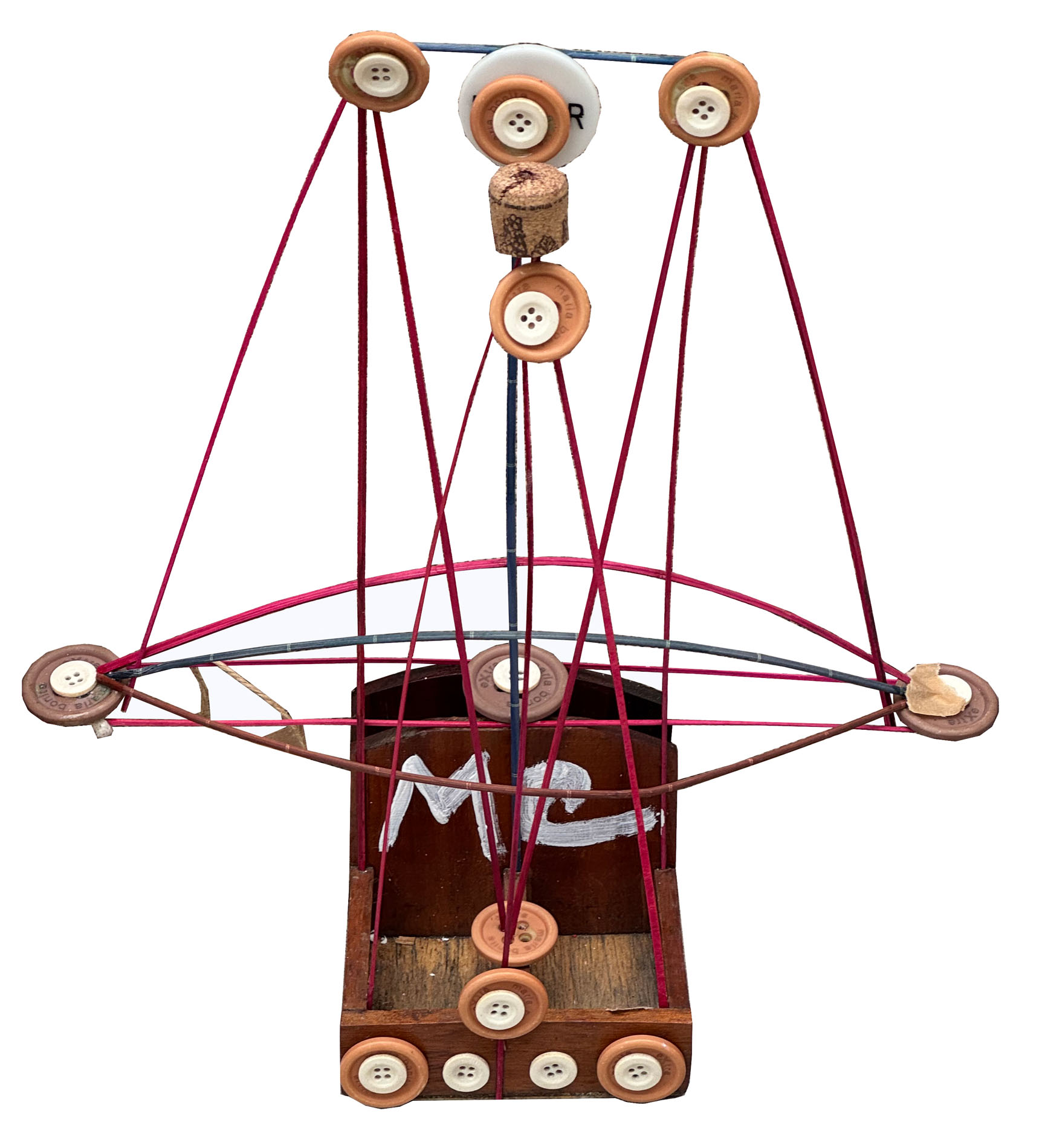
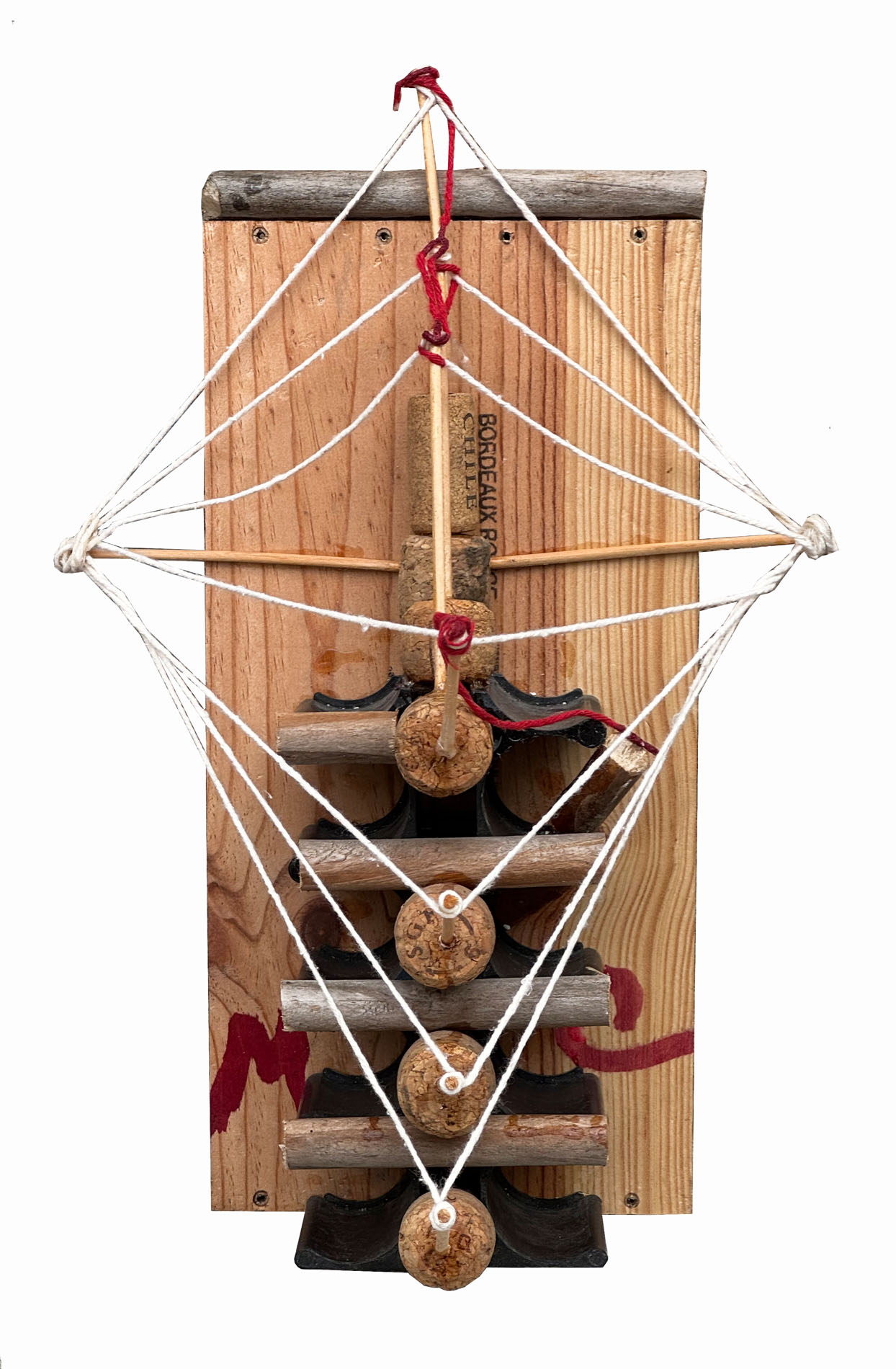
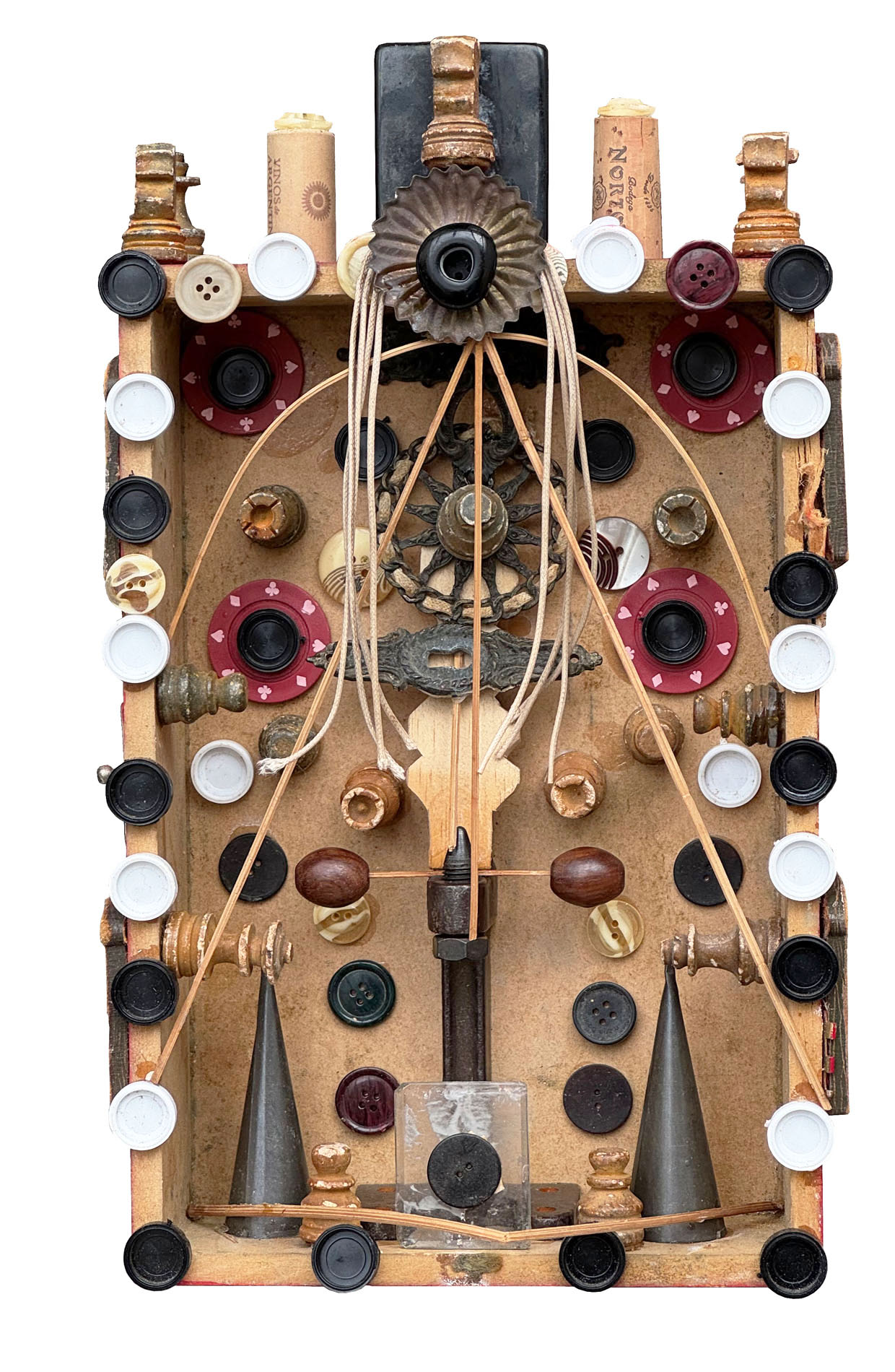
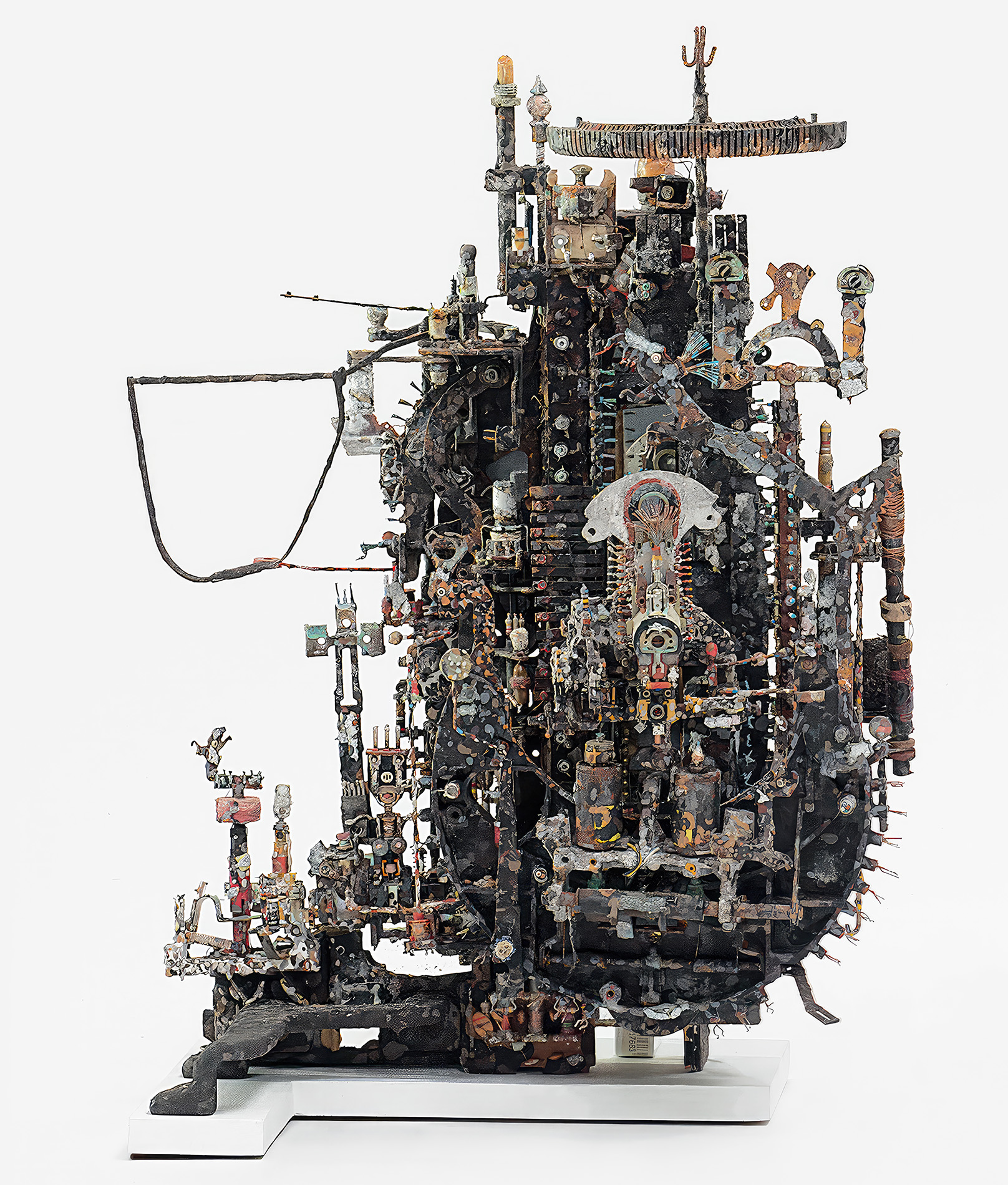
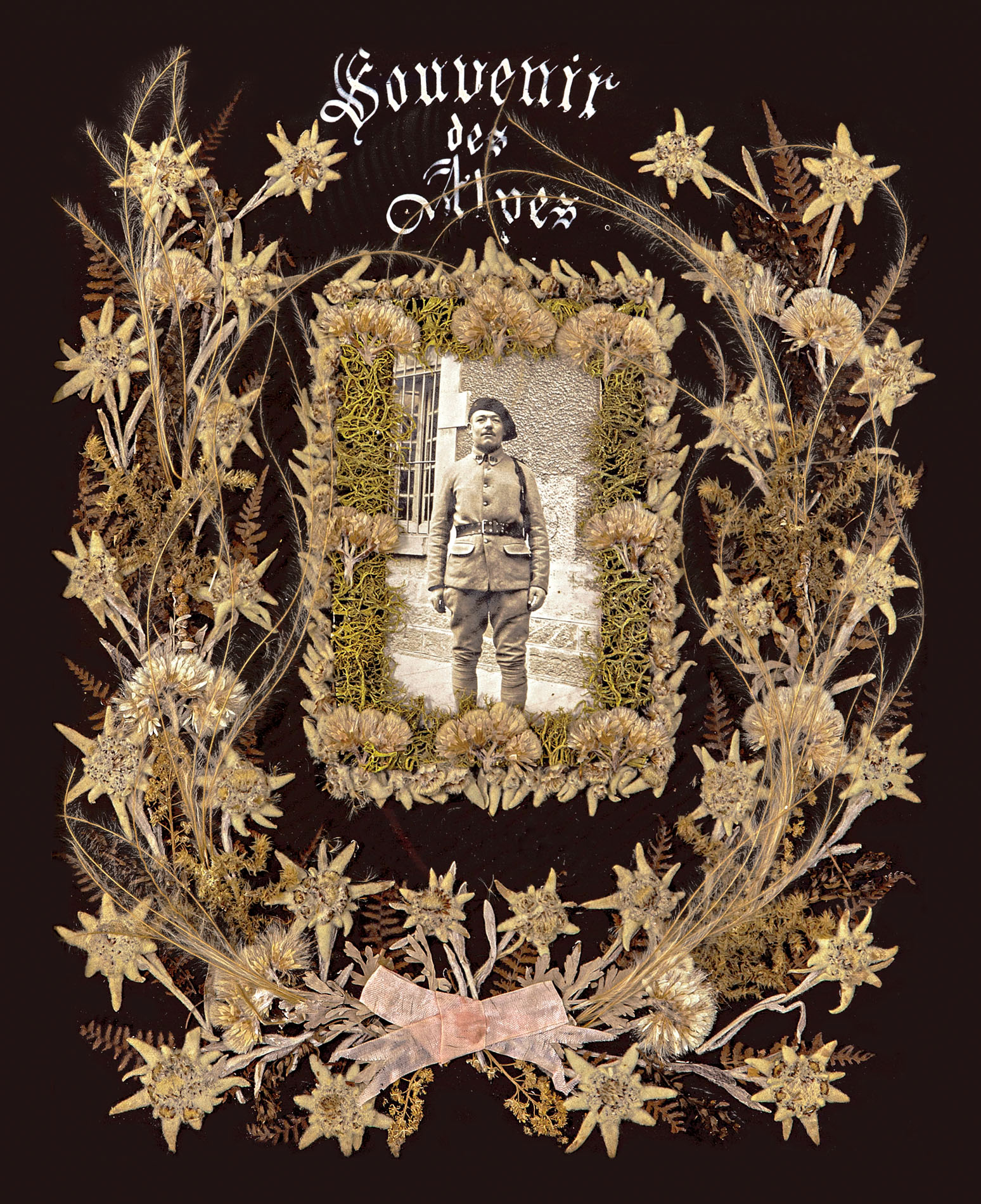
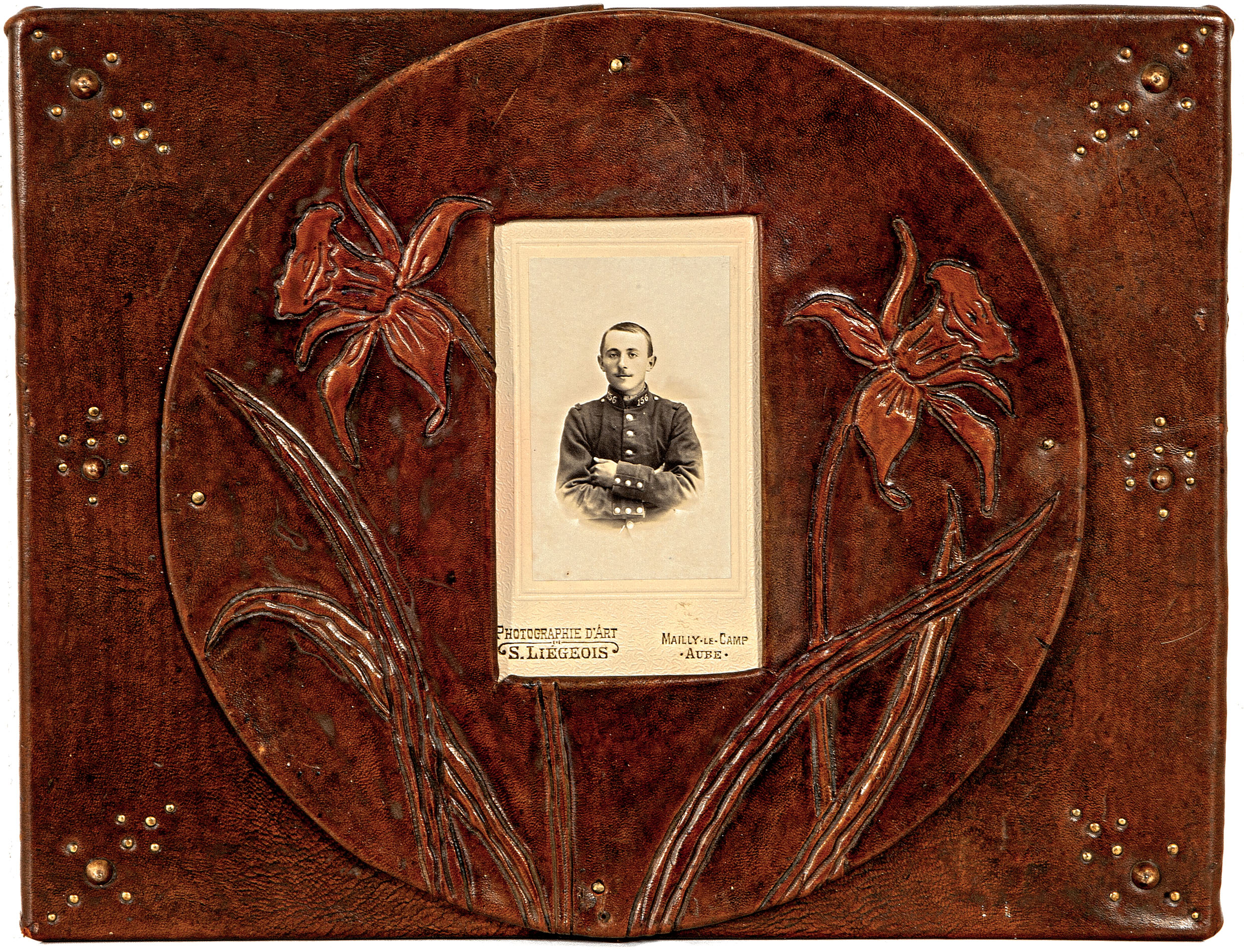
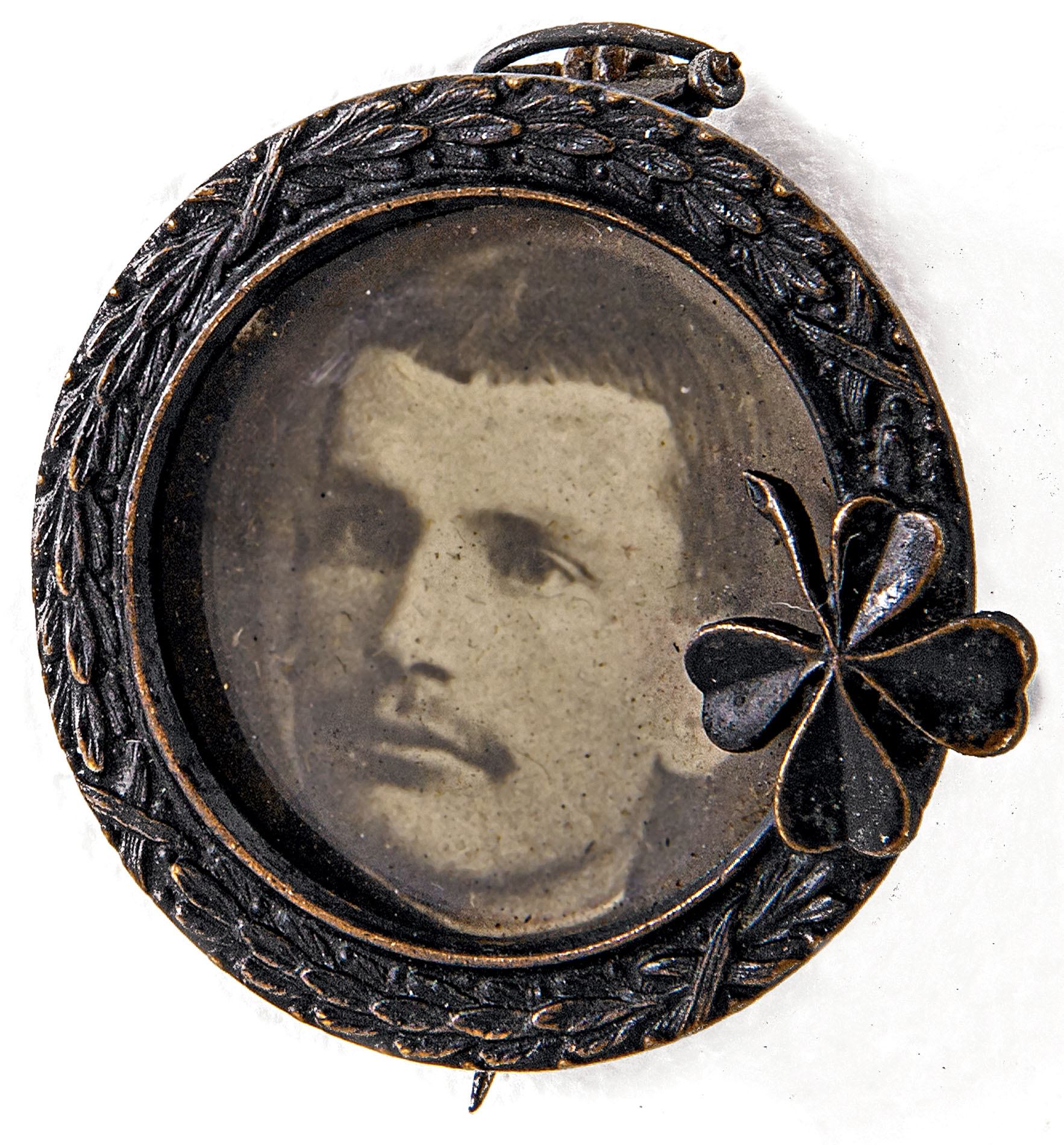
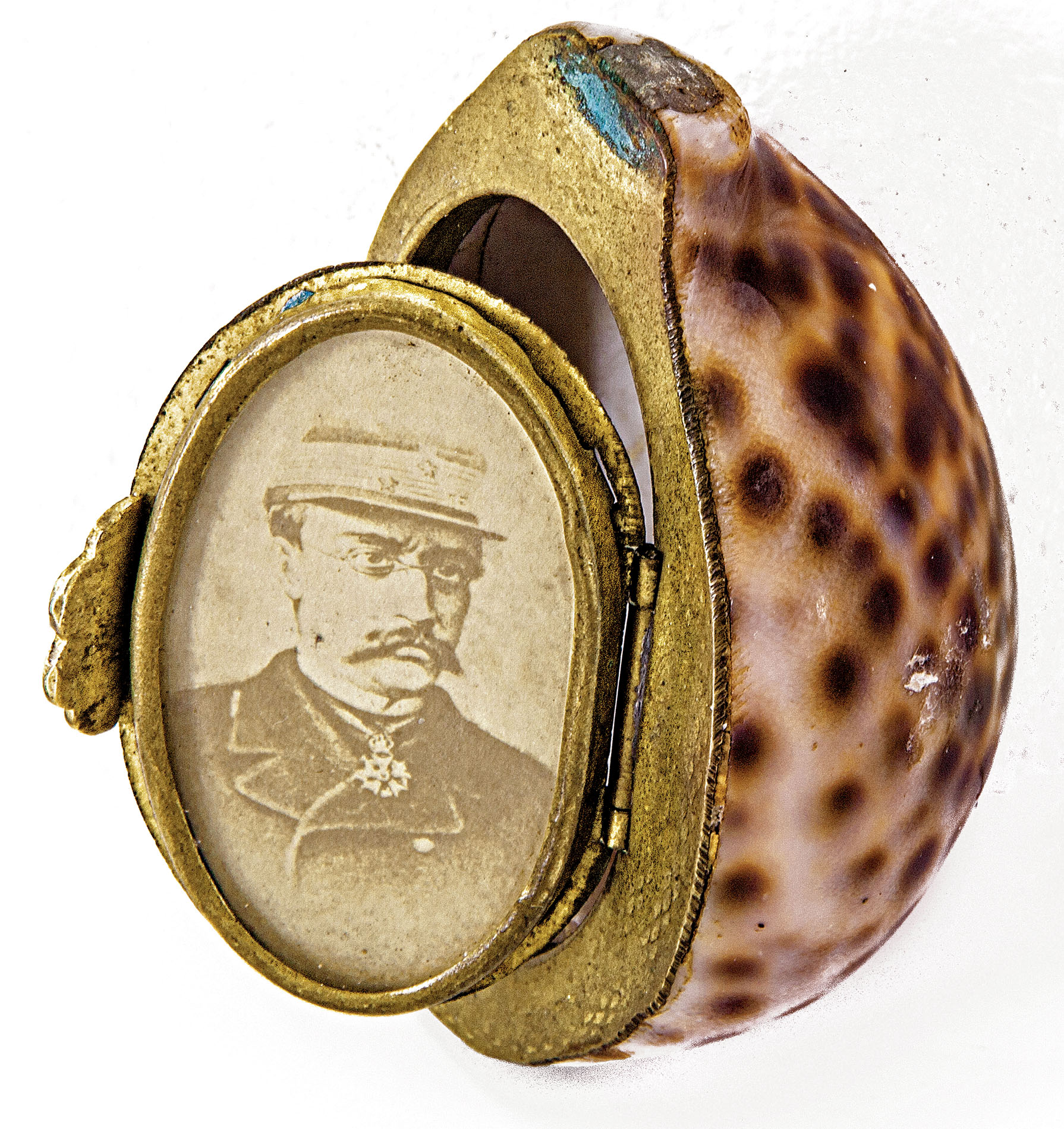
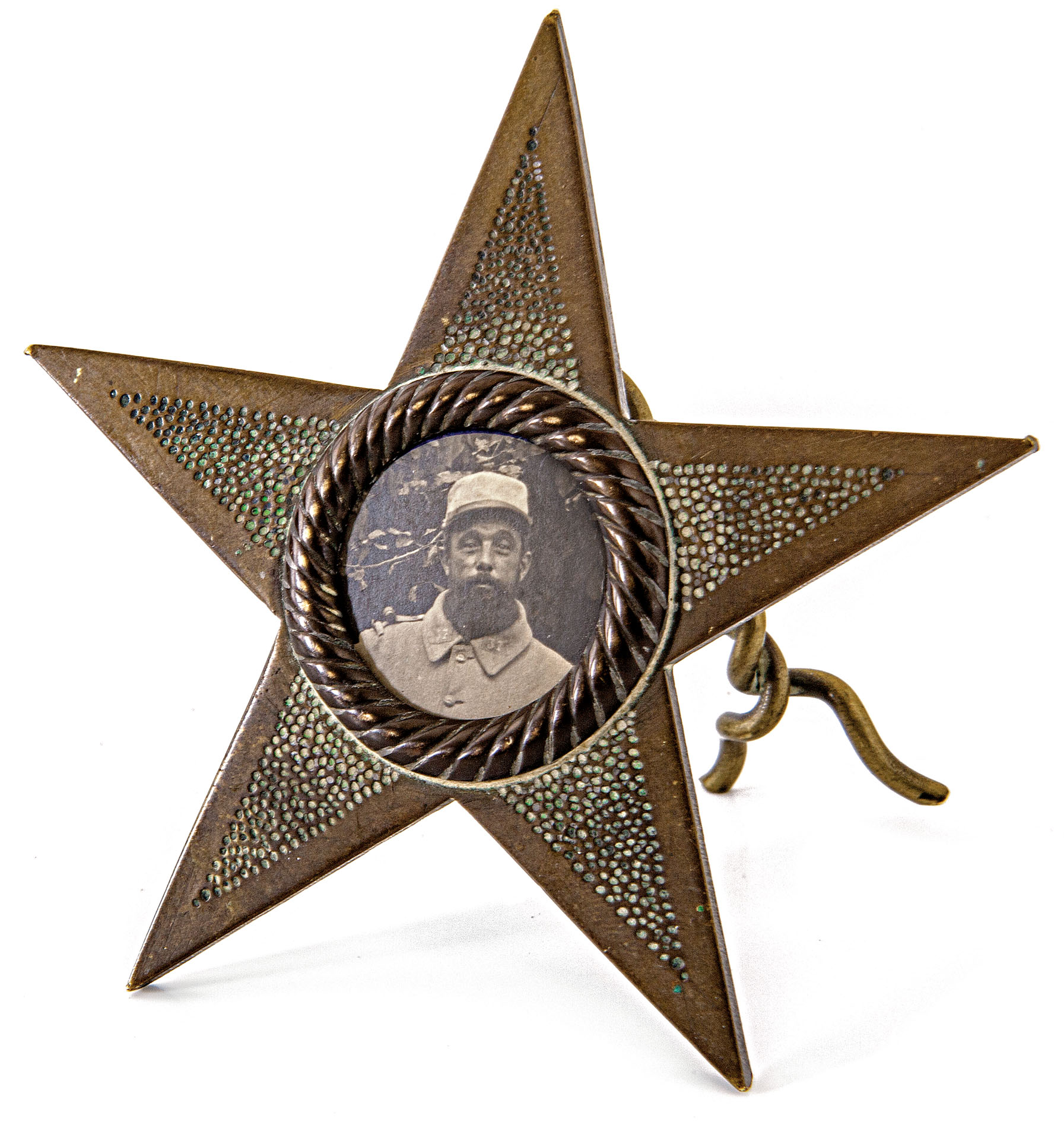
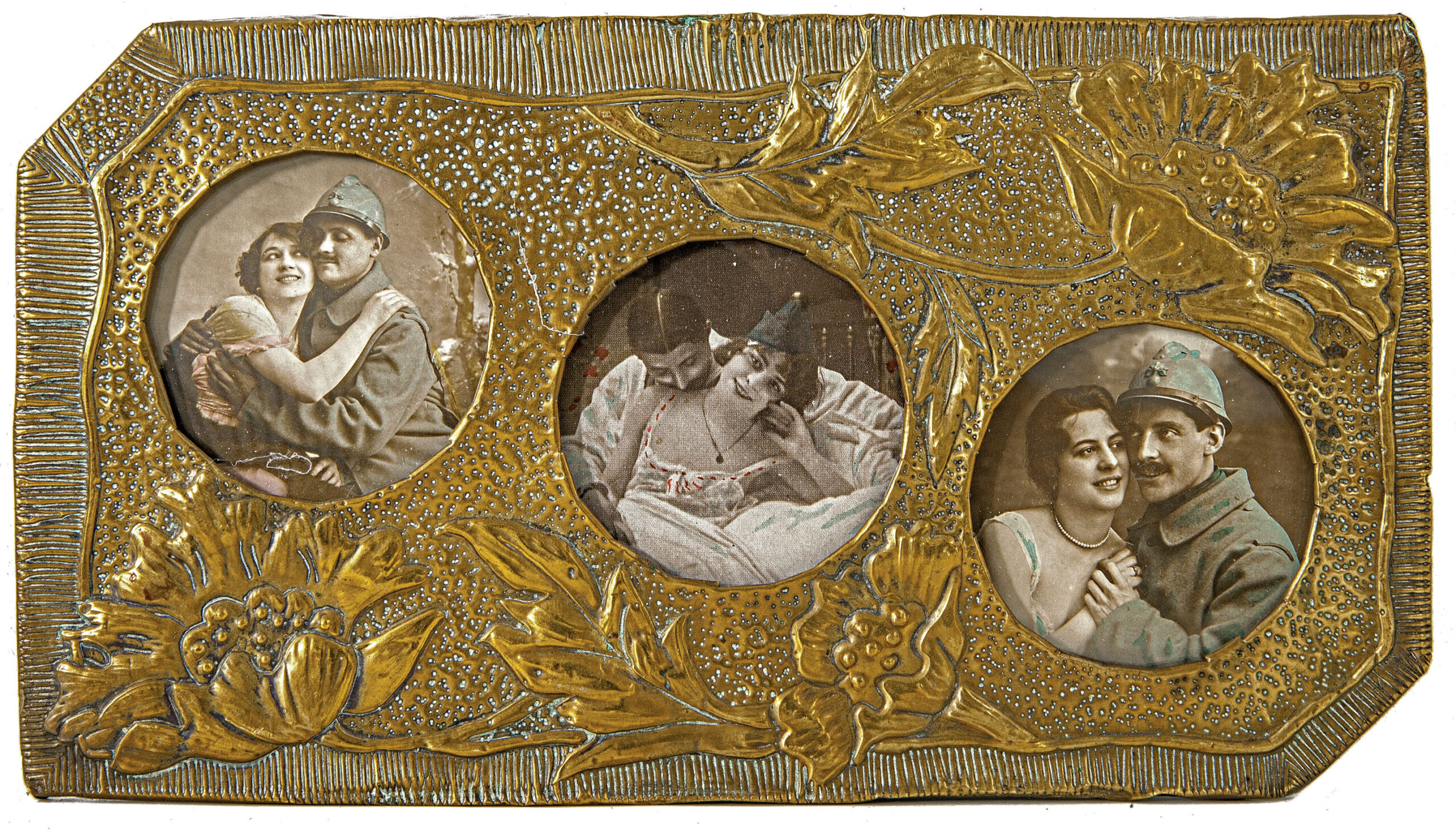
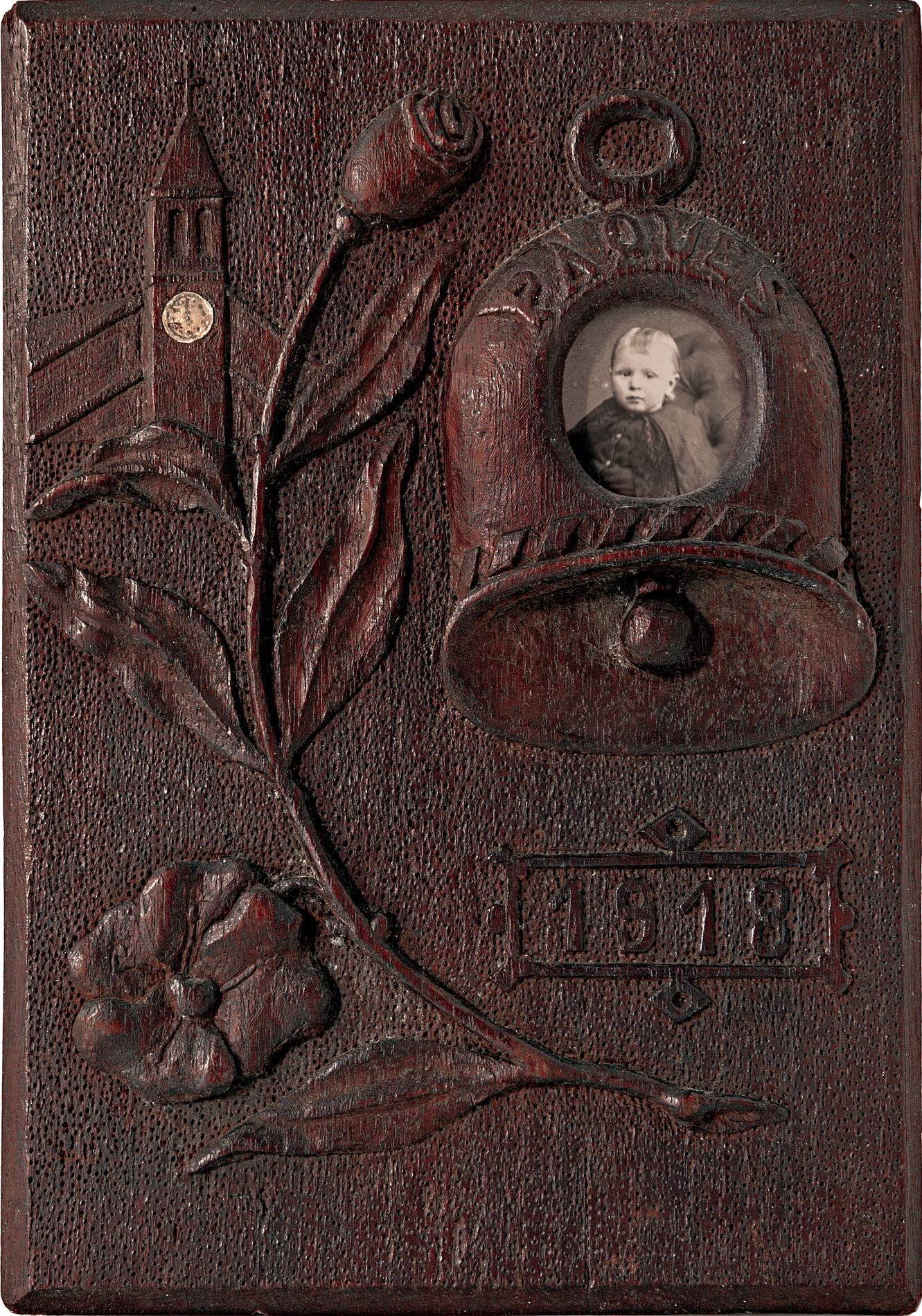
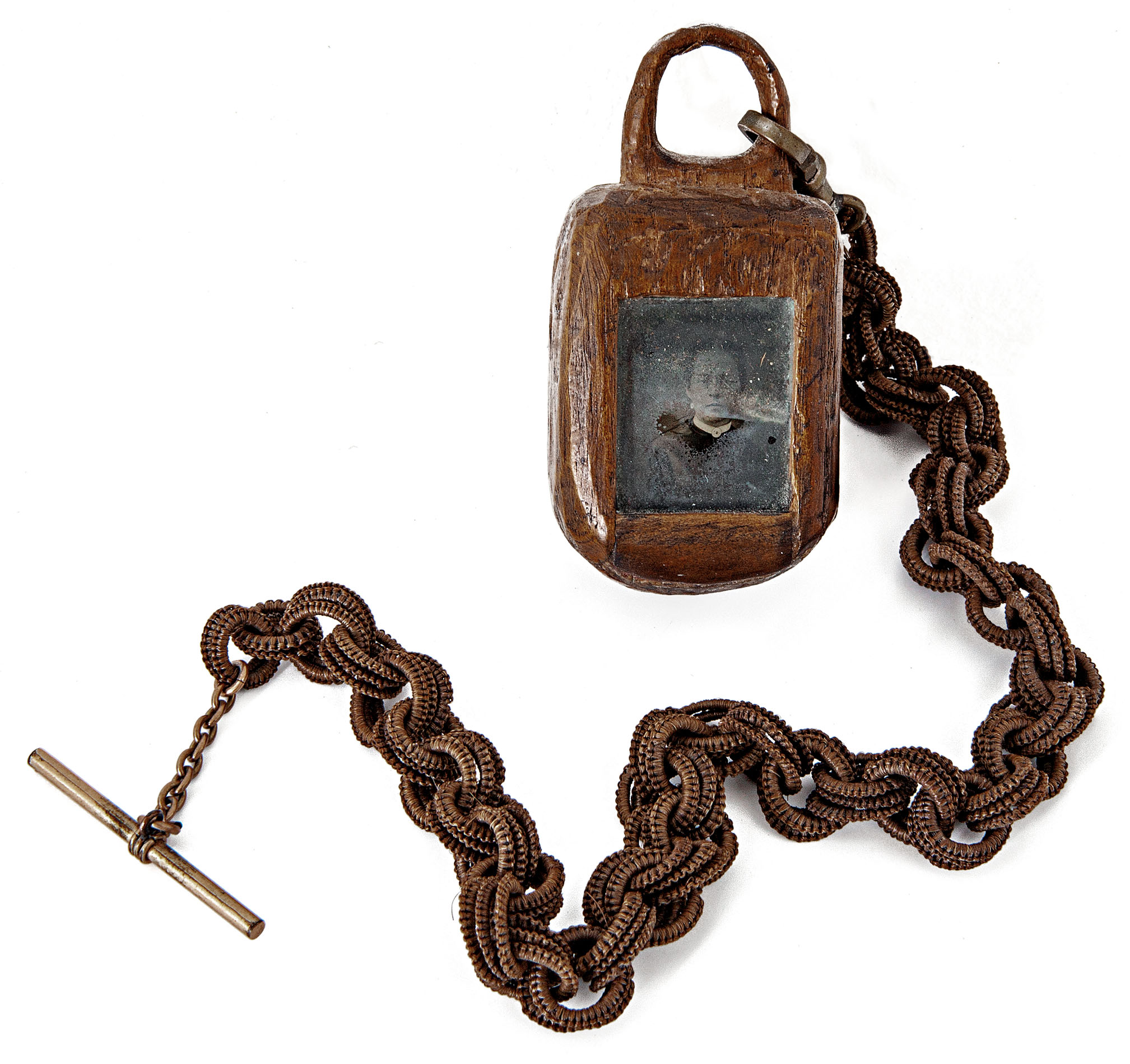
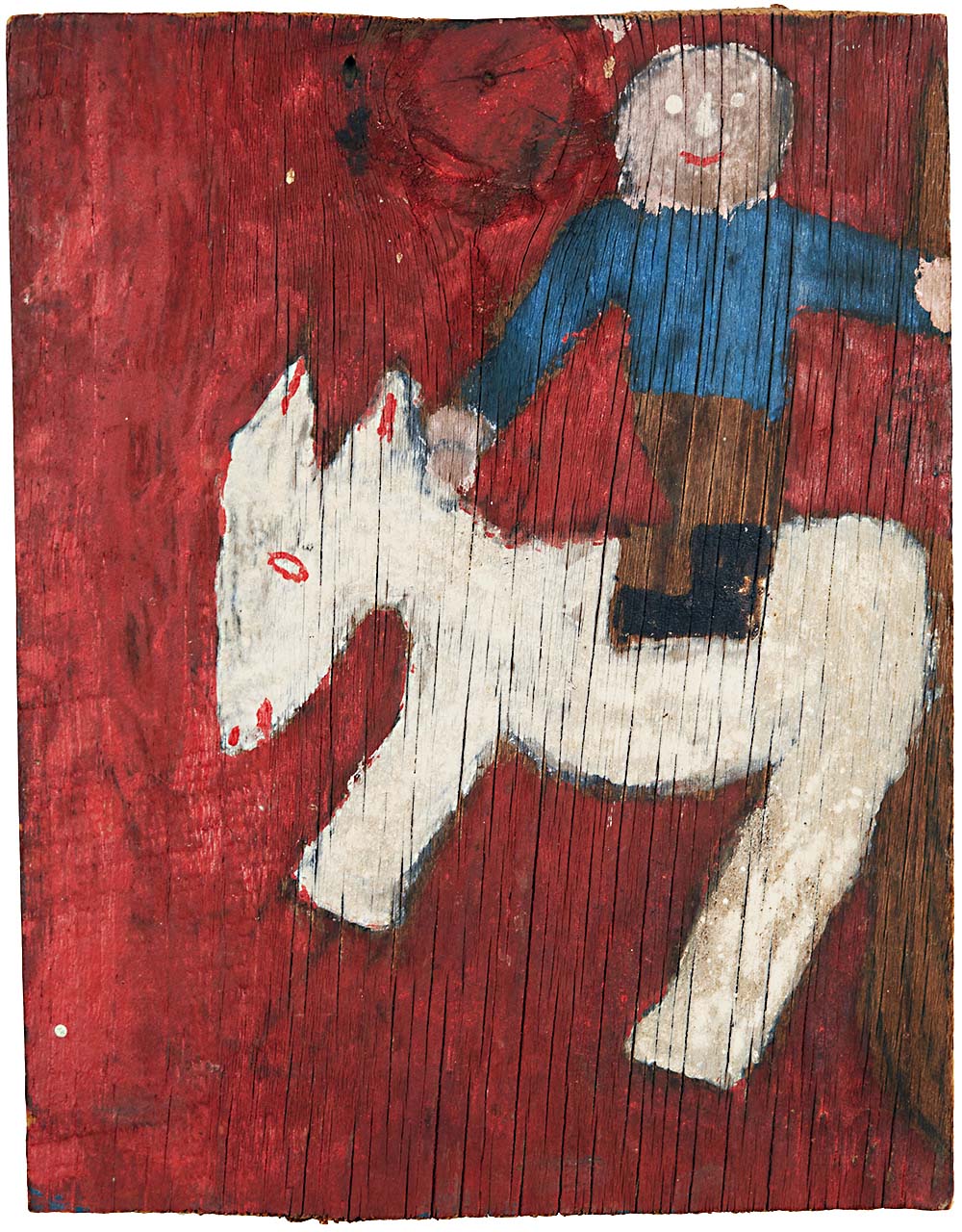
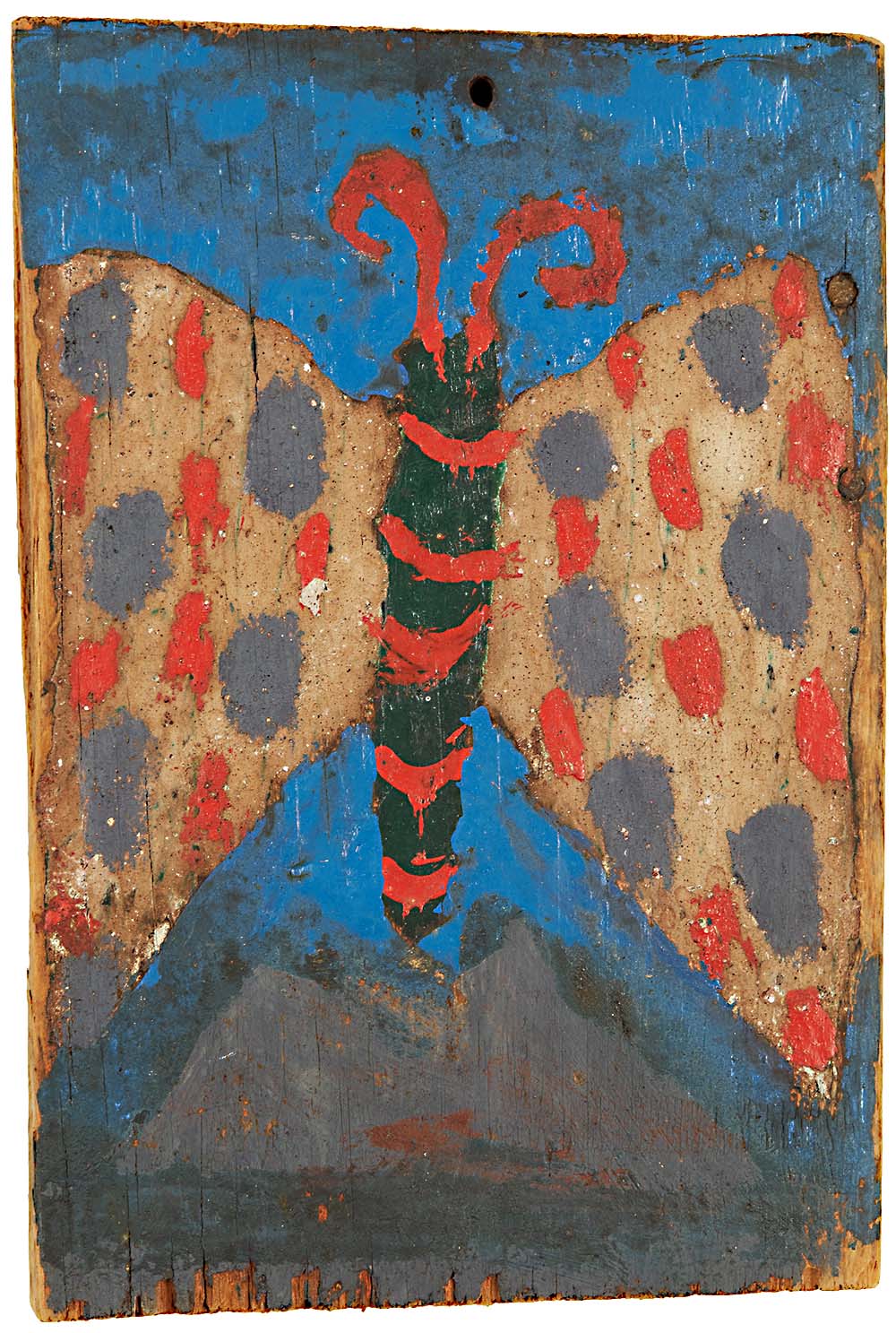
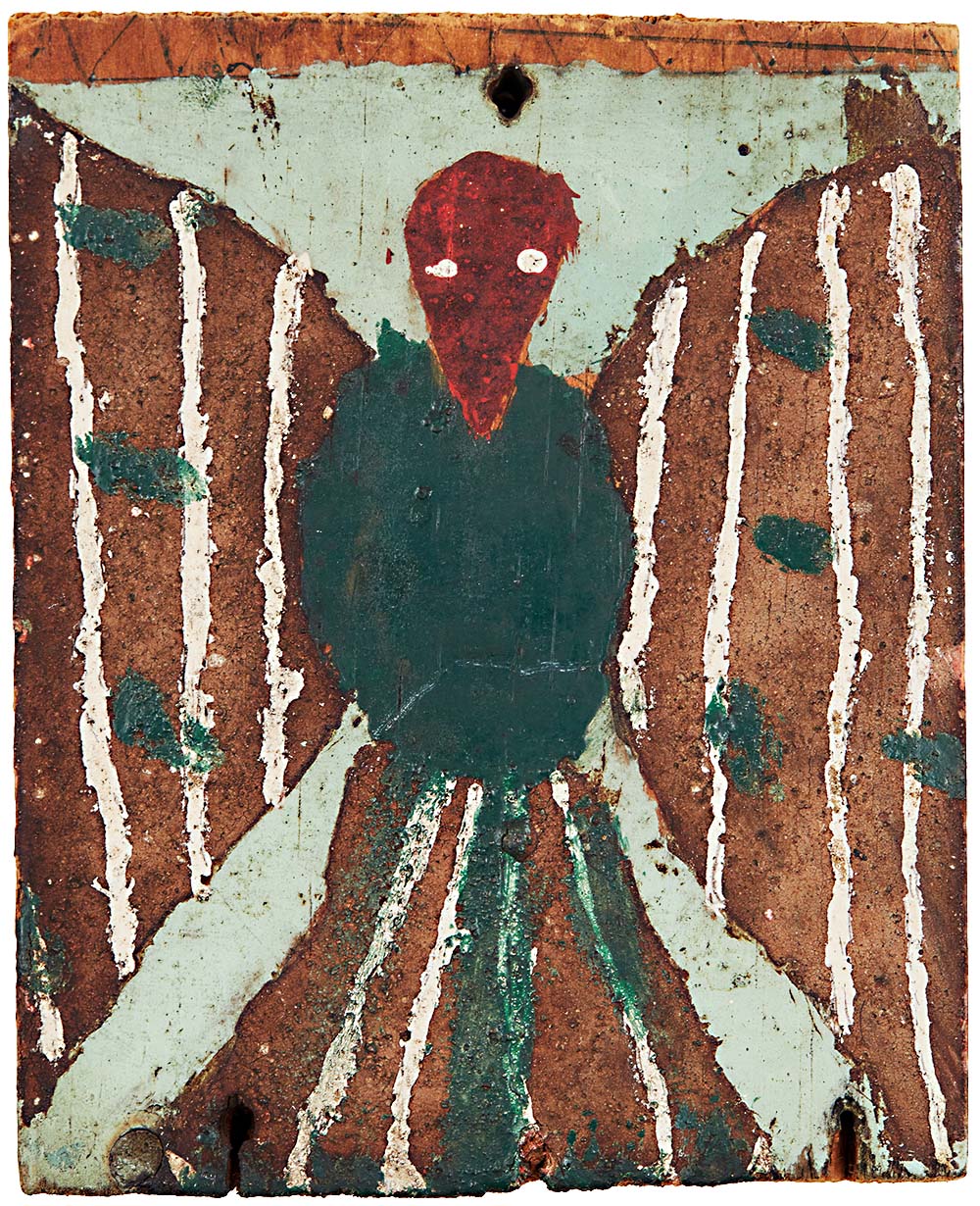
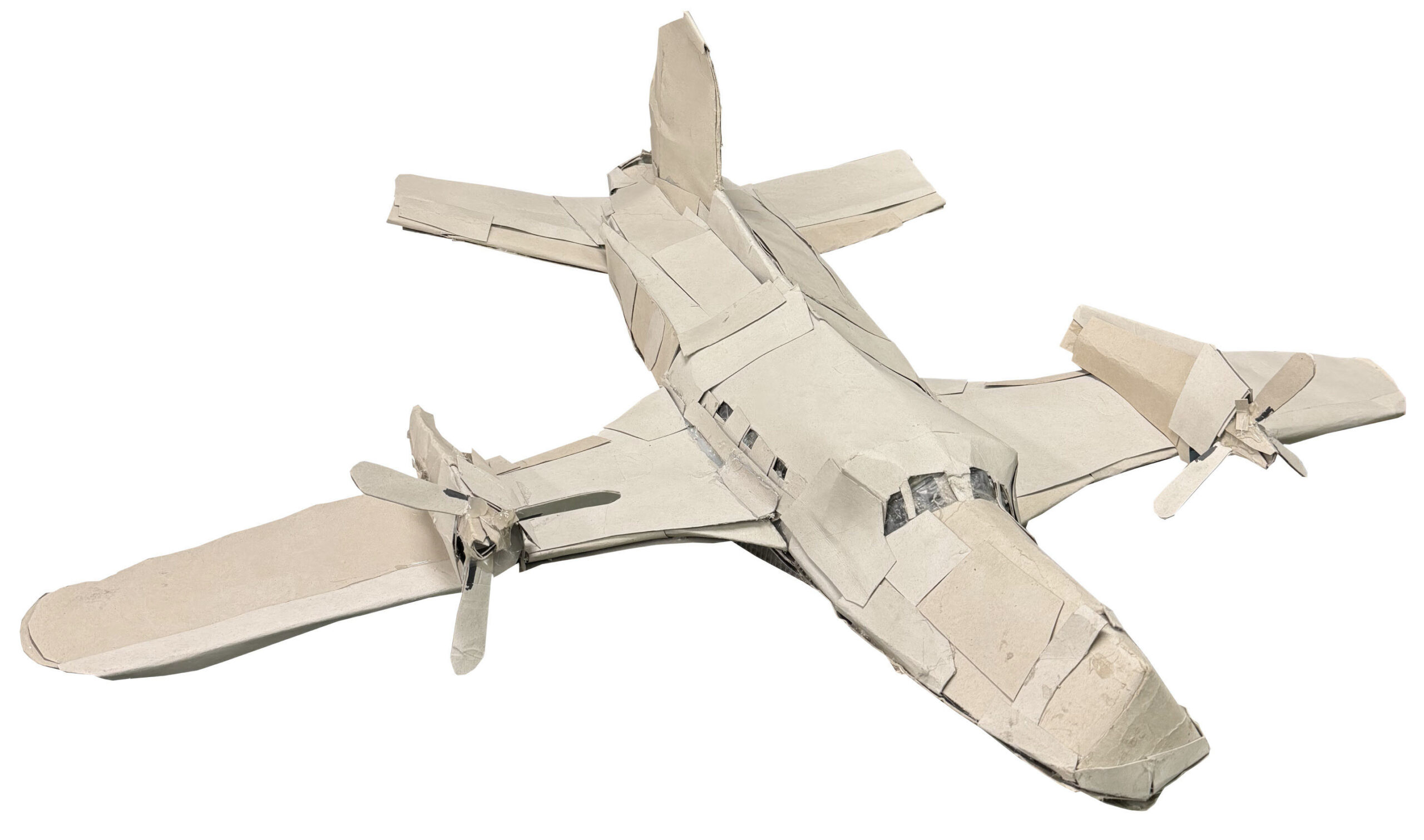
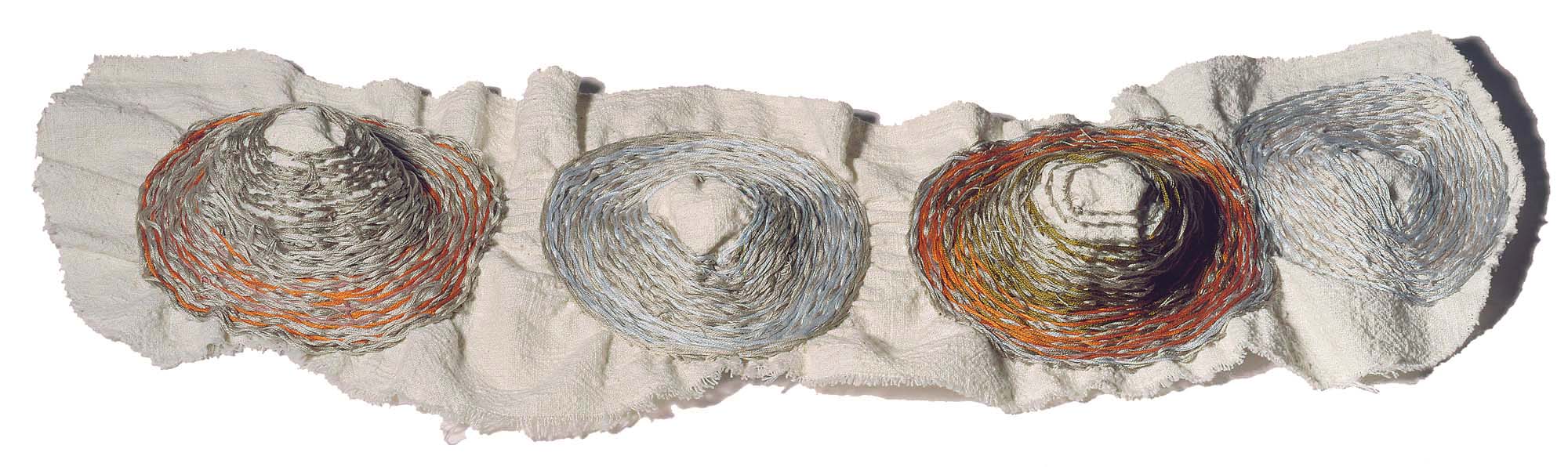
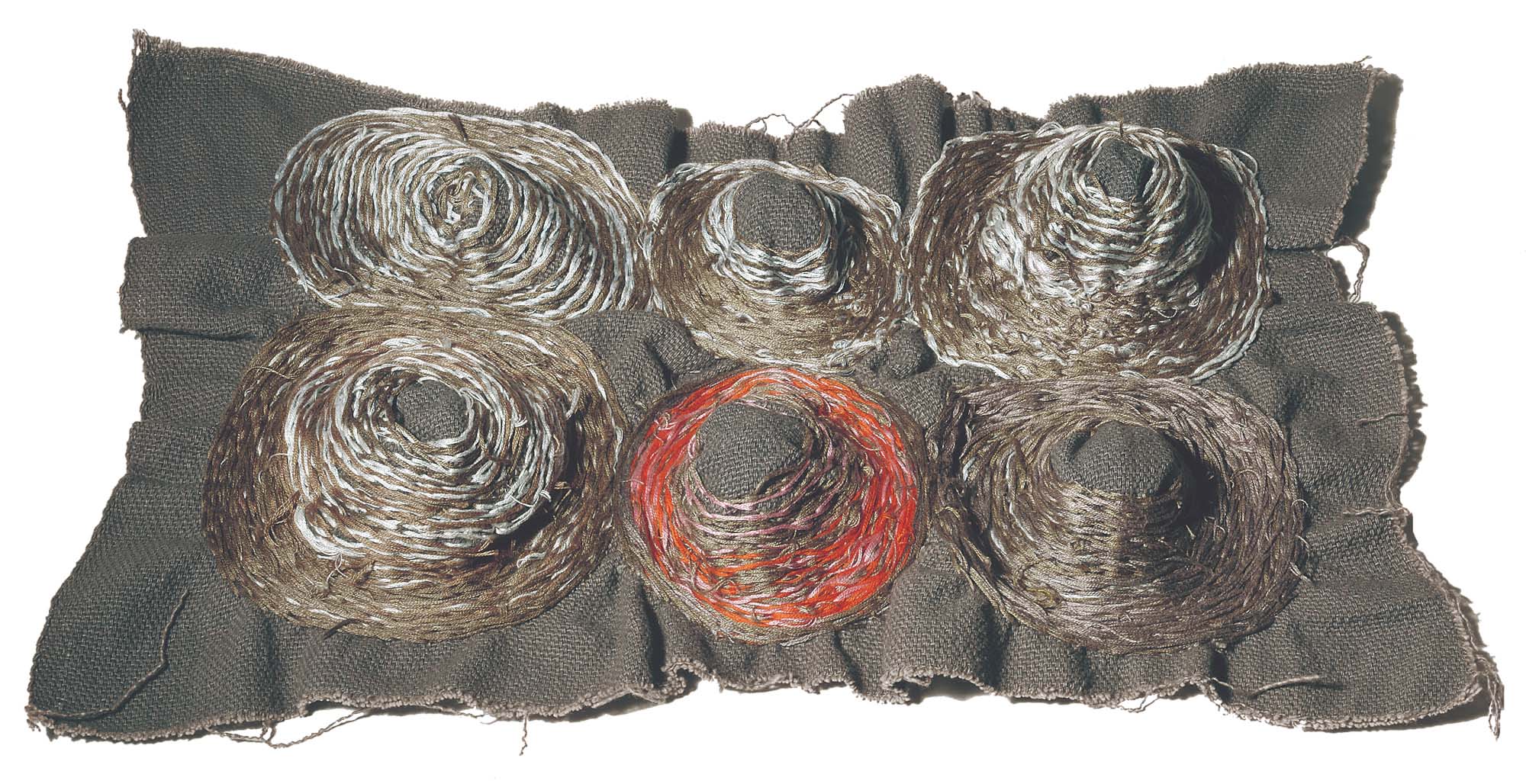
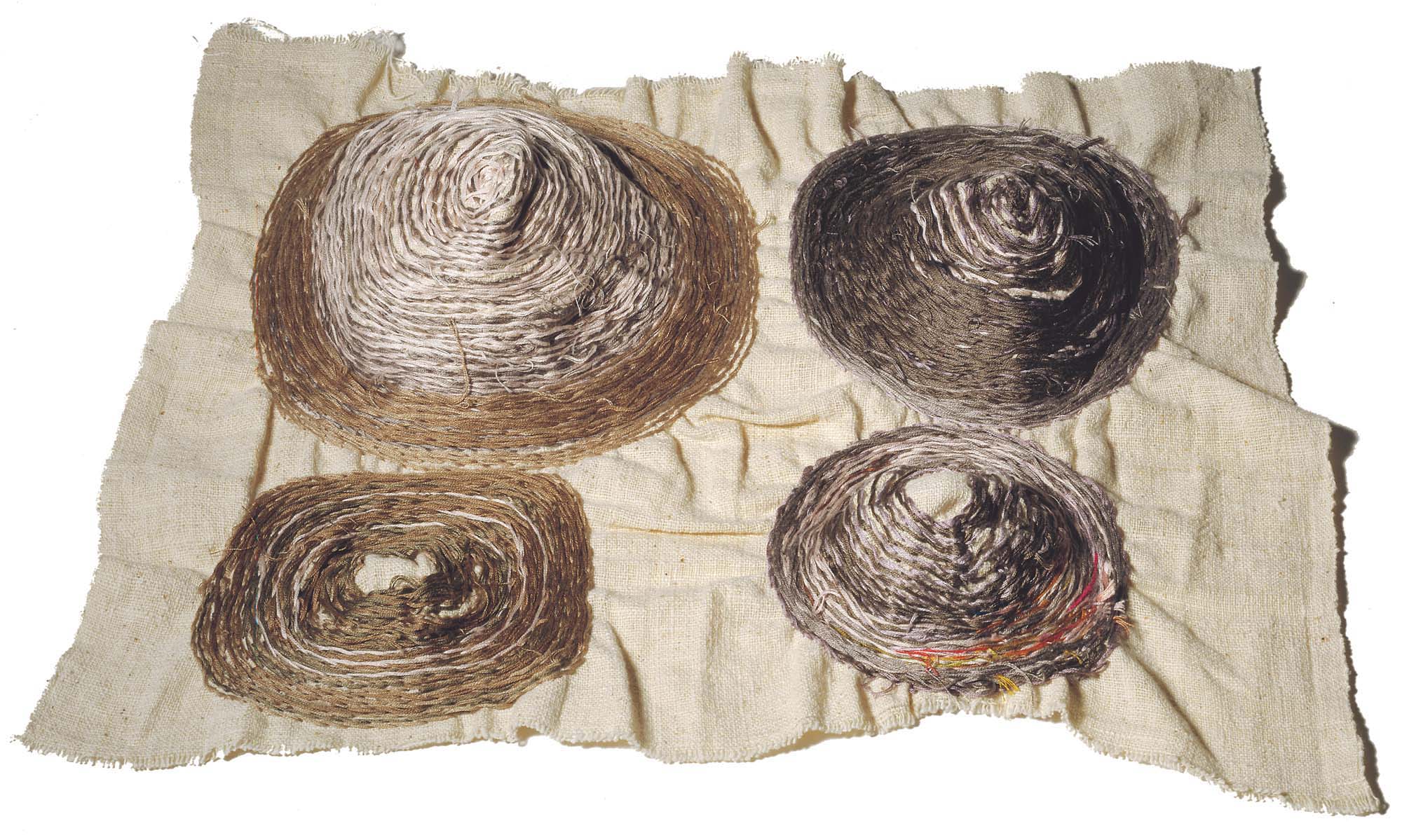
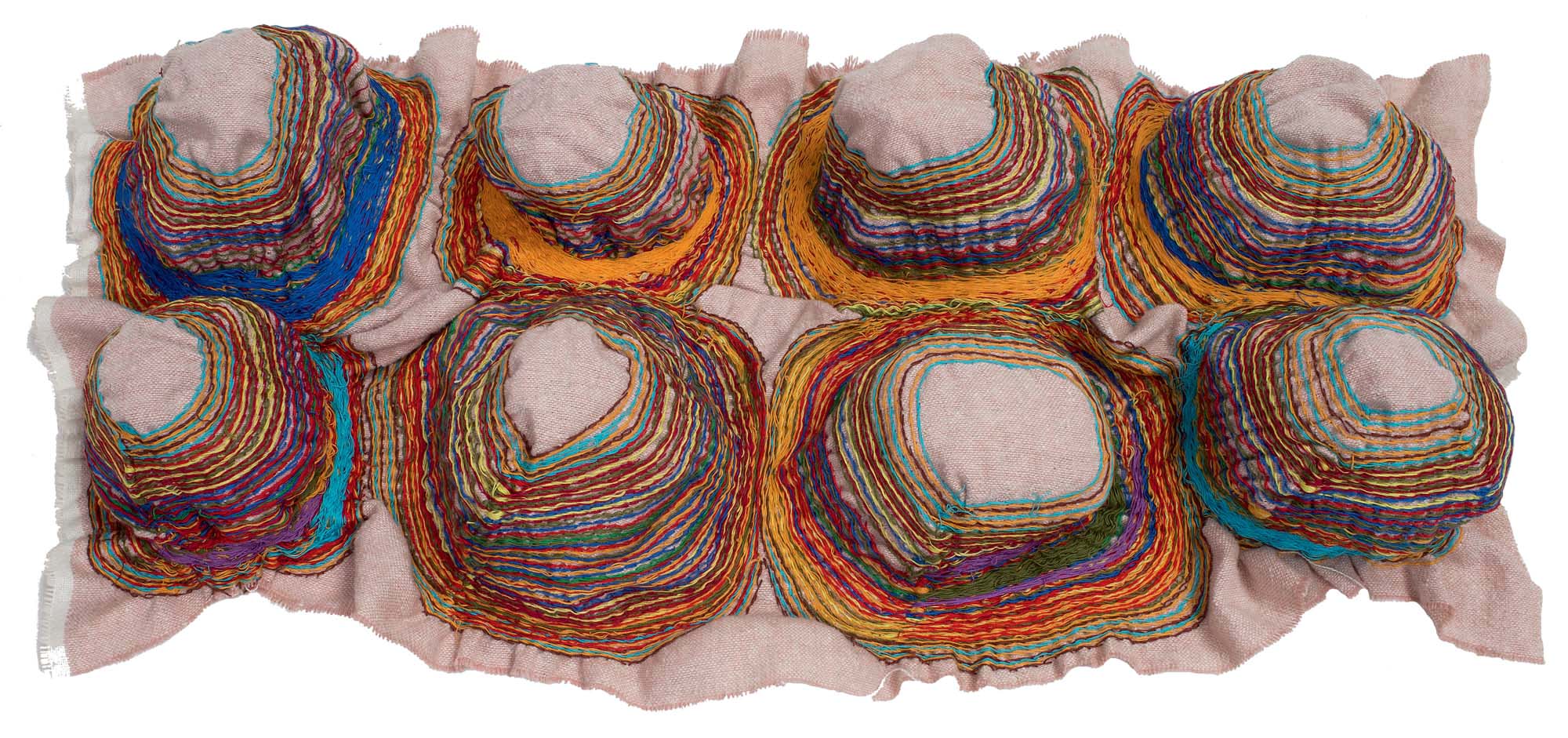
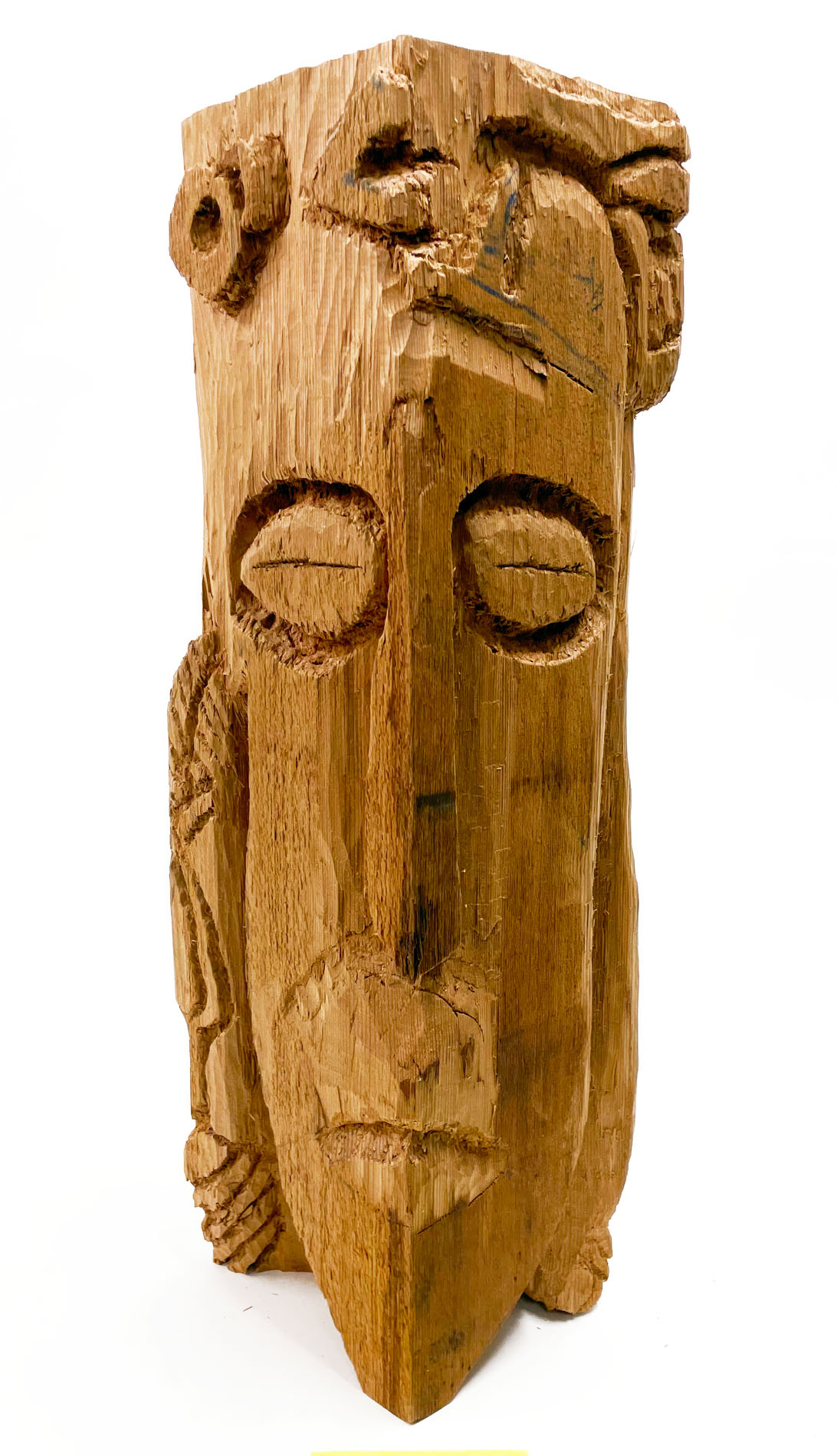
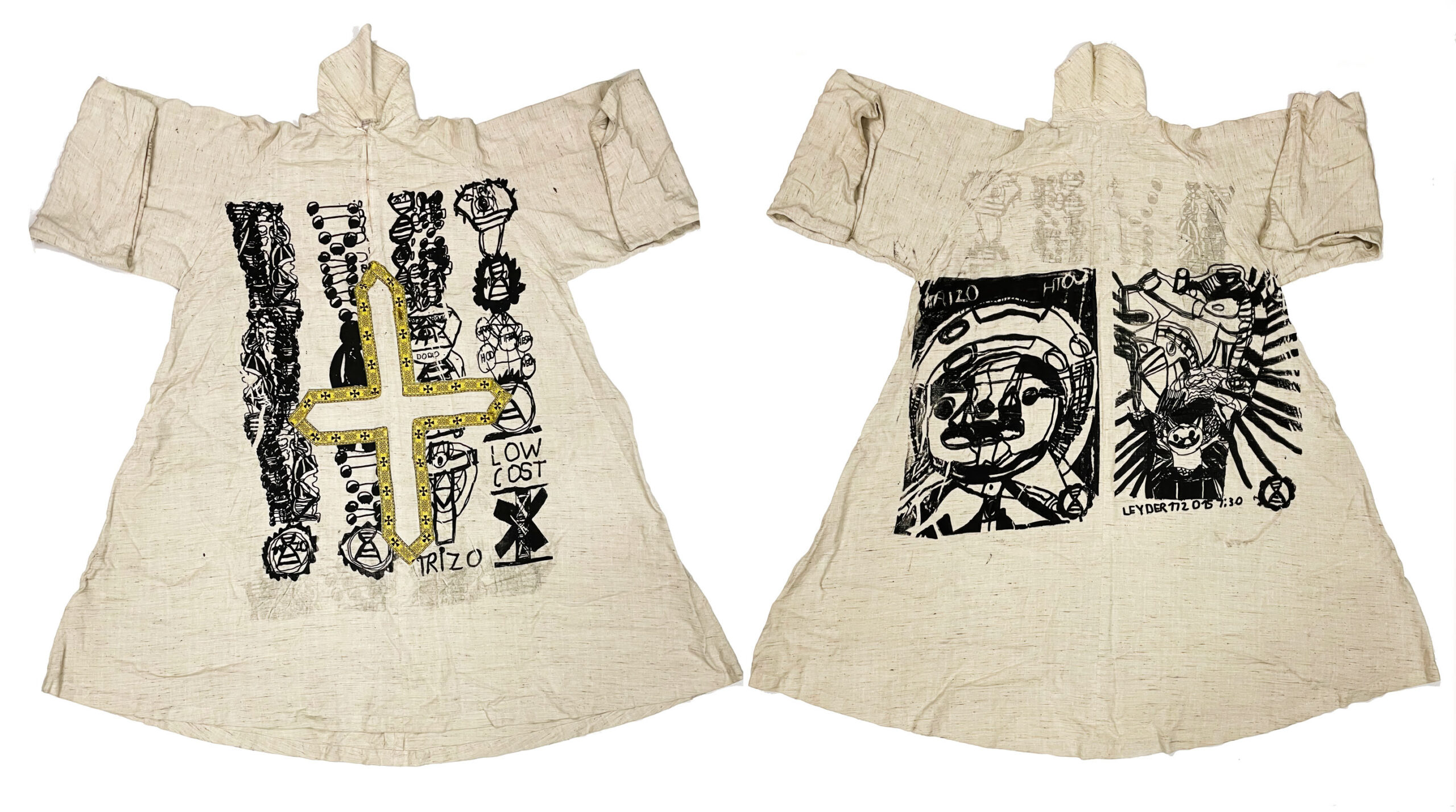
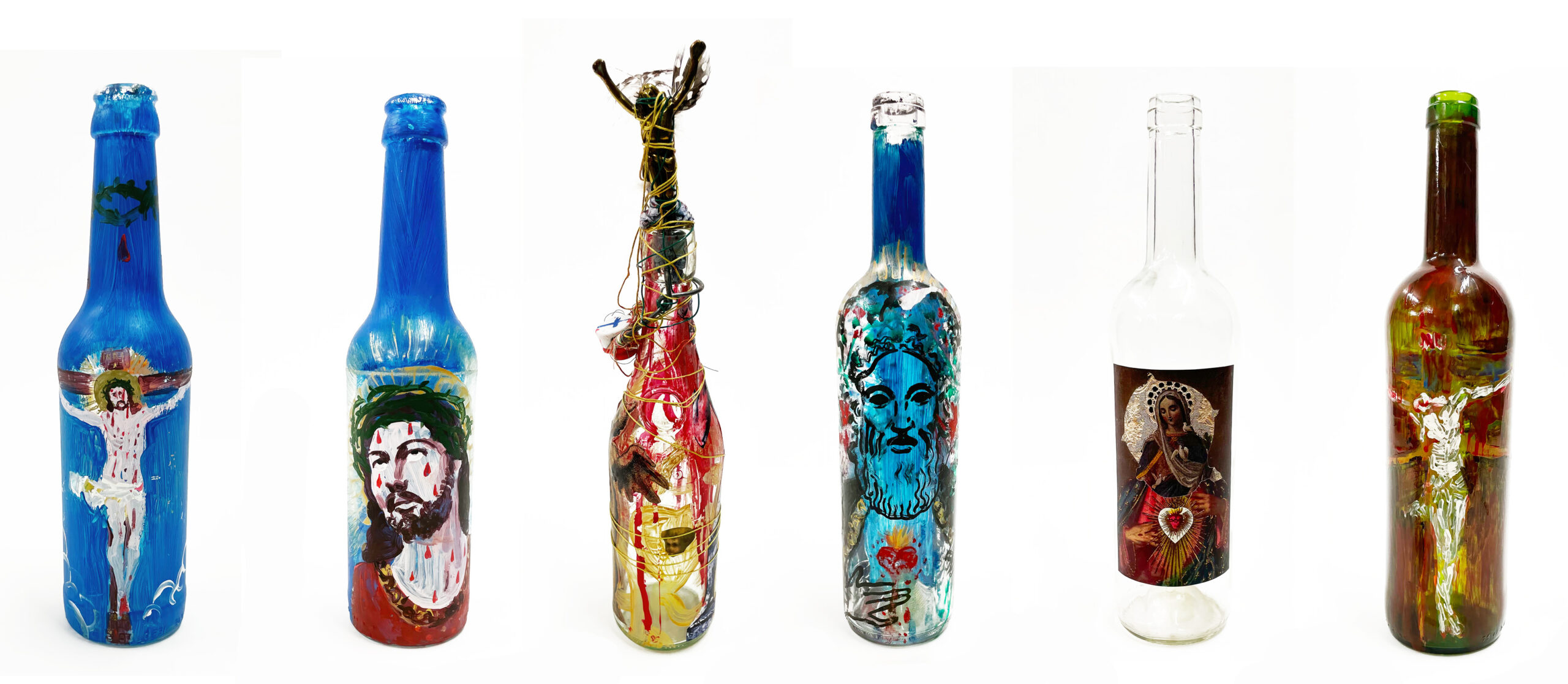
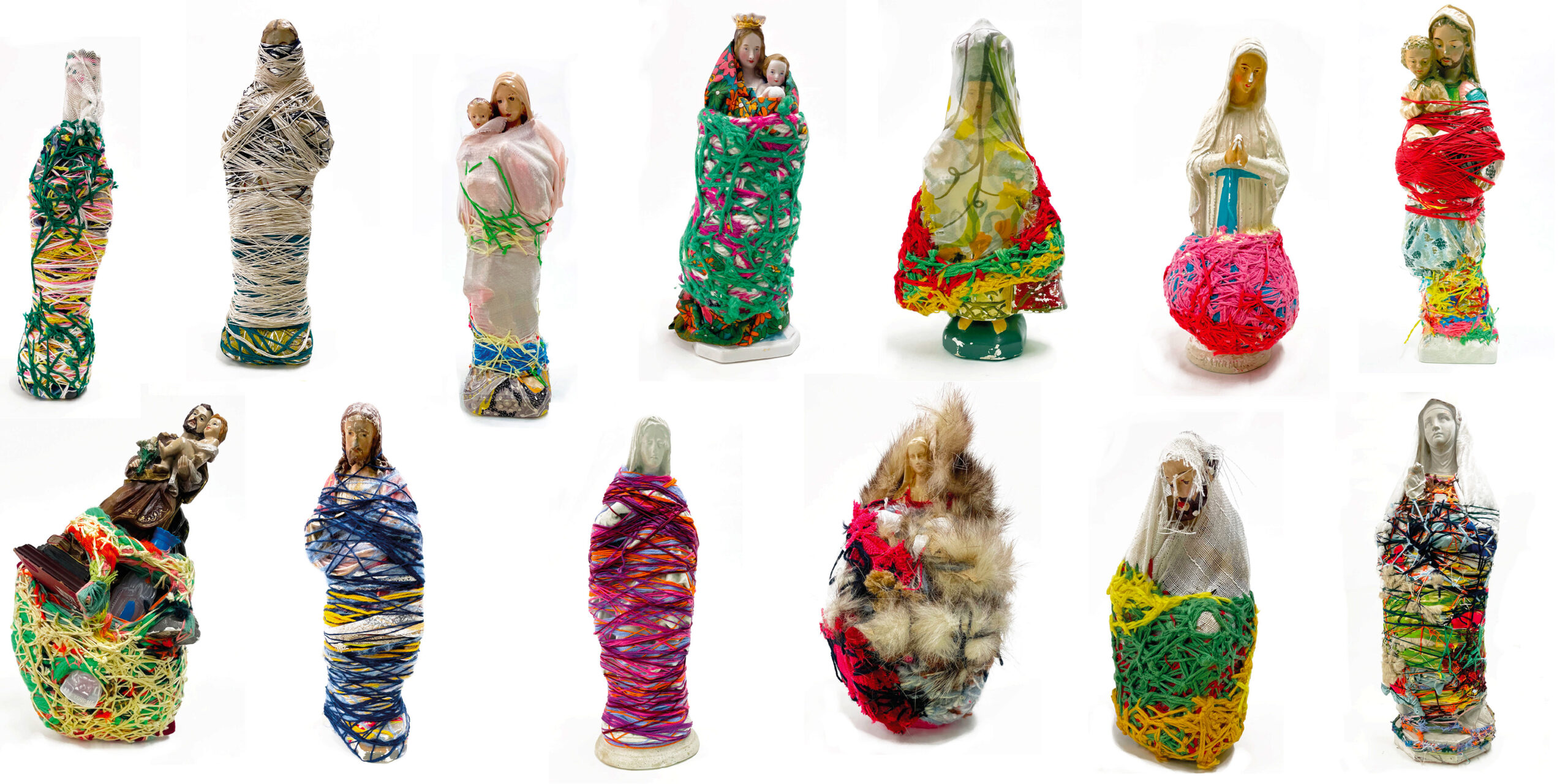
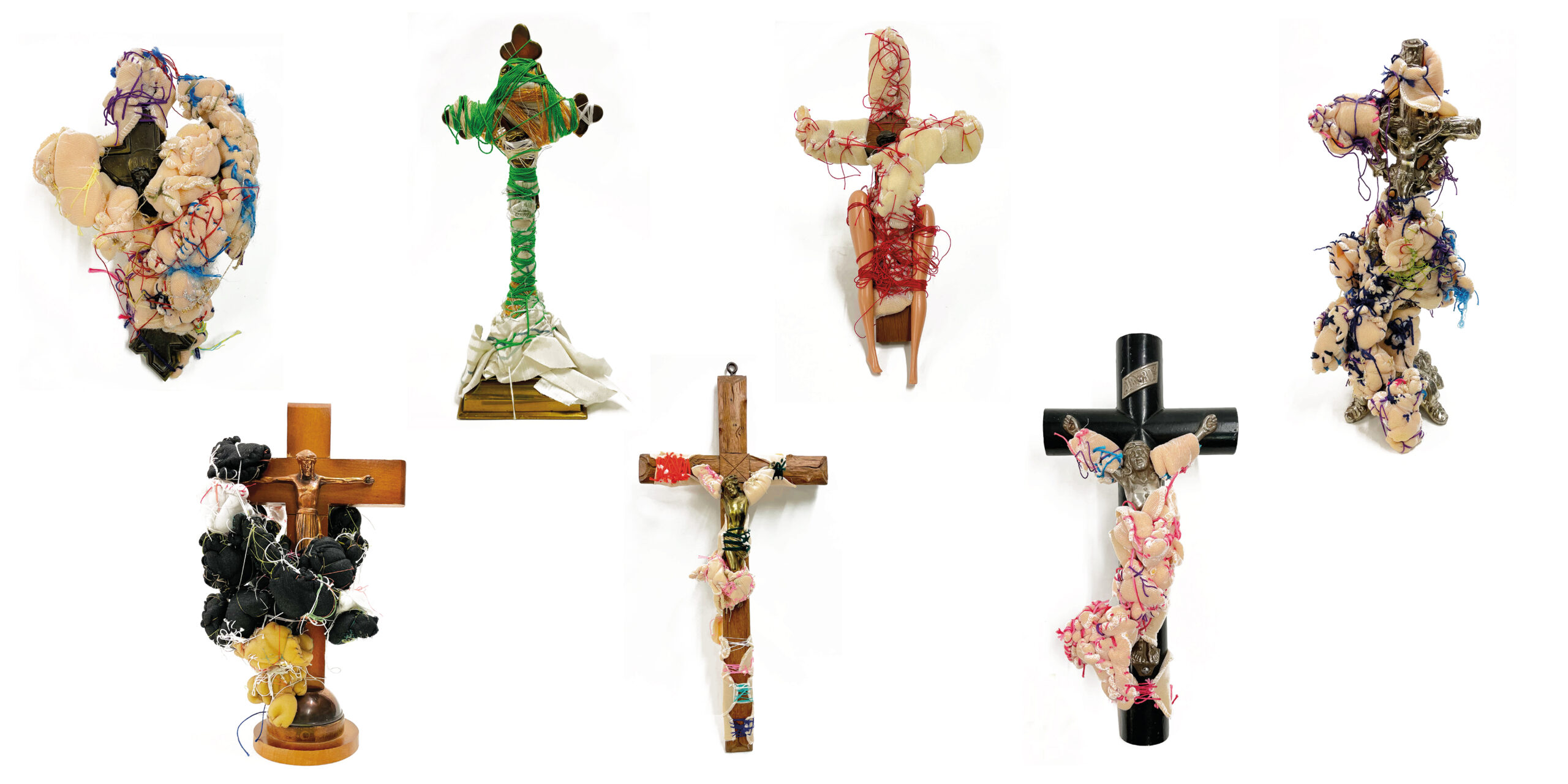
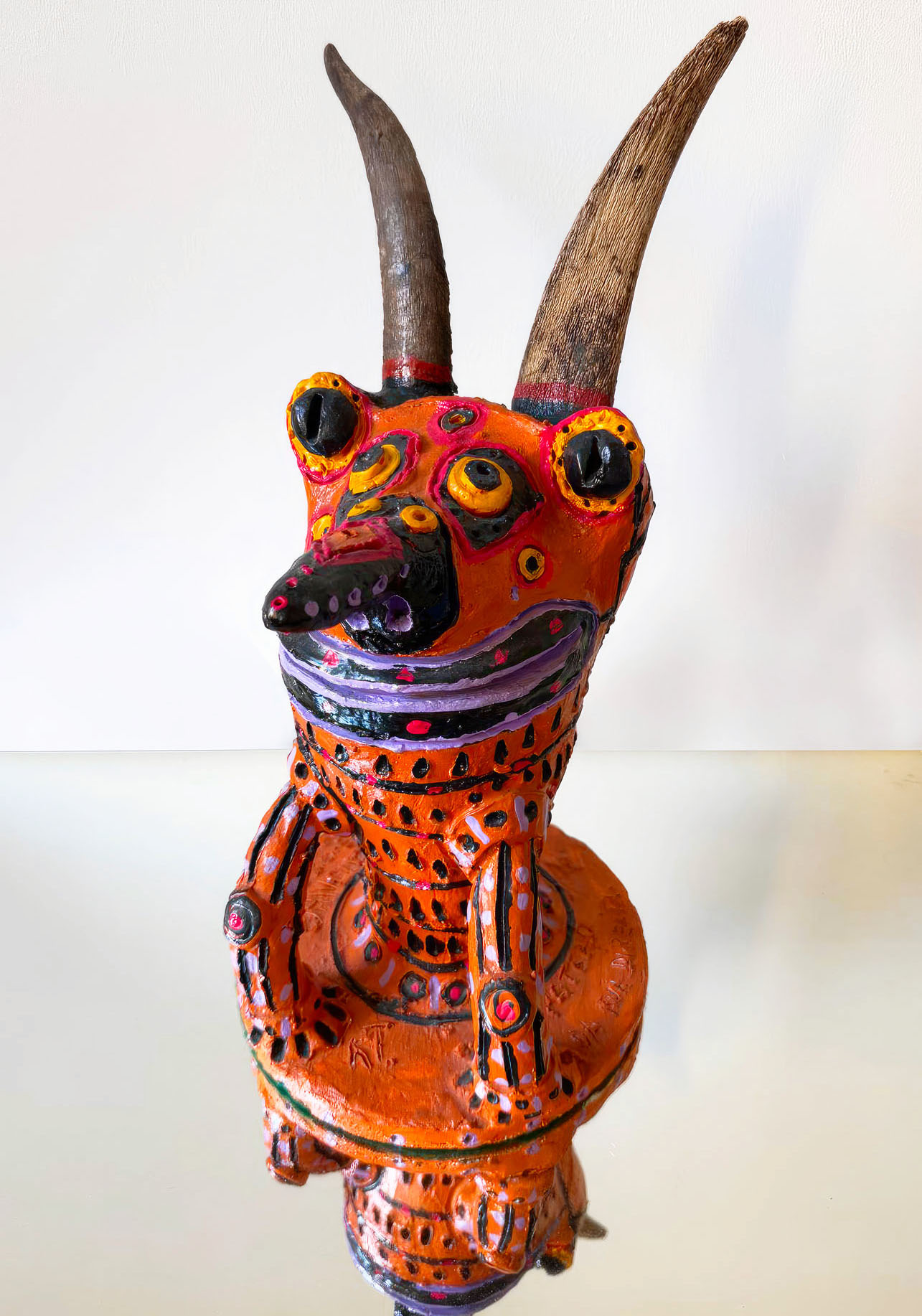
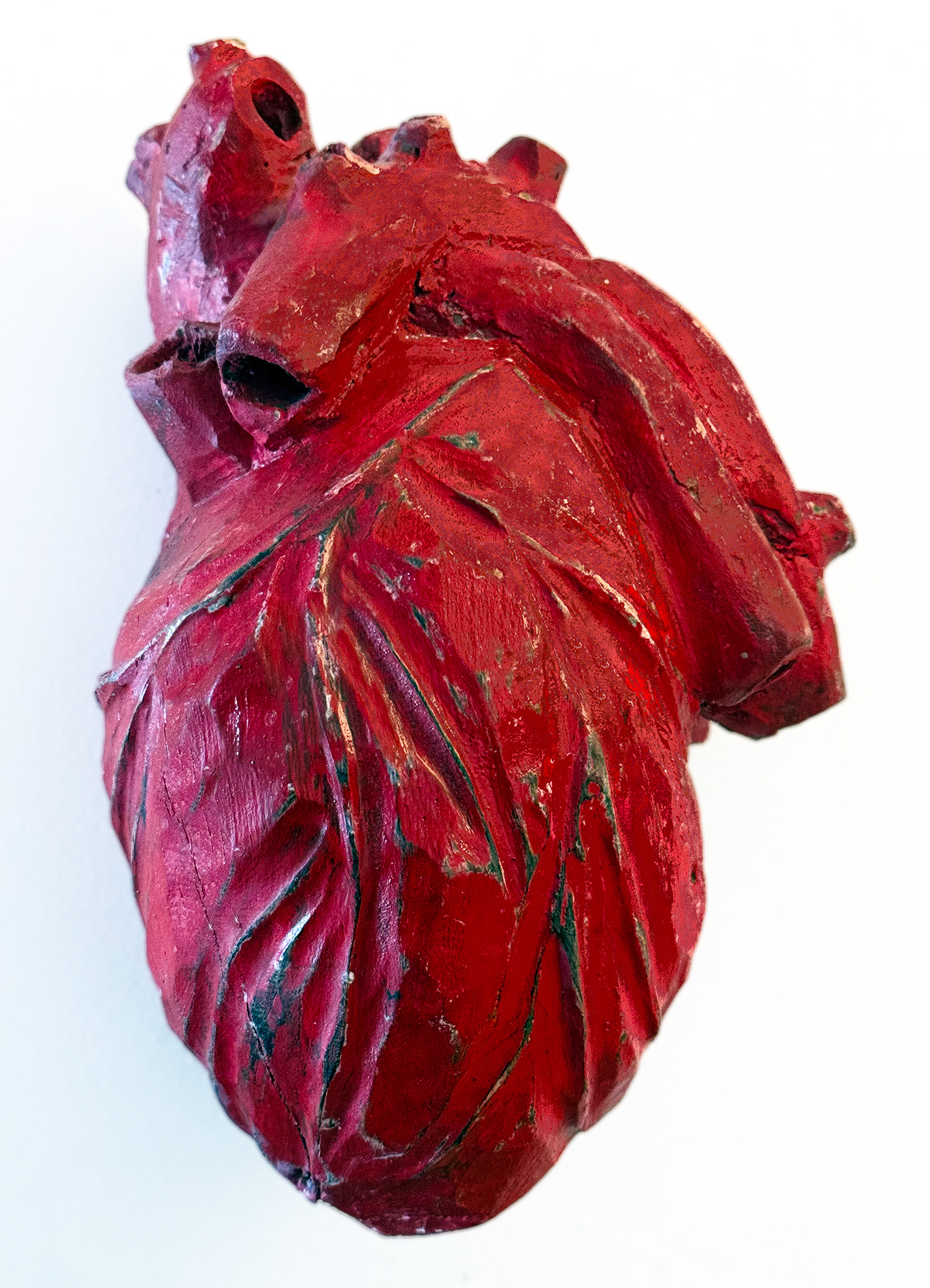
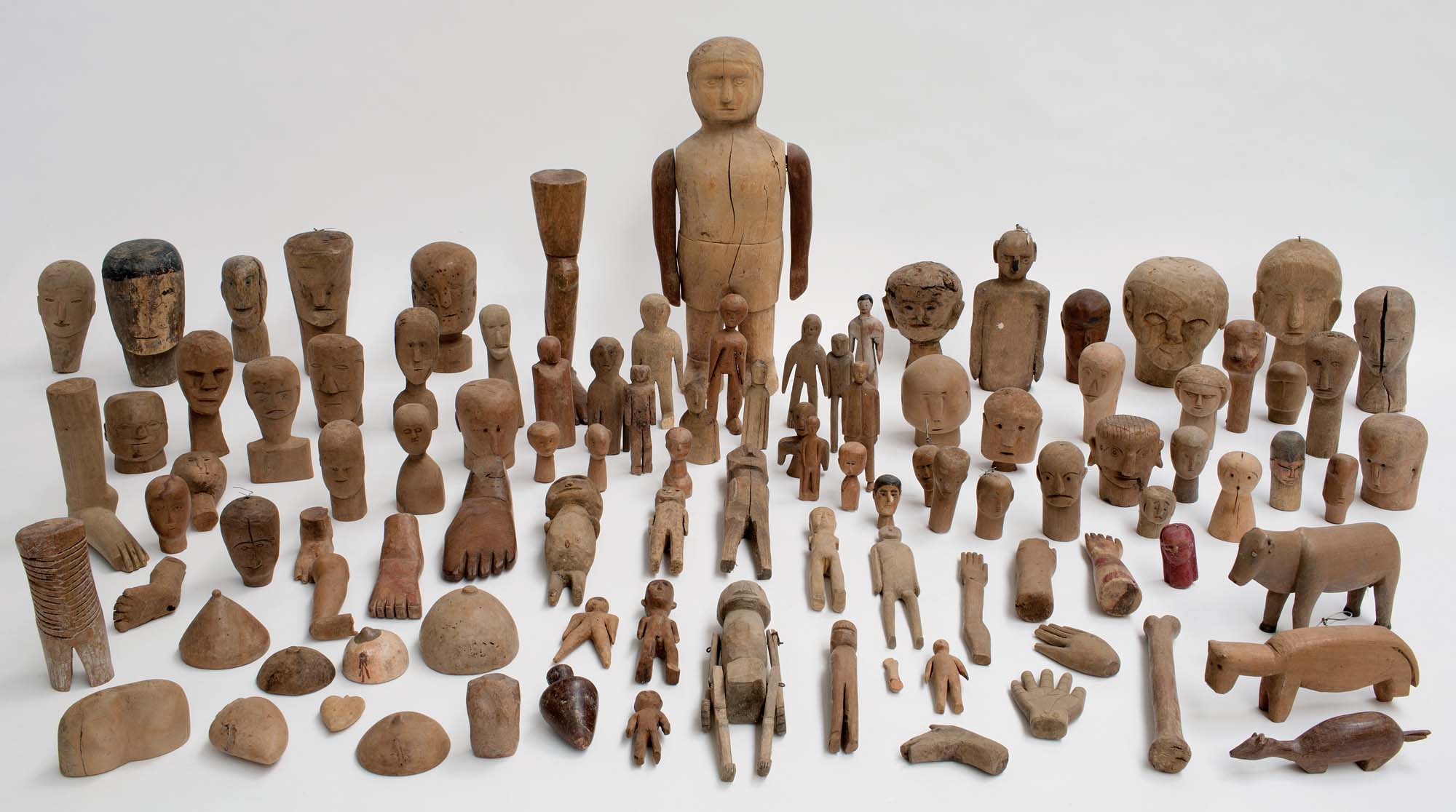
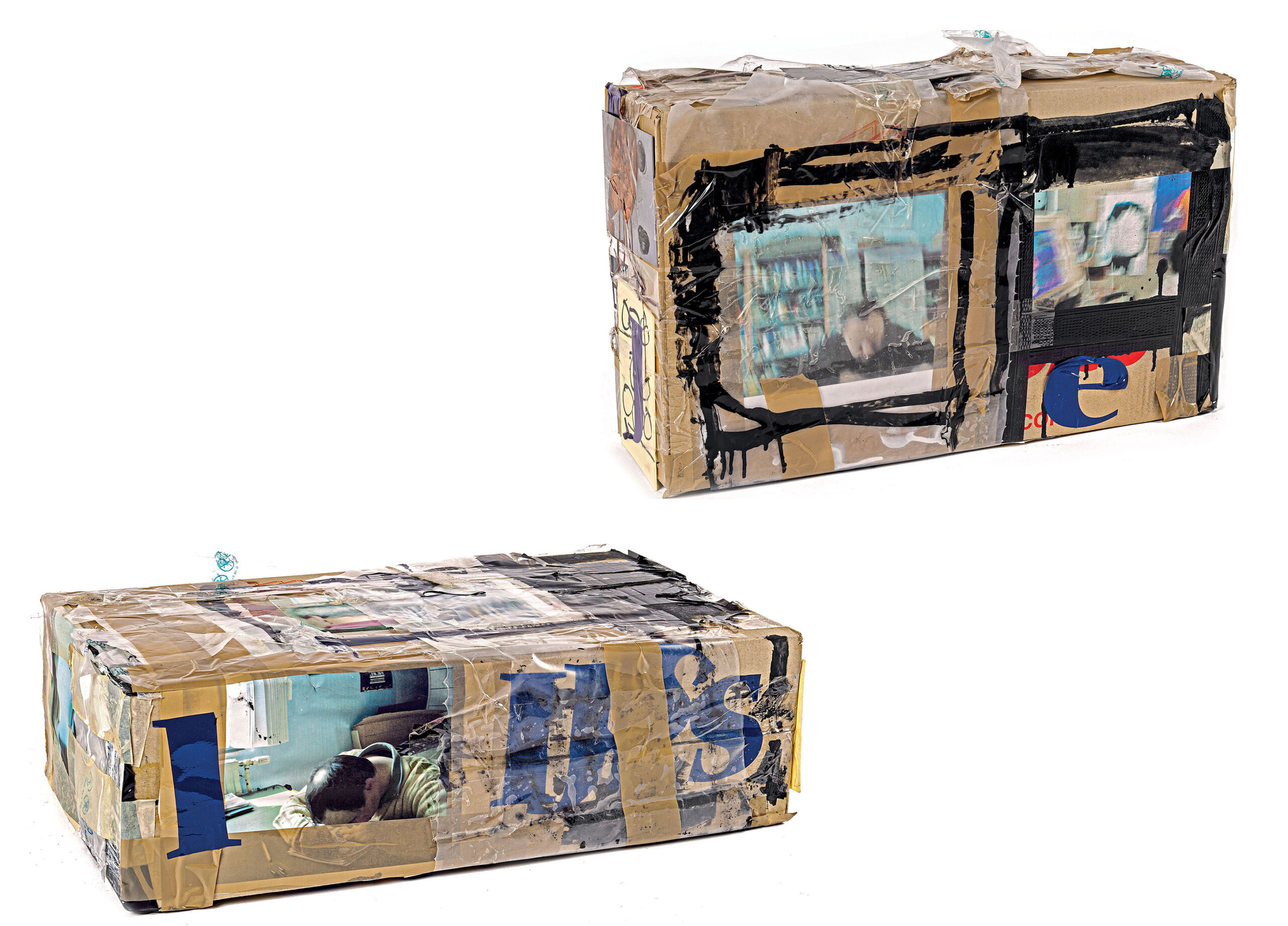
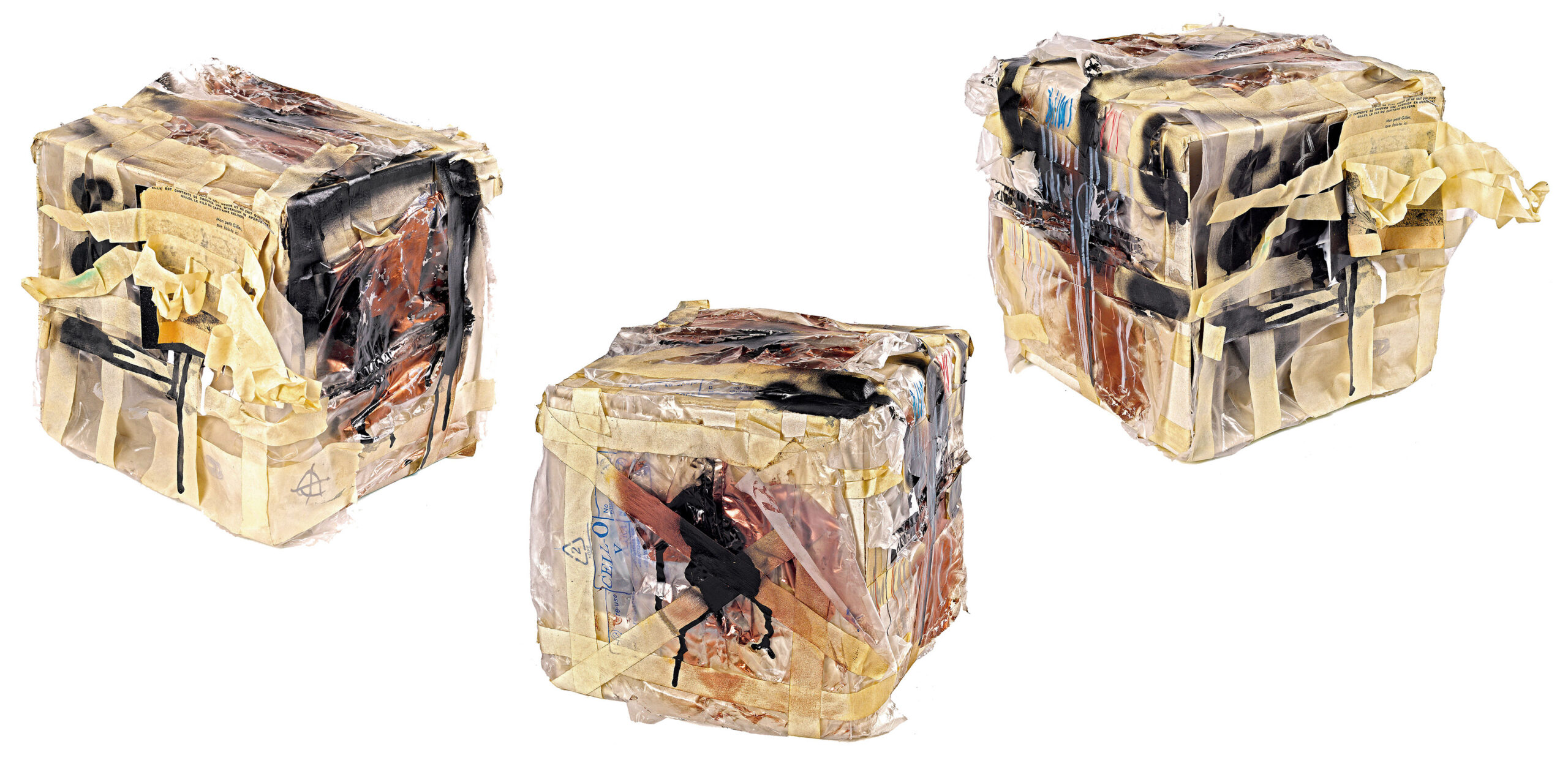
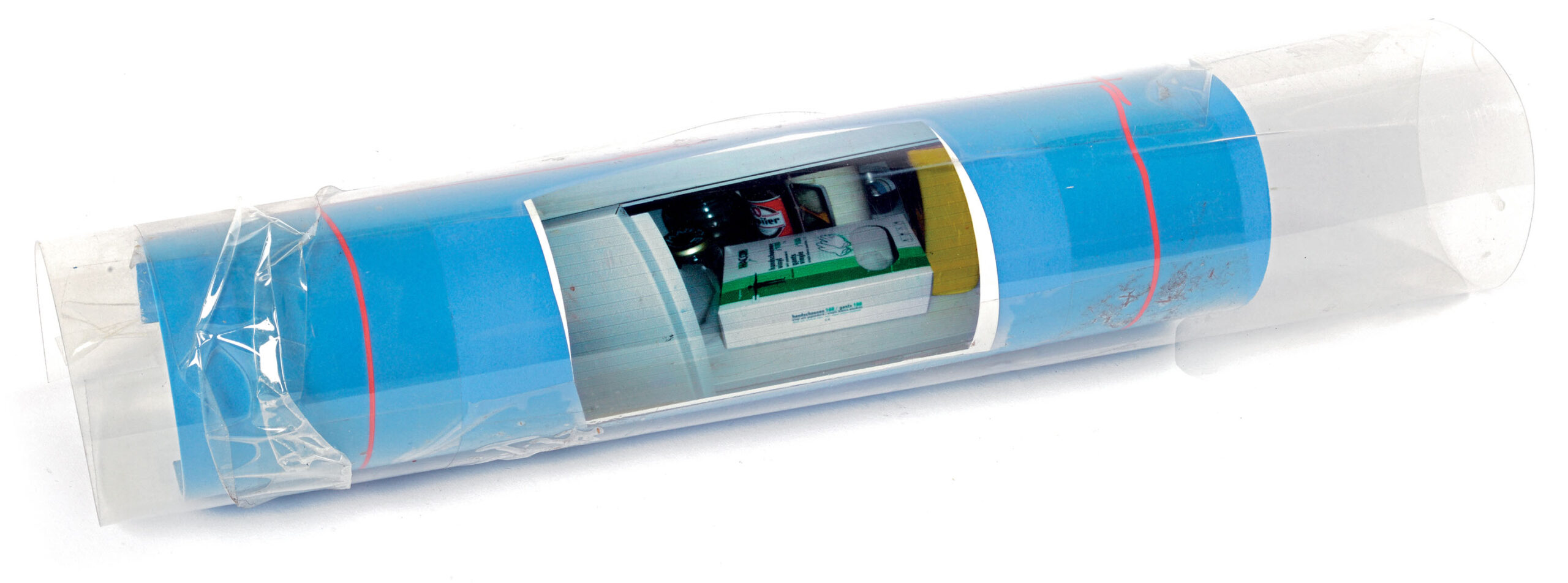
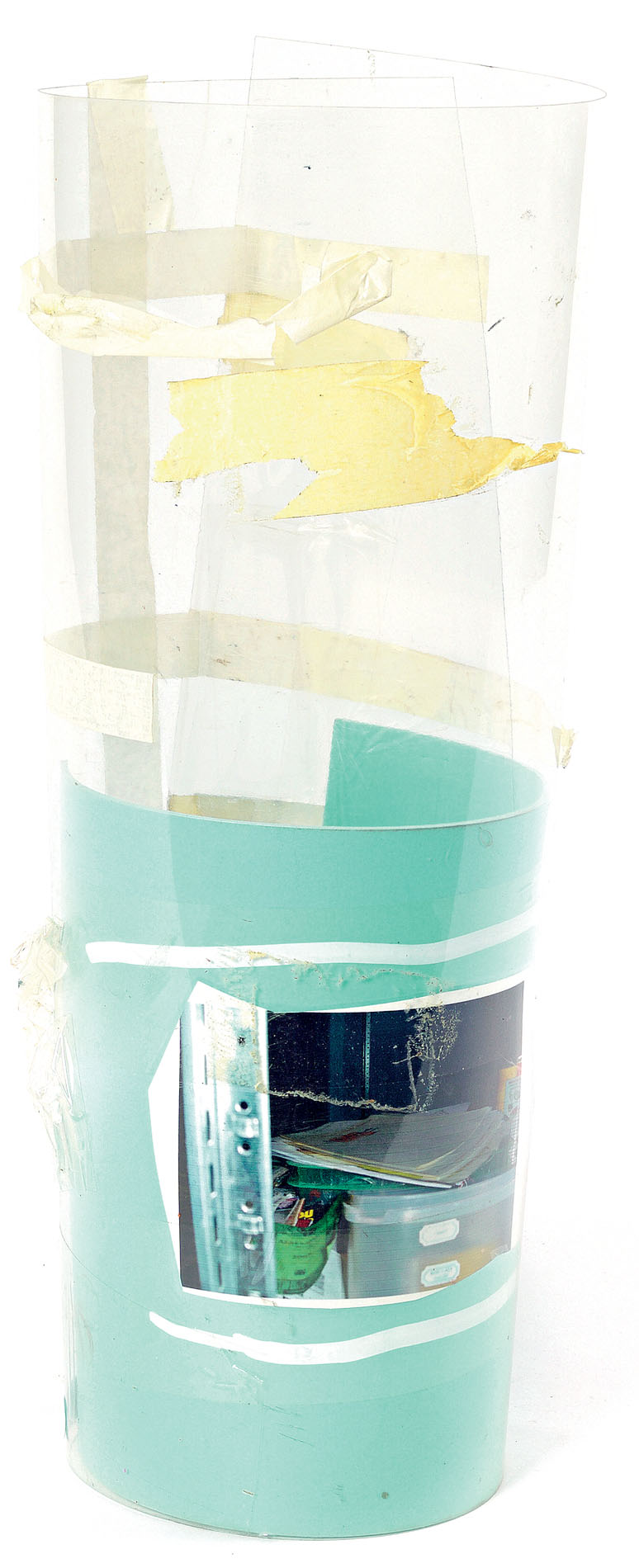
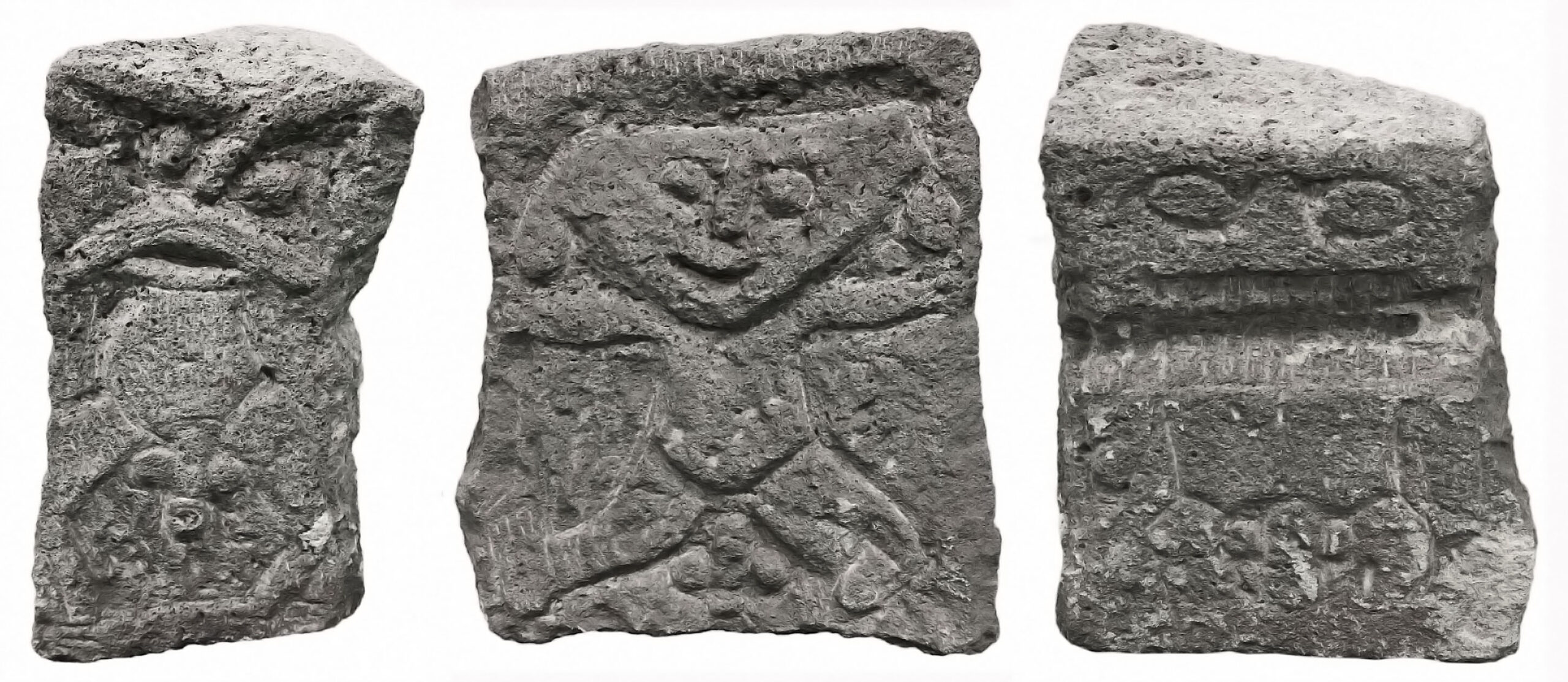
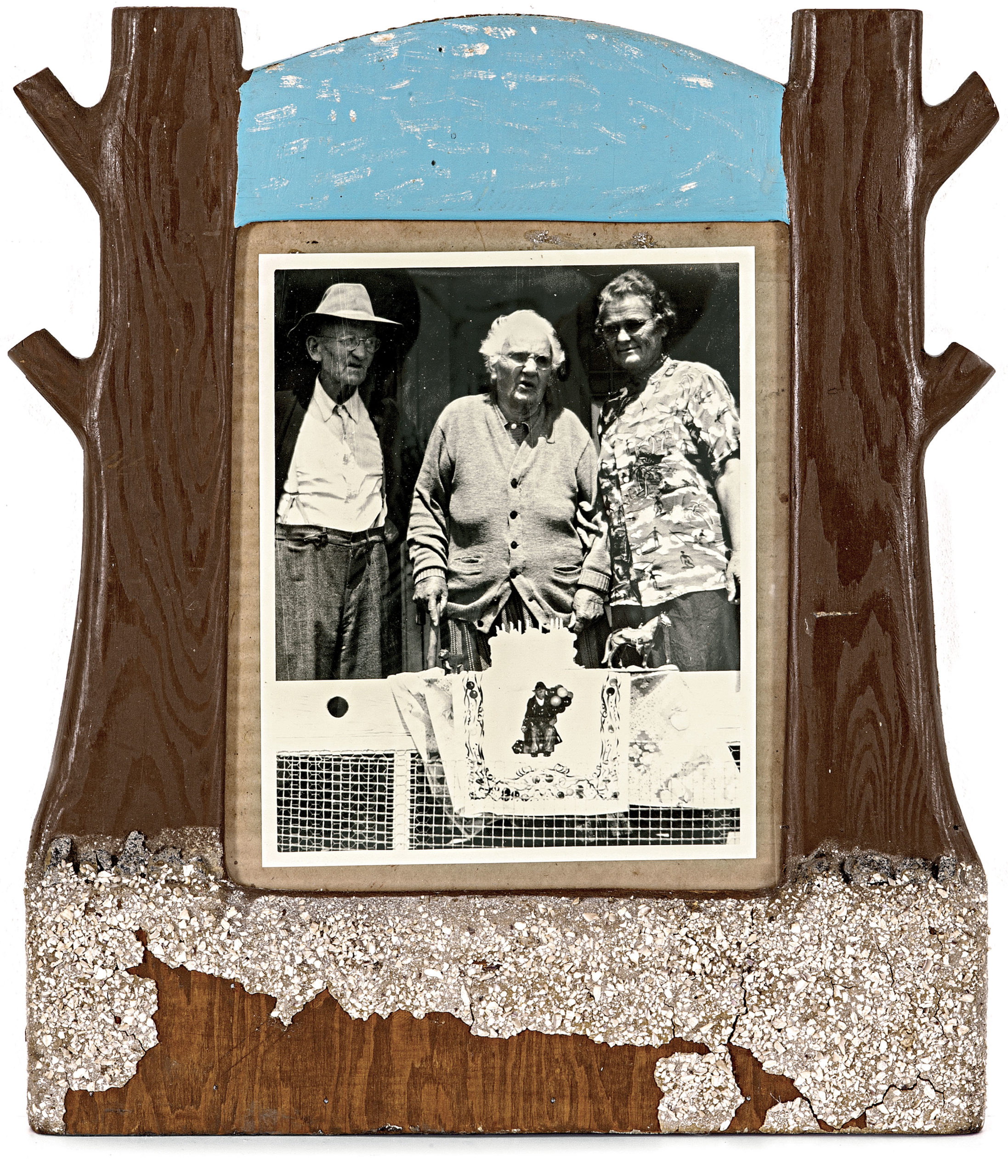
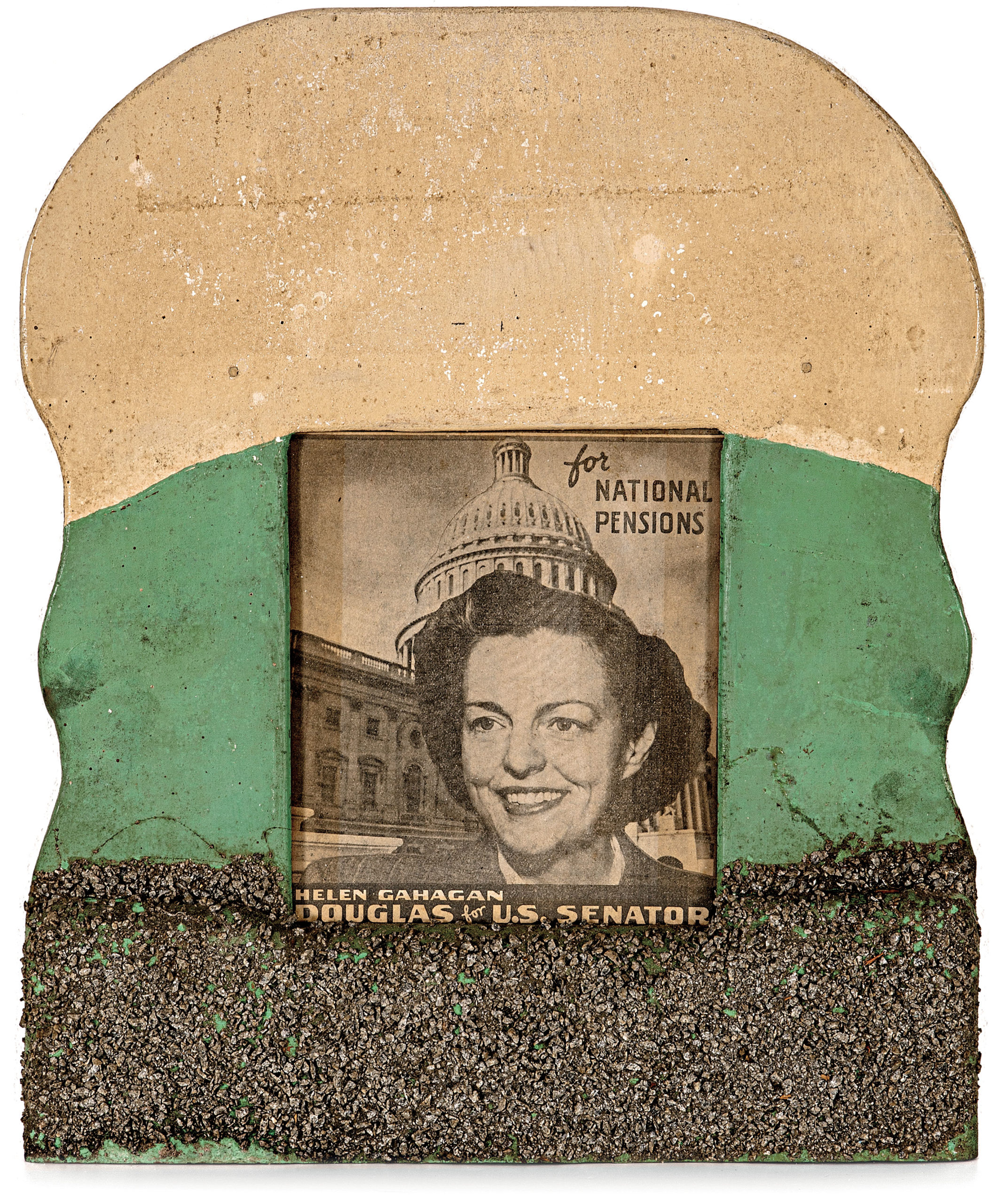
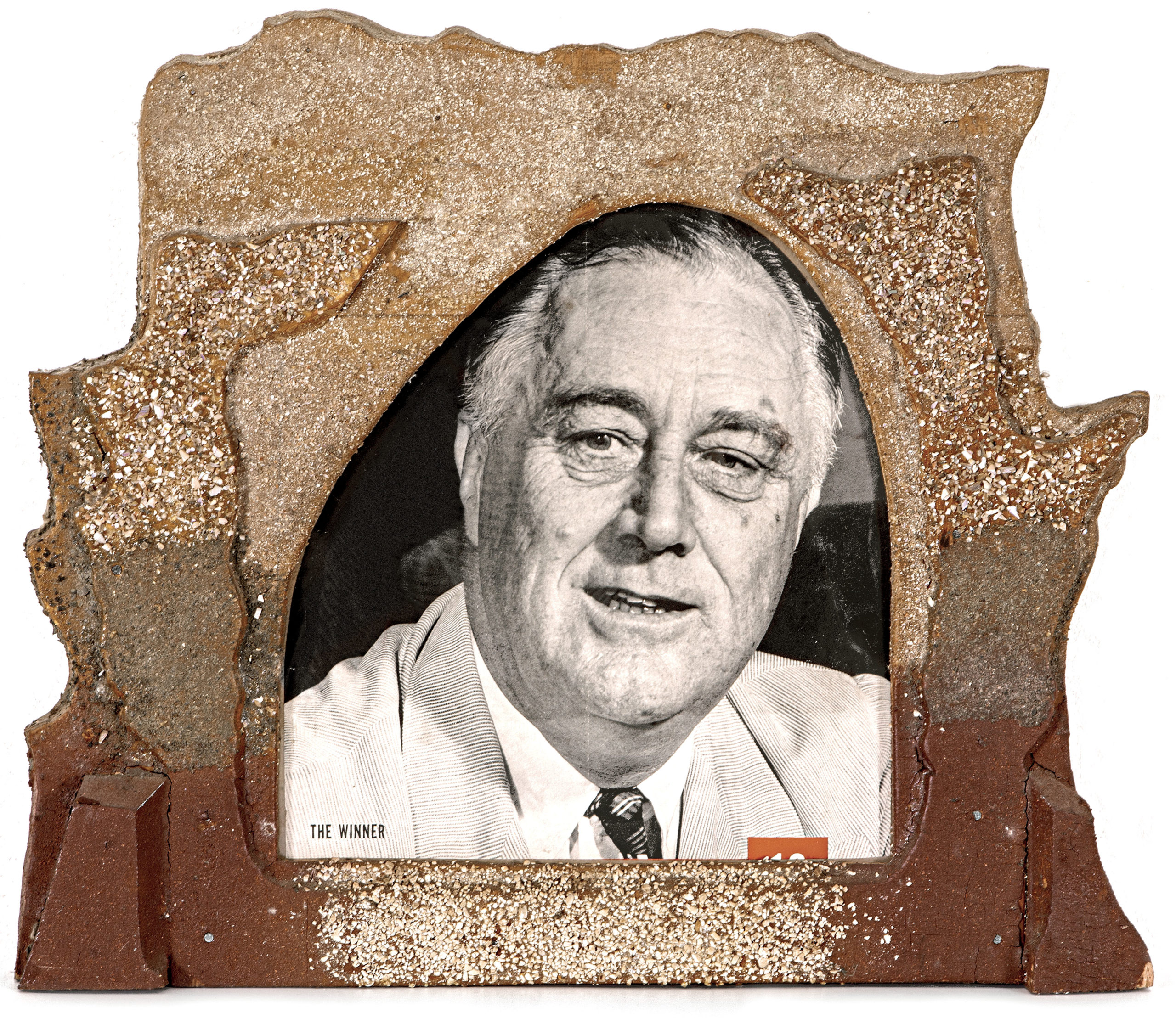
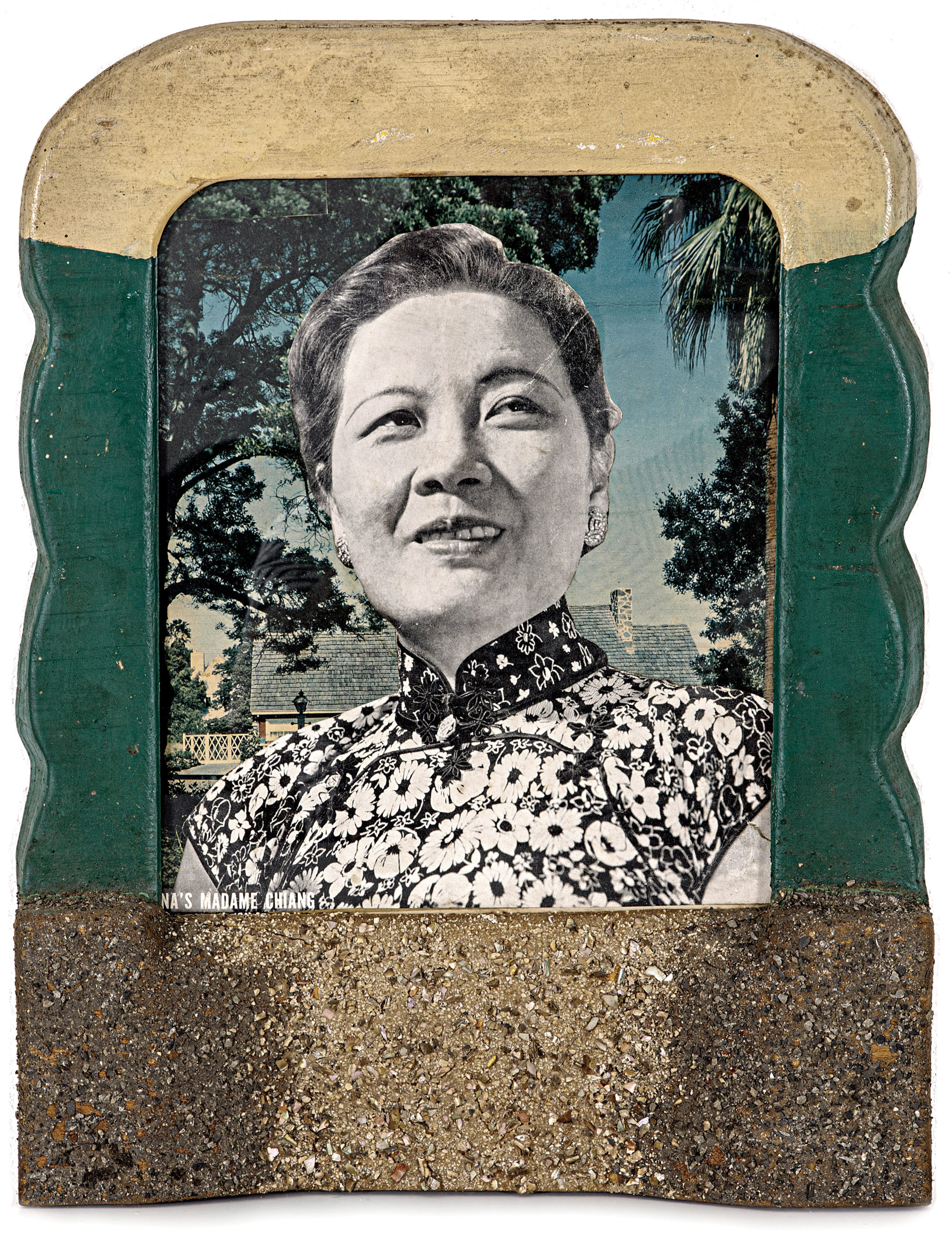
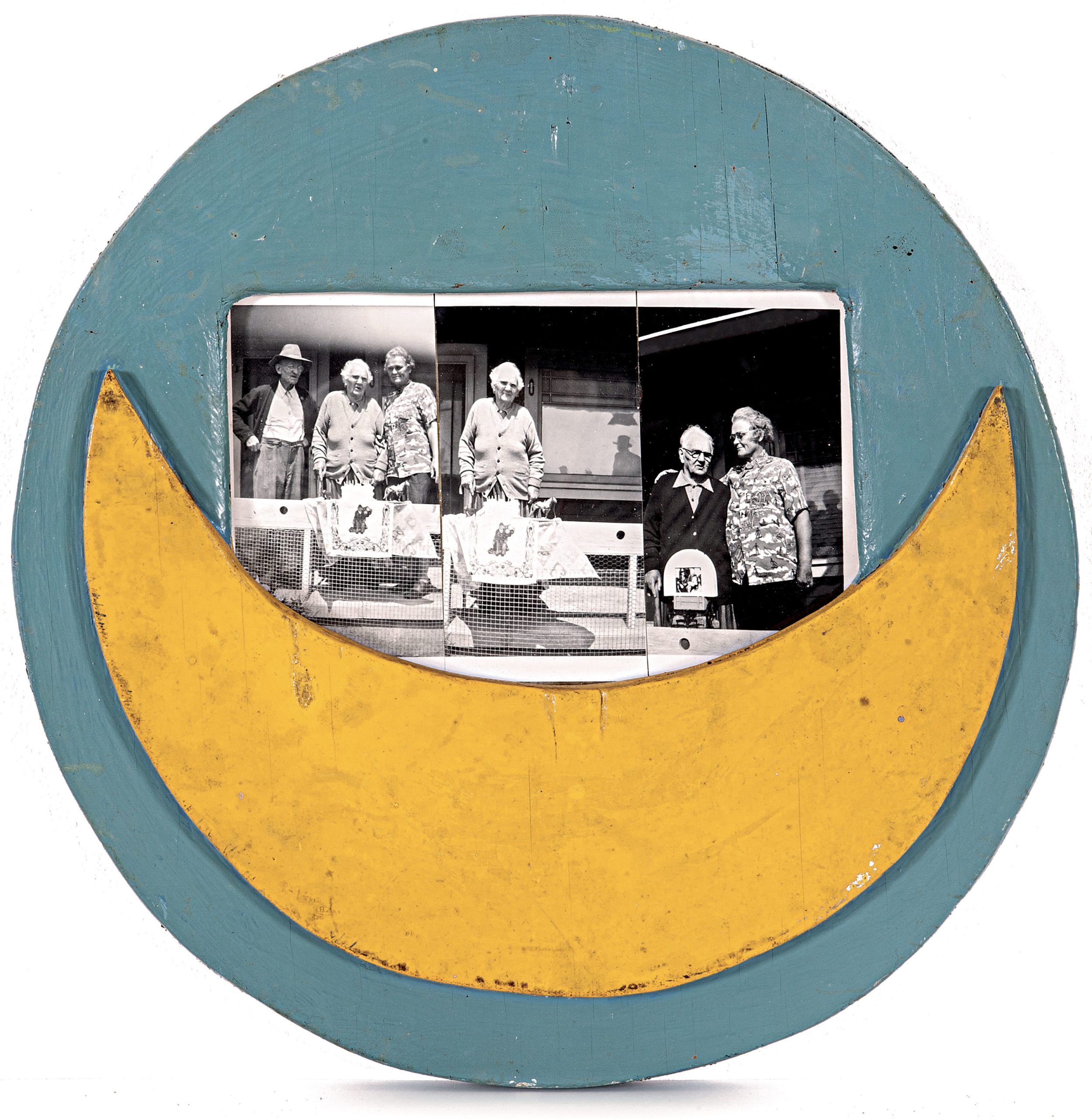
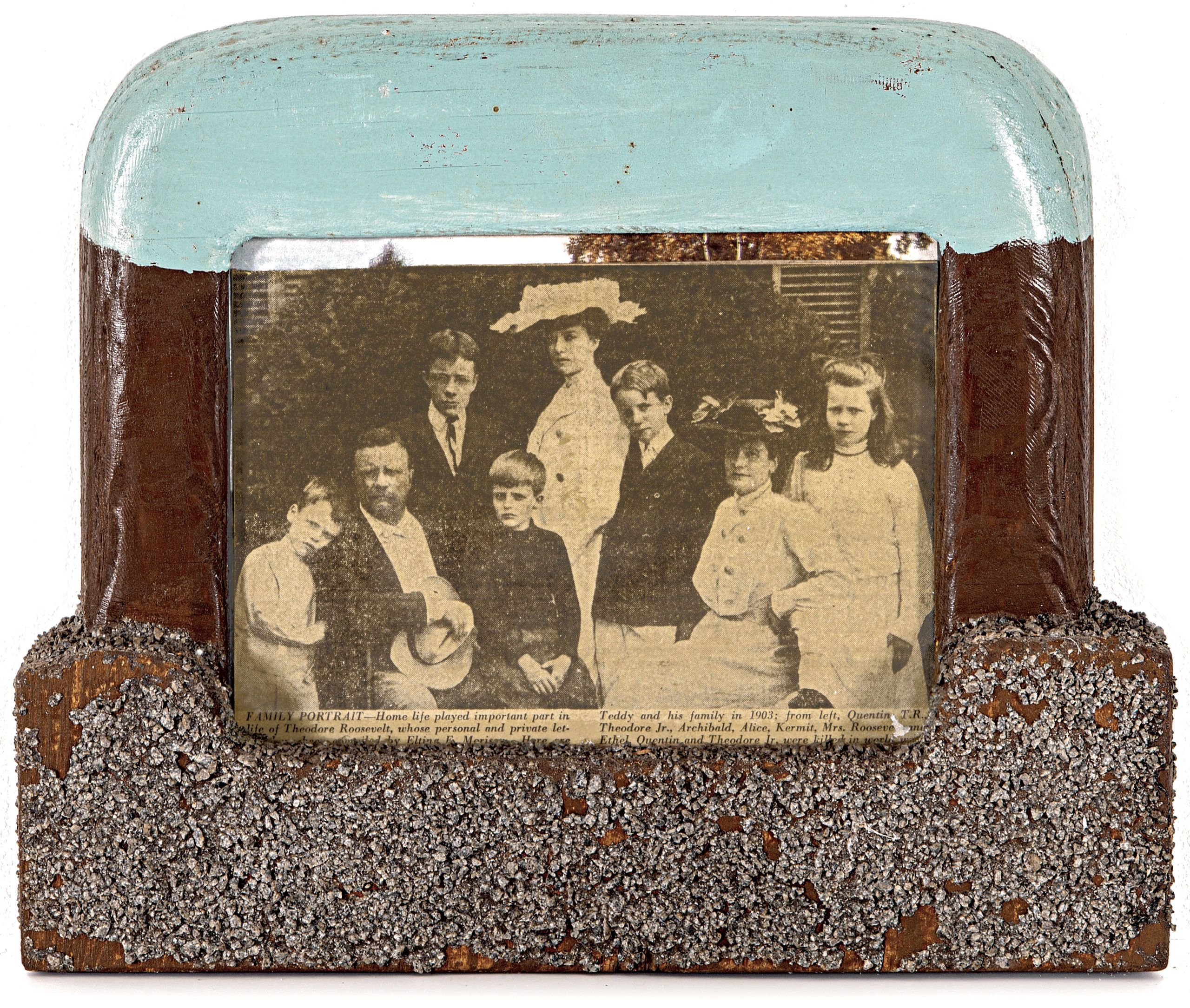
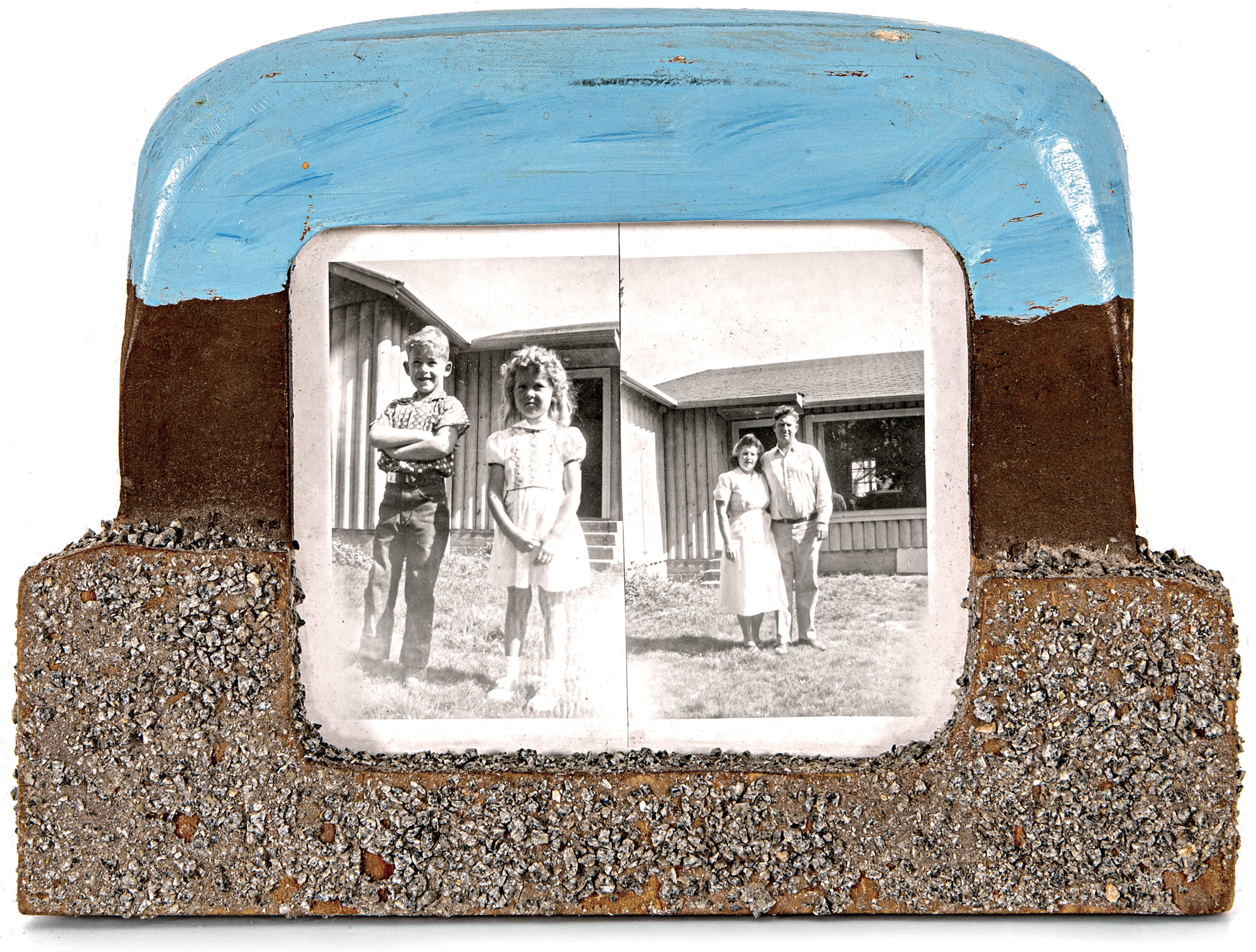
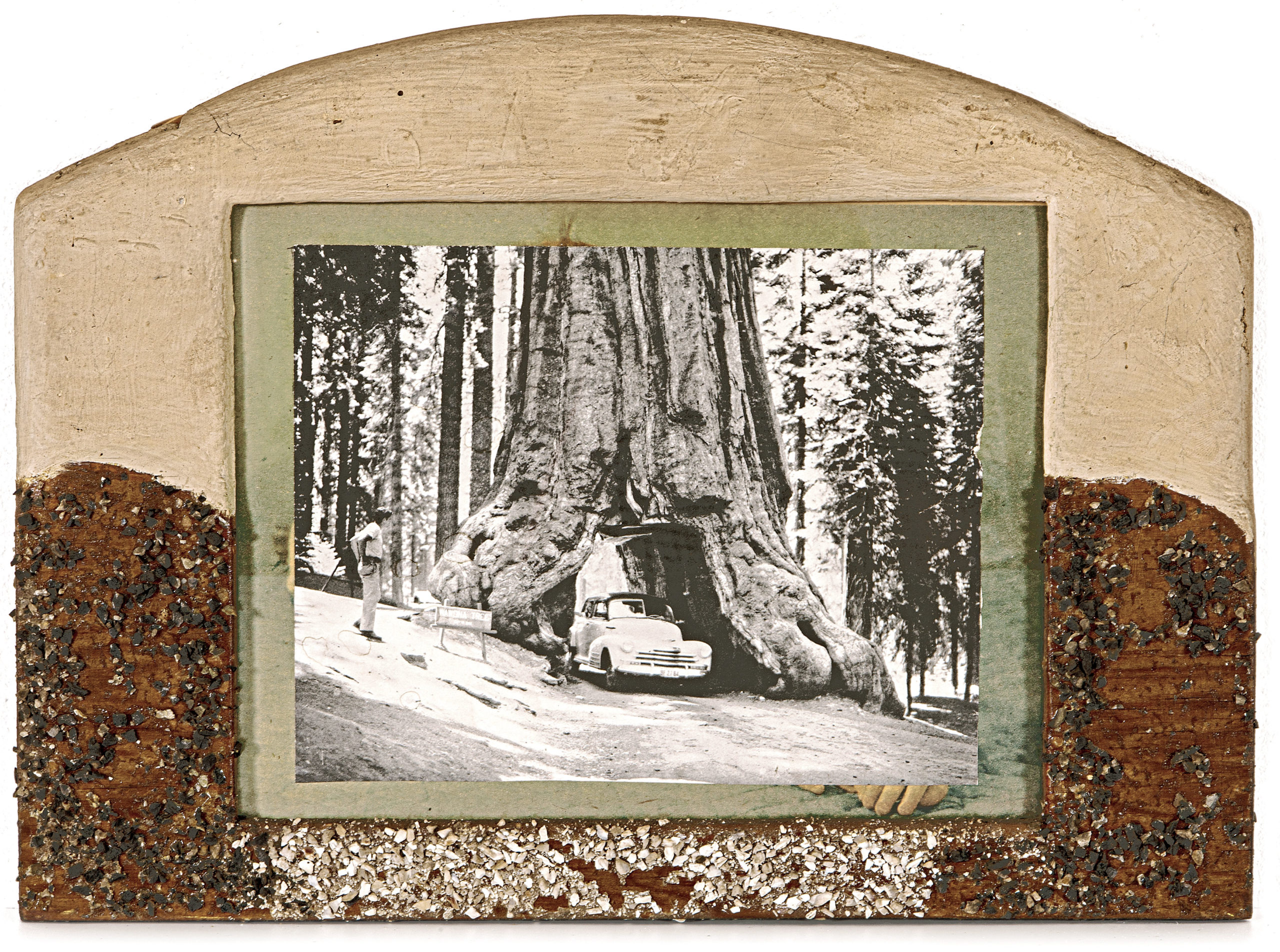
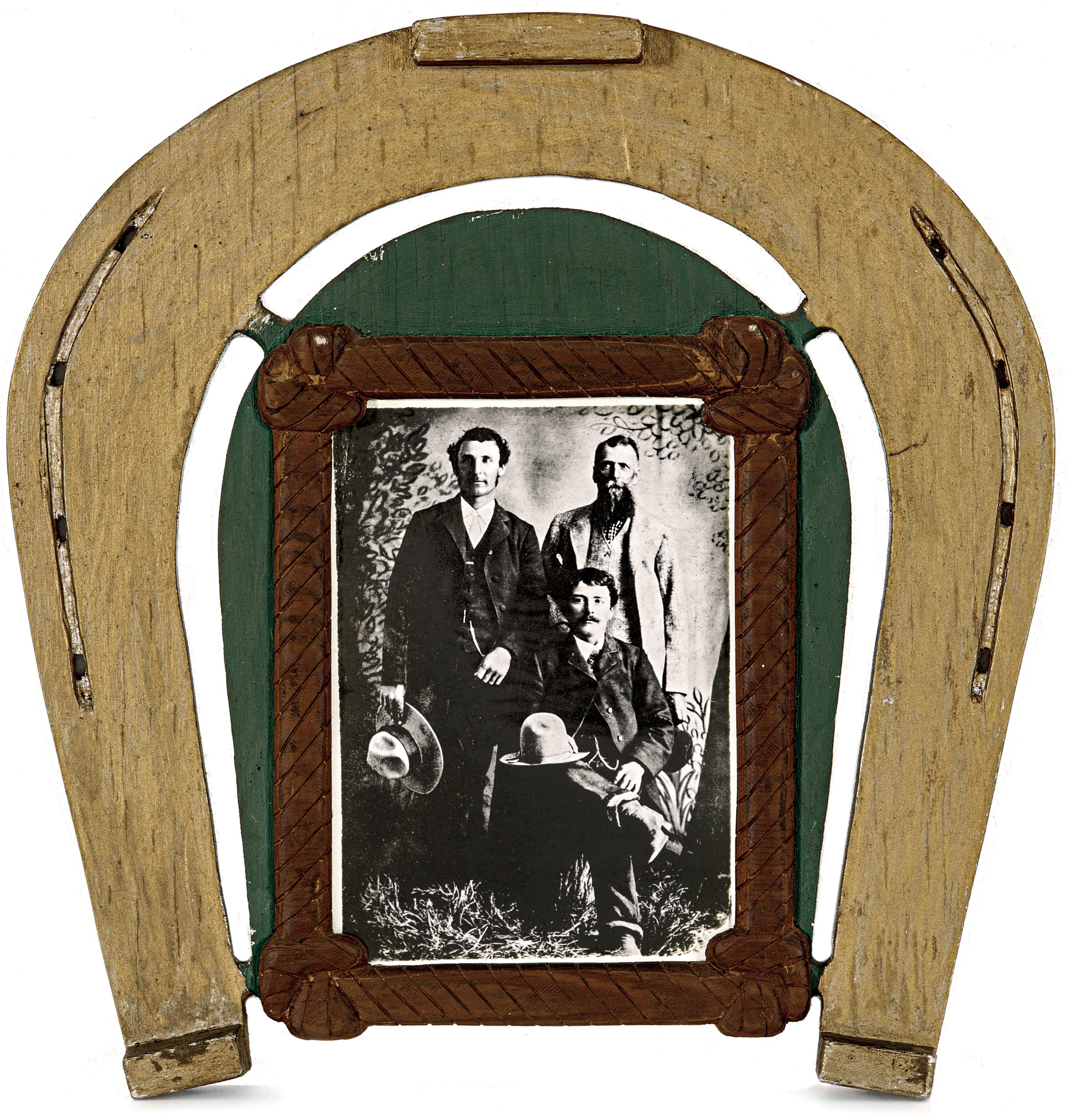
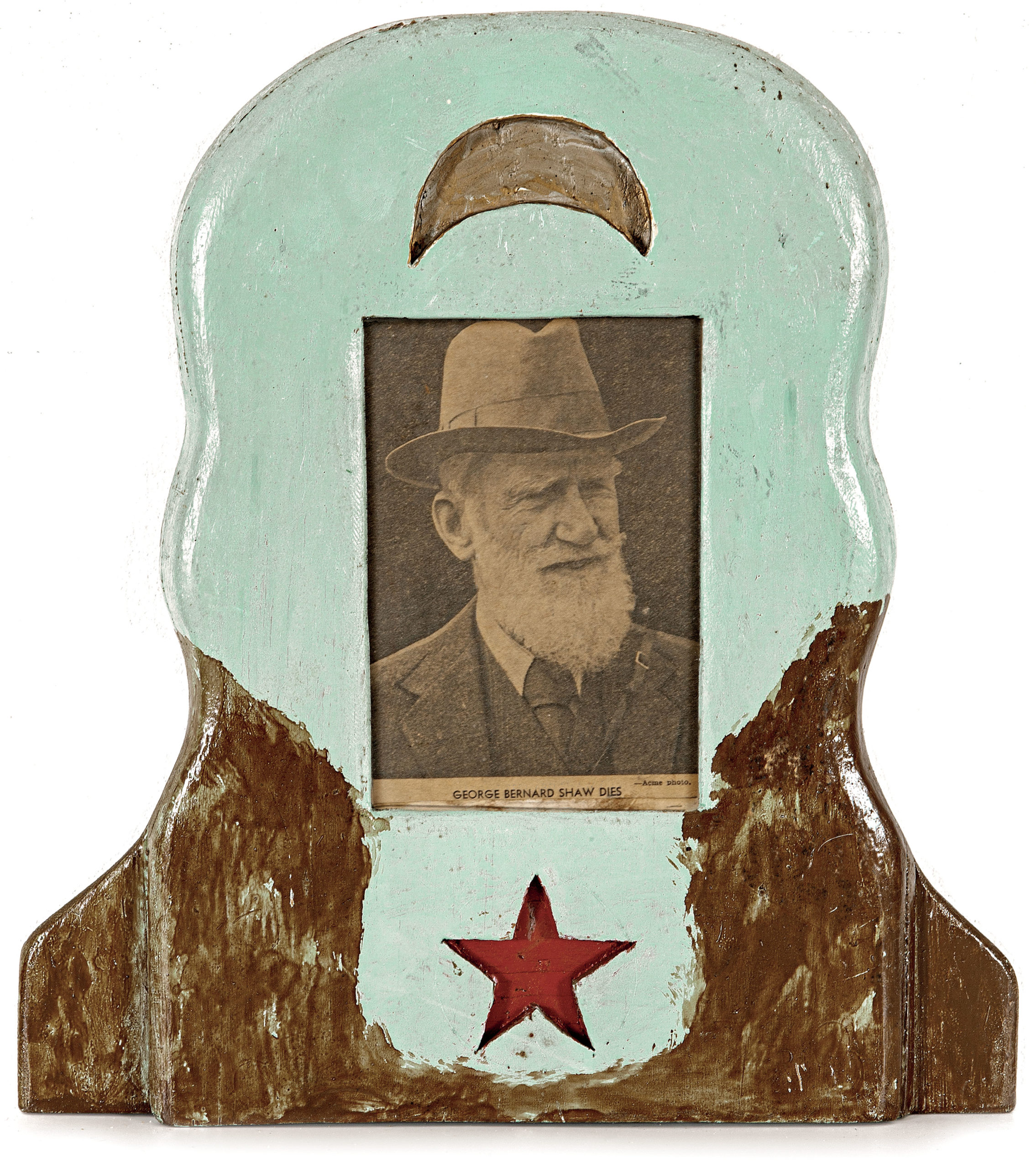
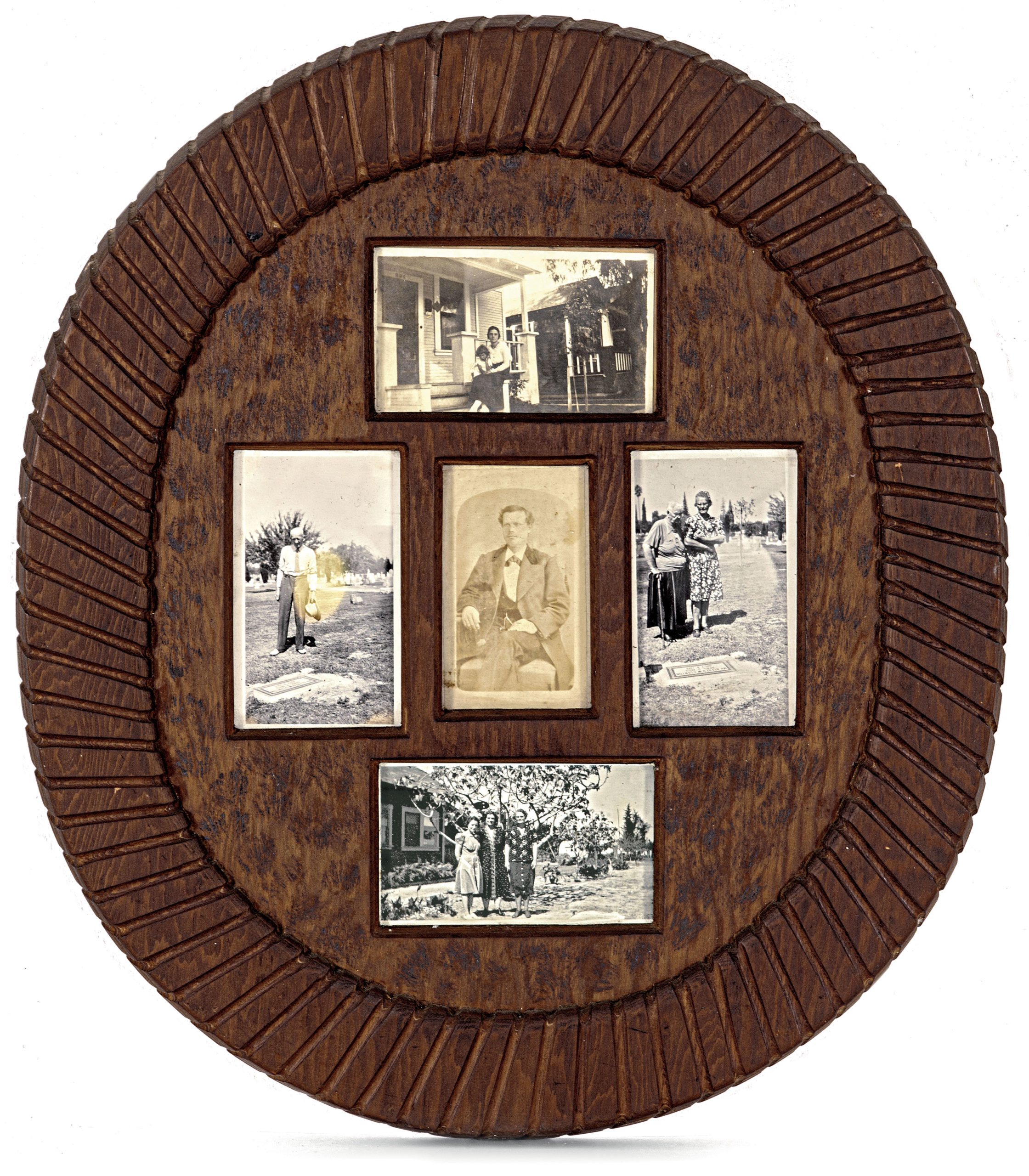
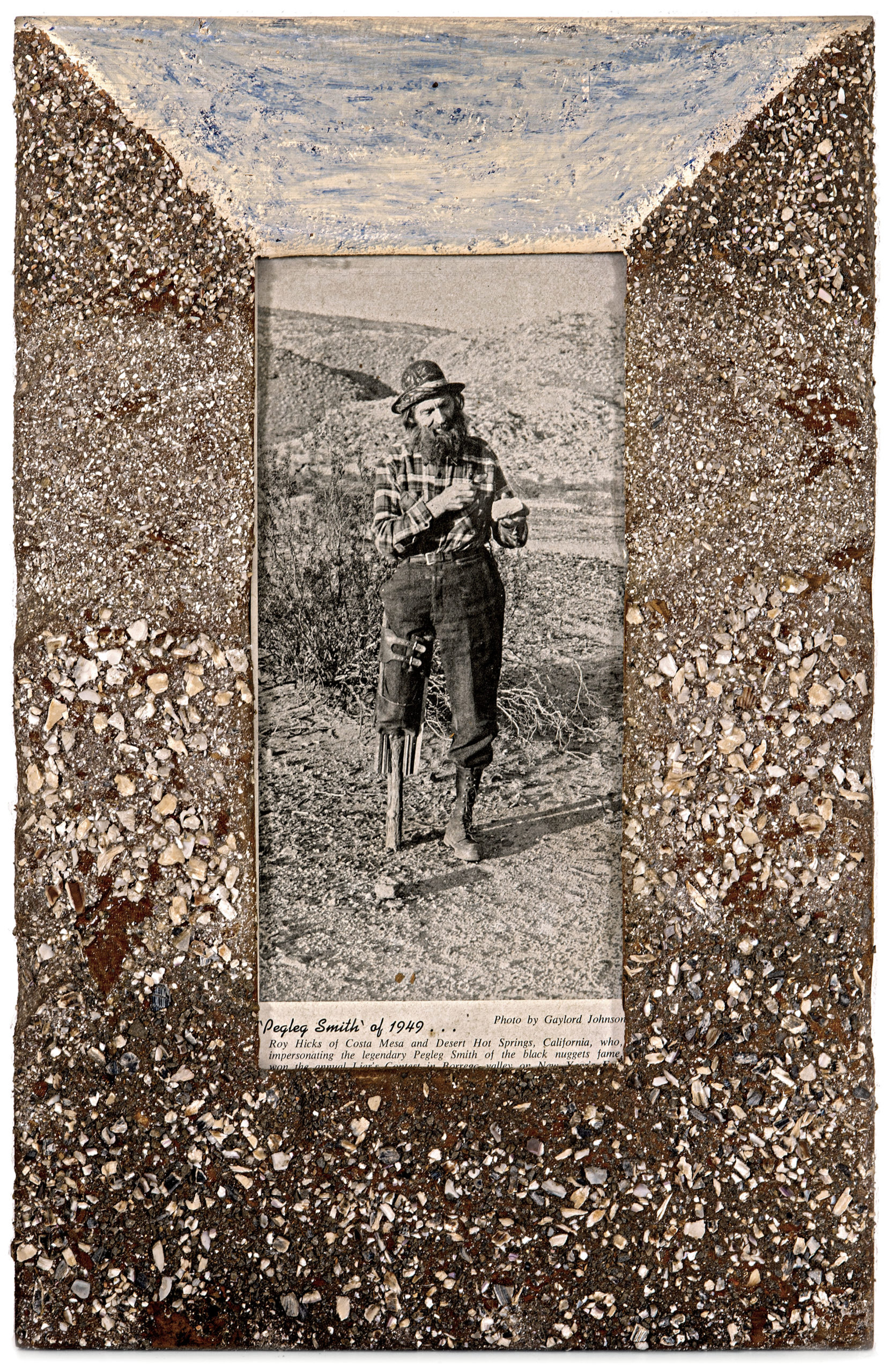
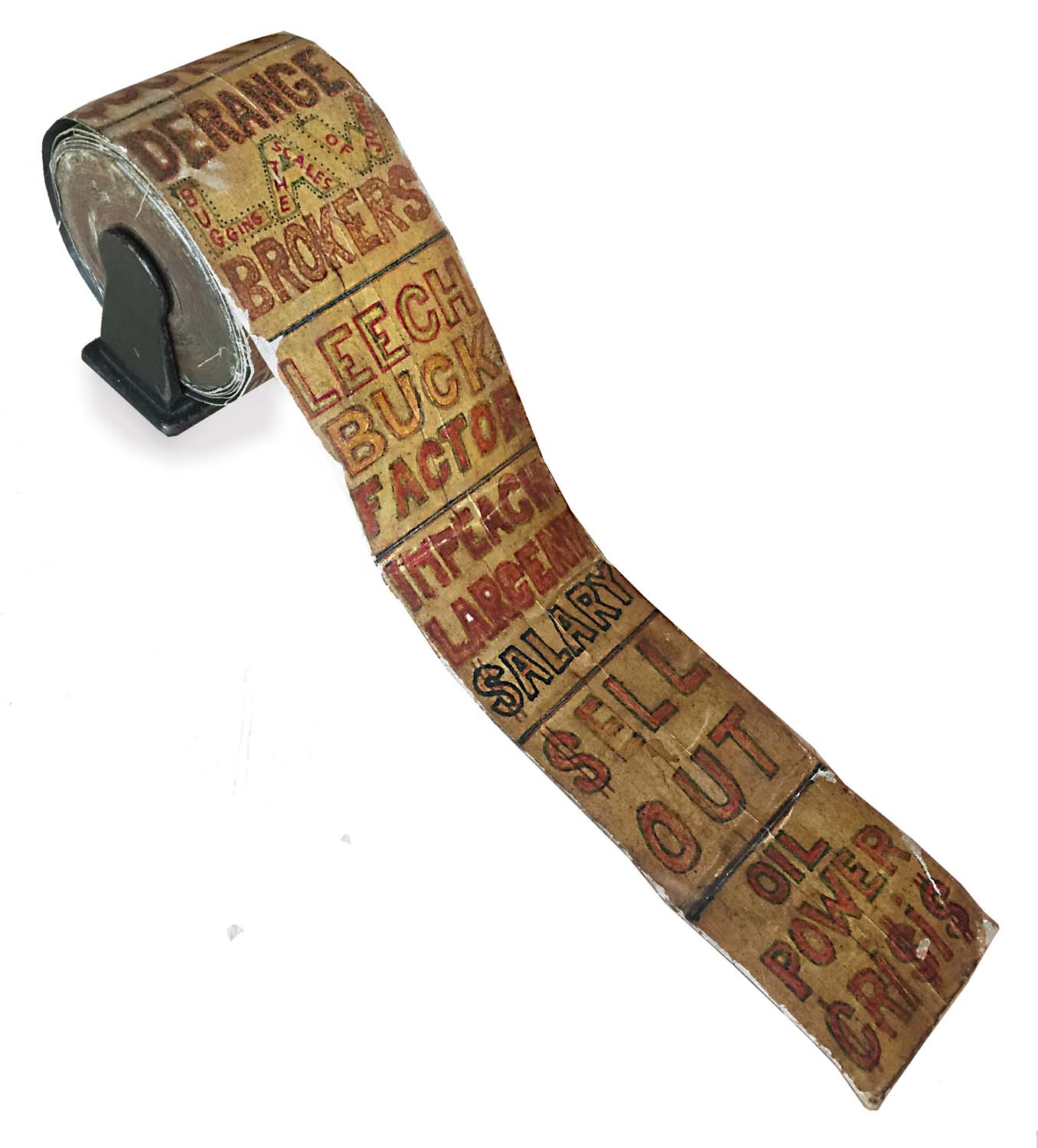
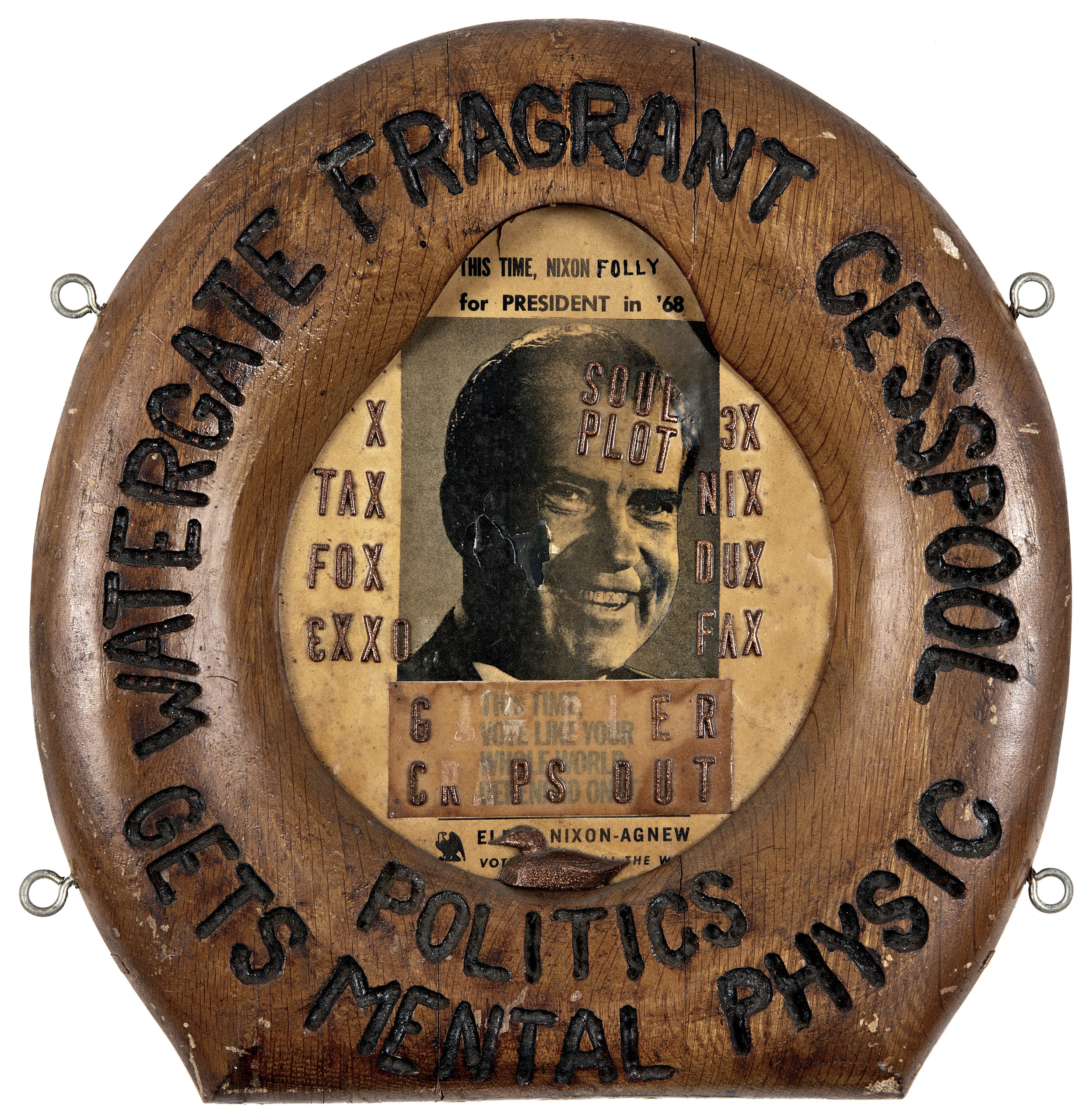
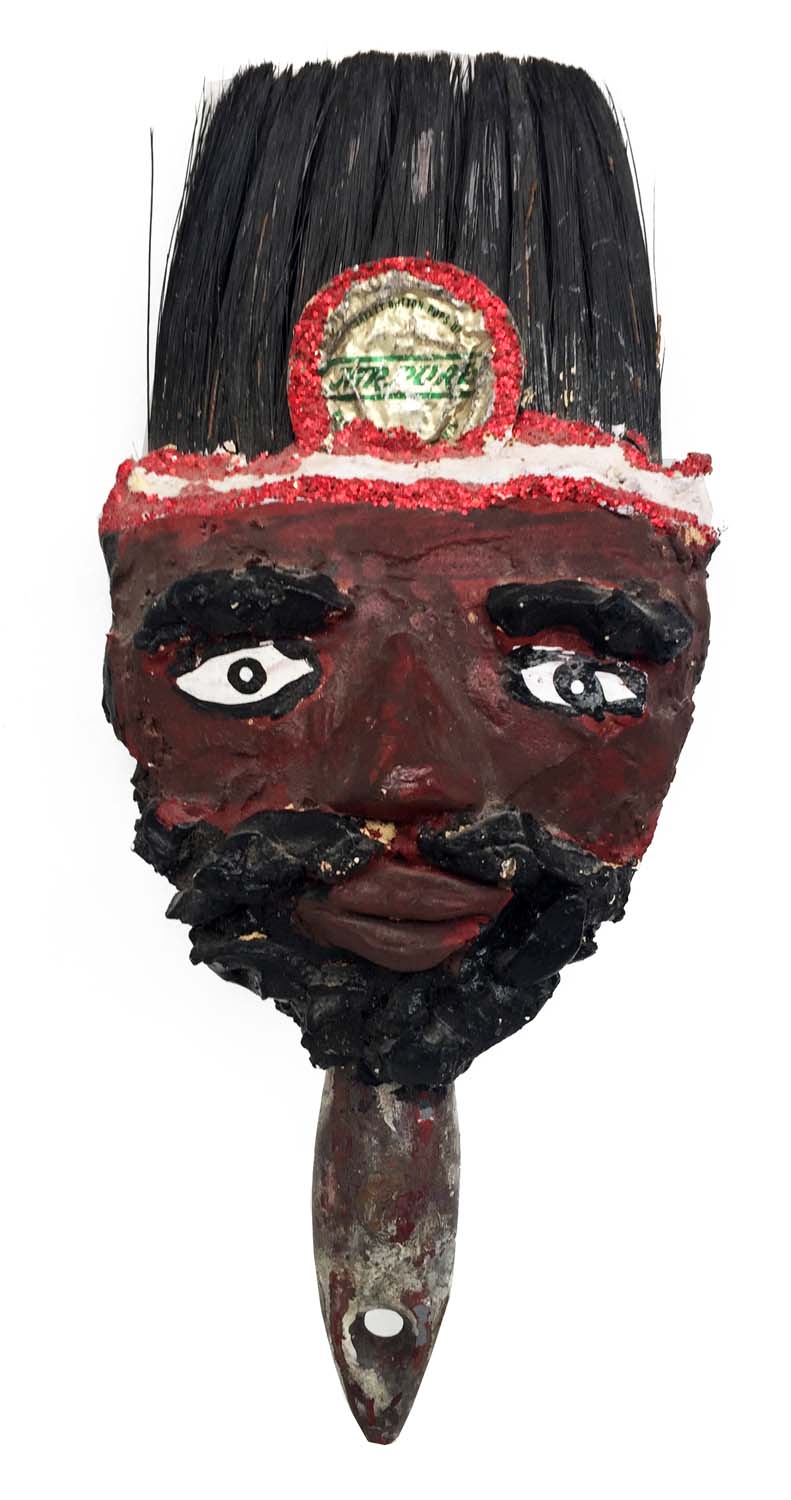
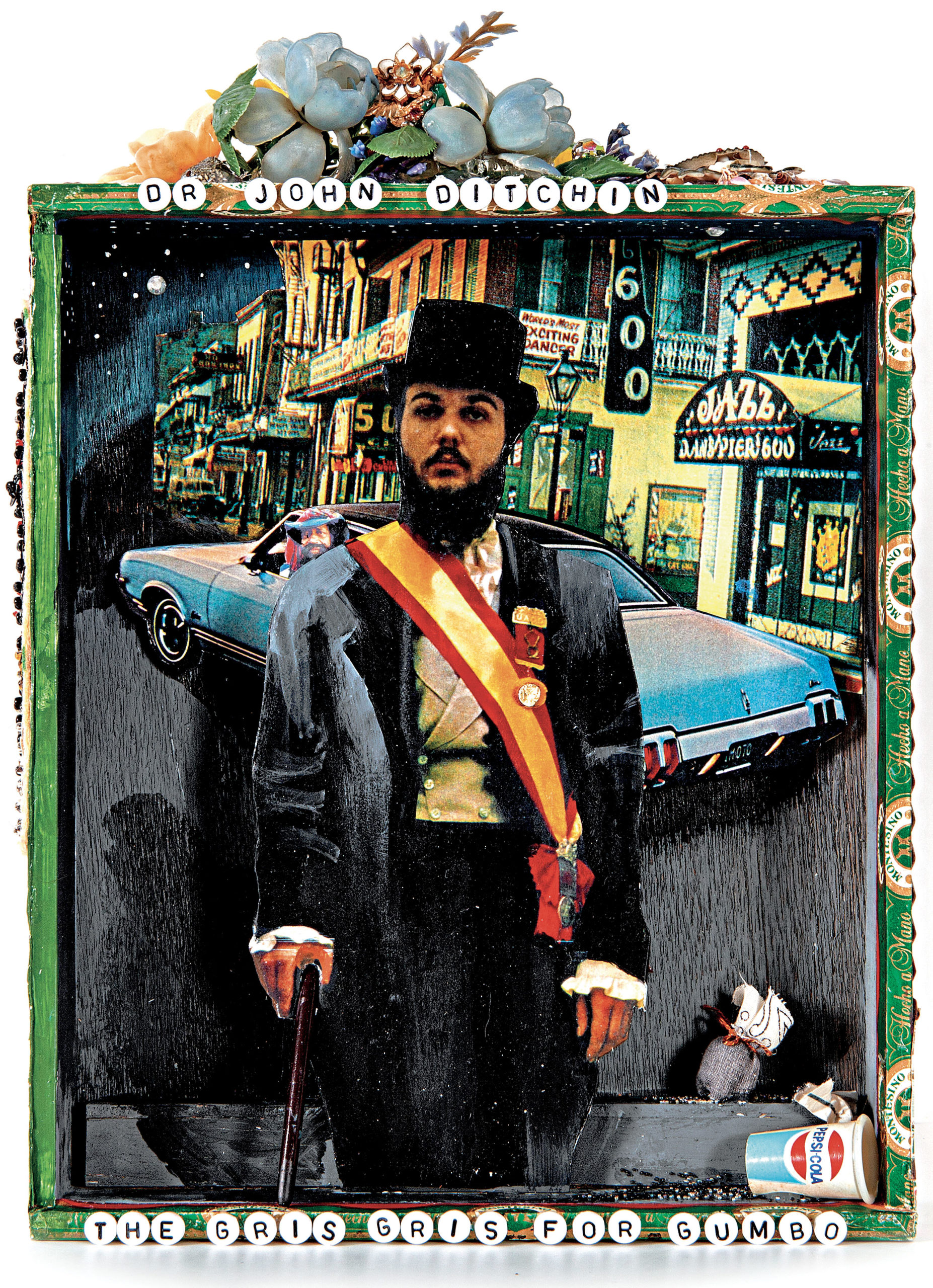
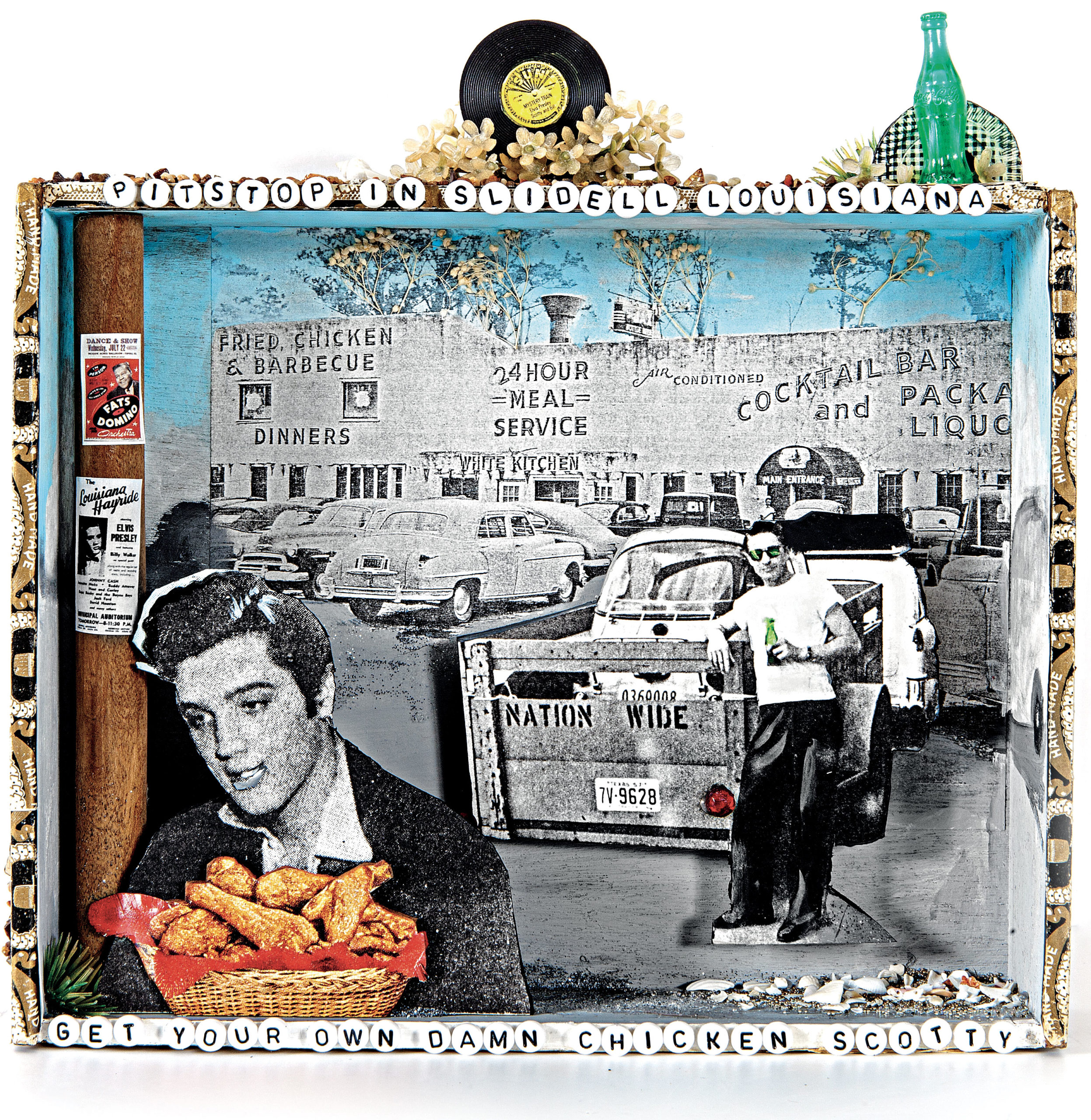
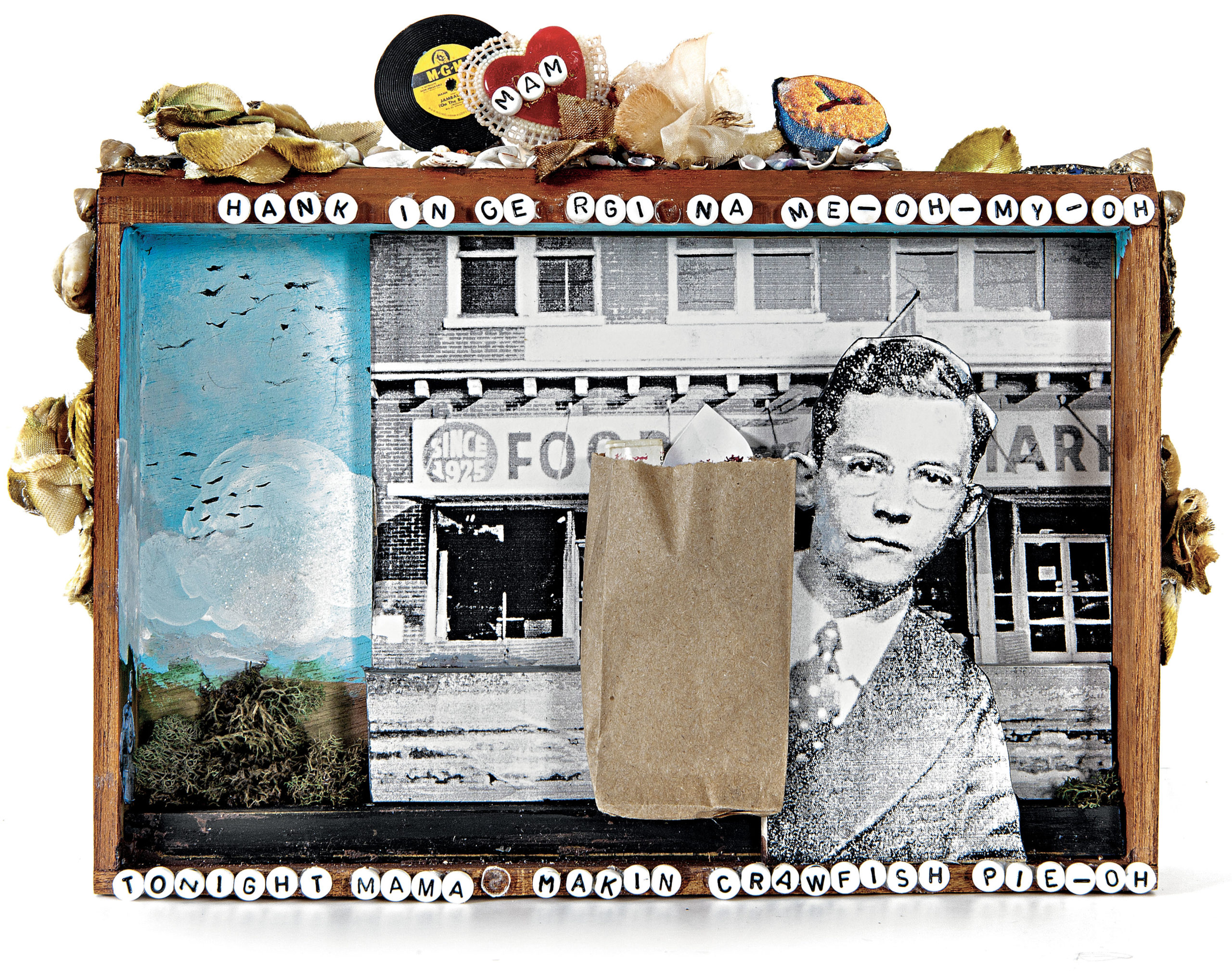
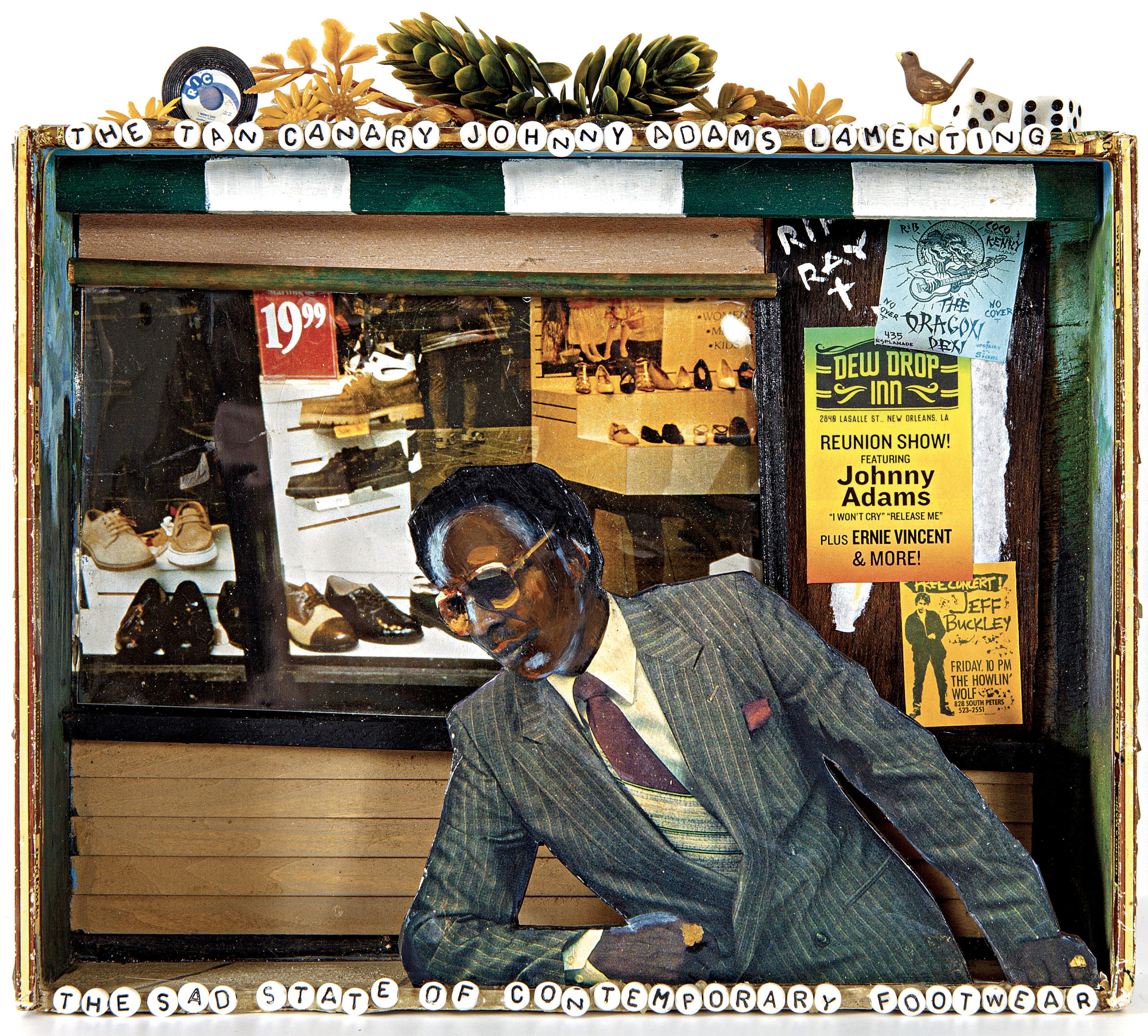
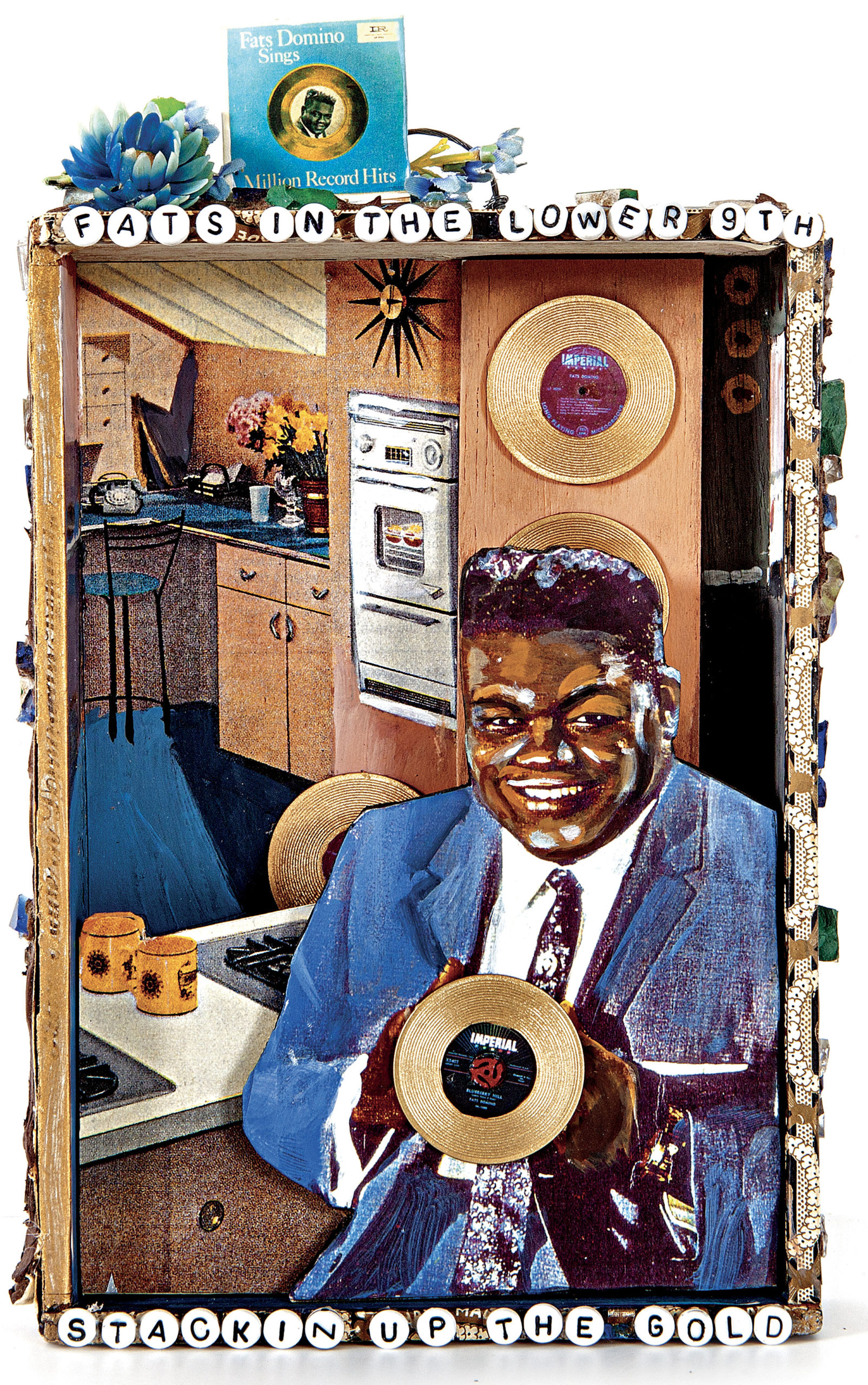
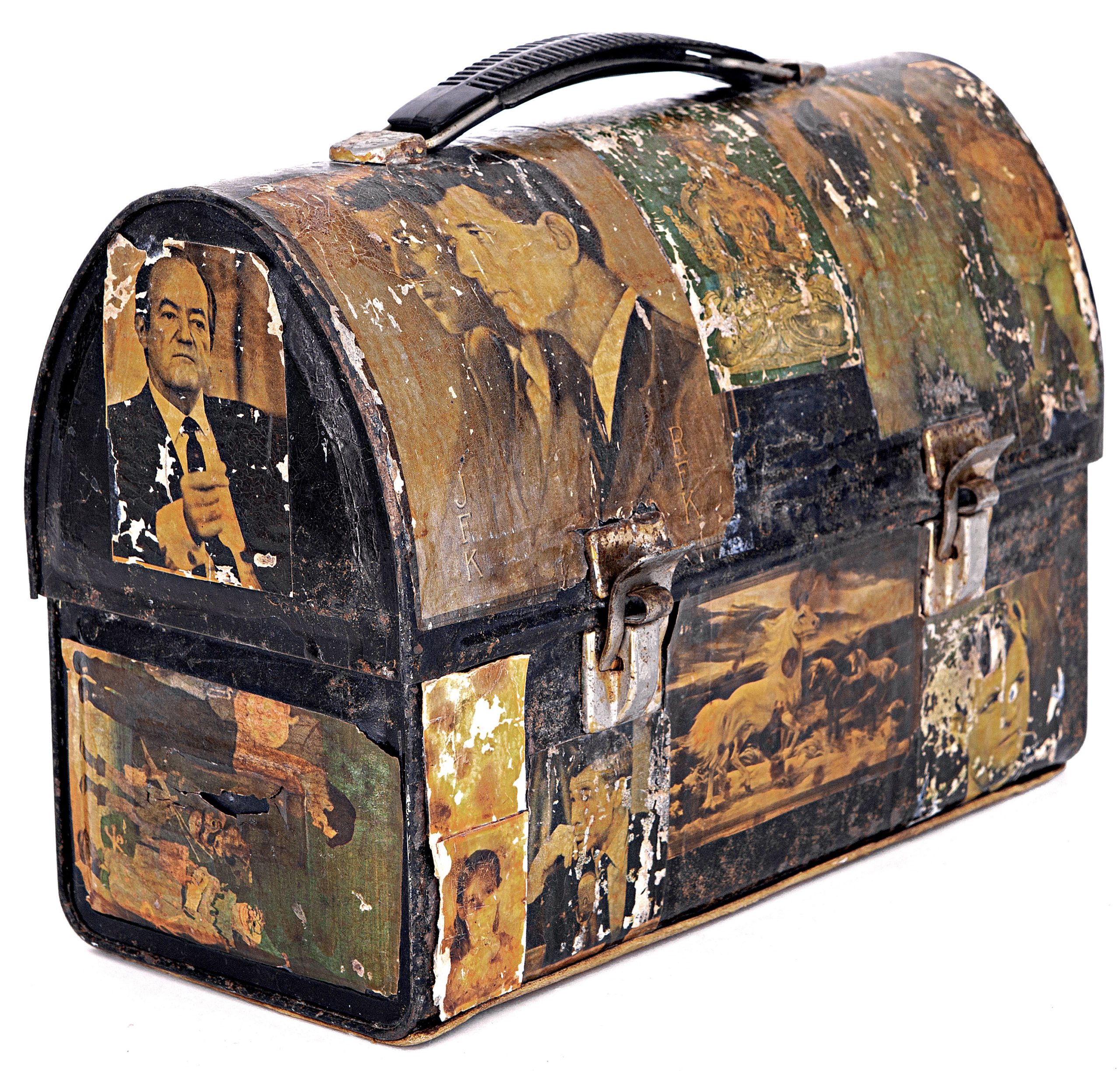
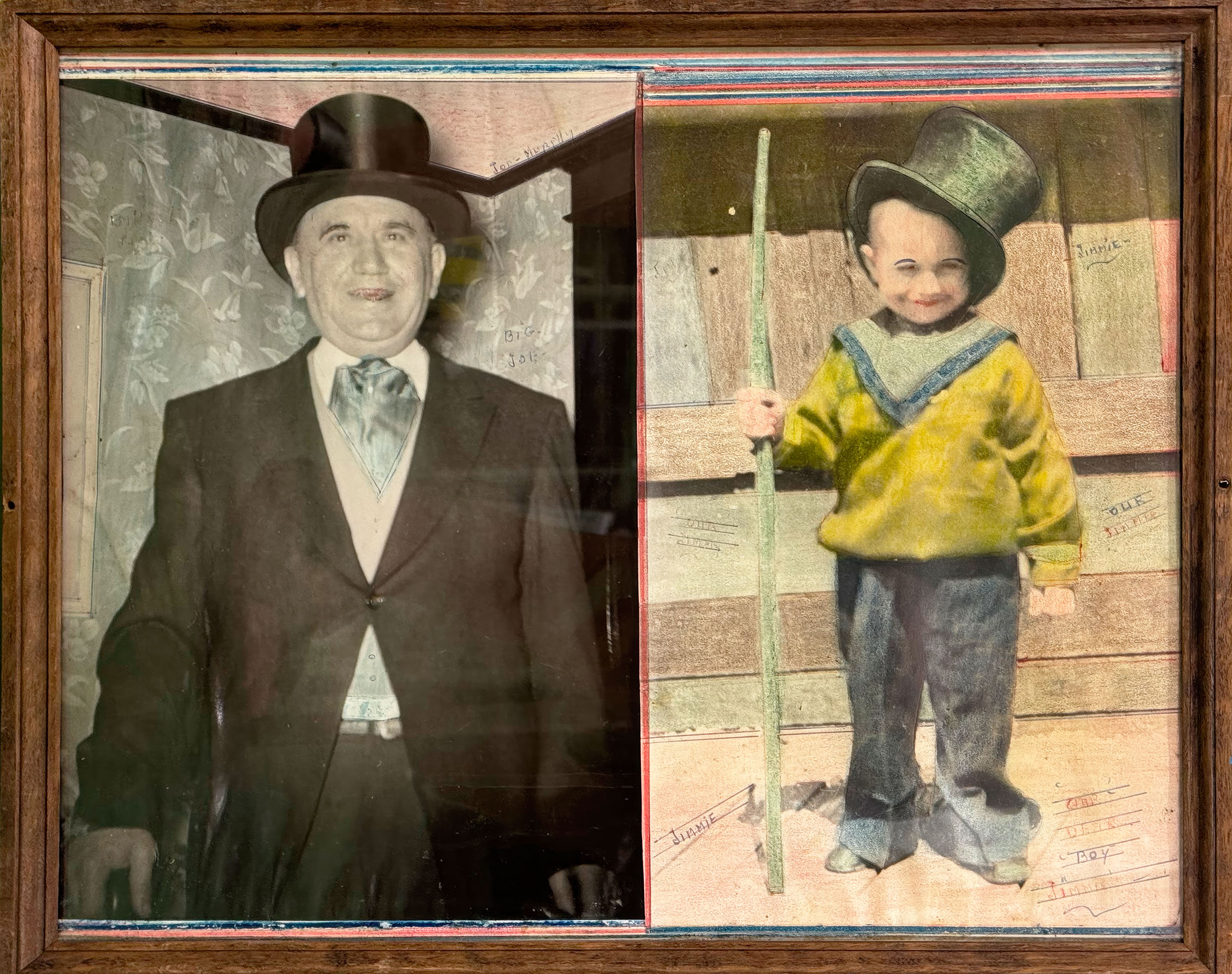
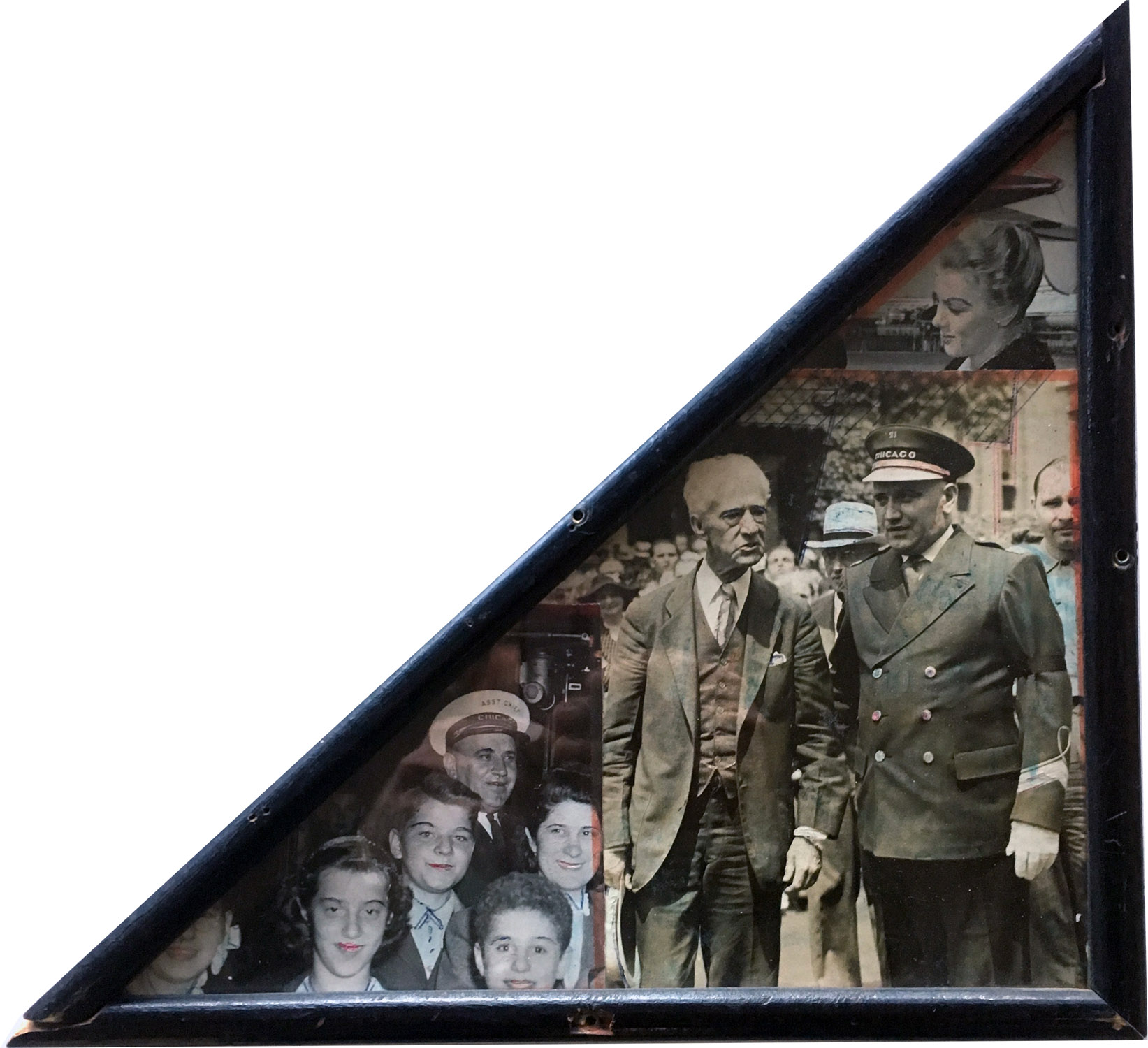
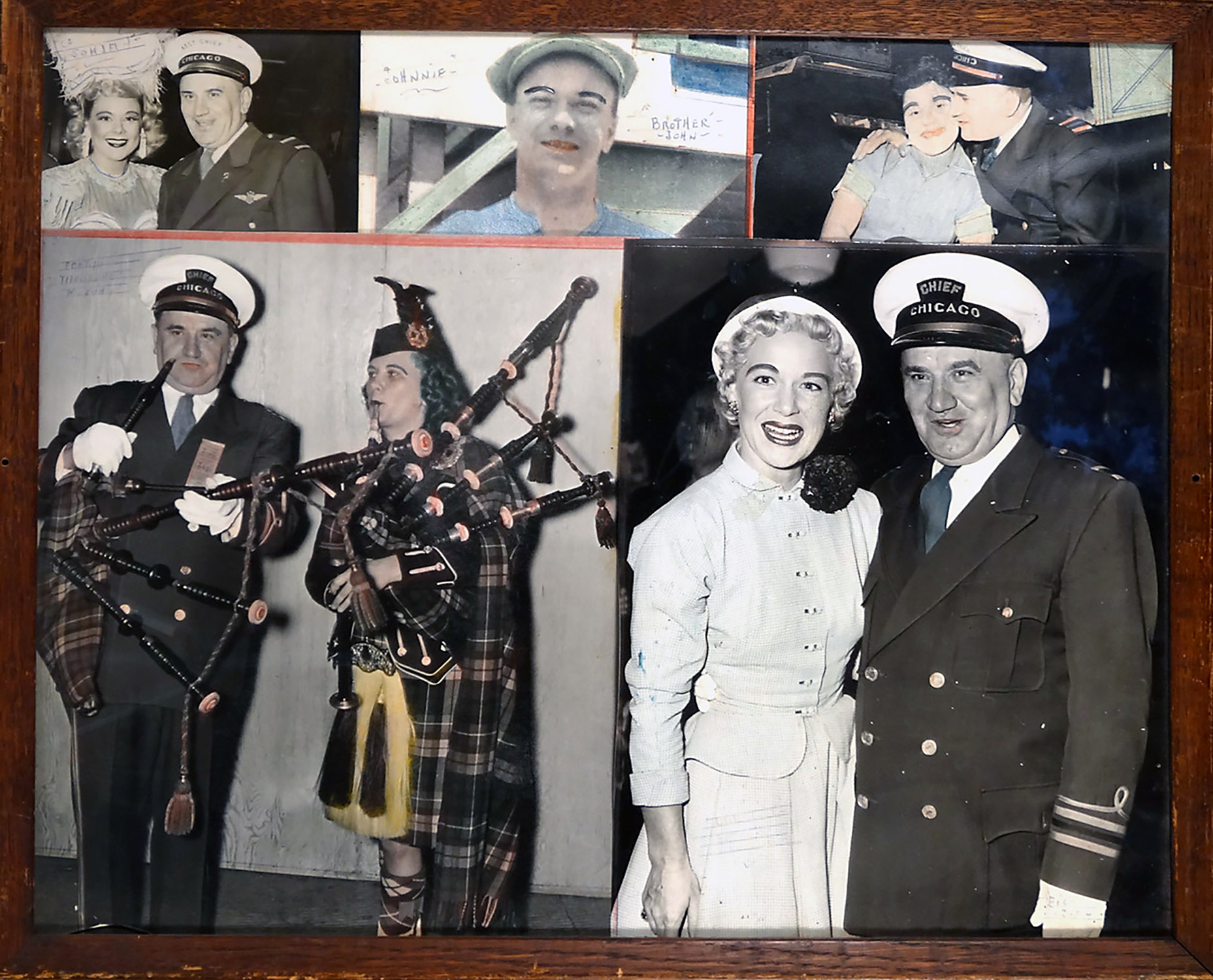
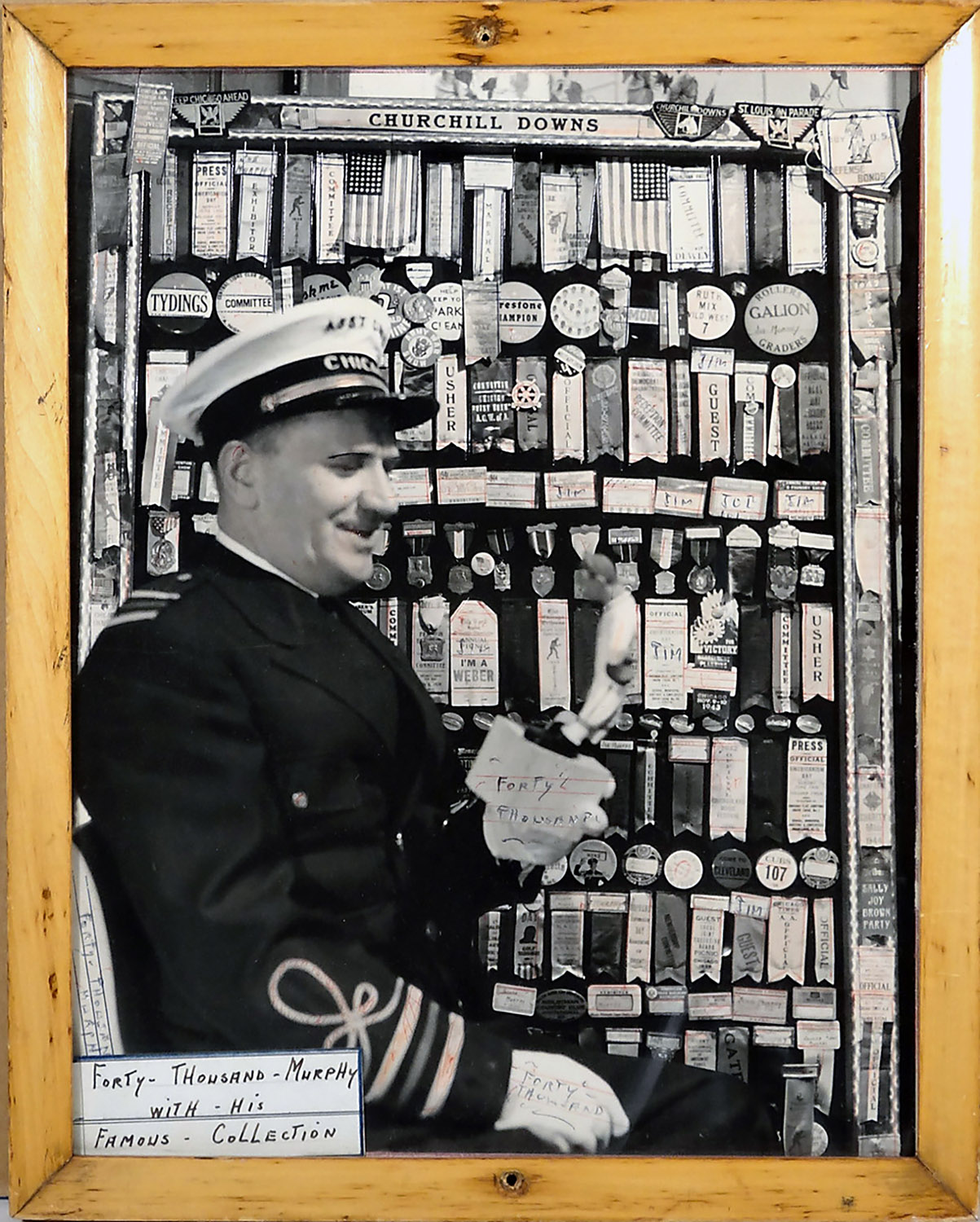
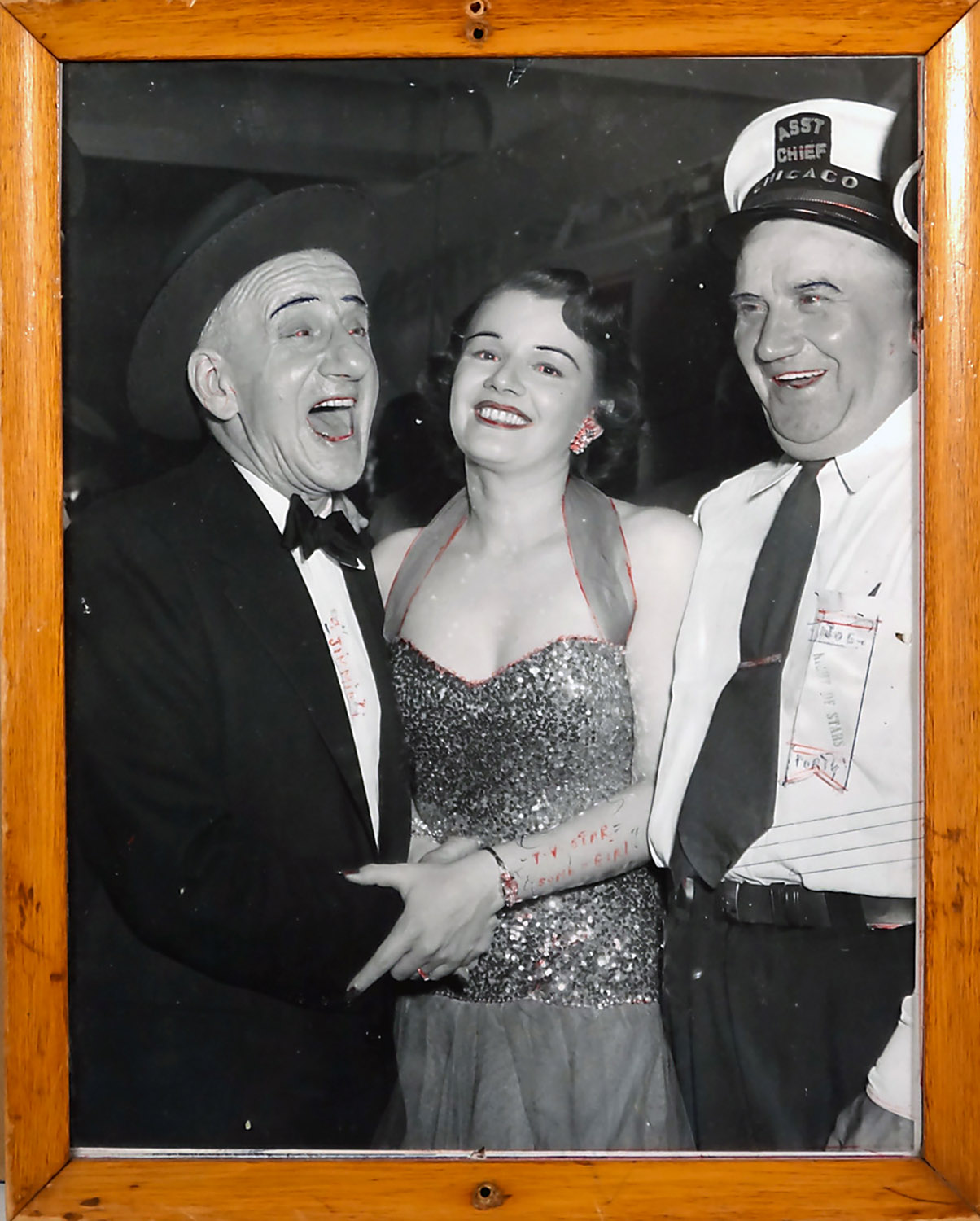
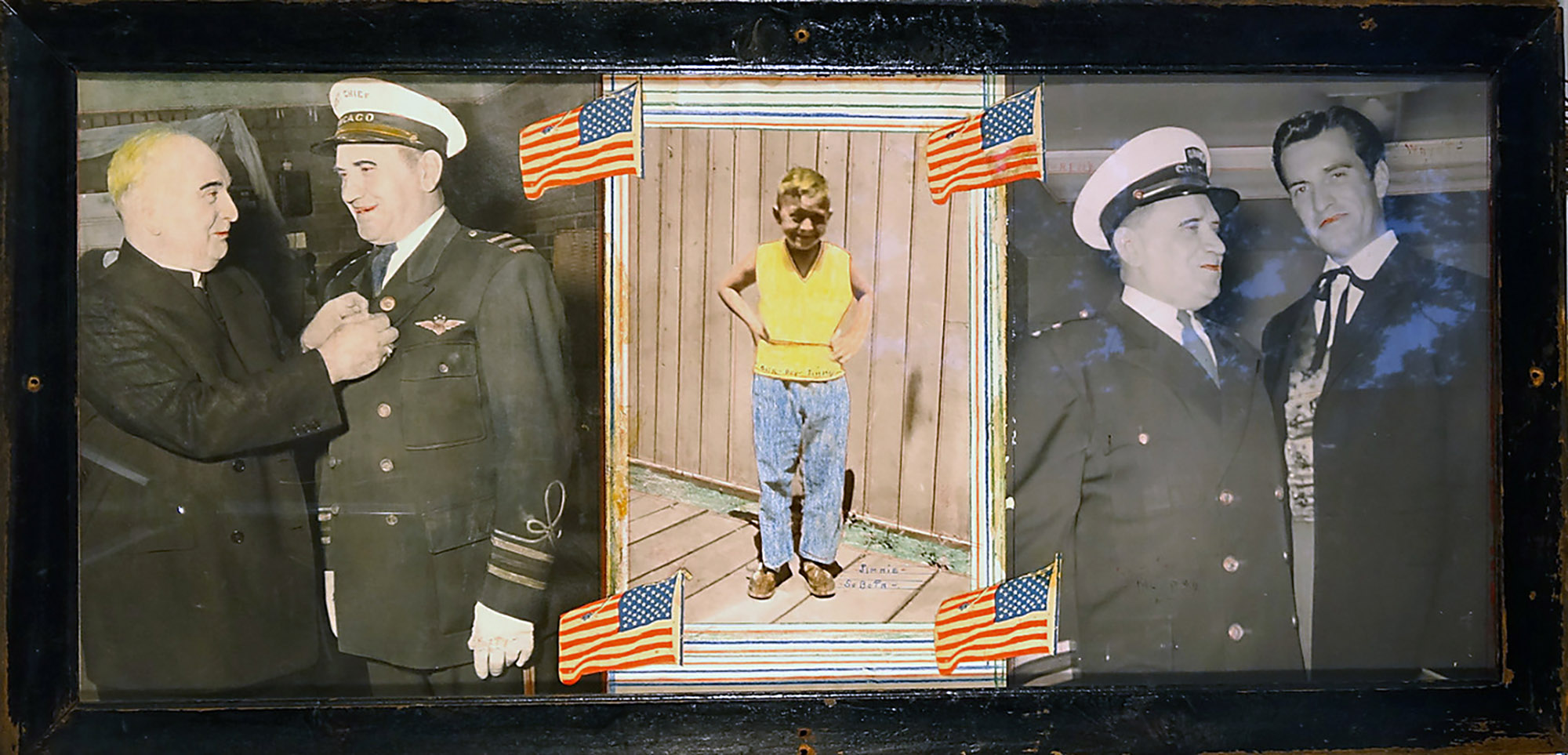
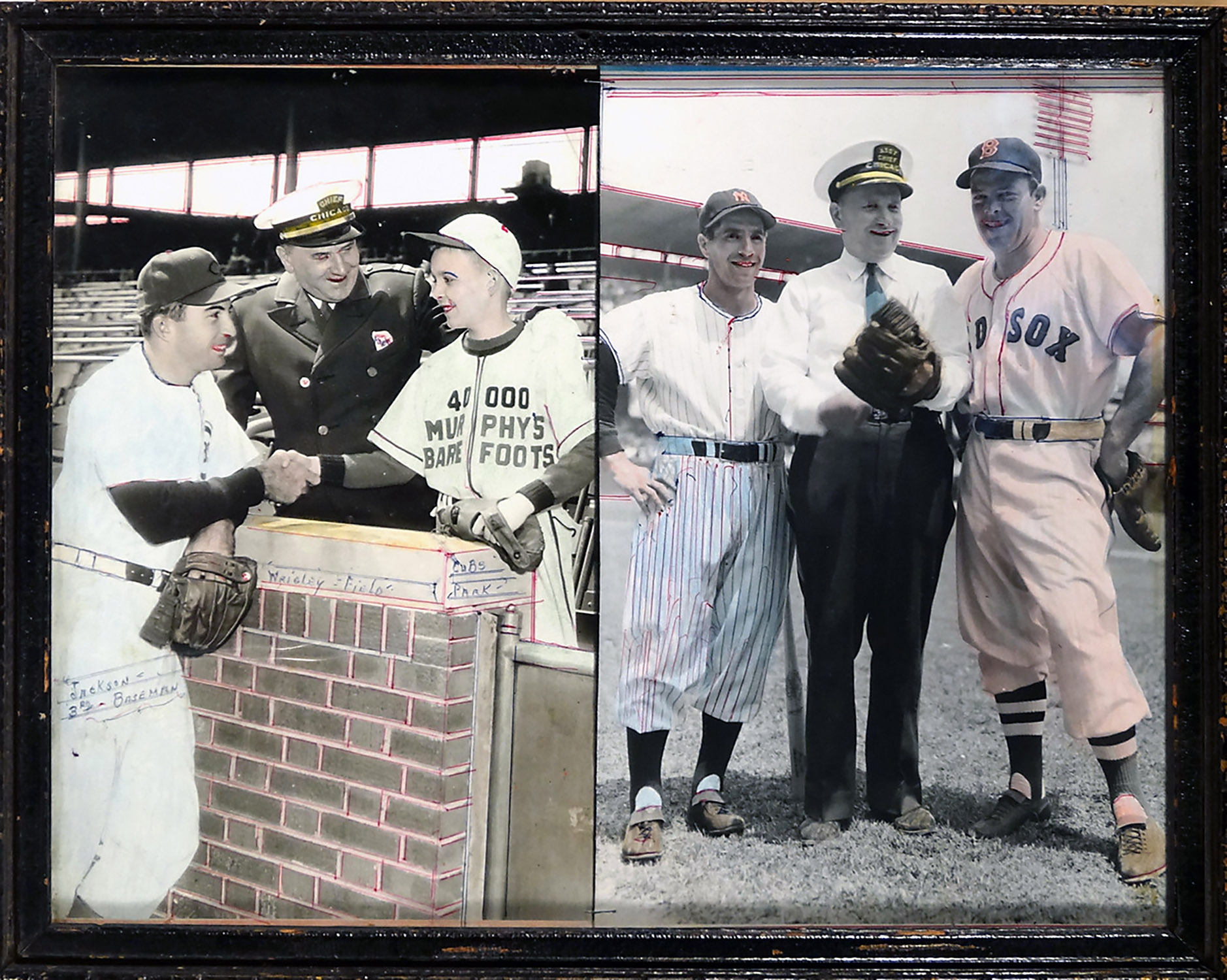
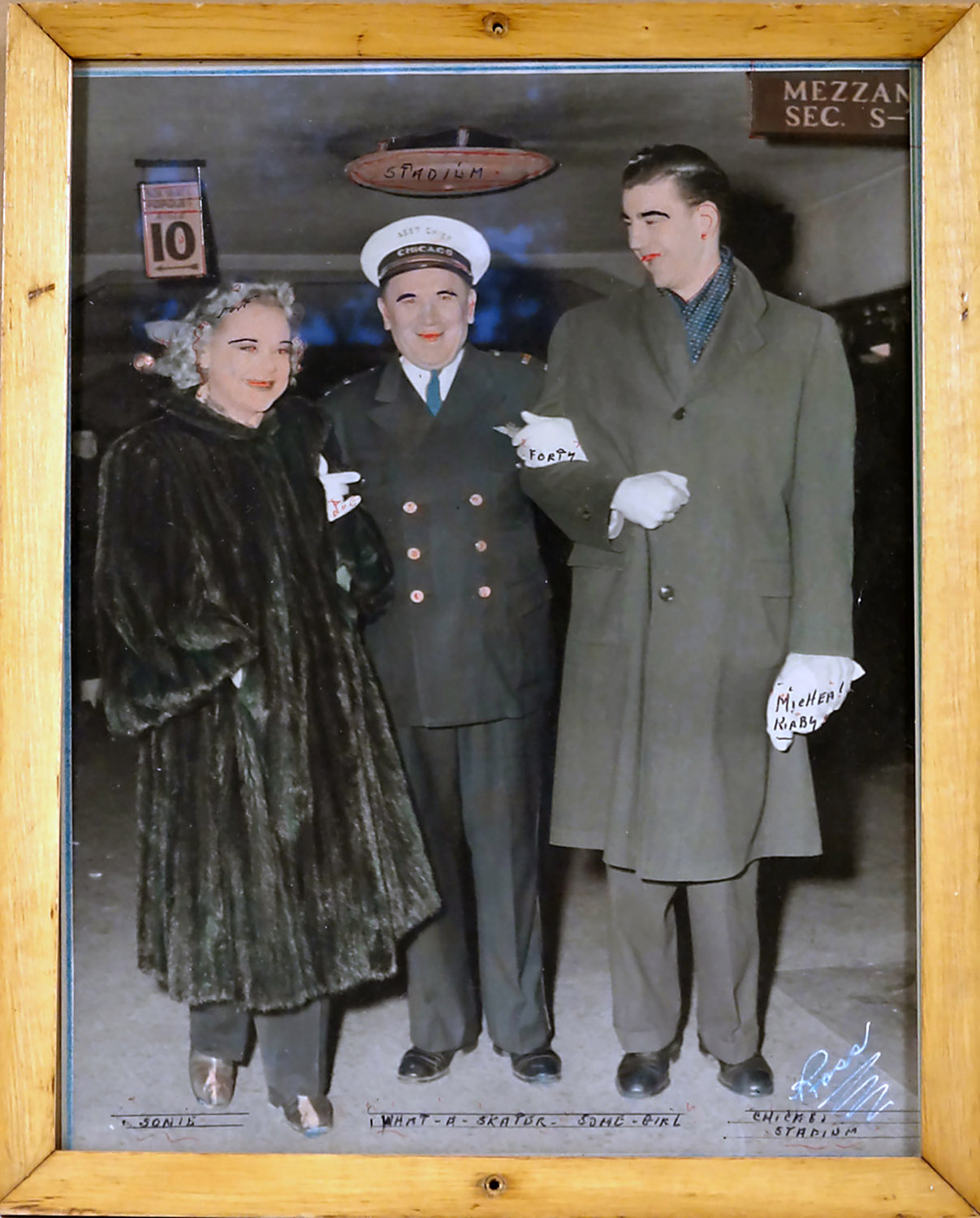
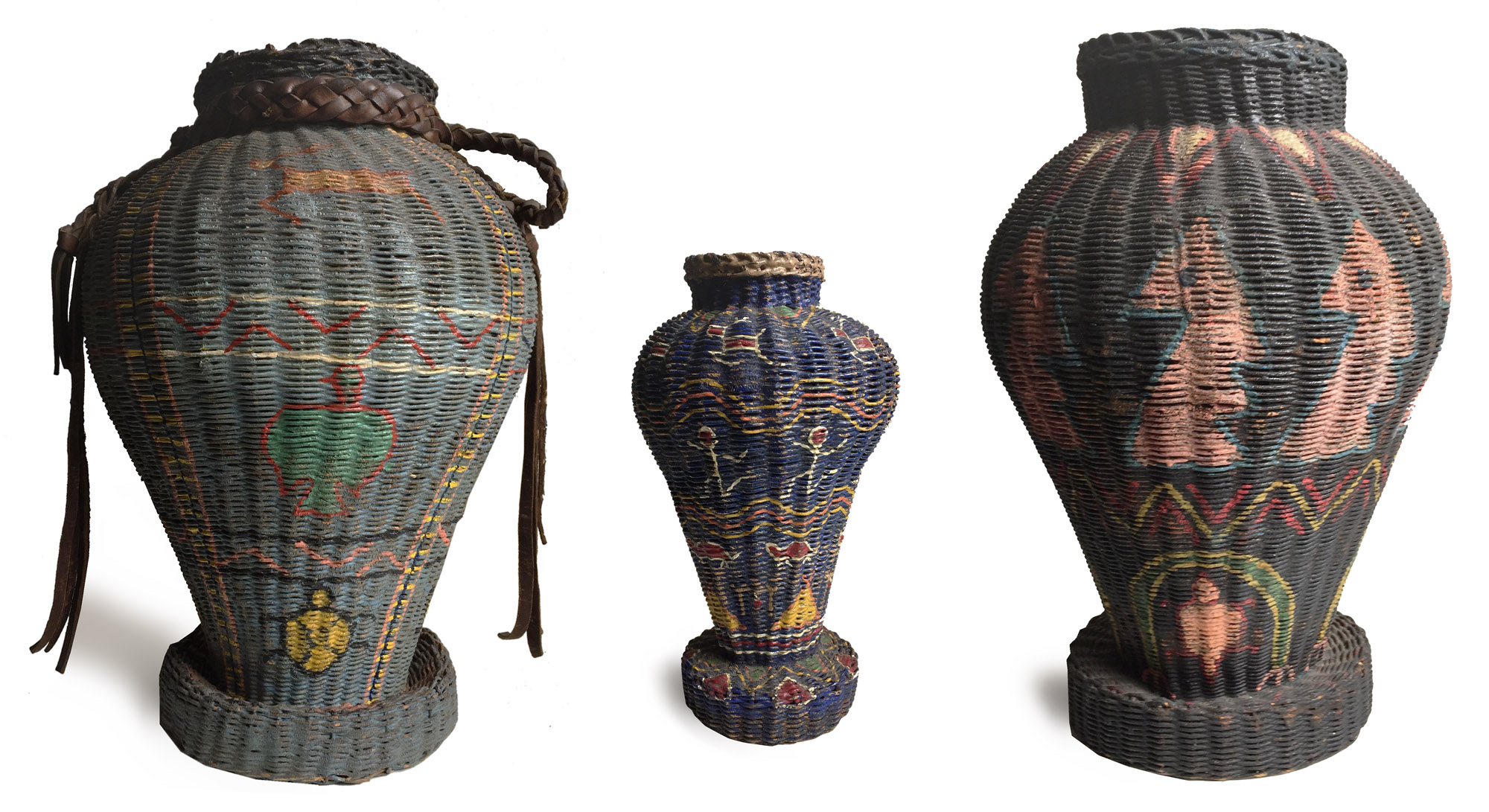
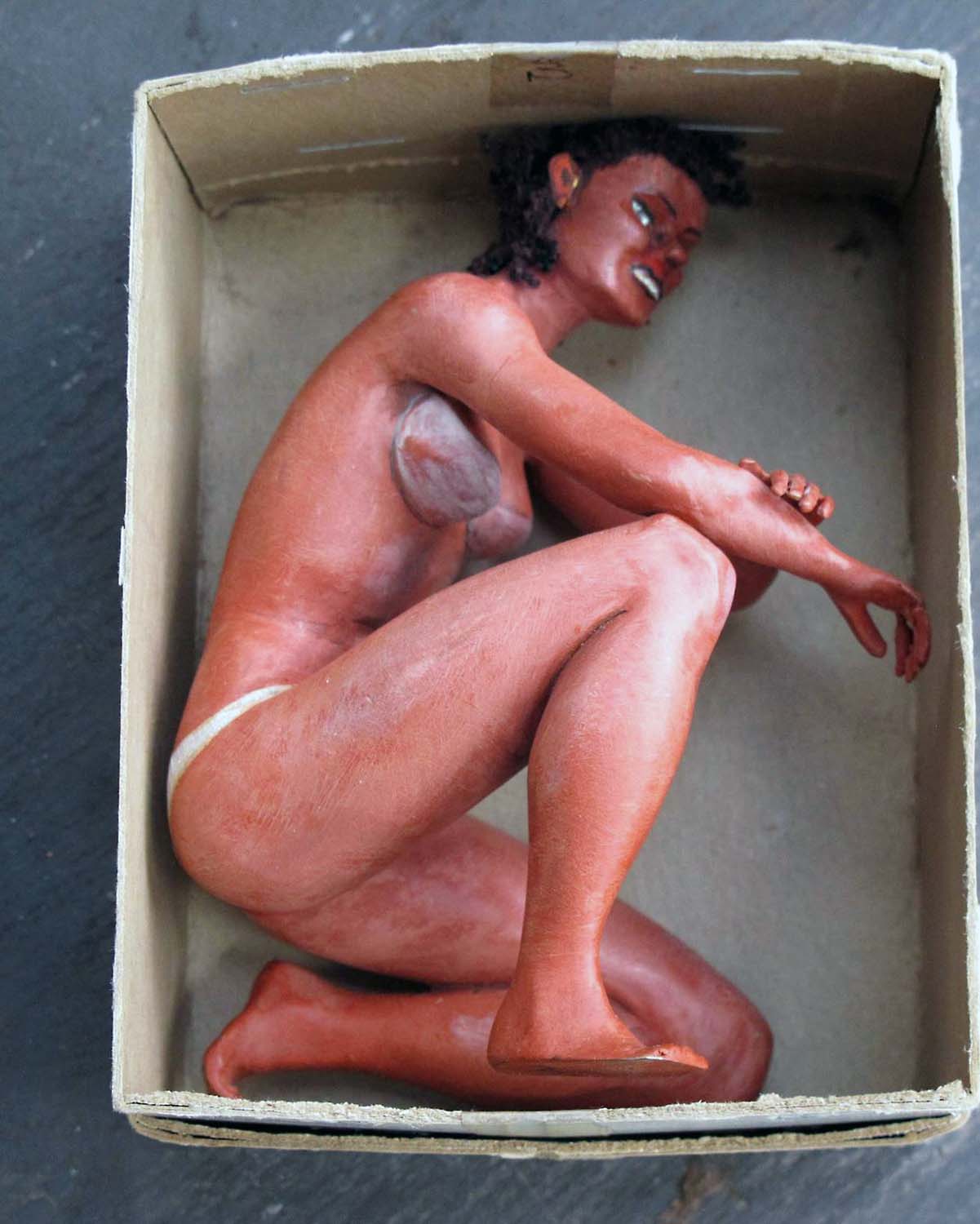
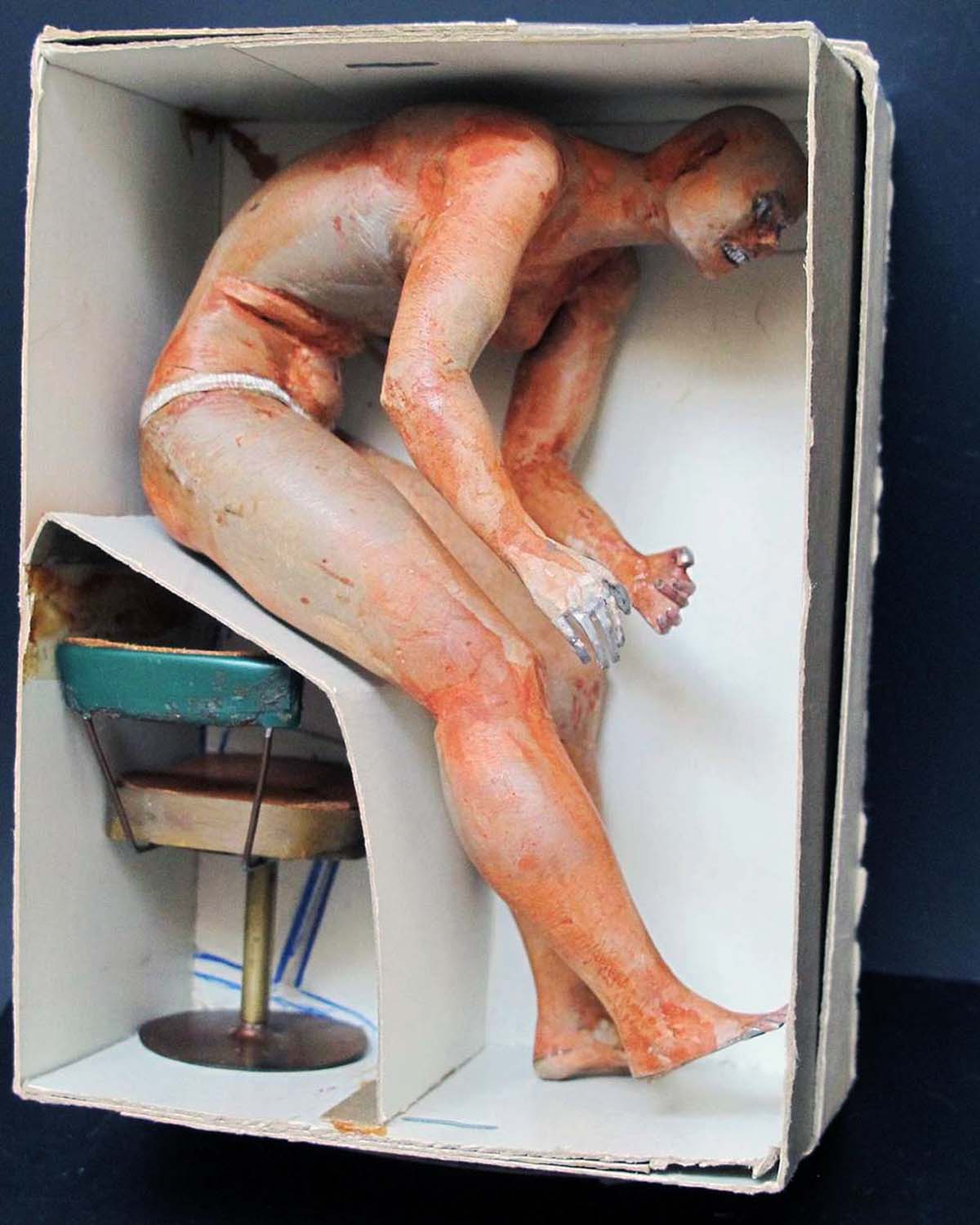
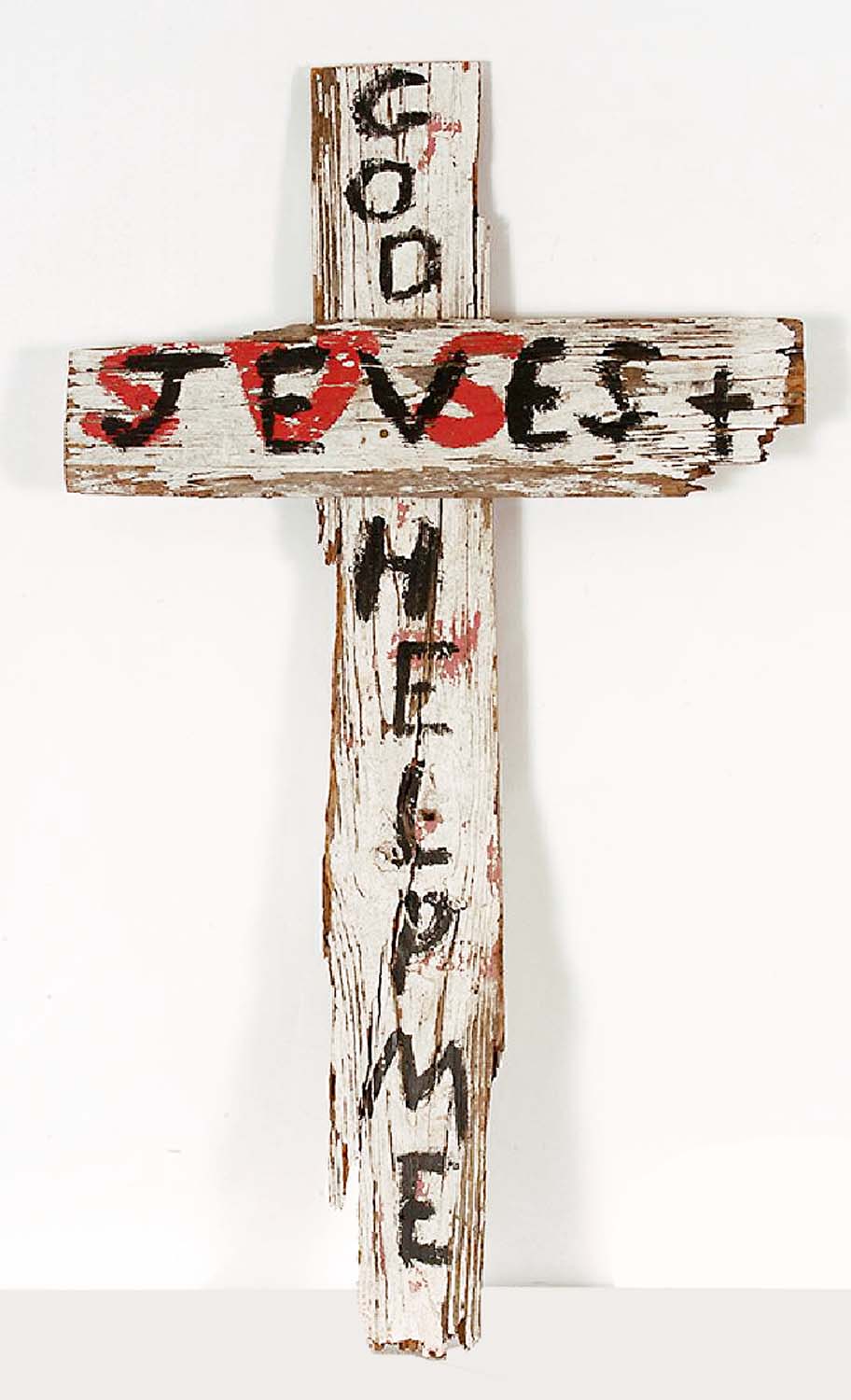
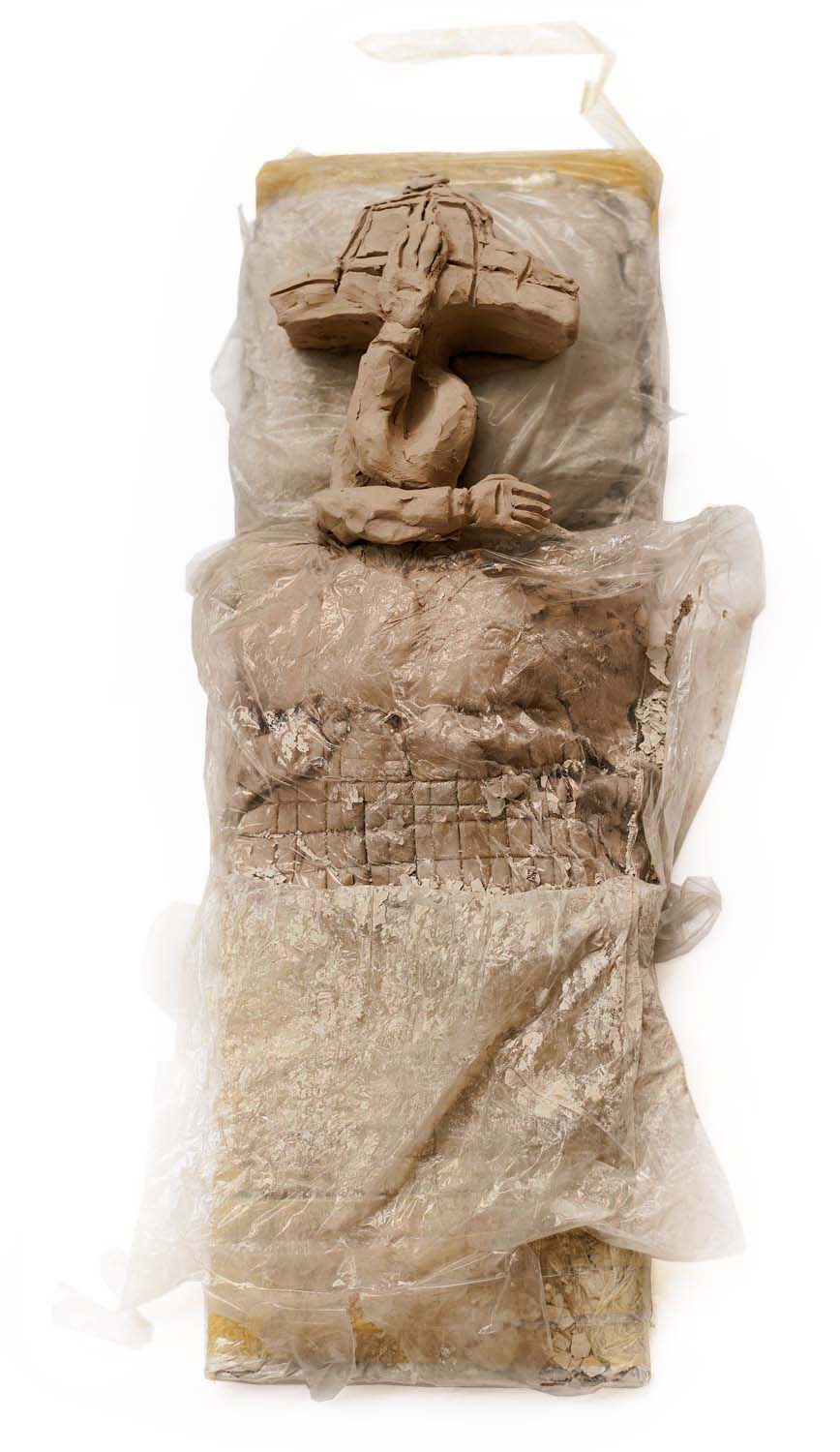
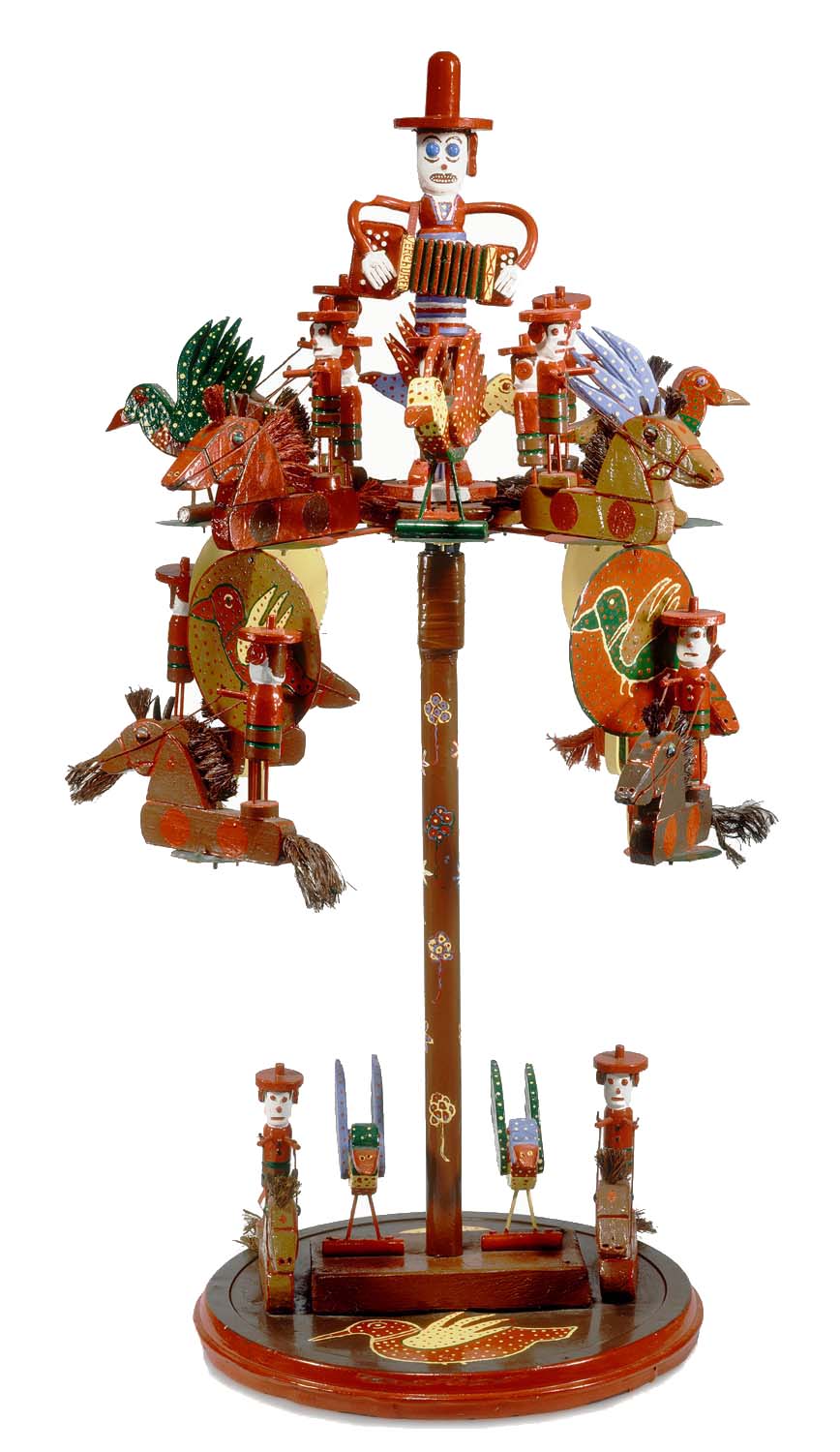
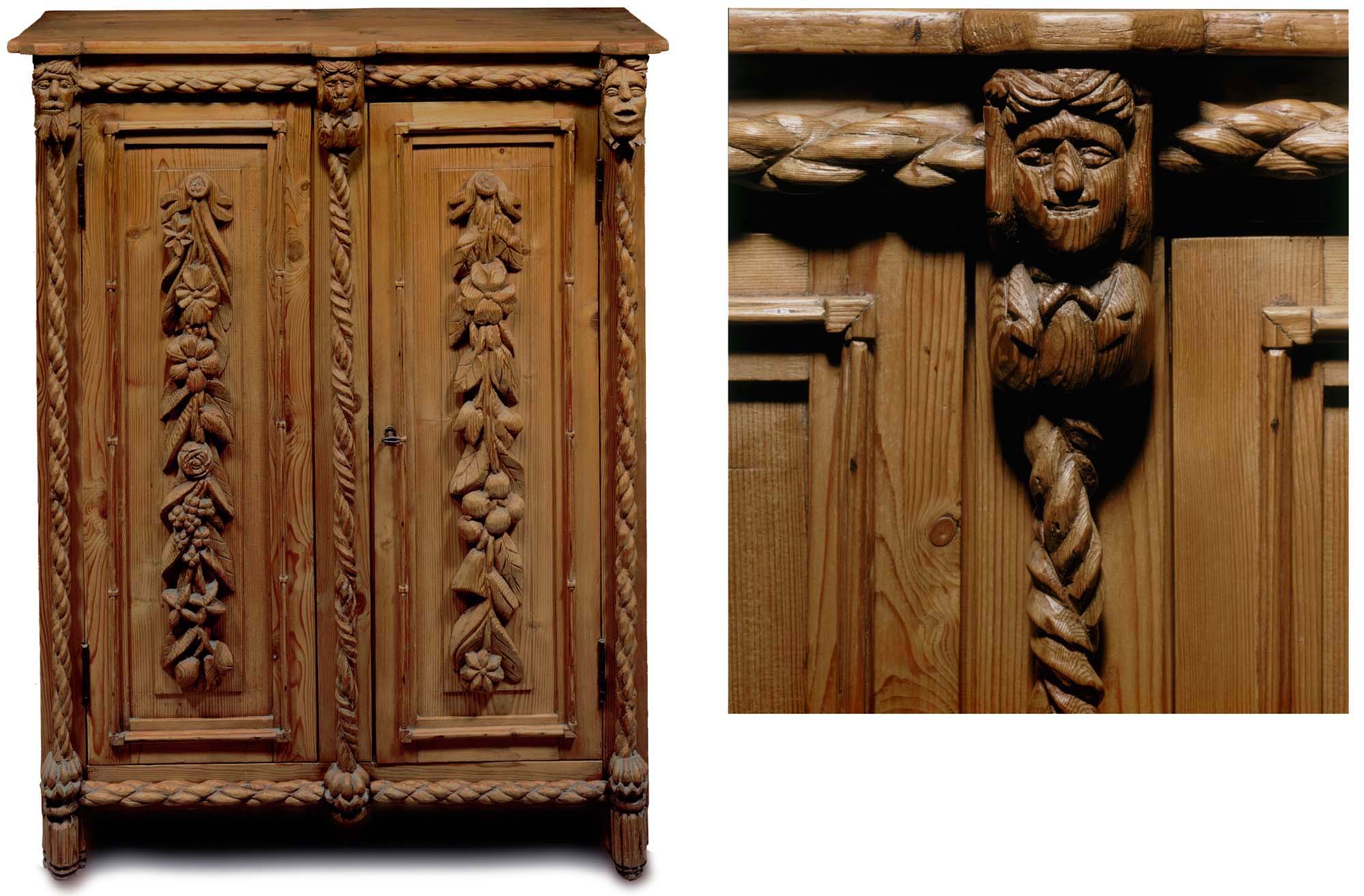
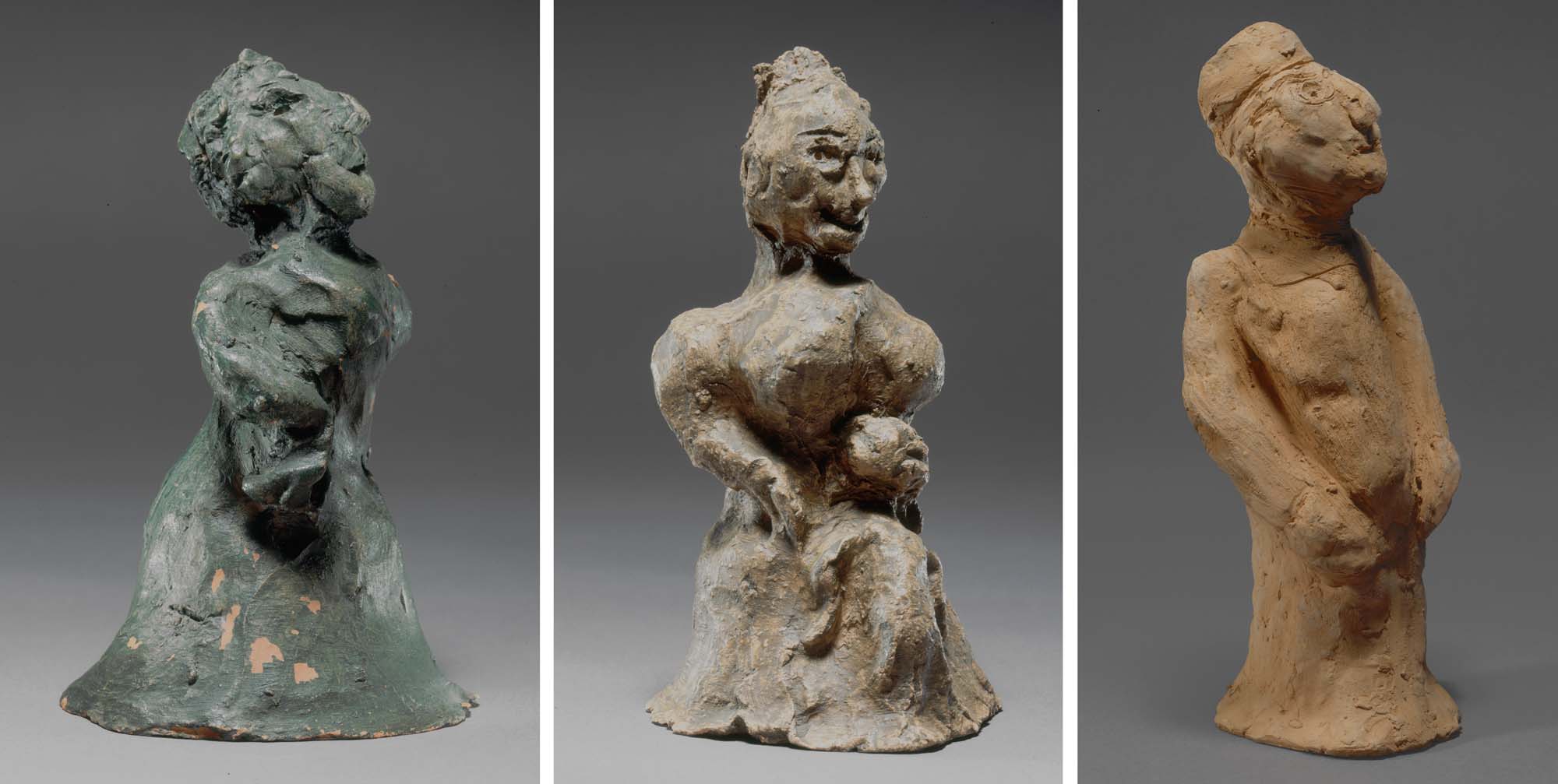
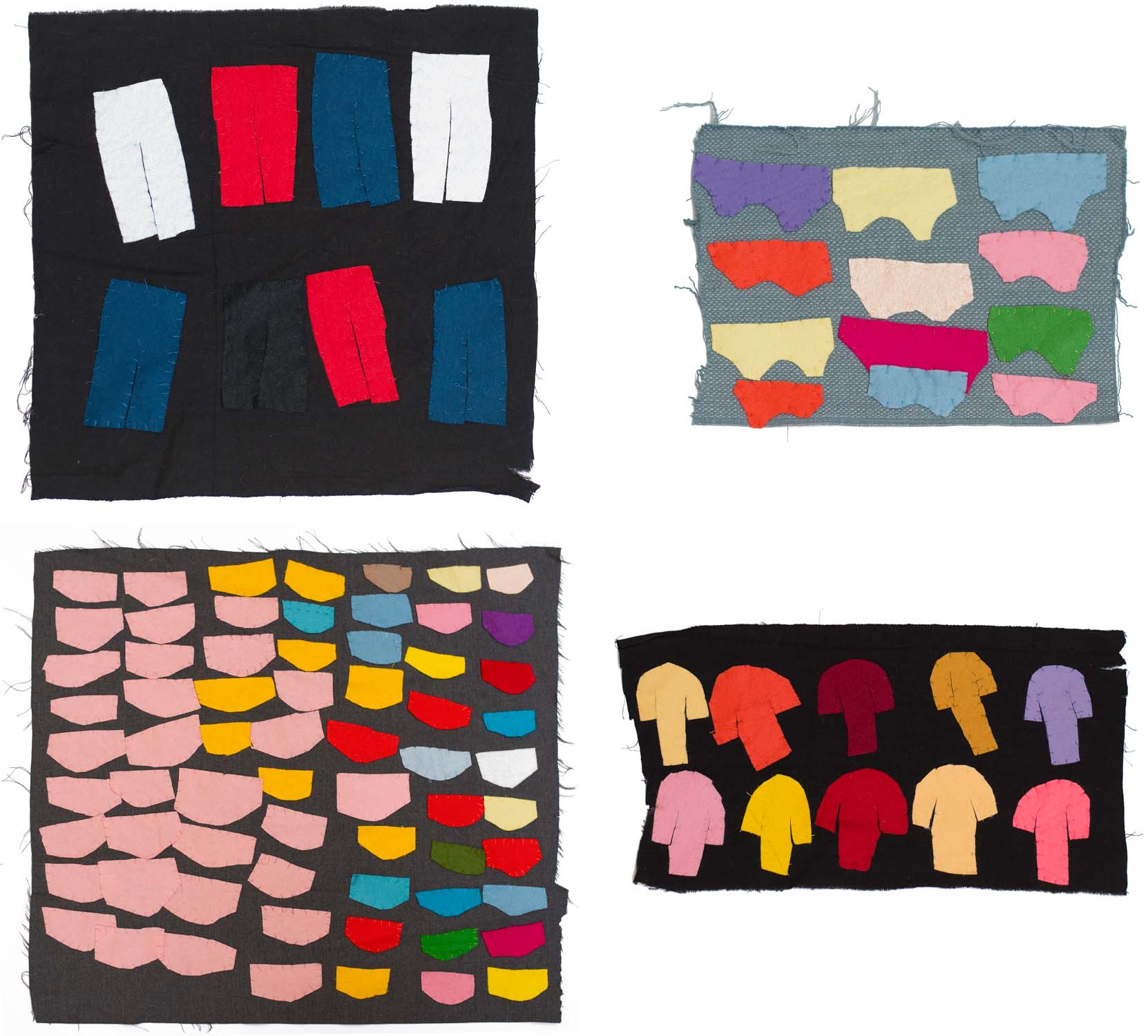
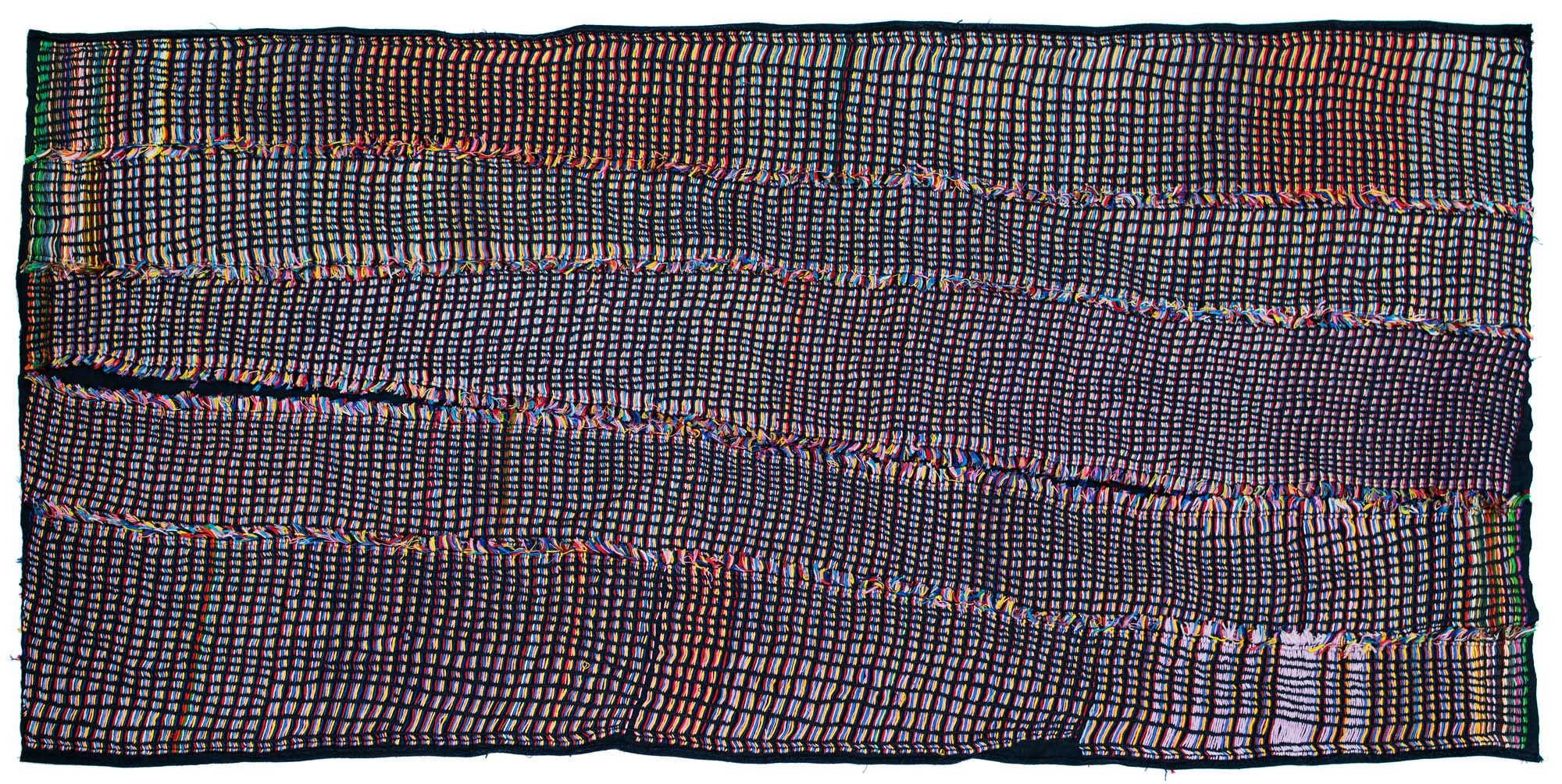
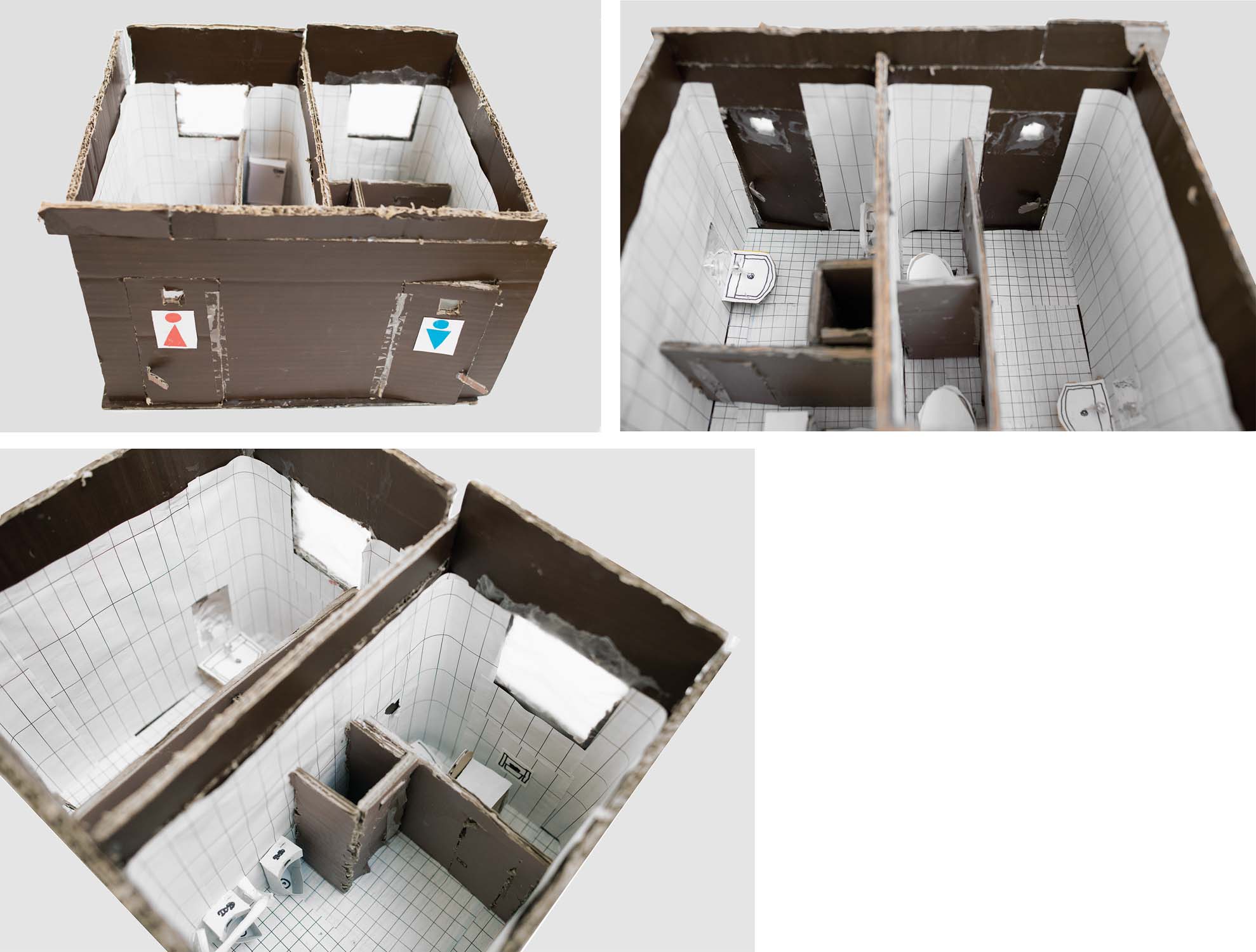
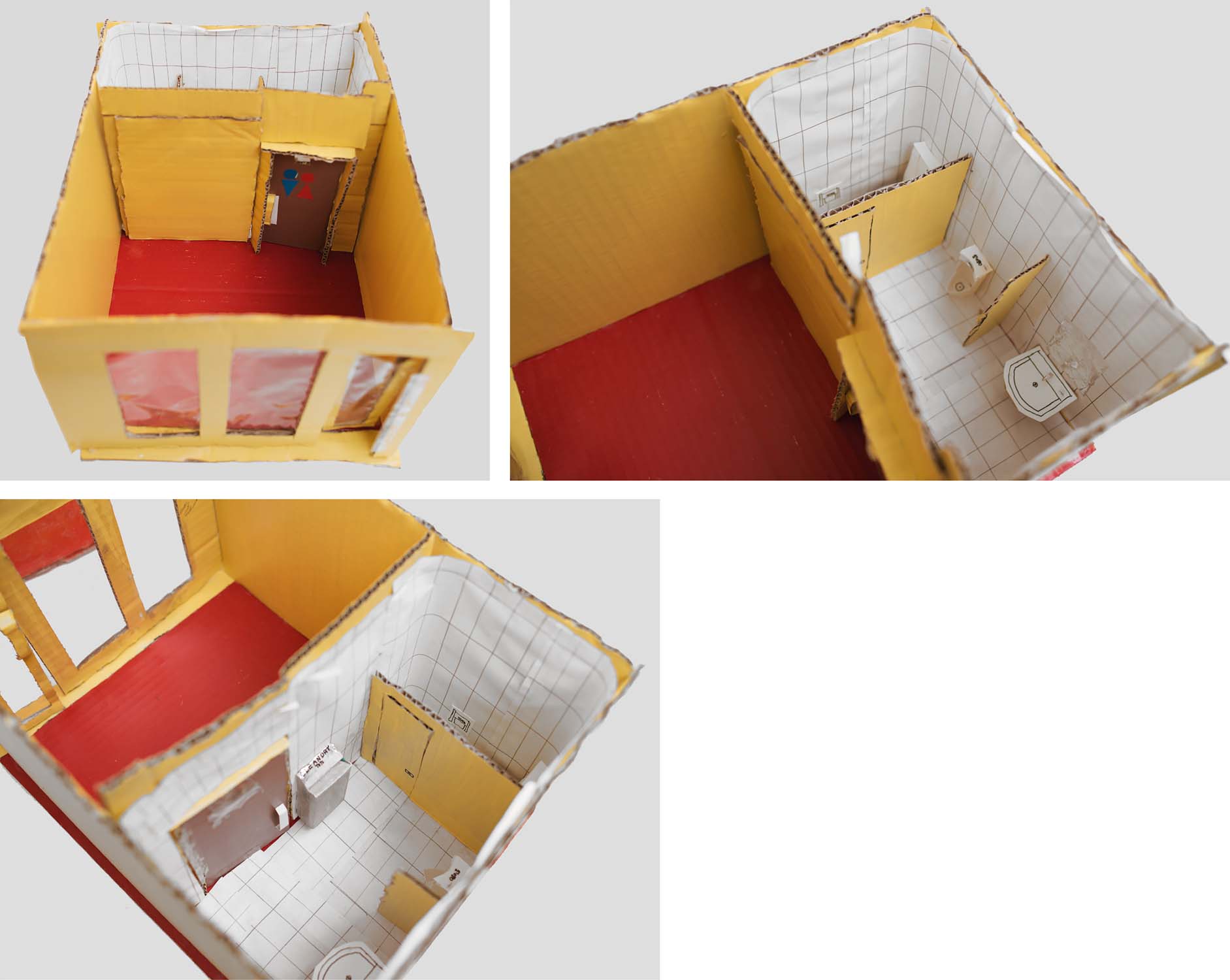
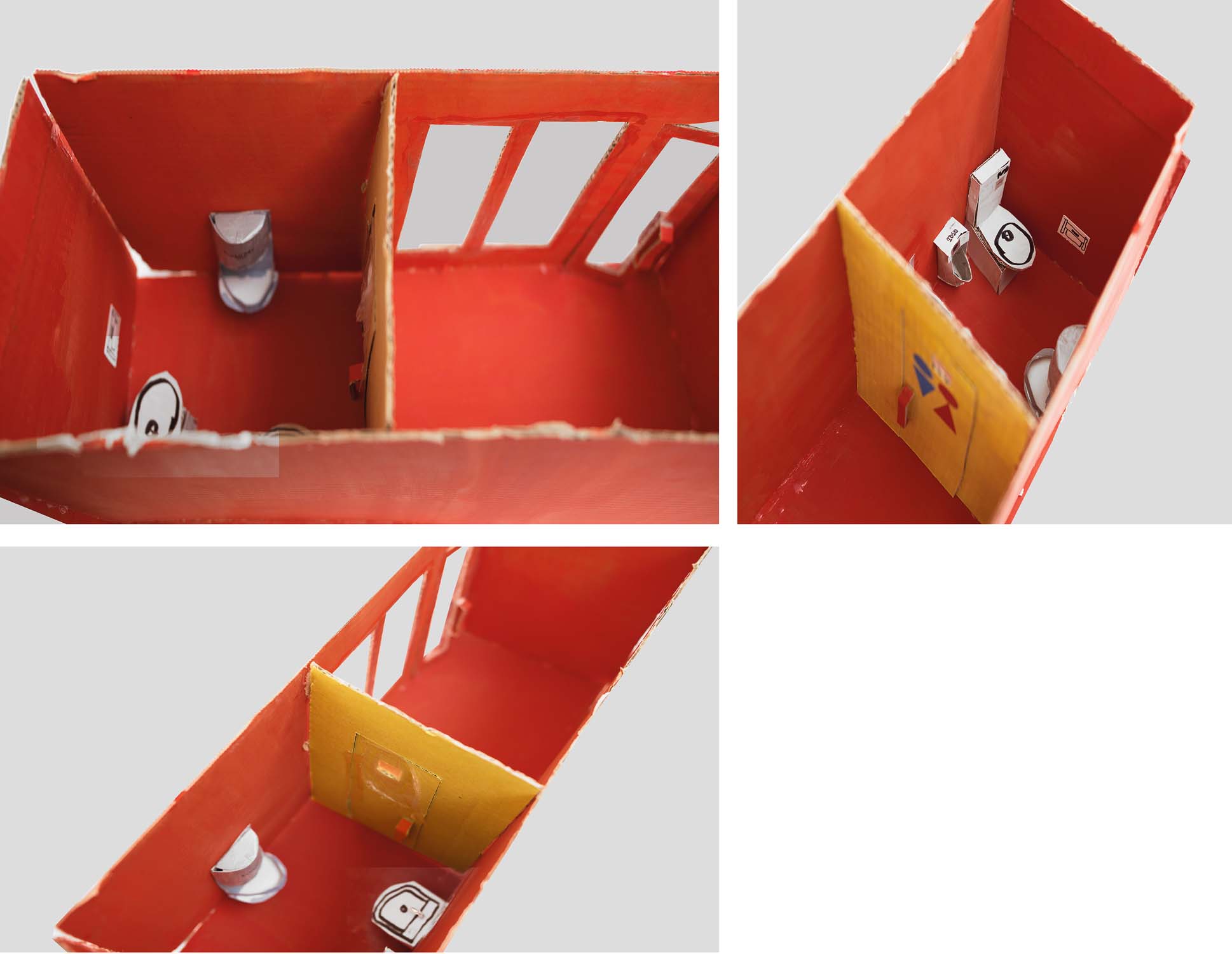
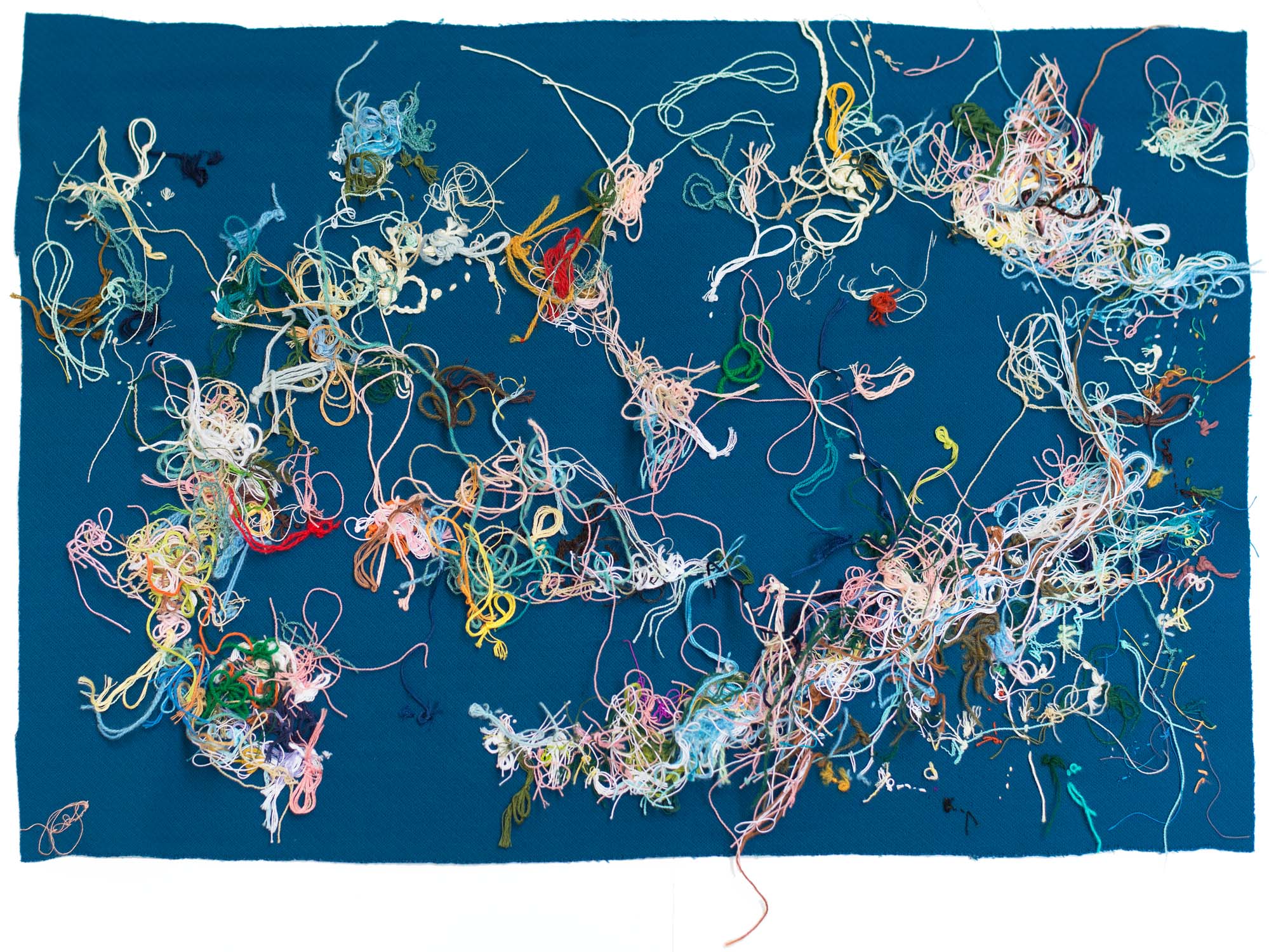
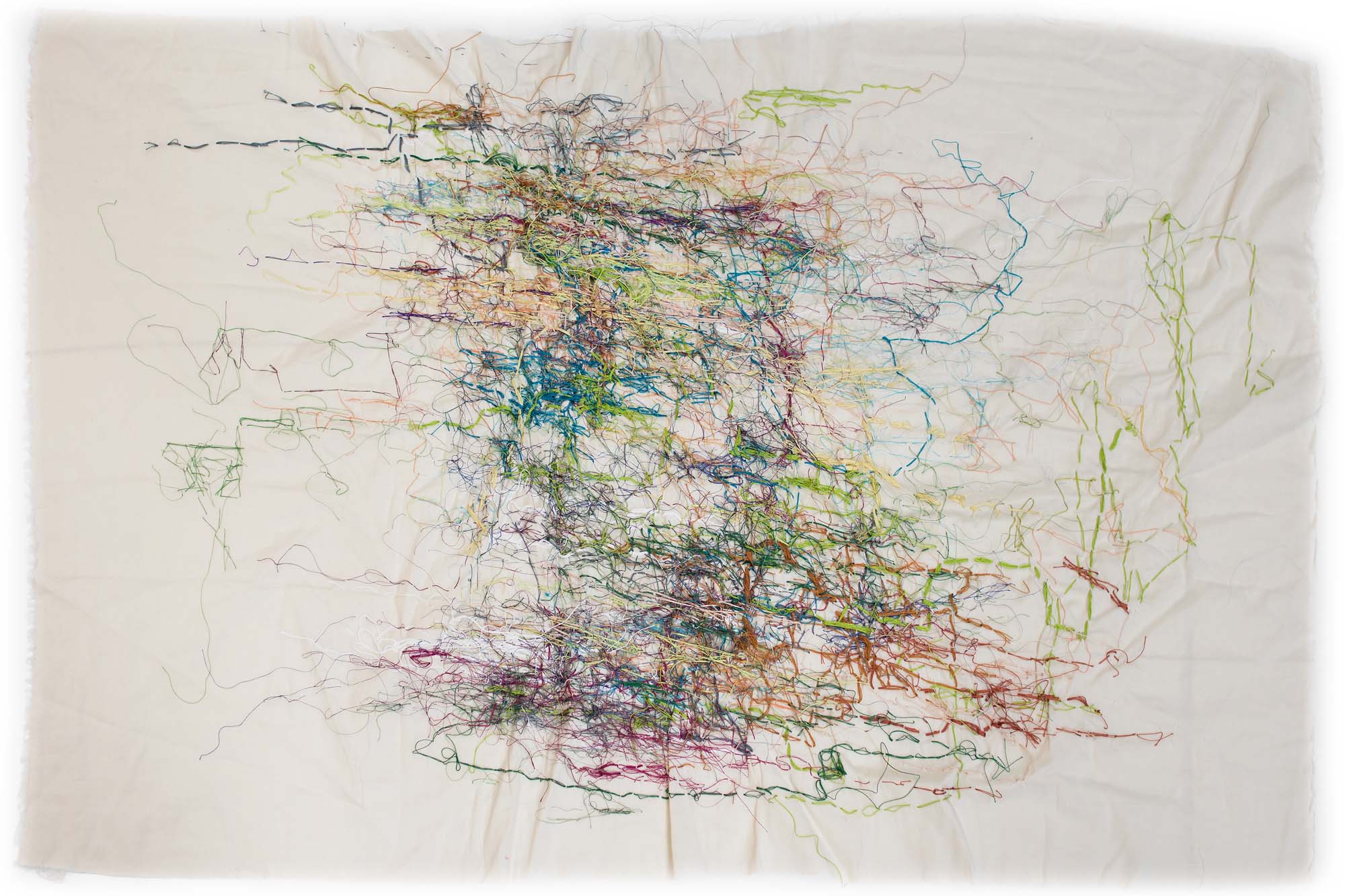
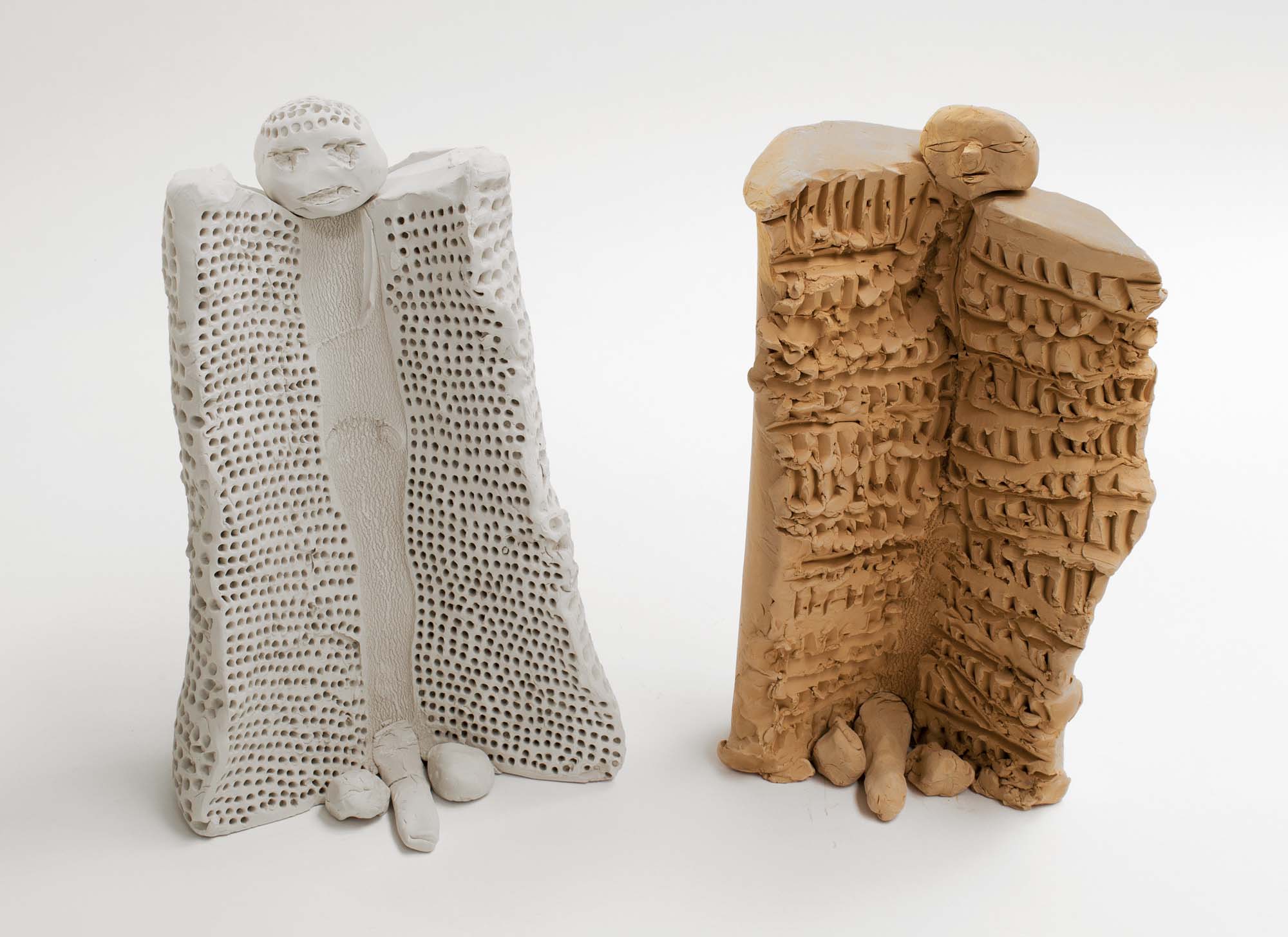
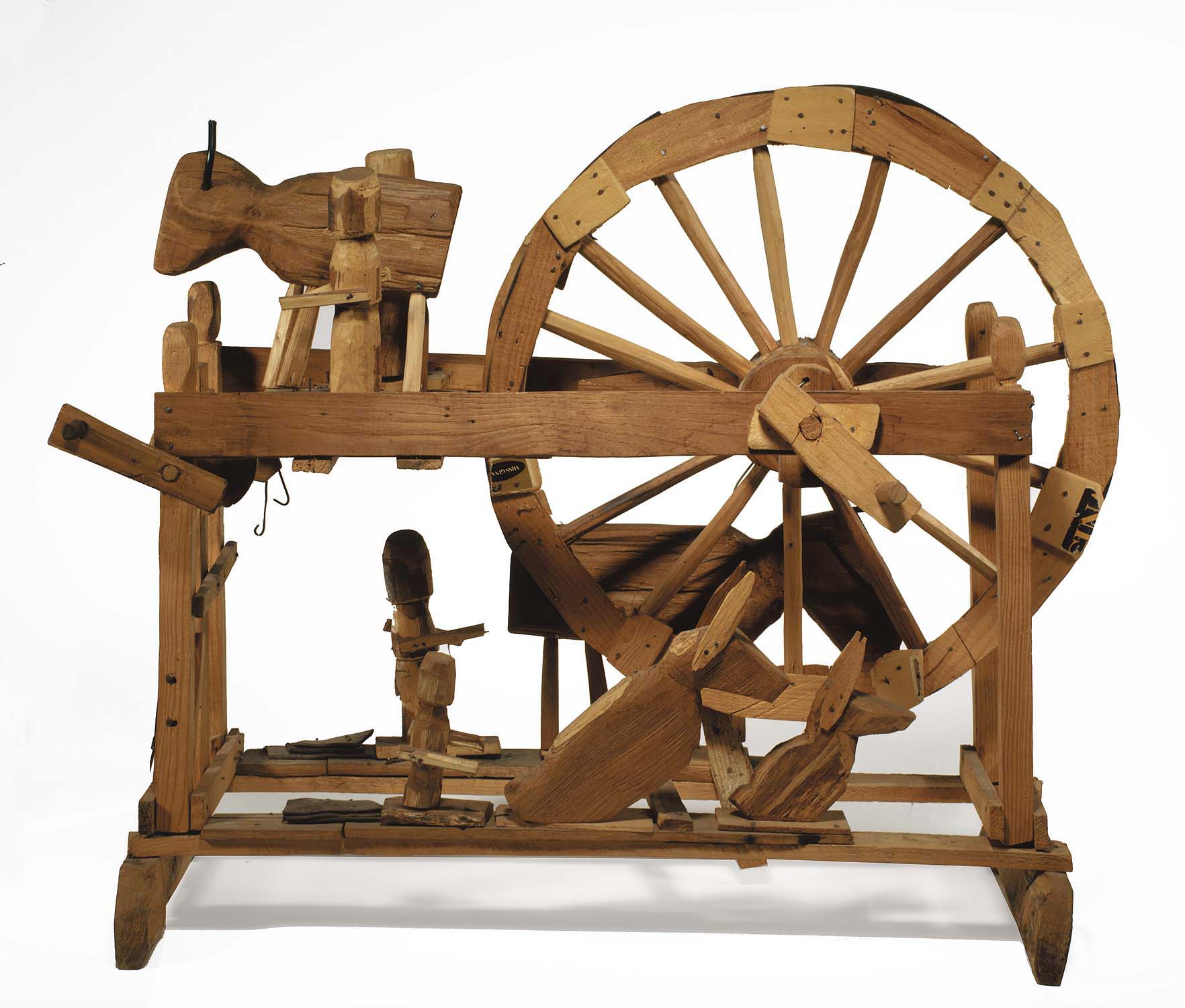
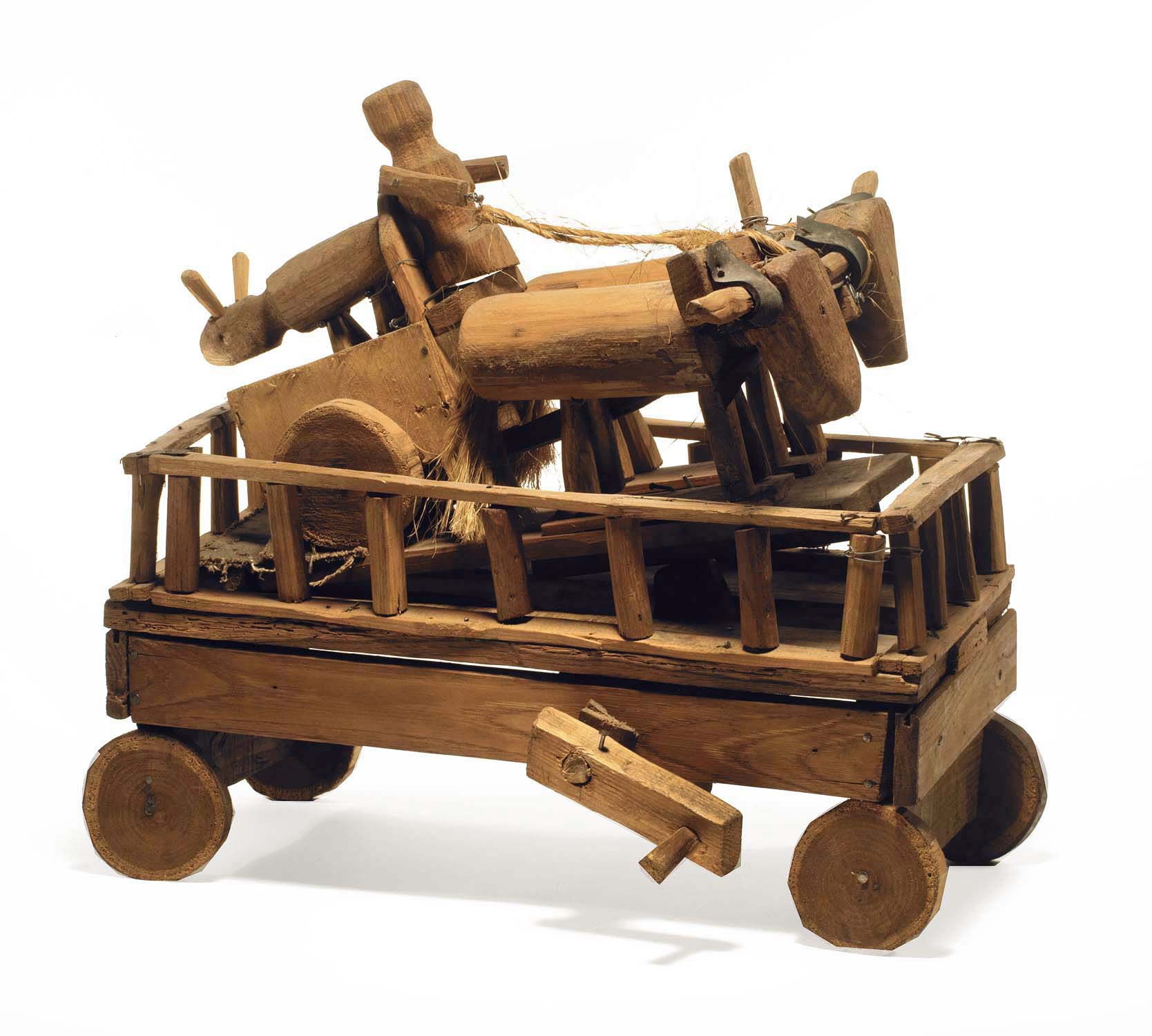
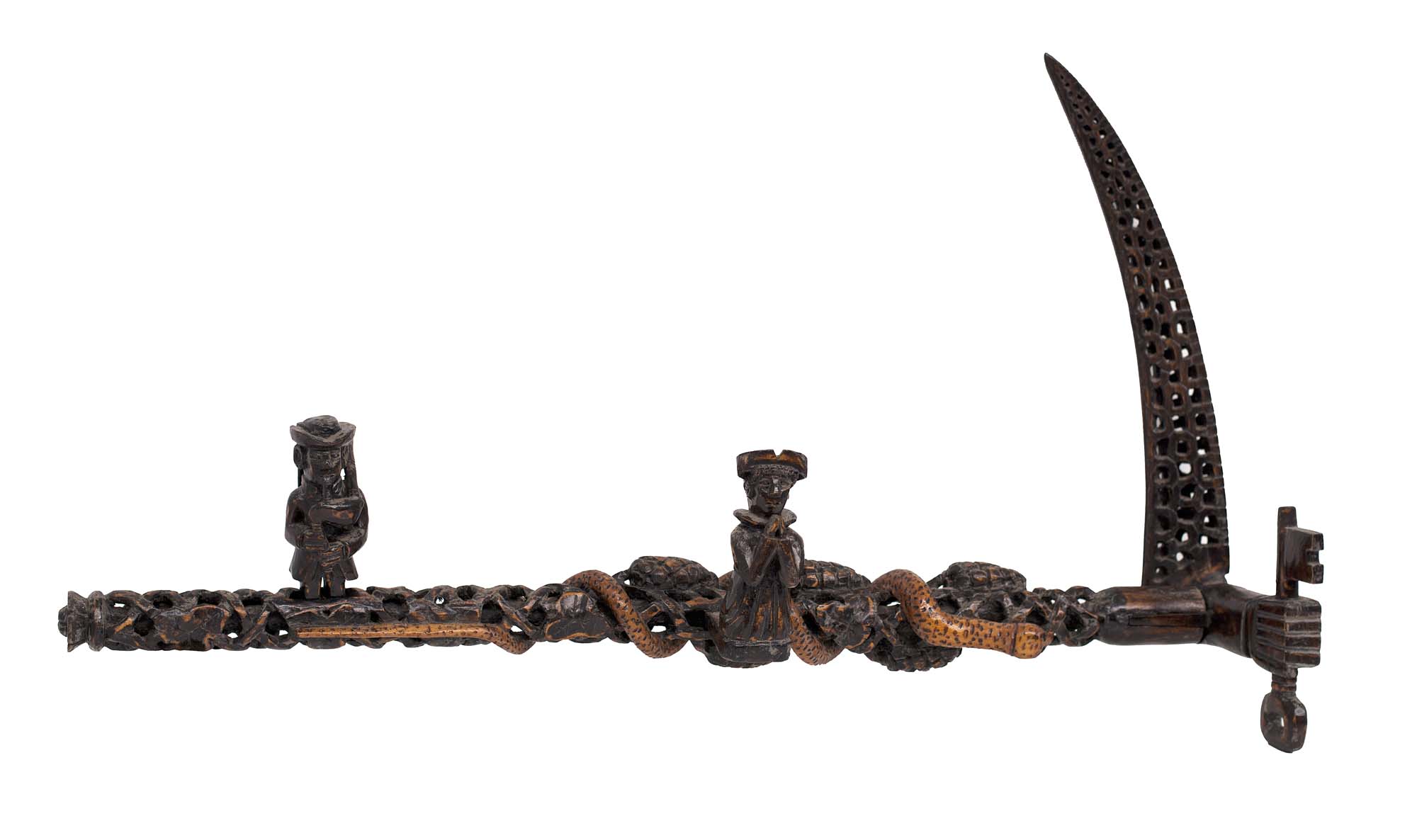
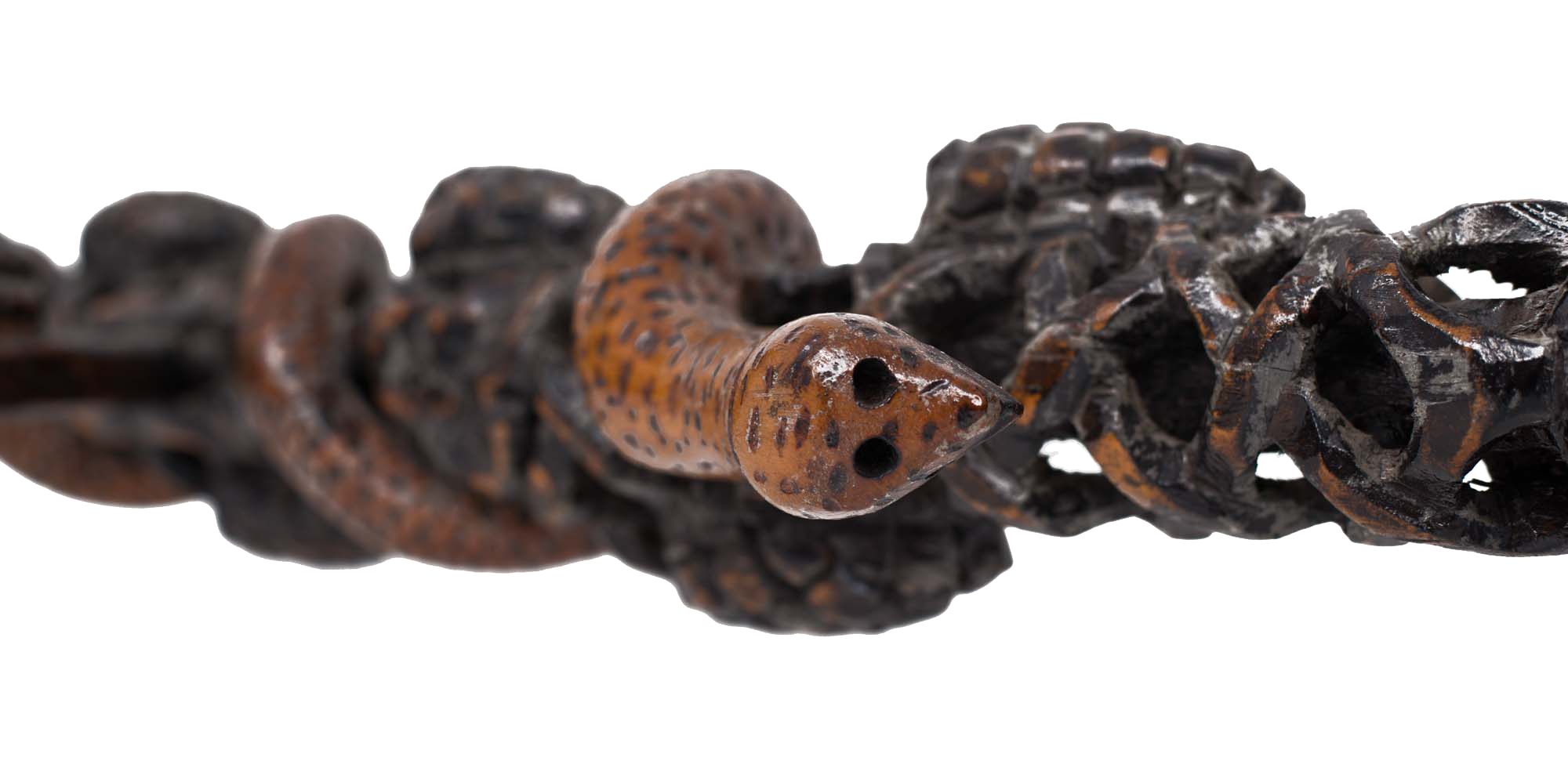
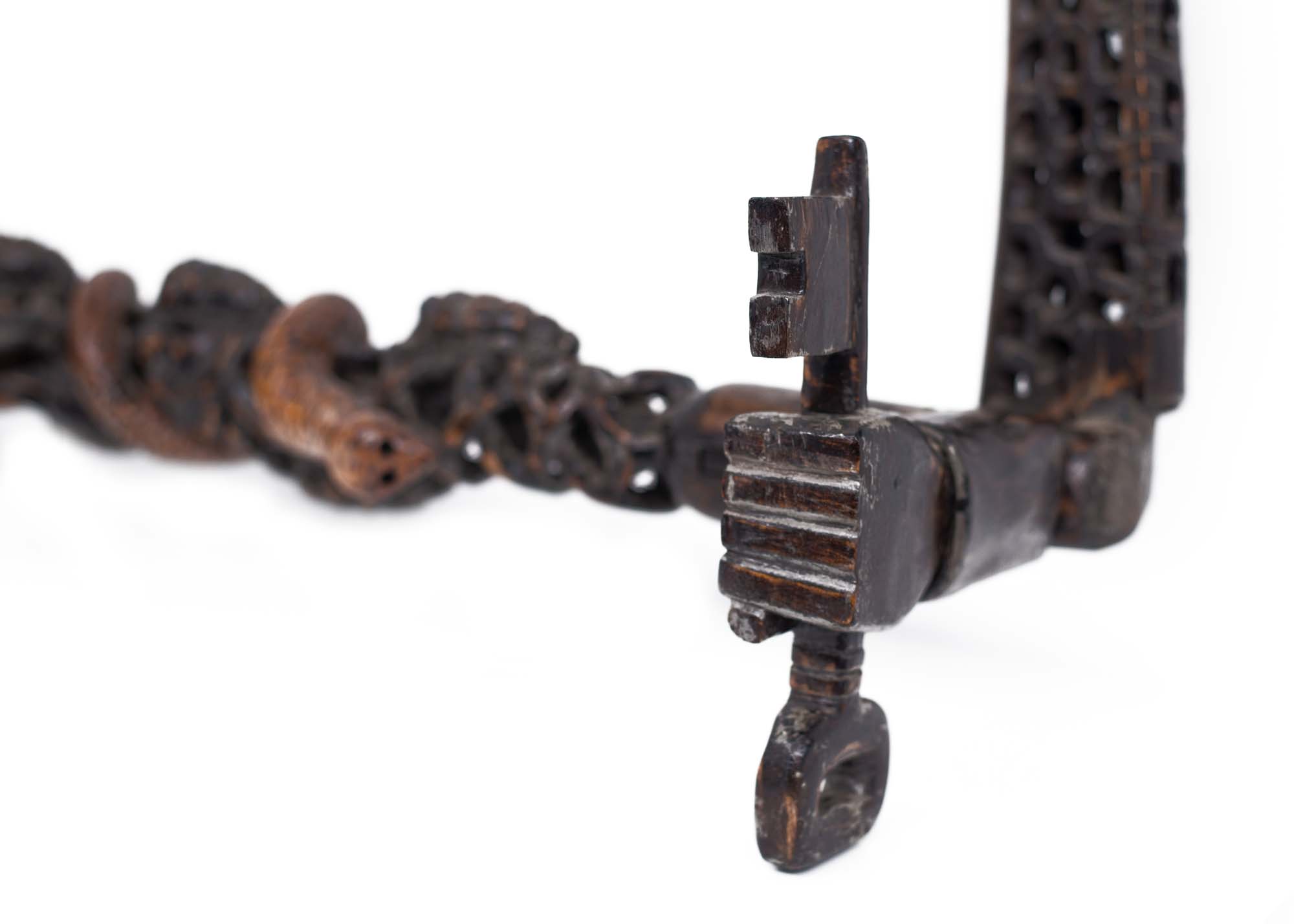
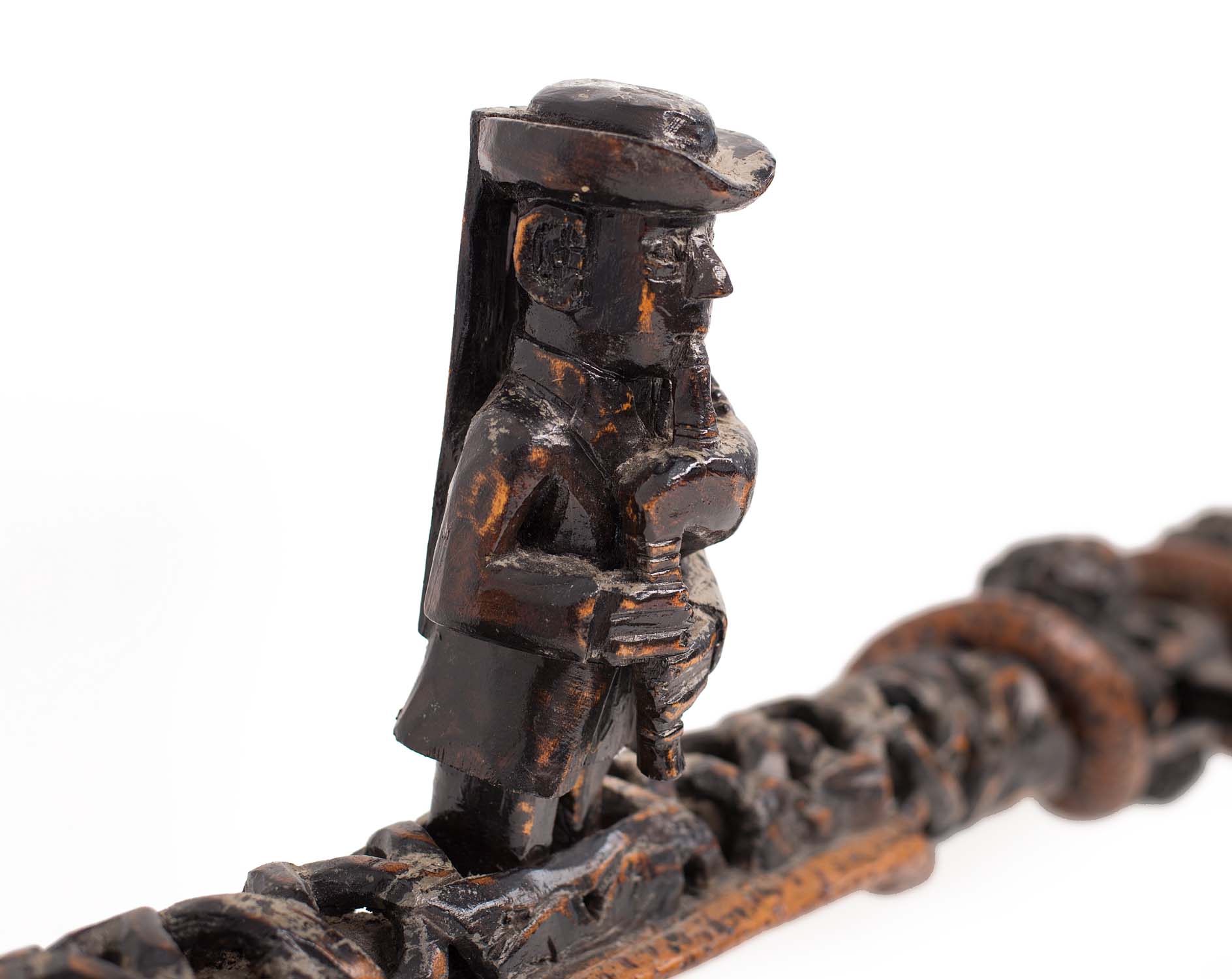
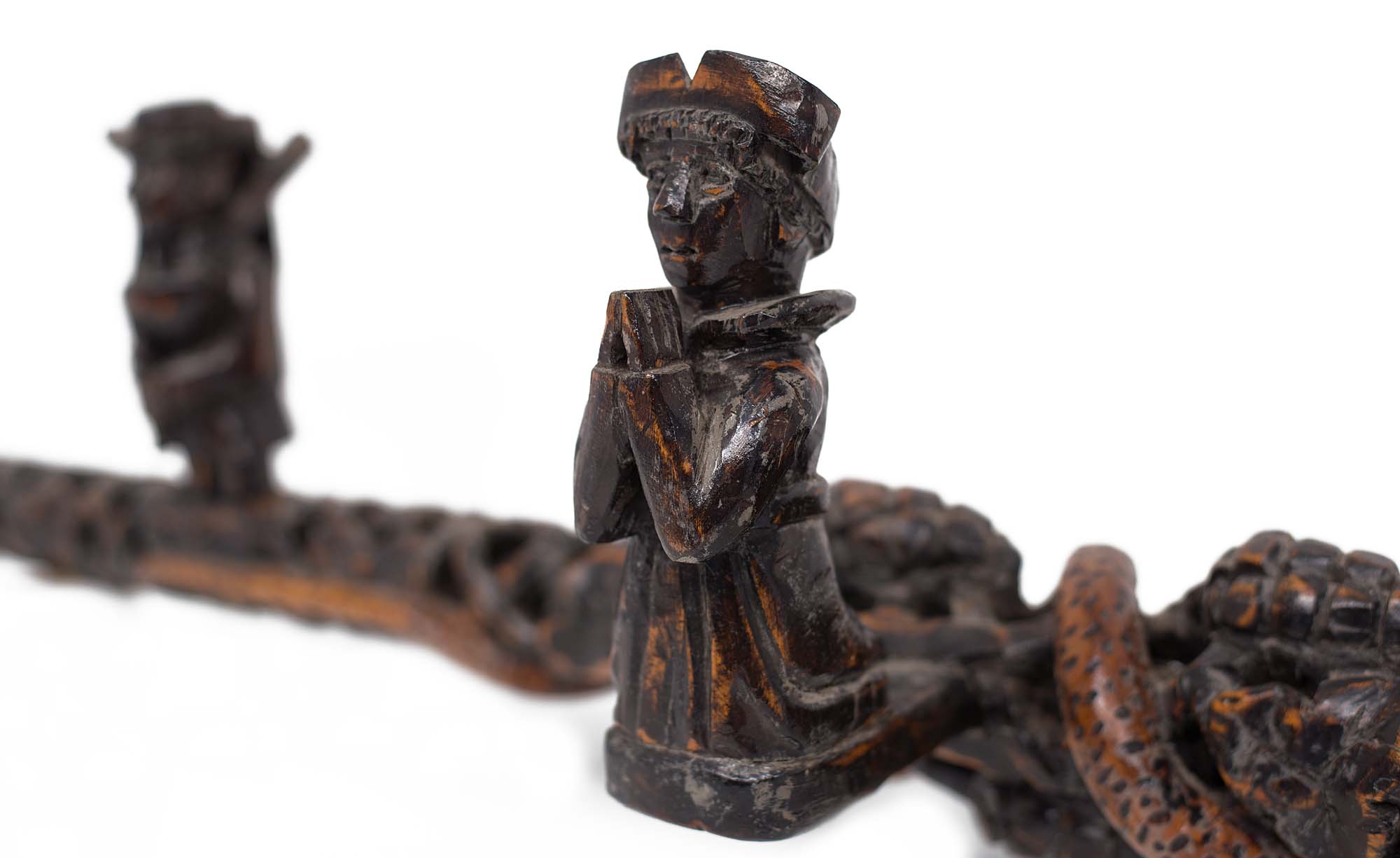
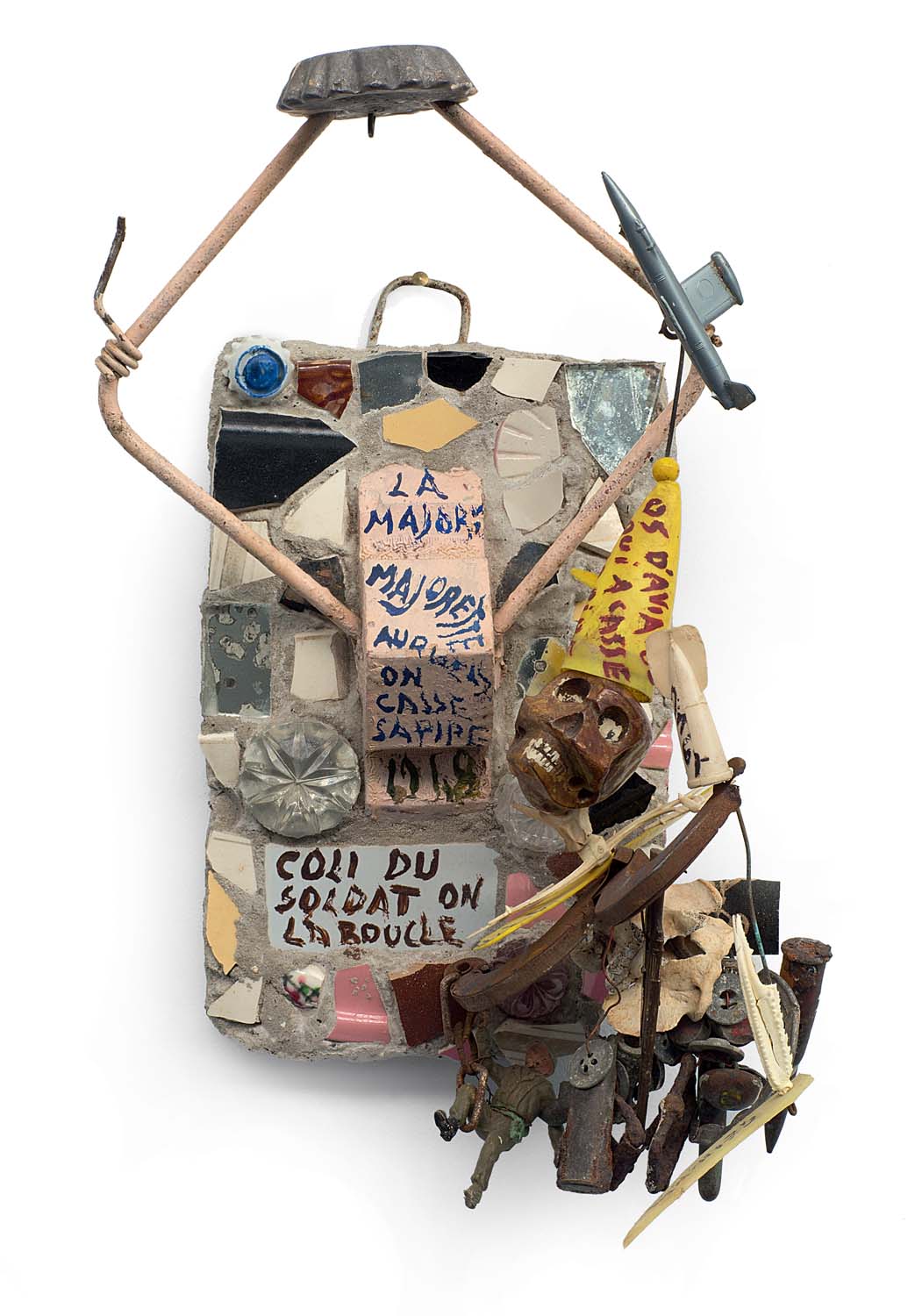
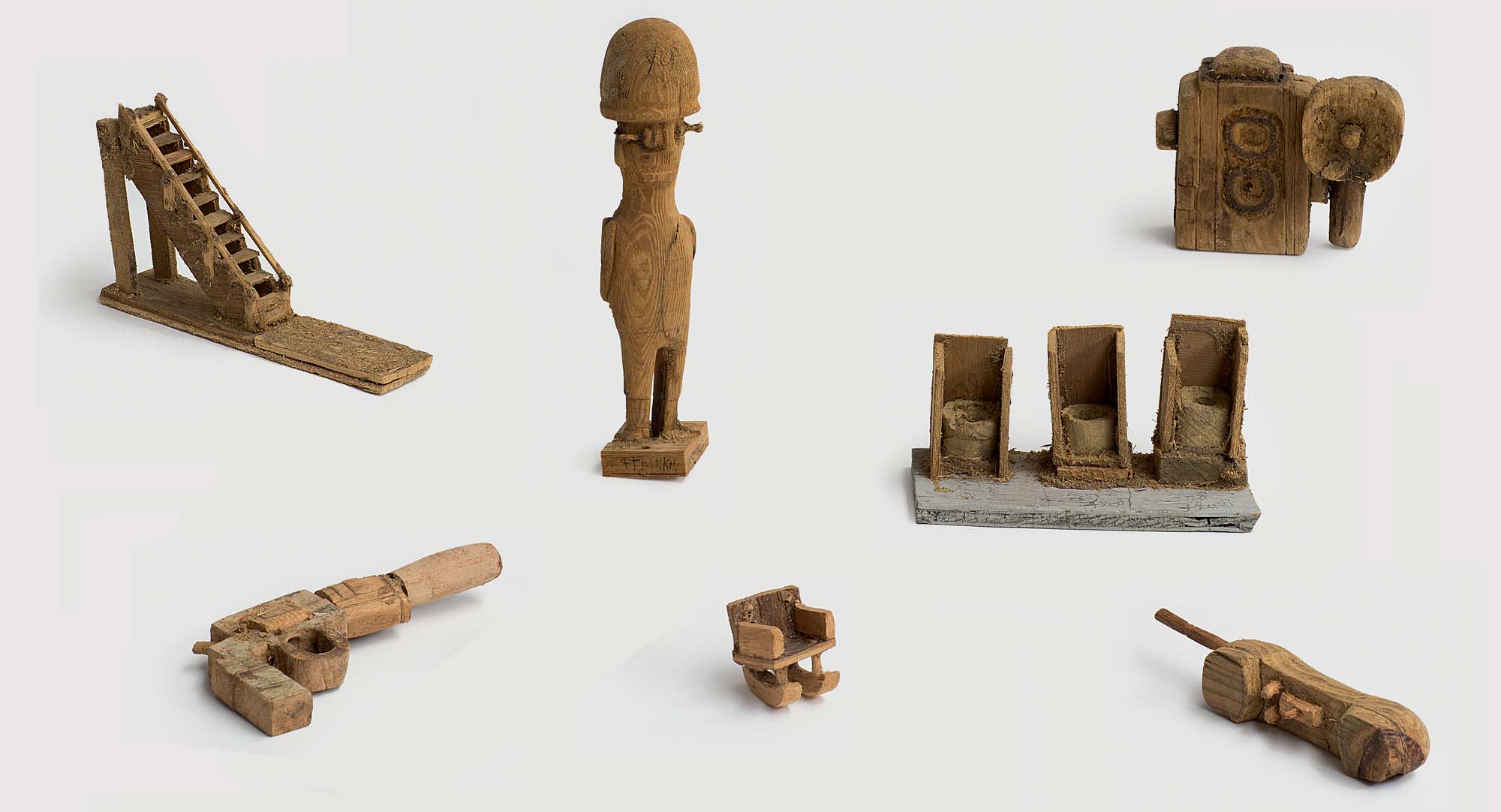
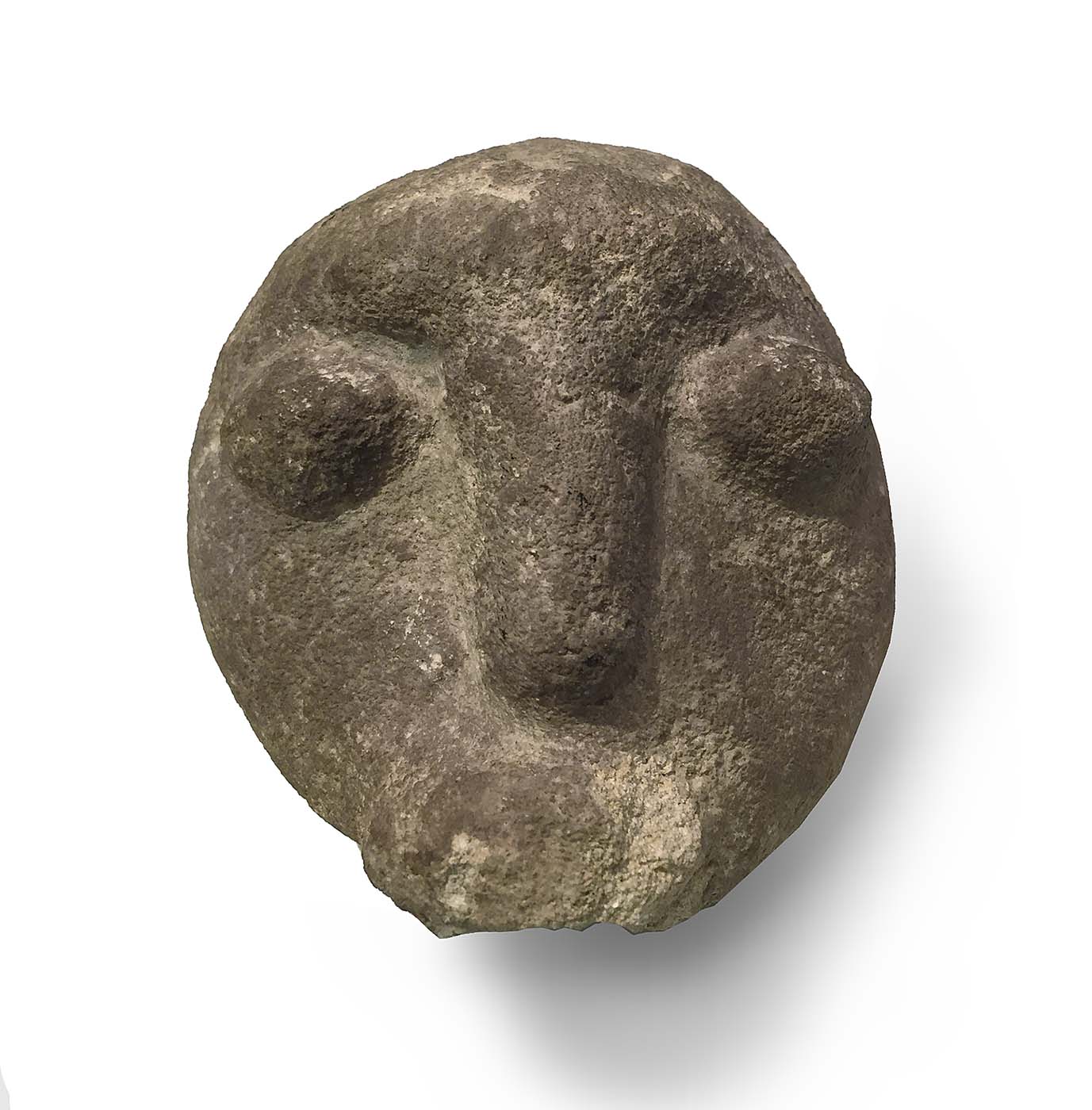
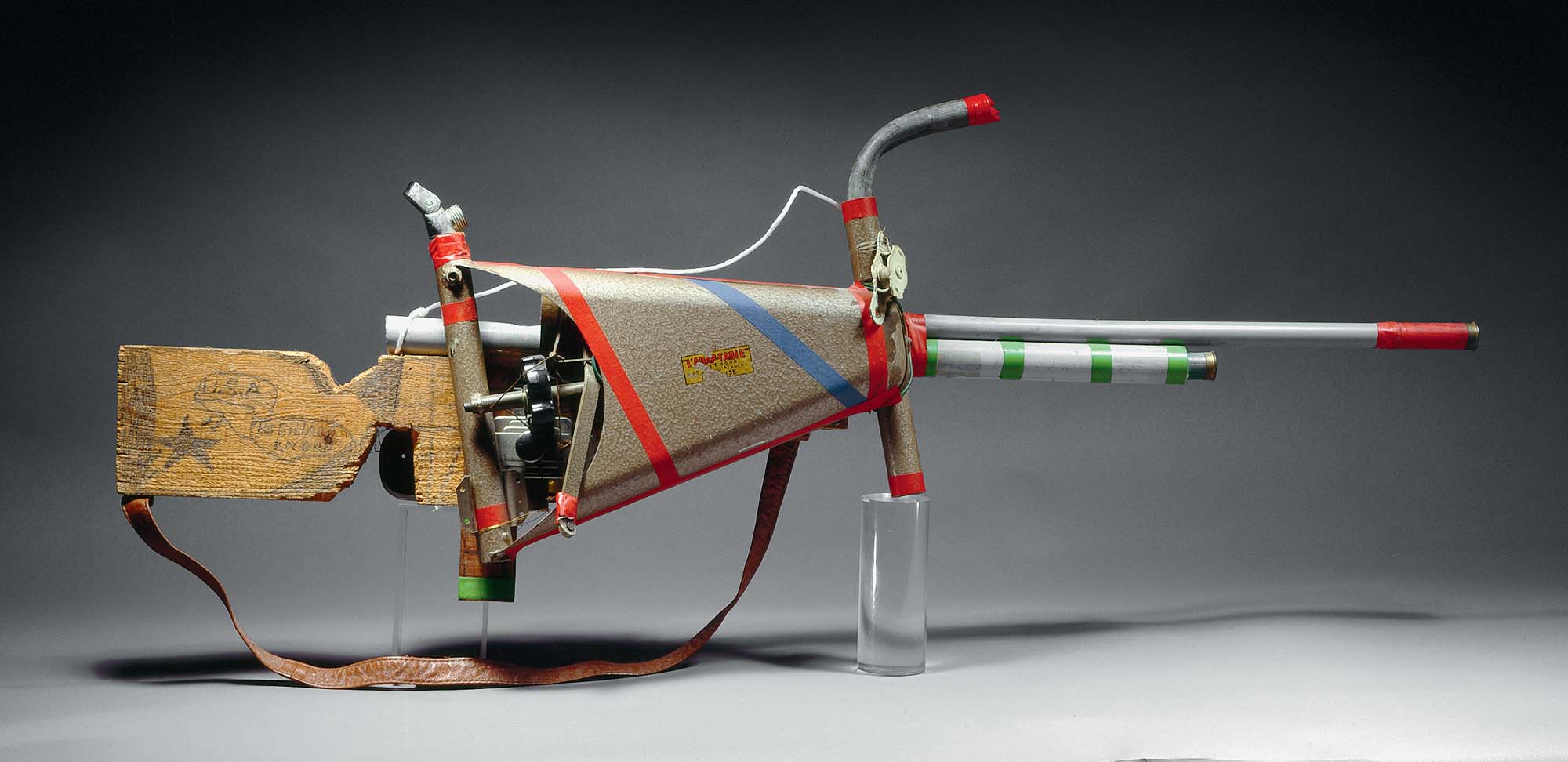
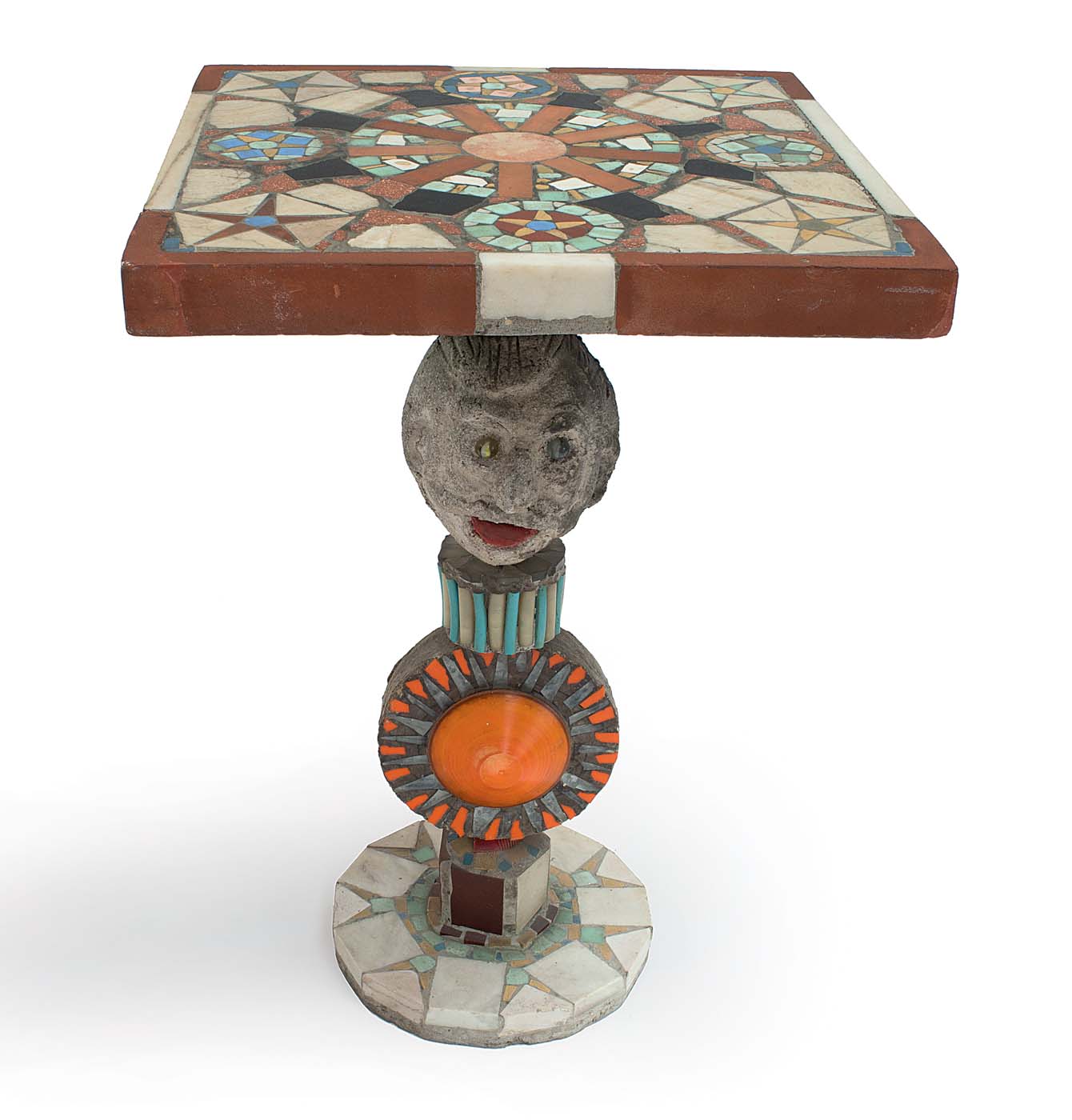
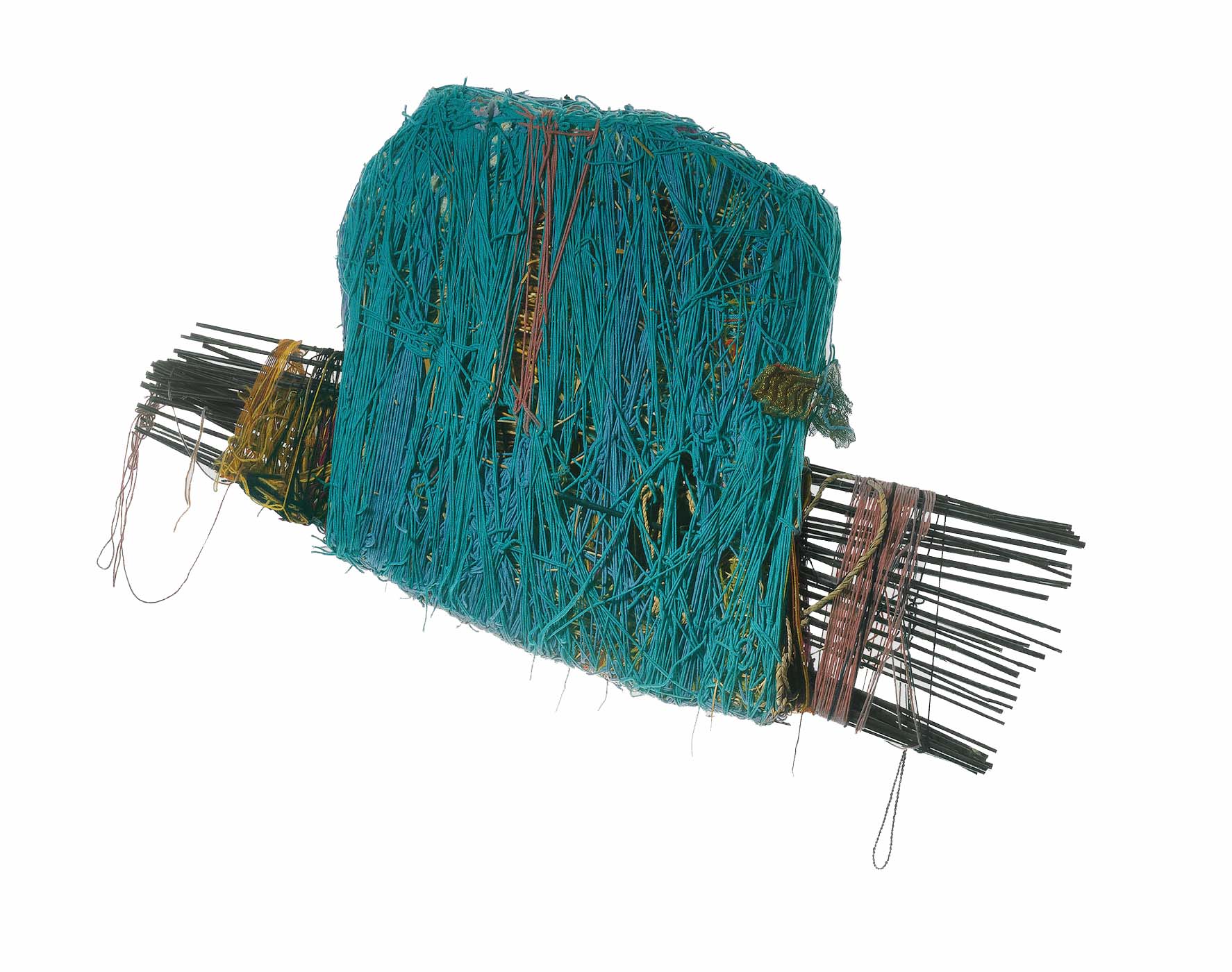
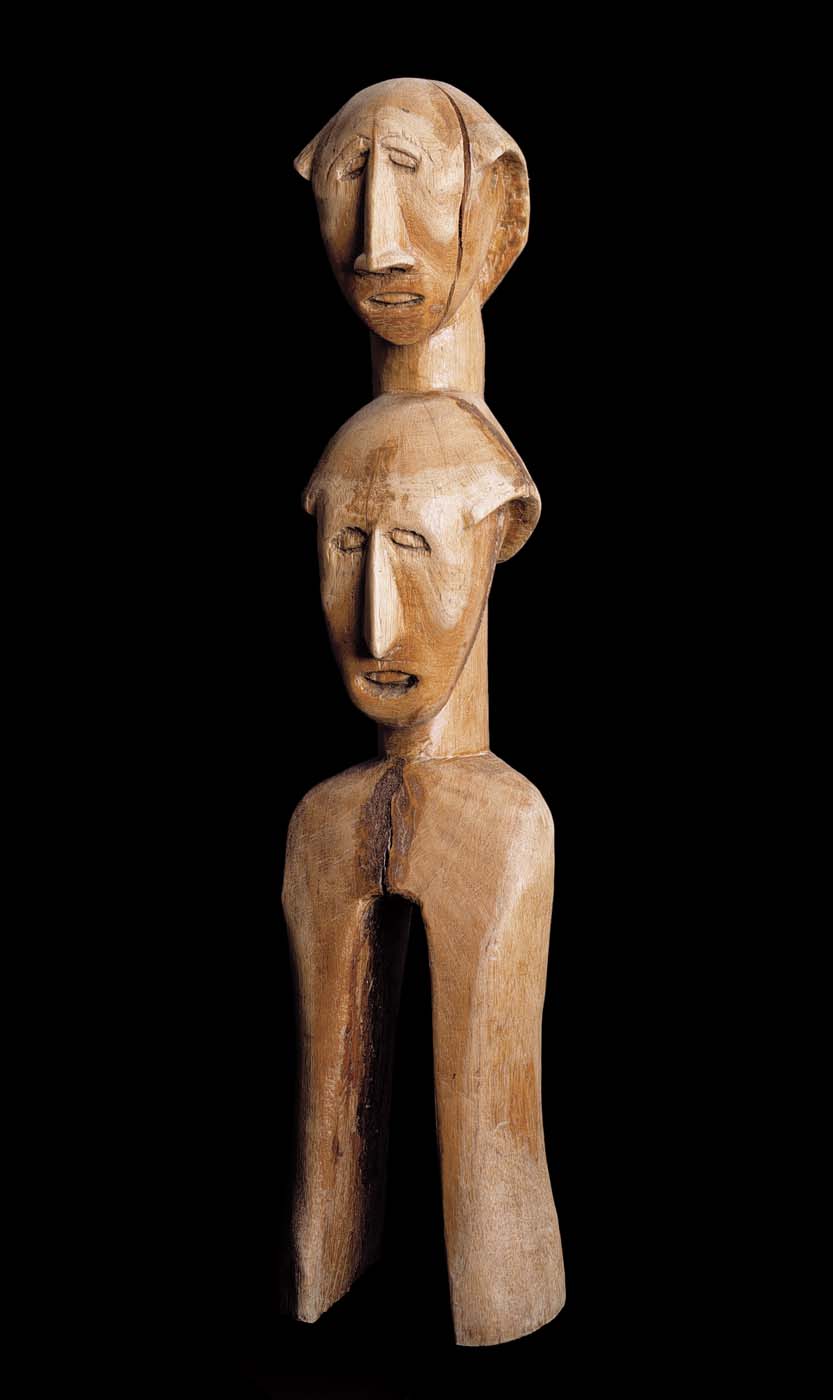
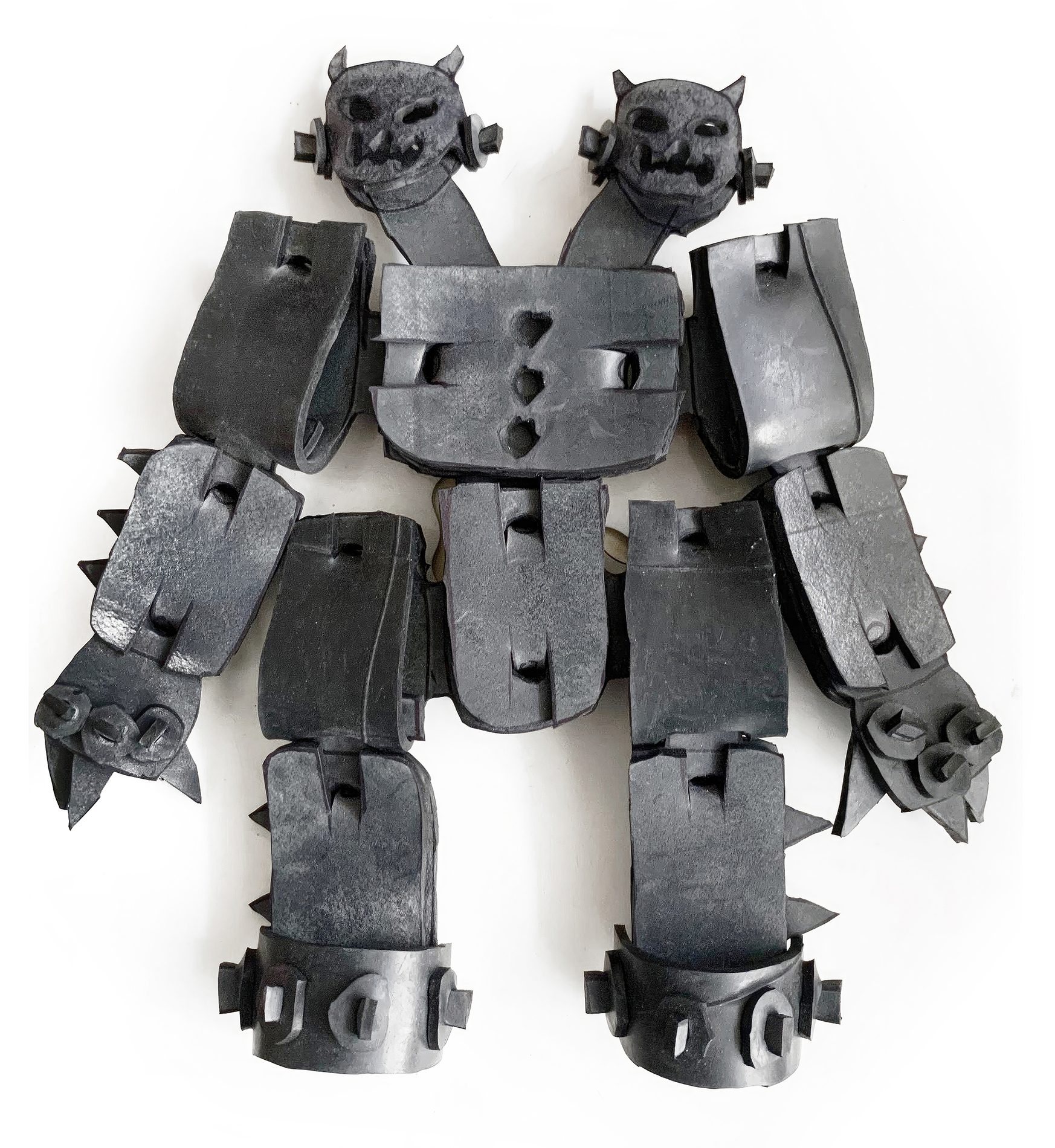
Typewriter keys, bits of wood, plastic dolls, inner tubes, bicycle wheels, car tyres, pebbles, feathers, plaster… Art can be made from any old odds and ends. Claude Lévi-Strauss distinguishes between the engineer, who has a specific project in mind, and the bricoleur who adapts to whatever resources are at hand. Necessity is the mother of invention for art brut’s many bricoleurs, who find their materials discarded on the pavement or in dustbins, to then recycle them in ingenious ways. Bricolage is also the simple pleasure of combining the objects around us into new forms, the way children do, and offers infinite possibilities for constructions guided solely by the imagination. Houses and gardens pop up along roadsides, metamorphosed by their owners. In France, Raymond Isidore’s Maison Picassiette is one example. Others have erected monuments, such as Facteur Cheval’s Palais Idéal, built from stones collected while on his rounds to deliver mail; the extraordinary merry-go-round created by Pierre Avezard (Petit Pierre, as he was known) and, in the United States, Simon Rodia’s Watts Towers.
collection | celestial epics | V | VI – bricolage
VI – bricolage
1/130